





 English
  Francês
  Alemão
  Italiano
  Japonês
  Norueguês
  Portuguese
  Spanish
  3 min of reading


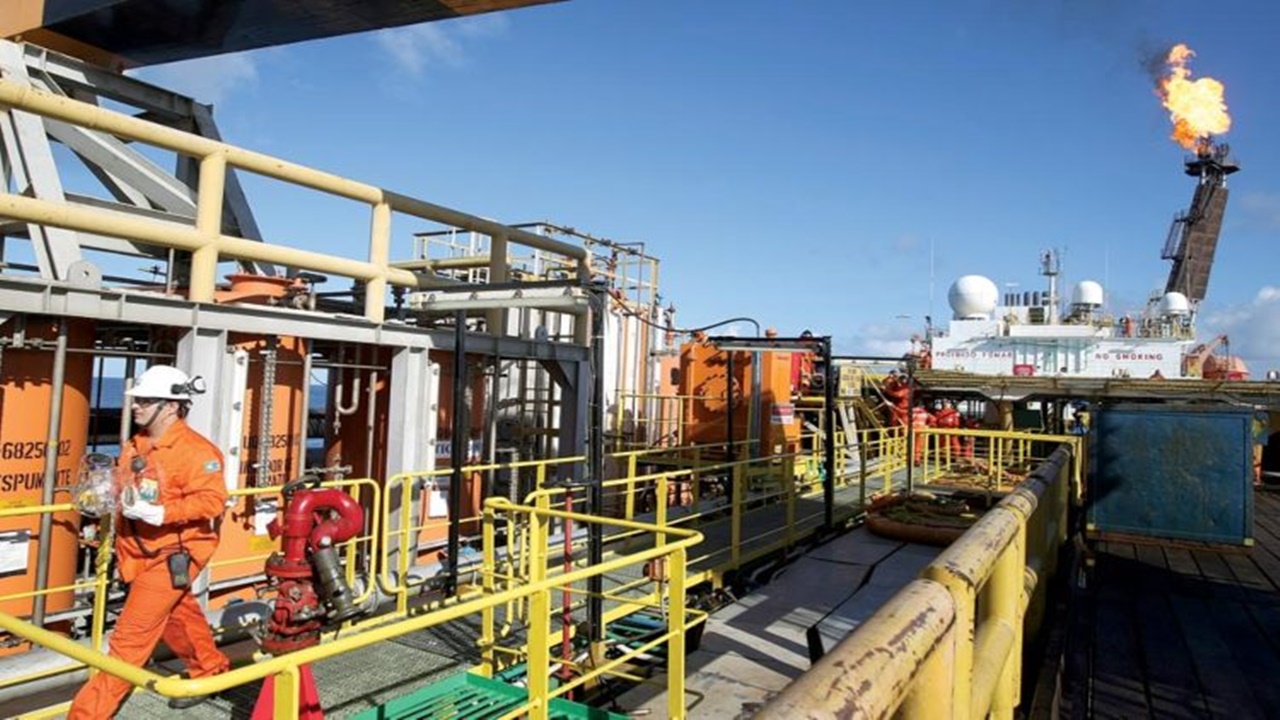
Despite Recently Becoming the Third Largest Oil Supplier to China, Ahead of the United States, Brazil Remains a Relatively Small Seller to the Asian Country
The Brazilian oil company Petrobras has been rapidly increasing its oil production and exports, and its executives are seeking a new market: India. Many Offshore Jobs in Sight: Petrobras Grants Maintenance Contract for 11 Platforms to Engeman, Which Holds an Operating Base in Macaé to Serve the Campos Basin
Read Also
- 255 Job Openings for Elementary Level, High School, and Technical Positions for Petrobras Offshore and Onshore Contracts in Macaé and Espírito Santo
- Modec Hires Brazilians for Positions in Singapore, for the FPSO Guanabara Project, as Production Supervisor
- The Much-Coveted Subsea 7 Opens 20 Positions in Rio de Janeiro for Candidates Without Technical Experience in Automation, Mechanical, Electrical, and More, This Morning
In an interview as part of the Reuters Commodity Trading Summit, CEO Roberto Castello Branco said that oil sales to China – an increasingly vital export market for Brazilian oil – will continue to grow amid strong industrial growth there and the acceleration of some of the largest offshore fields in the world in Brazil.
But the recently reorganized marketing and logistics division of the state company is actively exploring additional markets, particularly in Asia.
-
Petrobras finds high-quality oil in the pre-salt at 113 km from RJ and reignites expectations about strategic reserves in the Campos Basin.

-
Ocyan opens registrations for startups focused on innovation in the oil and gas sector and will select projects for Innovation Day with the support of Nexio.

-
Petrobras announces new oil discovery in the pre-salt of the Campos Basin and reinforces Brazil’s prominence with high-quality reserves that can increase production and energy revenues.

-
Alert in the fuel market: Analysts and a former director of ANP warn that oil prices may worsen in the coming months due to global instability.


Petrobras has begun seeking new buyers in India, hoping to become a relevant customer within three years, as it looks to diversify its buyer mix and minimize its dependence on China.
“We expect this to have a positive evolution in the near future, in about three years to have a consolidated position in the (Indian) market,” Castello Branco told Reuters.
The company has also increased fuel oil exports to Singapore. The country, which acts as a shipping hub, has increased purchases of Petrobras’s low-sulfur fuel to comply with new maritime legislation aimed at reducing greenhouse gas emissions.
The production from its massive deepwater field in Búzios is boosting Brazil’s oil surplus and has allowed Petrobras to raise its production target for 2020 by 5% in recent weeks.
The Brazilian oil company is also preparing to face tougher domestic competition as it sells refineries and seeks to end its near-monopoly in Brazilian fuel production. “To face stronger competition, we created a division for logistics, sales, and marketing … to act as an active seller, not a passive one,” said the CEO.
Despite recently becoming the third largest oil supplier to China, ahead of the United States, Brazil remains a relatively small seller to the Asian country compared to Russia and Saudi Arabia, Castello Branco said – but not for lack of appetite. China would absorb all the oil Brazil has to offer and often pays a premium for its oil from the Tupi field, the executive said.
In April, Petrobras reached the historic milestone of 1 million barrels per day of crude oil shipped to China, as a sharp drop in domestic fuel consumption diverted oil from national refineries. “At the moment, we do not have the capacity to sell 1 million (barrels per day),” he said. “With increased oil production, we will have availability for that.”










Seja o primeiro a reagir!