





 Portuguese
  English
  Spanish
  3 min of reading


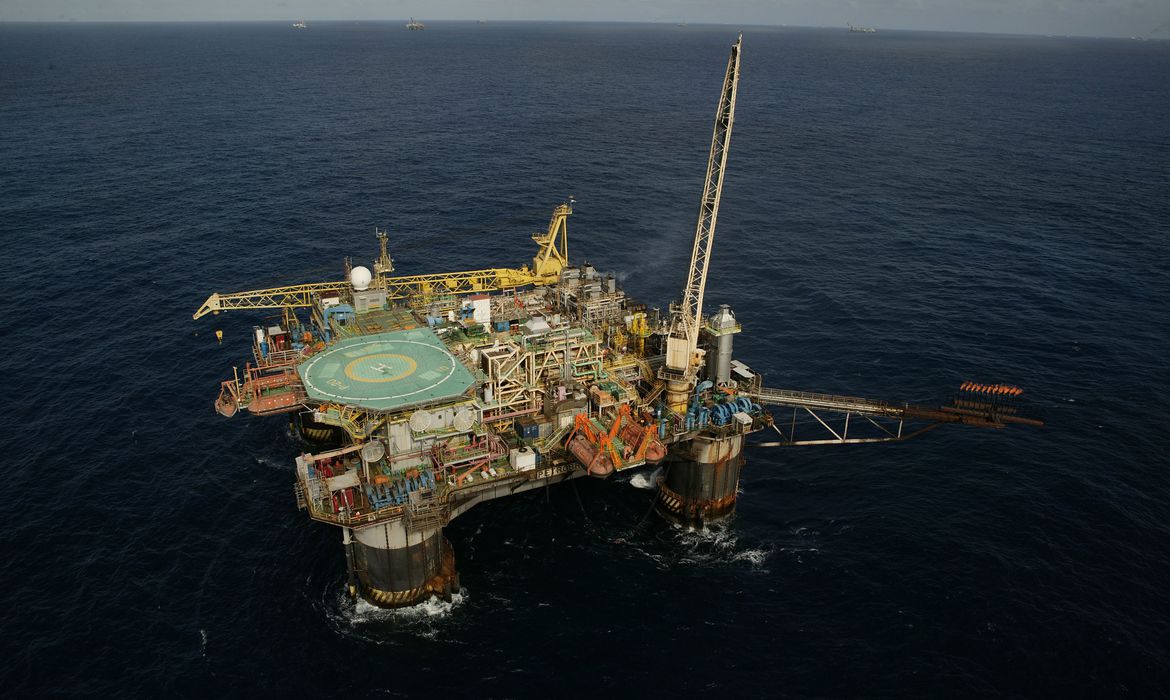
Oil Giants Around The World Have Gradually Cut Oil Production And Invested In Renewable Energies, While Petrobras Plans To Increase Oil Production By 2026
Petrobras has been at the center of political debate throughout Brazil, facing criticism and even being accused of contributing to the country’s inflation, due to its pricing policy which impacts gasoline and diesel prices. Not only that, the Brazilian oil company also faces the massive challenge of surviving the end of the oil era, needing to start operating in the field of renewable energies.
According to the scientific community, humanity needs to drastically reduce the use of fossil fuels to curb climate disasters. In September 2021, the journal Nature published a study indicating that global oil and gas production should decline by 3% each year until 2050 to ensure global warming is limited to 1.5°C.
That same year, the International Energy Agency (IEA) also released a study linking oil production with global warming. The guidance was that no new oil or coal reserves should be explored in order to avoid catastrophic climate change scenarios.
-
“No one will make us change the Pix,” says Lula after the US report.

-
Lula responds directly to Trump and says that Pix is from Brazil and will not change under pressure from anyone, after a report from the United States pointed out the Brazilian payment system as an American trade barrier.

-
Amazon has just announced a new fee on all deliveries, and your online purchases will become more expensive starting April 17, including for those buying from the United States here in Brazil.

-
He sold his share for R$ 4 thousand, saw the company become a giant worth R$ 19 trillion, and missed the opportunity of a lifetime.


In the meantime, Petrobras intends to increase its oil production by about 45% by 2026, with 15 new platforms in offshore pre-salt areas, rising from 2.2 million barrels per day to 3.2 million bpd. Therefore, the Brazilian oil company believes that oil will continue to generate satisfactory financial returns in the future, despite the world moving towards a system of energy and fuel production less dependent on fossil fuels. Last year, the company reported profits of over R$ 106 billion, resulting in the payment of R$ 37.3 billion in dividends to the Union.
It is worth remembering that the concept of a sustainable society is not limited to nature-focused practices, which are also of utmost importance. It also relates to a healthy economy, with more opportunities for everyone. However, today the price of fuels weighs heavily on Brazilian consumers.

Oil Companies Investing In Sustainable Energies Around The World
In August 2019, then Petrobras president, Roberto Castello Branco, stated that the company would no longer invest in renewable energies “because it is a business that requires different competencies from the oil and gas business.”
However, since then, several companies in the sector have begun to invest in renewables. France’s Total announced plans to neutralize operational emissions by 2050 and increase sustainable energy production tenfold by 2030, reaching 100 GW of capacity.
British Petroleum, a UK company, aims to achieve 50GW of renewable energy capacity by 2050 and is also working to reduce oil-derived fuel production by 1 million barrels per day by 2030.
Meanwhile, Anglo-Dutch Shell, which also has a network of fuel stations here in Brazil, intends to cut its oil production by up to 2% per year until 2030, neutralizing its toxic gas emissions by 2050.
Demand For Oil Will Continue Even With The Increasing Need For Renewable Energies, Says Petrobras
Petrobras was identified by the American organization Climate Accountability Institute, in a study conducted in 2019, as one of the top 20 companies that emitted the most greenhouse gases in the world since 1965.
The Brazilian oil company claims that the transition to renewable energy sources will not eliminate the high demand for oil and that both sources can coexist. “Transforming Brazilian resources into wealth” is a motto. Additionally, it is implementing actions to reduce its emissions, despite efforts to explore the pre-salt before “a new era,” as stated by the former company president, General Silva e Luna.
In the next five years, Petrobras plans to invest US$ 2.8 billion with the aim of reducing pollutant emissions, creating a decarbonization fund of US$ 248 million for low-carbon solutions. In 2015, the oil company announced that it intended to reduce its “operational emissions” by 25% by 2030.
The fact is, Petrobras will maintain its focus on deep and ultra-deep waters, where it still has competitive advantages. The upcoming elections may affect the future of Petrobras, but it is still too early to envision any other scenario.









Seja o primeiro a reagir!