





 Portuguese
  English
  Spanish
  3 min of reading


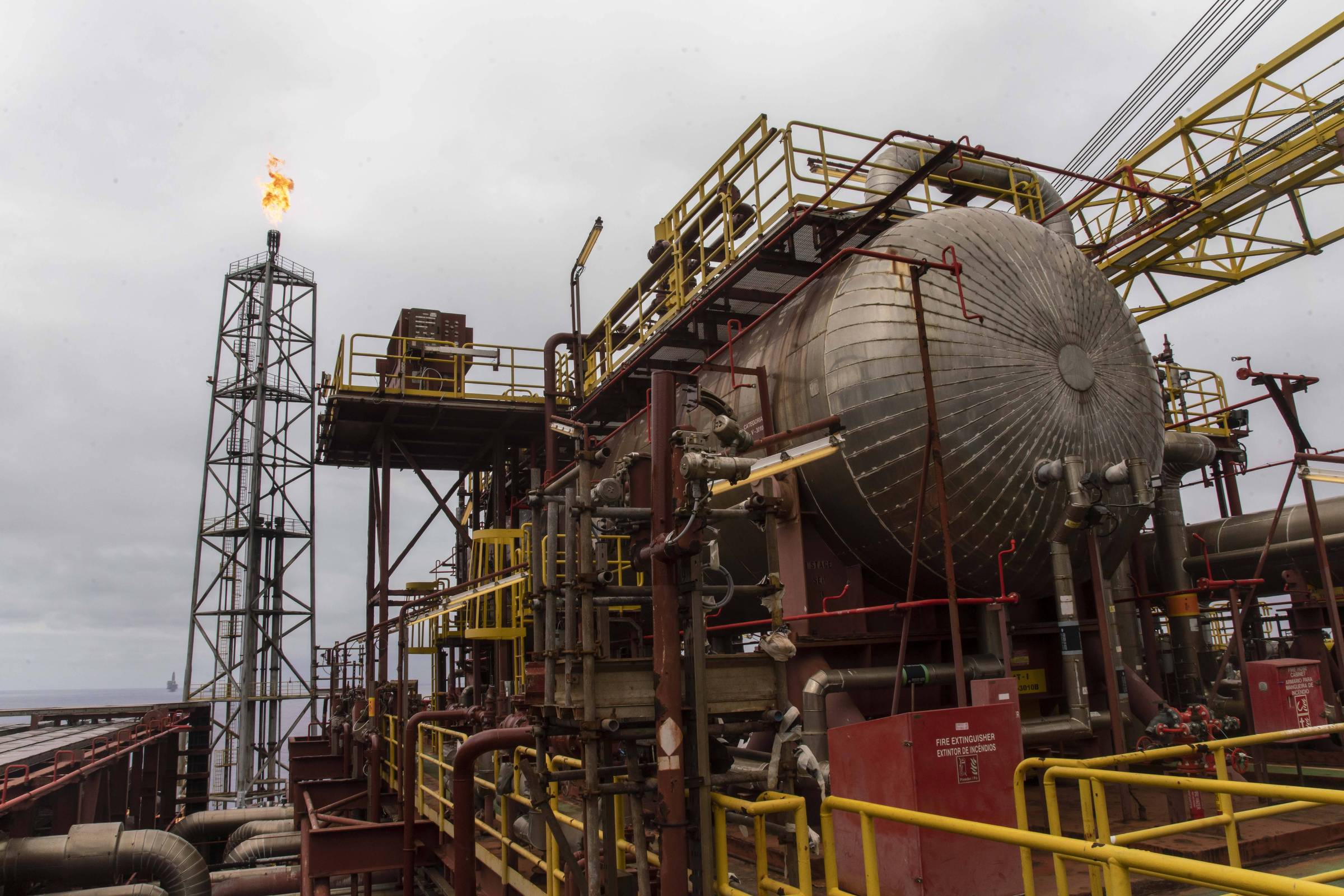
Petrobras Has Started to Reach Other Companies with Its New Carbon Storage Technology. 10.6 Million Tons Have Already Been ReInjected.
In the last year, Petrobras set a record for capturing, storing, and utilizing carbon dioxide (CO2) with its new technology called CCUS, an acronym in English. Through this method, the state-owned company reintroduces the CO2 generated in oil extraction back into the reservoir. This way, production efficiency expands and pollutant gas emissions are reduced, also generating competitive gains in its activities.
Petrobras Approaches Other Companies in the Sector Through New Technology
In just the last year, 10.6 million tons of CO2 were reinjected, equivalent to 25% of the total global industry in the last year, according to the Global CCS Institute. This is the largest carbon dioxide reuse operation in the world.
The president of Petrobras, Jean Paul Prates, stated last week that the company, through carbon storage technology, is approaching other large companies in the sector to develop new cooperation opportunities, both in the oil and gas sector and for the energy transition.
-
Renewable energy advances over protected areas in Brazil, and a survey by the Energy Transition Observatory reveals silent impacts that challenge environmental conservation and pressure sensitive traditional territories.

-
Rio Grande do Sul accelerates energy transition: State invests in renewable technologies and consolidates decarbonization strategies and pathways to attract billions in new industrial investments.

-
With 160,000 m² of collectors, an area larger than 20 football fields, Silkeborg, in Denmark, hosts a solar thermal plant that heats 19,500 homes and could become the largest solar heating plant in the world.

-
A study reveals the expansion of renewable energy procurement in Brazil and shows how companies are taking advantage of opportunities to reduce expenses, ensure energy efficiency, and strengthen strategic environmental commitments.


This statement was made after the executive received Wael Sawan, global CEO of Anglo-Dutch Shell, and Cristiano Pinto da Costa, president of Shell in Brazil, at the Petrobras building in Brasília. CCUS stands for Carbon Capture Utilisation and Storage, which, in practice, is a technology for emission reduction that can be applied across the energy system.
CCUS technologies involve capturing and storing carbon, burning fuel or in industrial processes, transporting CO2 by ship or pipeline, and using it as a resource to generate essential products or services.
What Is the Strategic Role of the Technology Used by Petrobras?
Carbon storage technologies also provide the basis for CO2 removal or negative emissions when the CO2 comes from biological processes or directly from the atmosphere. CCUS is strategic as a climate impact reduction option, capable of being applied in various ways and across a range of sectors, offering the potential to contribute to emission reductions in nearly all parts of the global energy system.
Consequently, progress in the development and implementation of this technology in one sector can bring significant benefits to other sectors or applications, including for technological learning, cost reduction, and infrastructure development.
A good example is the use in industrial plants and power plants, two areas critical for the transition to clean energy.
Petrobras Focuses on Socio-Environmental Projects
Petrobras has launched a call for proposals that will allocate R$ 432 million to socio-environmental projects, with applications open until April 11. This year’s public selection of the Petrobras program will be divided into two phases. In total, there will be nearly 50 projects, which will receive larger funding than has previously been invested by the company.
In the first phase, the regions of North, Midwest, Northeast, and South will be prioritized. The company will invest R$ 162 million in socio-environmental initiatives, and it is estimated that around 20 projects will be developed over a period of 3 years. In the second semester, the second phase will be announced, which will also include the Southeast region.
In the North and Northeast, the call for proposals includes the neighboring areas of the operations of the so-called Equatorial Margin, a new frontier for oil and gas exploration and production in Brazil, located between the states of Amapá and Rio Grande do Norte. The call focuses on non-profit institutions, and applications will remain open until April 11.








Seja o primeiro a reagir!