Portuguese
  Spanish



Wilson Sons Was One of the Companies That Hired the Most Professionals in the Oil and Gas Market in 2021
The maritime and port logistics operator in Brazil, Wilson Sons, is anticipating an increase in demand for FPSOs and has already captured the Brazilian market by servicing 70% of the chartered FPSOs in the country. The company explained this Tuesday (01) that the oil and gas sector’s estimates indicate growth, with new FPSO units entering operation over the next five years.
Read Other Related News
FPSO Market Will Be Boosted in 2022
Marcio Panisset, Regional Manager of Wilson Sons Agency, Commented: “The FPSO market has great growth prospects in the country. The sector’s estimates show that up to 26 units are expected to start operating over the next five years. This does not consider the oil exploration areas acquired in the rounds from 2017 to 2019. Wilson Sons has a strong presence in this market and we are preparing for the increase in demand.”
Wilson Sons also reported that it currently leads the maritime agency sector for servicing chartered FPSOs in Brazilian waters, covering 70% of the national market. Therefore, of the 26 platforms operating in Brazil, 19 are serviced by the company.
-
Petrobras to Double Natural Gas Supply in Northeastern Brazil with New Investment

-
Petrobras Approves $1.2 Billion Refinery in Brazil to Produce Aviation Fuel and Diesel from Plants
-
Petrobras Secures $2.2 Billion Contract to Build and Operate Four Support Vessels for Brazil’s Offshore Oil Fields
-
Oil production grows in Rio, but reserve replacement raises a warning sign



Expansion and New Contracts of Wilson Sons in the Oil and Gas Market
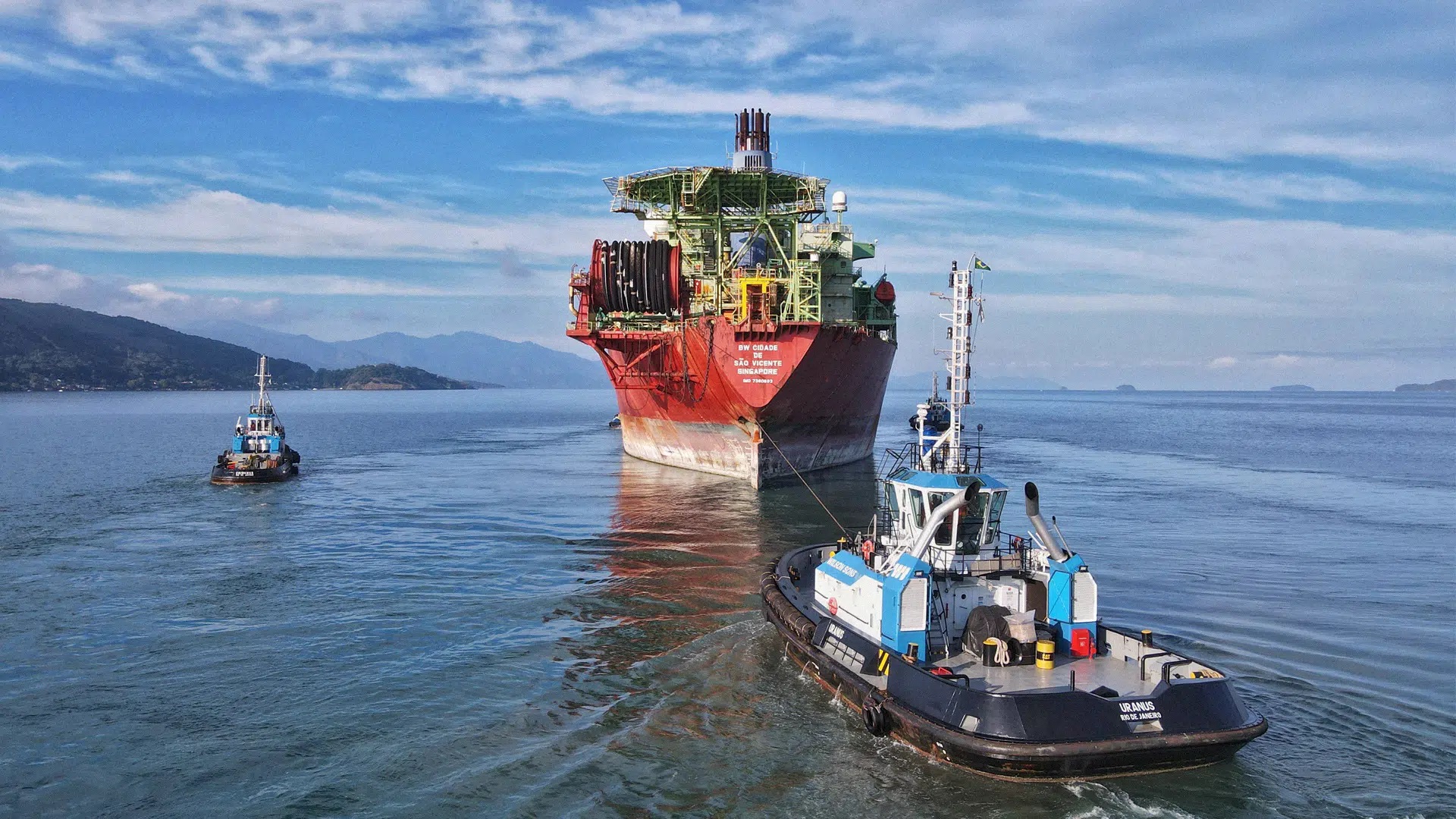
The Brazilian company services production units in the Campos, Santos, and Espírito Santo basins. In addition to continuous service contracts, the company participated in the mobilization and demobilization of FPSOs for the Brazilian pre-salt this year. Marcio Bragança, Operations Supervisor of Wilson Sons in Rio de Janeiro, states that these are “complex and very challenging operations,” made even more difficult by the pandemic.
The Norwegian BW Offshore is among Wilson Sons’ clients in the FPSO segment and operates a production unit in Brazil. Wilson Sons acted as manager and coordinator of all necessary procedures to obtain the respective authorizations from port authorities, also controlling all certificates and inspections, as well as assisting in the purchase of general materials and equipment.
Additionally, as a client of Wilson Sons for approximately ten years, BW Offshore also uses the company’s maritime support services of tugs. Leonardo Tannure, Supply Manager of BW Offshore, commented: “Wilson Sons’ experience and strength in the port and maritime market give us the necessary assurance for the scale of our operations. Along with trust in quality, the synergy between services streamlines communication, facilitates decision-making, and brings commercial benefits.”
Another FPSO Has Just Arrived in Brazilian Waters to Operate for Petrobras in the Mero Field
Petrobras announced this Tuesday that the FPSO Guanabara would be the first definitive system to operate in Mero, which is the third largest field in the pre-salt after Búzios and Tupi. In the coming months, the FPSO will be connected to the wells and subsea equipment, and final tests will be conducted before the first production, expected to occur in the first half of the year.
To recall, the first production was postponed in April 2021 due to construction delays of the FPSO caused by the Covid-19 pandemic. Japan’s MODEC was responsible for the engineering, procurement, construction, mobilization, installation, and operation of the FPSO Guanabara MV31, including topsides processing equipment and hull and marine systems.
The vessel was converted and integrated at the DSIC shipyard in Dalian, China. After leaving China, it stopped for about two months at the Drydocks World Dubai shipyard in Dubai, where the commissioning activities took place.