





 Portuguese
  English
  Spanish
  3 min of reading


Petrobras Maintains Its Technical Reputation Intact, According to Company President Jean Paul Prates. Even After Involvement in a Corruption Scandal Years Ago, the Company Continues to Invest in New Wind Energy Projects to Expand Clean Energy Production in the Brazilian Atlantic.
In a press conference during “Ceraweek by S&P Global 2023,” a global energy forum held in Houston, Texas, Prates stated that Petrobras has never lost any of its assets and has never had refineries exploding or damaging its pipelines, platforms, or production, which makes it consistent in its operations. Despite involvement in the corruption scandal, Petrobras remains firmly committed to investing in wind energy projects and other initiatives that can ensure sustainability in its activities.
Thus, the company continues to seek solutions that can guarantee the country’s energy sovereignty without compromising the environment. After facing challenges due to the corruption scandal, Petrobras, the Brazilian energy production company, aims to rebuild and maintain its reputation.
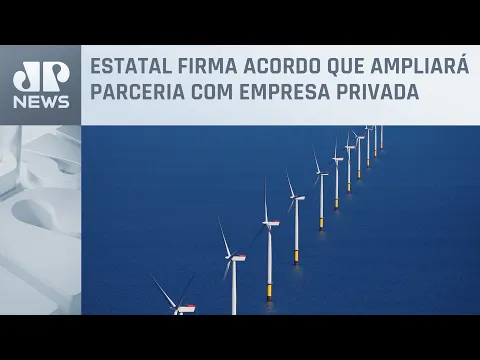
In an official announcement, the company president declared that the partnership with Norwegian Equinor to assess the execution of seven wind projects in Brazilian waters is an important step for Petrobras’ future. According to Prates, the company is committed to following the philosophy of doing the right thing, as well as decarbonizing its operations by 2050.
-
Renewable energy advances over protected areas in Brazil, and a survey by the Energy Transition Observatory reveals silent impacts that challenge environmental conservation and pressure sensitive traditional territories.

-
Rio Grande do Sul accelerates energy transition: State invests in renewable technologies and consolidates decarbonization strategies and pathways to attract billions in new industrial investments.

-
With 160,000 m² of collectors, an area larger than 20 football fields, Silkeborg, in Denmark, hosts a solar thermal plant that heats 19,500 homes and could become the largest solar heating plant in the world.

-
A study reveals the expansion of renewable energy procurement in Brazil and shows how companies are taking advantage of opportunities to reduce expenses, ensure energy efficiency, and strengthen strategic environmental commitments.


In this way, the company seeks to attract private investors to join it in this endeavor. Wind energy became part of the company’s strategic plan after Luiz Inácio Lula da Silva returned to power in 2023.
With a record profit of 188 billion reais in 2022, Petrobras expects to attract investor interest in this type of proposal. The partnership with Equinor is seen as a unique opportunity to establish itself in this promising market, with a generation potential of 14.5 GW.
Petrobras aims to maintain its position as one of the world’s leading energy production companies, proud of its team and reputation. “If there was an investigation that was done, it was difficult times, but we are back,” stated Prates.
Petrobras Shares Decline After Announcement of Interest in Offshore Wind Energy Projects in Partnership with Equinor
The Petrobras shares declined after the company’s announcement of interest in studies to evaluate investments in offshore wind energy projects in partnership with Norwegian Equinor. The market reacted negatively, with petr3 and petr4 shares retreating 2.10% and 1.81%, respectively. Other oil companies, such as prio and 3r, also recorded declines.
Genial Corretora changed its recommendation from “hold” to “sell” for Petrobras’ preferred stock after signing a letter of intent with Equinor to enhance cooperation between the companies in studying the economic, environmental, and technical feasibility of the seven offshore wind energy generation projects along the Brazilian coast, with the potential to generate up to 14.5 GW.
The company would have to invest up to R$ 130 billion in the coming years, which the brokerage sees as a challenging commitment from the perspective of generating value for shareholders. BTG Pactual assesses that the short-term impact is likely to be insignificant and that construction could take a long time to materialize, as there is no legislation regulating offshore wind farms in Brazil.
The forecasted capacity of 14.5 GW corresponds to 8% of the country’s installed capacity, which further highlights the potential magnitude of the projects. BTG remains cautious in light of uncertainty regarding capital allocation outside its traditional operations, which could reduce dividend payments. Analysts maintain a neutral recommendation for the shares.
Petrobras Evaluates New Wind Energy Projects on the Brazilian Coast










Seja o primeiro a reagir!