





 Portuguese
  English
  Spanish
  6 min of reading
  0 comments


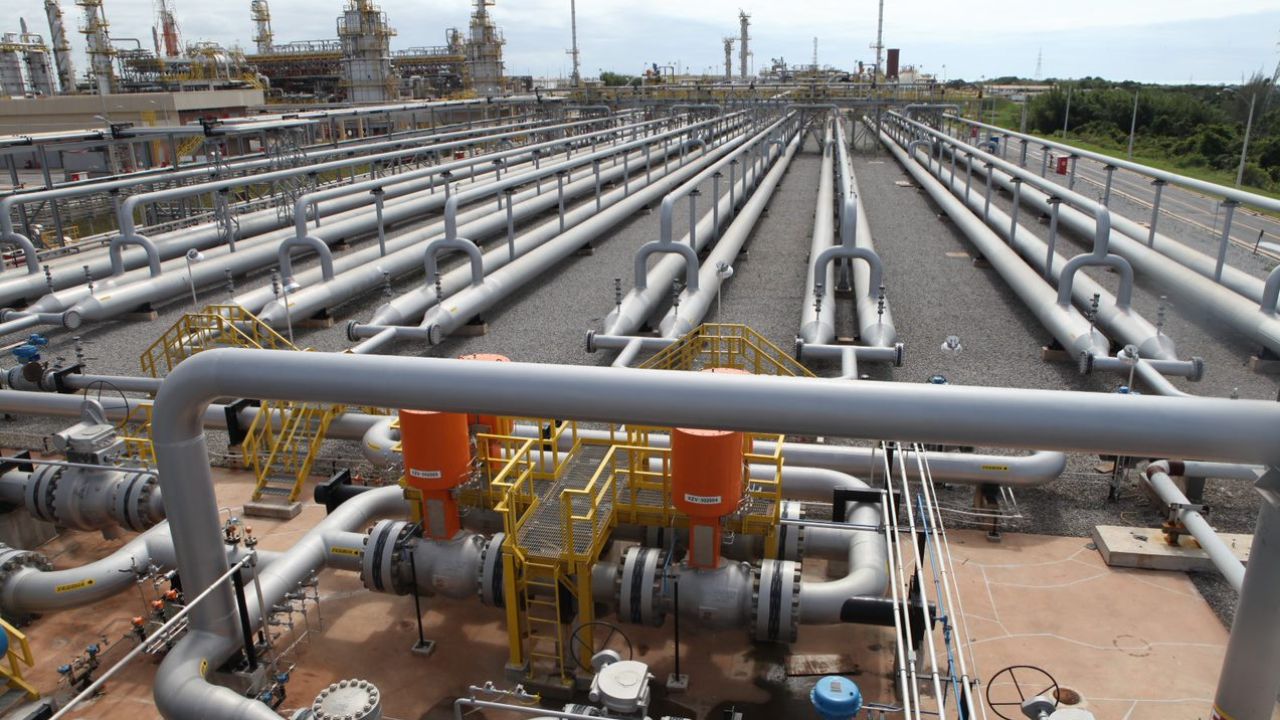
State-Owned Company Seeks Rebalancing of Transportation Costs to Enhance Competitiveness in the Free Natural Gas Market, Where It Promises to Be More Aggressive.
Petrobras advocates for equality in the division of costs for using the pipeline system. The state-owned company seeks greater competitiveness in the free natural gas market. The company has entered new industrial segments and promises a more aggressive stance. This discussion is central to the agenda of the Natural Gas Sector Monitoring Committee.
Petrobras’ Pursuit of Competitiveness in the Free Natural Gas Market
Petrobras has intensified its operations in the free natural gas market. The state-owned company targets industrial segments such as ceramics and paper and pulp, previously unexplored. The company promised a more aggressive approach in competition with private traders.
In parallel to its incentive award policy for demand, Petrobras hopes to gain competitiveness with a rearrangement of transportation tariffs. Maurício Tolmasquim, director of Energy Transition and Sustainability at Petrobras, requested equality in the division of pipeline system costs in relation to competitors. He believes that this factor, combined with the start of operations at the Boaventura processing unit and new products, will improve the company’s performance.
-
The rise in oil prices could ensure an extra revenue of R$ 100 billion for the Federal Government, indicates a recent economic study.

-
Naturgy begins an investment of R$ 1.6 million to expand the gas network in Niterói and benefit thousands of new residences and businesses.

-
A major turn in the Justice system suspends tax increases and directly impacts oil and gas companies in Brazil by affecting costs, contracts, and financial planning, leaving uncertain what could happen to the sector if these costs had increased.

-
Brava Energia begins drilling in Papa-Terra and Atlanta and could change the game by reducing costs in oil while increasing production and strengthening competitiveness in the offshore market.


“We have been talking, presenting data, explaining, and we expect that we can have a cheaper transportation tariff,” said Tolmasquim. According to him, this would increase the possibility of offering a better price in the free market. This statement came in the context of questioning the decline in profitability indicators for Petrobras’ Gas and Low Carbon Energies business in the first quarter of 2025, reflecting increased competition and the end of contracts for thermoelectric plants in the regulated market.
What Is at Stake in the Division of Pipeline Costs?
Tolmasquim argues that Petrobras’ competitors currently pay a transportation tariff “lower than it should be.” Gas transport companies are entitled to a Maximum Allowed Revenue. Before the market opened, this revenue was fully covered by contracts with Petrobras. With the entry of new players, the way this revenue is divided has changed, although its total value has not.
The revenues obtained by transport companies from contracting capacity to third parties are deducted from the amount Petrobras must pay. Therefore, the more other agents pay for using the system, the less Petrobras pays, and vice versa. The state-owned company understands that the tariffs paid by the market are calculated based on reference scenarios detached from the current dynamics of system use. Since Petrobras covers the difference between the amounts paid by competitors and the revenue owed to transporters, it claims to bear an overstated cost, which puts it at a competitive disadvantage. “We end up with a difference to pay that is greater, in our view, than it should be paid,” summarized Tolmasquim.
However, this is a relative disadvantage. Petrobras’ competitors are calling for measures to reduce the state-owned company’s dominant position and complain about the access costs to the infrastructure for transportation and processing operated by Petrobras itself.
Legacy Contracts and the Path to Tariff Equality
To understand the situation, it is necessary to analyze the legacy contracts. These were signed between Petrobras and the transporters (its former subsidiaries) before the new entry and exit contracting regime and the privatization of TAG and NTS. There are multiple contracts with maturities between 2025 and 2033, constituting the basis of the transporters’ revenues. In these contracts, Petrobras, as the original carrier, contracted all the available capacity of the NTS and TAG pipeline network.
After a commitment to the Administrative Council for Economic Defense (Cade) to open the market, Petrobras signed Agreements for Reduced Flexibility with TAG (2021) and NTS (2022). The legacy contracts granted the state-owned company great flexibility in injecting and withdrawing gas. With the agreements, Petrobras indicated its needs, releasing remaining capacity to the market. The transporters’ revenues were preserved, and Petrobras assumed the position of principal debtor of capacity reservation, paying for it even without fully utilizing it at all times. A counterpoint in this discussion is that by privatizing the transporters, Petrobras would have priced this cost into the value of the assets sold.
The Ministry of Mines and Energy (MME) announced that it is structuring a delivery block for the transportation sector. One of them is the adaptation of the legacy contracts to the entry and exit model, as provided for in the Gas Law of 2021. This could lead to the standardization or harmonization of tariffs between Petrobras (under legacy contracts) and third parties. The tariff review of the transport companies in 2025 and the expiration of the first legacy contracts at the end of the year are seen as a window for this re-discussion.
The Impacts of Equality and Petrobras’ Expansion in the Free Market
The coexistence with legacy contracts adds complexity to the opening of the market, something also undesirable for Petrobras’ competitors. There is no uniform opinion among private agents regarding the equality of system costs. On one hand, the measure has competitive effects, potentially increasing the weight of private agents in the division of the pie. On the other, there is a perception that this discussion could help provide more stability to tariffs. Petrobras’ current lower propensity to reserve capacity in the system has affected the capacity offering processes of transport companies.
Meanwhile, Petrobras is advancing in the free market. The company announced two new contracts: one with Portobello, in Santa Catarina, in the ceramics sector (which has the largest number of free consumers), and another with Suzano, for five paper and pulp units in São Paulo. The latter marks Petrobras’ debut in the São Paulo free market. Thus, Petrobras diversifies its operations, previously focused on the steel industry, with clients such as Gerdau, CSN, Ternium, ArcelorMittal, and Usiminas, as well as contracts in the refining (Mataripe Refinery) and fertilizers (Unigel) sectors.
Petrobras Responds to Competition with New Commercial Policy
The entry of new competitors has led to a deconcentration in the gas market, although Petrobras maintains its dominant position and has launched a counter-attack. In response, the state-owned company launched a new commercial policy, the “demand incentive award.” It began offering discounts on the price of gas for volumes above the minimum commitment (take-or-pay), which is the volume most sensitive to gas spot market arbitrations.
“This [entry of competitors] presents the challenge of acquiring new customers. To this end, we have implemented a very aggressive policy of competitive pricing that has been effective,” said Tolmasquim. He added: “We consider that we are prepared. We will continue launching new products to capture a larger share of the market.” The expectation is that the migration of industrial consumers to the free natural gas market will continue to accelerate in 2025. In fact, a survey by the Eixos agency, based on public data from ANP, shows that the number of industries that migrated to the free market has more than doubled in the past six months, with at least 47 active industrial clients in the free market by March, supplied by 11 different traders.
Other Relevant News from the Gas and Energy Sector
The gas sector is closely following the draft regulatory decree for biomethane, which is under public consultation. Petrobras, in turn, advocates austerity and seeks to simplify the SEAP project (Sergipe Deep Waters), in addition to confirming the expectation of resuming operations at the fertilizer plants in Sergipe and Bahia starting in October.
In the electric sector, the Electric Sector Monitoring Committee (CMSE) approved the anticipation of the operations of ten thermoelectric plants. The Brazilian government also signed commercial agreements in the gas sector with Russia (Novatek) and China (CNCEC). Other topics on the agenda include the tariff review of transport companies, a point of concern expressed by TBG’s president, Angélica Laureano, in an interview with the Eixos studio during the IBP Natural Gas Seminar, the increase in gas supply in Campos with the Wahoo field (PRIO), the potential for growth in Brazilian gas demand, and the consolidation of the spot market, topics also discussed in depth at the Eixos studio with various industry experts.








Seja o primeiro a reagir!