





 Portuguese
  English
  Spanish
  6 min of reading
  0 comments


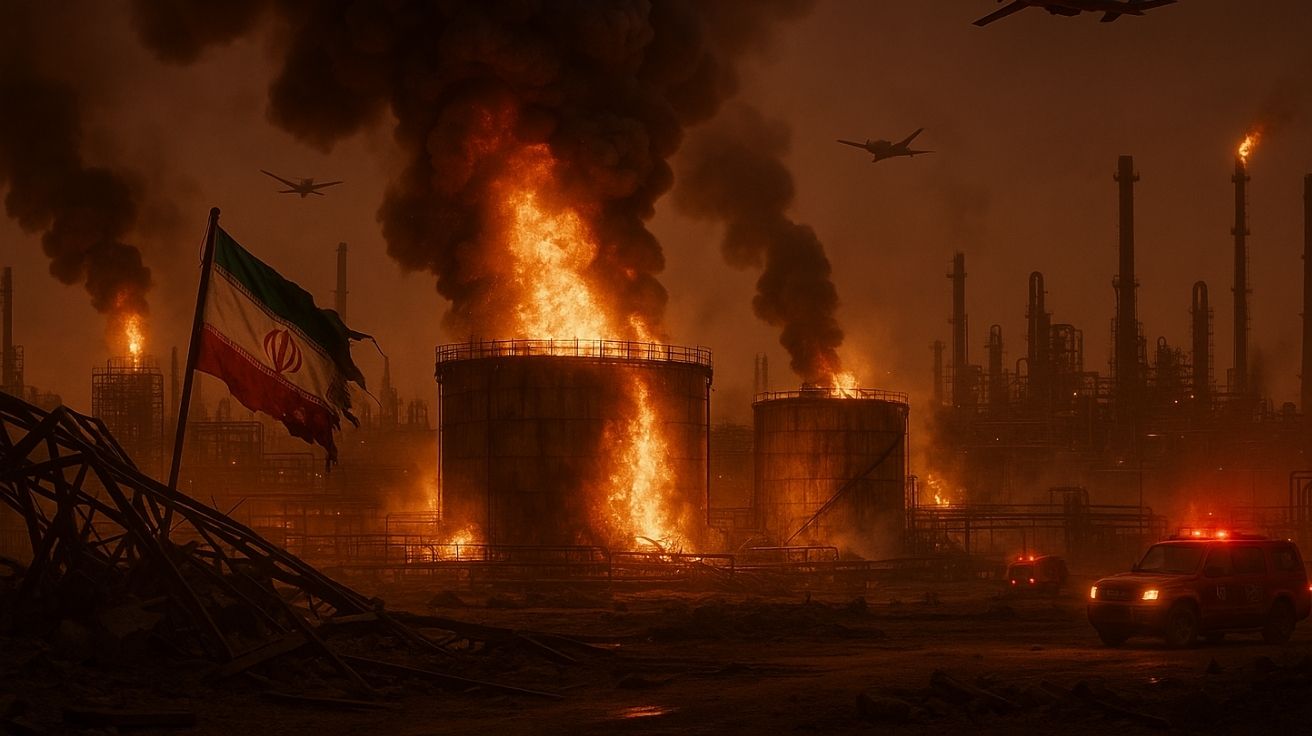
Direct Conflict Between Israel And Iran Triggers Explosions In Refineries, Missile Launches And Immediate Increase In Oil Prices; Markets Fear Global Energy Collapse
The price of oil rose sharply in the international market following the Israeli bombings on Iranian soil, recorded on Friday, June 13, 2025. The main global benchmarks, Brent and WTI, rose by 4.4% and 4.3% just on the 17th, reaching US$ 76.45 and US$ 74.84 per barrel, respectively. The next day, the increase continued and was already approaching a cumulative 13% since the start of the attacks.
According to Al Jazeera and experts consulted by the American press, the possibility of a broader conflict involving the United States and the risk of blockage of the Strait of Hormuz have raised fears about global supply. Although the facilities on Kharg Island have not yet been hit, the risks are increasing. Military tension and damage to refineries, such as that in Shahr Rey, heighten the perception of scarcity.
ARTICLE CONTINUES BELOWSee also
Brazil Ignores Trump’s threats to BRICS, Buys 42 tons of gold and reduces the Dollar’s share by 6.45% in international reserves.

Havan buys historic football land in Blumenau for a million-dollar amount protected by a confidentiality clause and is already planning to change even the layout of streets to build a megastore in half-timbered style costing 80 million reais.

Mercado Livre “opens the vault” and announces a record investment of R$ 57 billion in Brazil in 2026, a value 50% higher than the previous year, with an expansion plan that includes 14 new logistics centers, totaling 42 units in the country and hiring an additional 10,000 employees.
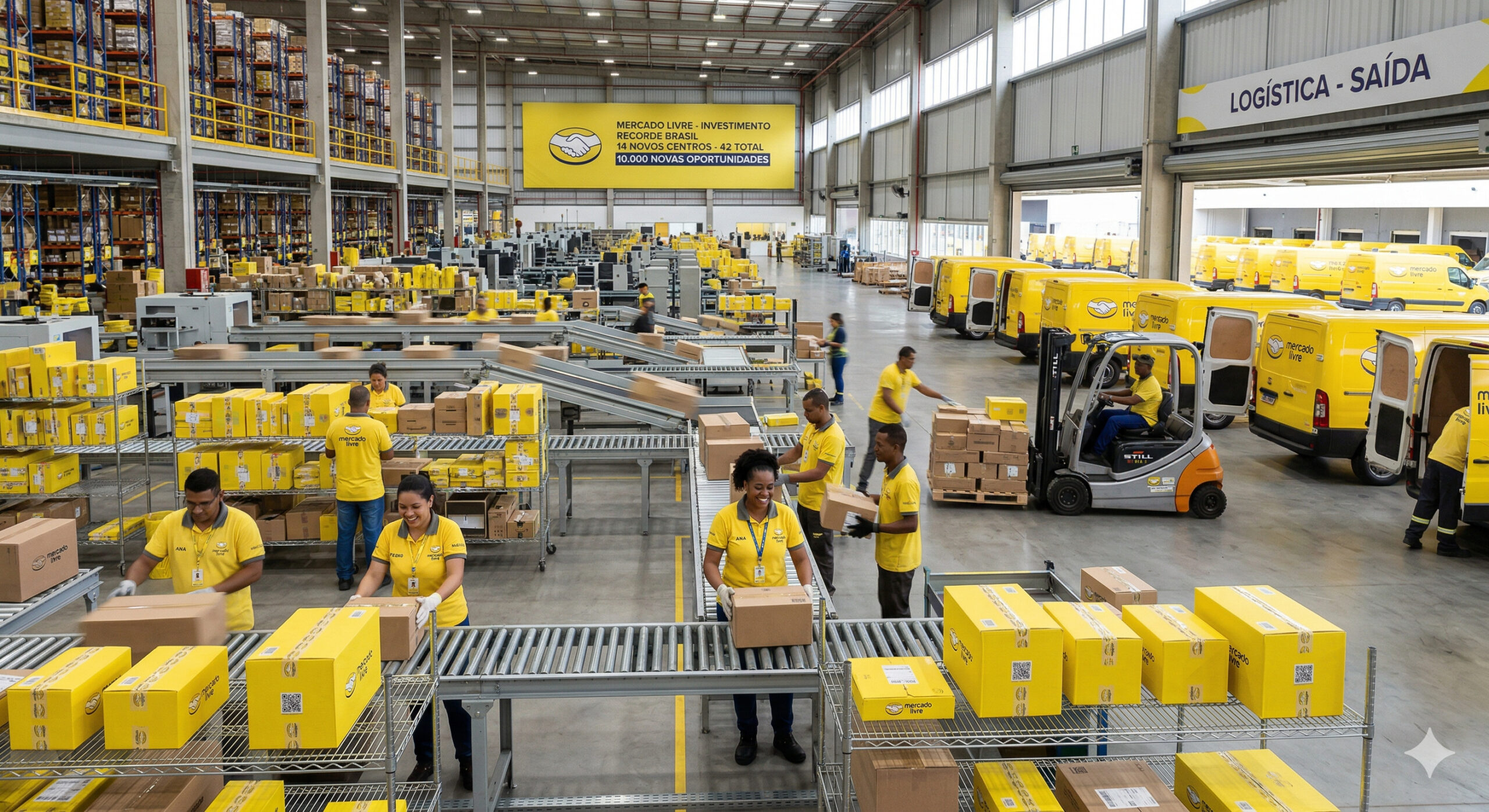
How investment in technology can revolutionize the national economy and enhance industrial gains, according to a study that highlights the direct impact on productivity, innovation, and wealth retention within Brazil.

Strait Of Hormuz At Risk: Blockade Could Affect Up To 30% Of Global Oil Flow And Cause International Logistical Collapse
The main concern surrounding the Middle East crisis is the possibility that Iran could retaliate with a blockade of the Strait of Hormuz, responsible for 20% To 30% Of All Oil Exported In The World. The region is considered strategic not only for OPEC countries but also for economies like China, Japan And The European Union, which depend on free transit to ensure their energy stocks.

Experts like Thomas O’Donnell, affiliated with the Wilson Center, assert that a direct attack on Kharg Island or an attempt to close the strait would be interpreted as acts of war against the global economy. O’Donnell emphasizes that Iran could also target Saudi refineries as a strategy for maximum retaliation.
Even though Iranian production accounts for about 4% Of Global Supply, the mere possibility of scarcity and the speculative impact on futures contracts already generate global volatility. The financial market responded with an immediate drop in major U.S. indices.
History shows that similar situations, such as the Gulf Wars or the Arab embargoes of the 1970s, caused global energy crises and severe recessions. With supply chains already pressured by the energy transition and previous conflicts, the world may face new supply shocks.
The closure of Hormuz or the loss of relevant refineries in Iran would lead to increased shipping costs, revisions in export routes, and possible military interventions to ensure the fluidity of trade.
Israeli Bombings Hit Iranian Energy Infrastructure And Drive Up Oil Prices In Futures Markets
Since the night of June 13, 2025, Israel has bombed several oil and gas facilities in Iran, including the South Pars Complex, the Shahr Rey refinery, the Shahran depot, and the Fajr Jam plant. The offensive also targeted facilities near Tehran, raising fears about permanent structural damage to Iran’s energy system.
Although the International Atomic Energy Agency (IAEA) has confirmed damage to nuclear infrastructure, the immediate impact has been most felt in the commodities market, with futures contracts rising sharply due to uncertainty.
Overall, Iran produces about 3.99 million barrels of oil per day, exporting most via Kharg Island. Analysts believe that any attack on this key logistical point could generate severe imbalances.
Tensions escalated after U.S. President Donald Trump demanded “unconditional surrender” from Iran and declared he knows the location of Ayatollah Ali Khamenei, an indirect threat to eliminate the supreme leader.
The next morning, more than 100 Iranian drones were launched against targets in Tel Aviv, most intercepted by the Iron Dome system, according to Israeli sources.
This cycle of attack and retaliation has amplified uncertainties and caused a domino effect in markets. The tech sector fell more than 0.9% on the Nasdaq, and the S&P 500 index dropped 0.84%.

OPEC Strategic Reserves May Not Be Enough To Contain Global Impact Of The Crisis Between Israel And Iran In 2025
Although analysts like Clayton Seigle from CSIS believe that the OPEC can compensate for the decline in Iranian production, the ability to respond immediately is limited. The reason lies in the need for logistical redistribution, internal political approval from the countries, and activation time of wells.
The U.S. could also mobilize its independent producers, the so-called “frackers,” but the costs and production time increase the risk of temporary shocks. The market, sensitive to risk perception, reacts in advance.
An even more critical scenario would be the extension of the conflict to Gulf countries and the involvement of Iran-aligned militias, such as Hezbollah, creating a multiple attack front. This could compromise the production of Saudi Arabia and the United Arab Emirates.
Thus, even if global production is not compromised at the moment, contracts are already pricing in the geopolitical risk, leading to speculative rises. Countries like China and India have begun to revise their strategic stock policies.
The fear is that if the conflict prolongs or escalates, replenishing reserves and normalizing trade flow may not be sufficient to meet global demand. This would pave the way for a new era of instability in oil prices.
Arms Race Between Israel And Iran Amplifies Instability And Transforms Oil Into A Strategic Weapon Of War In 2025
The military clash is not limited to the battlefield. Both Israel and Iran utilize their energy capabilities as instruments of international pressure. While Israel bets on technology, alliances, and surgical precision, Iran plays with the volume, strategic location, and resilience of its underground infrastructure.
Data from Global Firepower 2025 indicate that Iran possesses the 3rd Largest Oil Reserve and the 2nd Largest Natural Gas Reserve In The World. Nevertheless, its exports have been limited by U.S. sanctions. This makes any loophole in the blockade highly valuable for the country.
Israel, on its part, explores fields in the Mediterranean, but relies on partnerships with the U.S. and European countries to secure its supply. Therefore, its focus is on neutralizing enemy infrastructure before it becomes a direct threat.
In the current scenario, oil is a central part of the geopolitical game. Attacks on refineries, sabotage, and threats to transportation are ways to force negotiations or pressure enemies.
If Iran opts for total retaliation, it is likely to target the energy infrastructure of Israeli allies. This includes Gulf countries and possibly the Suez Canal, through which a significant portion of exports to Europe passes.
Outlook For 2025: Volatility, Oil Above US$ 100 And Risk Of Global Energy Crisis Become Increasingly Likely
The persistence of the conflict between Israel And Iran may push the price of oil back above US$ 100, as seen in previous crises. The combination of political instability, retaliation, and damage to infrastructure is a classic catalyst for energy shocks.
Global markets are attentive to every new attack or statement, reacting swiftly on stock exchanges and commodity contracts. The risk of U.S. intervention, in addition to escalating the conflict, may make the militarization of trade routes inevitable.
Governments and energy companies are reviewing their projections for the second half of the year. The International Energy Agency is expected to issue a new alert regarding stocks and supply stability.
Experts warn that even if the conflict is contained, the damage already caused has had a lasting psychological effect on the market, which could keep prices elevated for months.
The key word in this scenario is oil price, becoming not just an economic indicator but a direct reflection of global security in times of war.
In the worst-case scenario, a prolonged escalation could lead to recession, fuel shortages, and disorganization of logistical chains in various regions of the planet.








-

Uma pessoa reagiu a isso.