





 Portuguese
  English
  Spanish
  4 min of reading
  0 comments


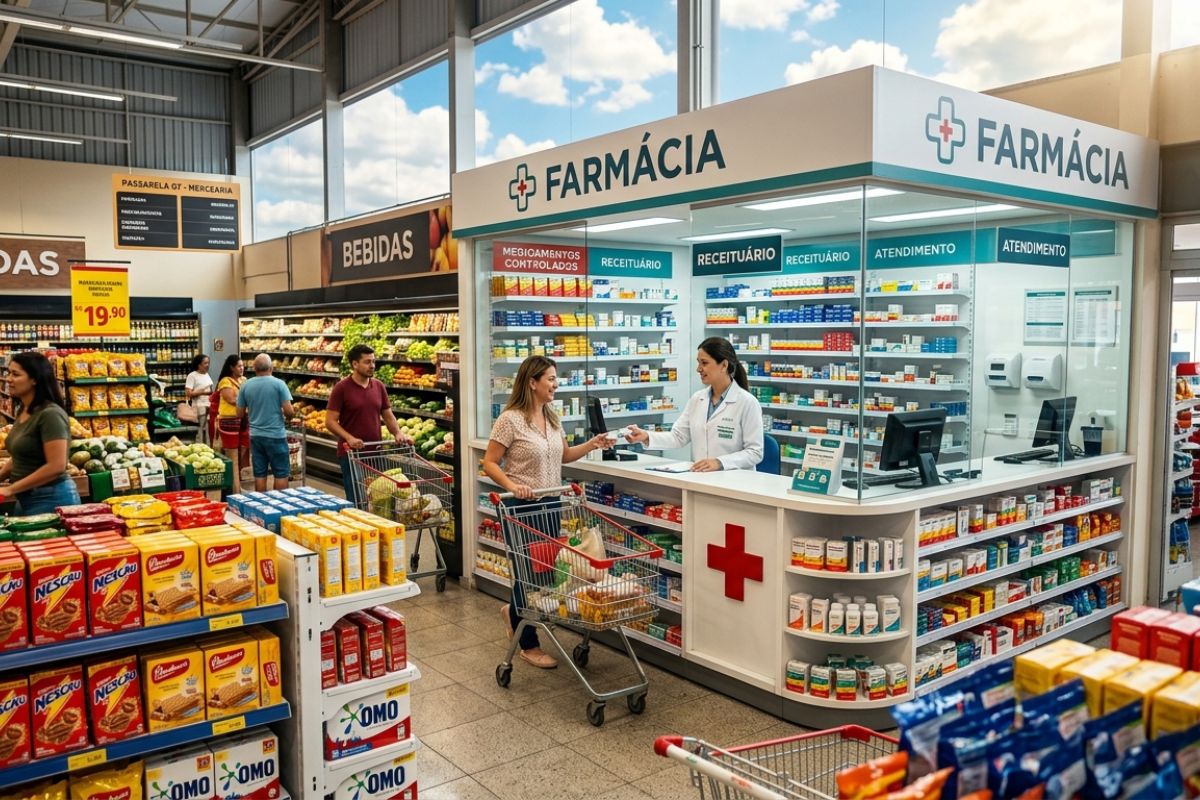
The new law authorizes pharmacies inside supermarkets across the country, but requires a separate space, a mandatory pharmacist, controlled storage, strict sanitary rules, and sales restricted to the counter.
The pharmacy inside the supermarket has been authorized by the federal government nationwide, with the aim of increasing access to medications and providing more convenience to consumers. However, this change does not mean that medicines will appear mixed with food or hygiene products on the shelves.
In practice, the pharmacy will operate within the supermarket’s sales area, but as a separate service, following strict sanitary rules, with technical assistance, a responsible professional, and specific storage conditions to ensure safety in sales.
What the new law allows regarding pharmacies inside supermarkets
The legislation authorizes the installation of pharmacies and drugstores within supermarkets, including in the sales area. The goal is to make life easier for consumers, allowing them to address more than one need in the same location, without extra trips.
-
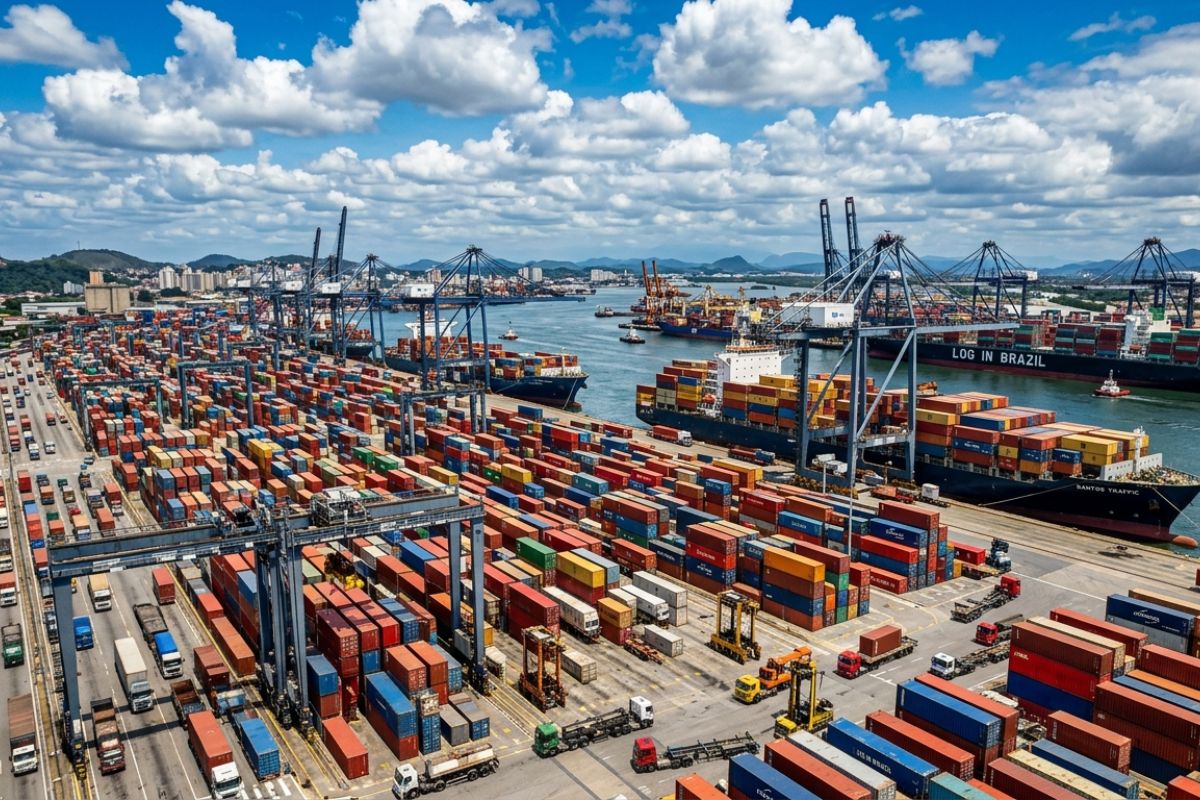
Ports like Santos and Paranaguá are operating at their limits and may block containers as early as 2030, warns a study by Macroinfra; bottlenecks increase costs and delays and push cargo to Rio, Salvador, Pecém, and Suape across Brazil.
-
Lula reveals in an interview that he asked President Xi Jinping three times to invest in a major project in Brazil, the Salvador-Itaparica bridge, which is set to begin in June with the participation of a Chinese consortium and is expected to be extraordinary, according to the president.

-
Neighboring city of Belo Horizonte has properties starting at R$ 139,000 with 90 m² and a price per square meter much lower than the capital, even concentrating automotive, petrochemical, and logistics hubs.

-
Drought in northern Bahia forces family farmers to invest in expensive irrigation and seek microcredit from Banco do Nordeste; with high interest rates and a default rate of 6.5%, the debt becomes a threat to the crops.


Even with this authorization, the operation does not turn into a “medicine aisle” within the store. The pharmacy must exist as an exclusive point, with technical standards similar to those of a traditional drugstore, preserving the logic of specialized service.
What does not change with the pharmacy in the supermarket
The change is in the location, not in the requirements. The pharmacy remains subject to sanitary rules and a service model that requires control and technical responsibility.
This means, in practice:
Medications continue to be sold inside the pharmacy, not at the supermarket checkout;
Prescription medications remain controlled when necessary;
Service continues to be provided by a qualified professional, not by supermarket employees.
Why medications will not go to the supermarket shelves
The new rule does not allow the sale of medications outside the pharmaceutical space. In other words, the pharmacy remains the only authorized location to display and sell these products within the supermarket.
In practice, medications cannot be placed on common shelves or mixed with other items. Sales remain concentrated in the pharmacy, with control when a prescription is required and with appropriate guidance for the consumer. The idea is to maintain safety and traceability, avoiding impulse purchases or inadequate storage.
Rules that remain strict: what continues to be mandatory
Despite the flexibility in the installation location, sanitary requirements remain firm. To operate within the supermarket, the pharmacy must comply with specific norms, focusing on safety, preservation, and quality of service.
Among the main mandatory points are:
Separate and identified physical space
The pharmacy must have an exclusive area, properly signposted and isolated from other sections. This prevents the mixing of products and reinforces control over service.
Presence of a pharmacist during all operating hours
The pharmacist is mandatory to guide the consumer, reinforce safe use, and ensure that sales follow technical standards. Without a pharmacist, there is no regular pharmacy operation.
Storage control
Medications must be kept under appropriate temperature and preservation conditions. This reduces the risk of loss of efficacy and quality issues related to excessive heat or inadequate storage.
Full compliance with sanitary regulations and requirements from health authorities
The pharmacy must follow applicable regulatory rules, just like any drugstore, even when located inside the supermarket.
How the pharmacy can operate within the supermarket
The pharmacy can operate in two main ways, depending on the model adopted:
Operation by the supermarket itself
The supermarket directly manages the service, taking on the management, hiring of pharmacists, and legal obligations.
Partnership with pharmaceutical networks
The supermarket partners with a specialized network, which takes over the operation and maintains the standard of a traditional drugstore, simply installed within the market.
In both cases, the central rule does not change: the pharmacy must meet all legal requirements and obtain licenses from the relevant regulatory bodies. The consumer does not buy medicine “at the supermarket,” they buy it at the pharmacy located within it.
What changes for the consumer at the time of purchase
The main change is convenience. With the pharmacy inside the supermarket, the consumer can buy medications and everyday items in the same place, reducing trips and making routines more practical.
Additionally, the measure is likely to stimulate competition in the sector. This could generate more service options, potential improvements in service, and an expansion of pharmaceutical offerings, as long as the pharmacy maintains sanitary rules as the foundation of its operation. Convenience increases, but safety remains the core of the model.
How to identify a regular pharmacy inside the supermarket
For the consumer, some signs help to understand if the operation is following what the law requires:
- there is a separate and well-identified space as a pharmacy
- there is a pharmacist present during operating hours
- service takes place within the pharmacy area, not on common shelves or checkouts
- medications are kept under proper custody and preservation, not exposed as common products
These points reinforce the difference between convenience and improvisation. A pharmacy inside the supermarket only makes sense when it maintains technical standards.
Do you see more advantage in the pharmacy inside the supermarket for convenience, or do you think this could hinder receiving guidance and purchasing calmly?
With information from: Gov.br








Seja o primeiro a reagir!