Portuguese
 Spanish


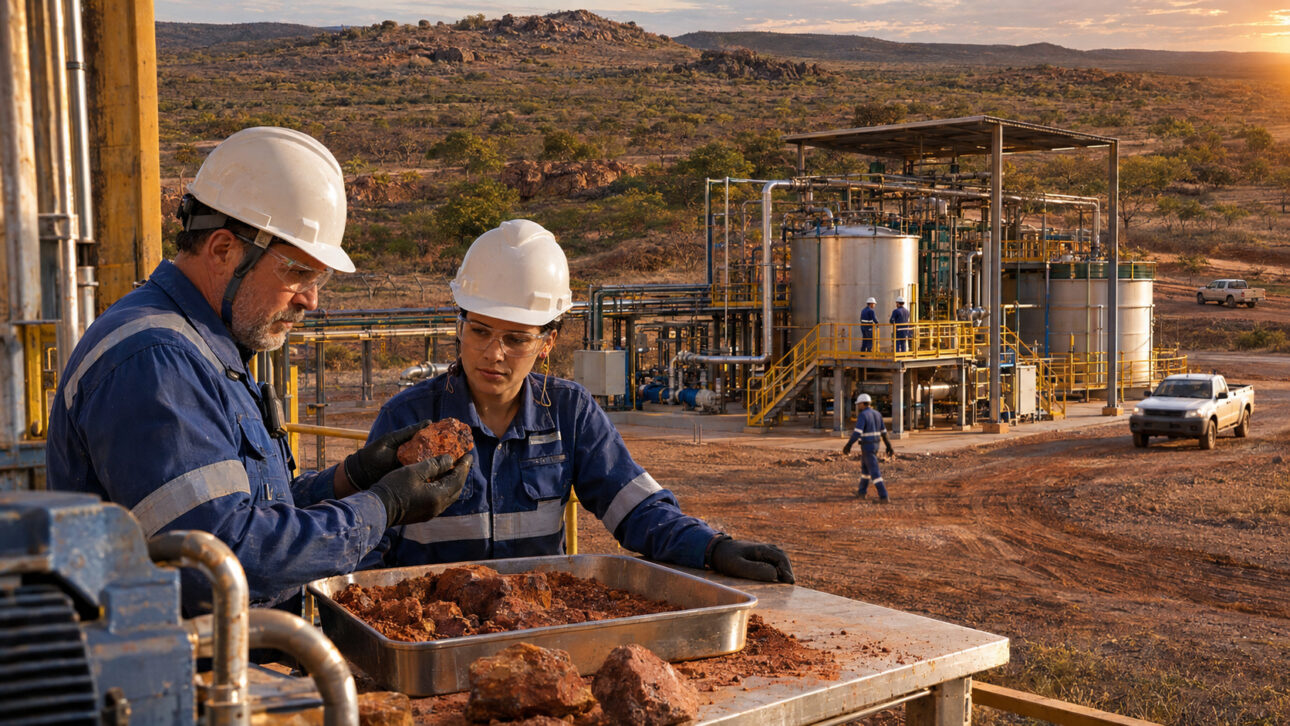

Brazilian Nickel’s $1.4 billion project aims to turn southern Piauí into a hub for strategic minerals. The project has received approval for R$100 million in financing from BNDES, Brazil’s state development bank, and plans to expand operations starting in 2030.
A mining project valued at $1.4 billion in Piauí could produce 27,000 metric tons of nickel and 900 metric tons of cobalt a year, strengthening Brazil’s supply of raw materials used in the automotive, steel and battery industries. Developed by Brazilian Nickel, the project is located in Capitão Gervásio Oliveira and received approval for R$100 million in financing from BNDES, Brazil’s state development bank, according to an official announcement dated July 13, 2026, reported by Radar Capex on November 21.
The initiative is part of the Piauí Nickel Project, which aims to expand the extraction and processing of strategic minerals in northeastern Brazil.
However, large-scale production has not yet begun. The company still needs to finalize its financing arrangements and make a formal final investment decision.
-
Canadian miner negotiates $135 million purchase of Pará gold mine, targets annual production of 110,000 ounces

-
Ceará’s R$2.5 billion uranium and phosphate project advances after Funai decision but still awaits environmental approval from Ibama
-
BYD discusses investments in Brazil’s Minas Gerais state, focusing on lithium processing and battery manufacturing
-
BHP to invest up to US$17.4 billion in doubling South Australia’s copper output to 650,000 tons annually by 2040

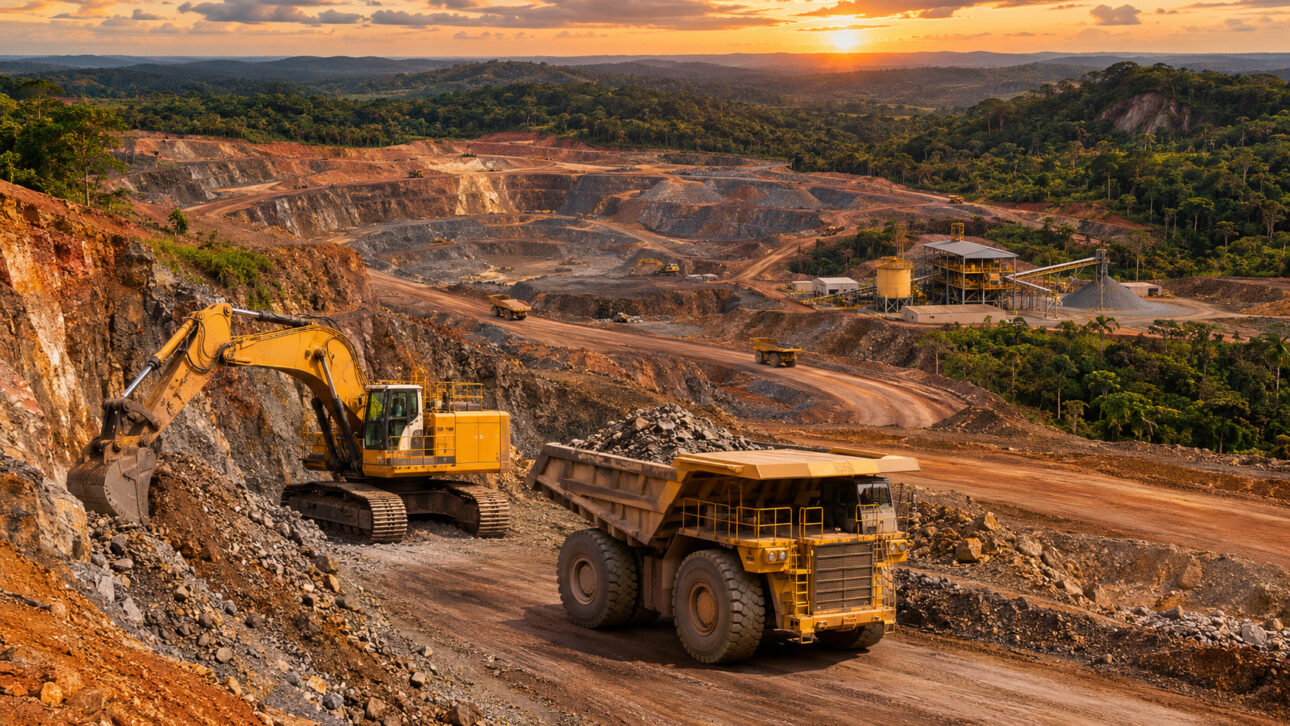
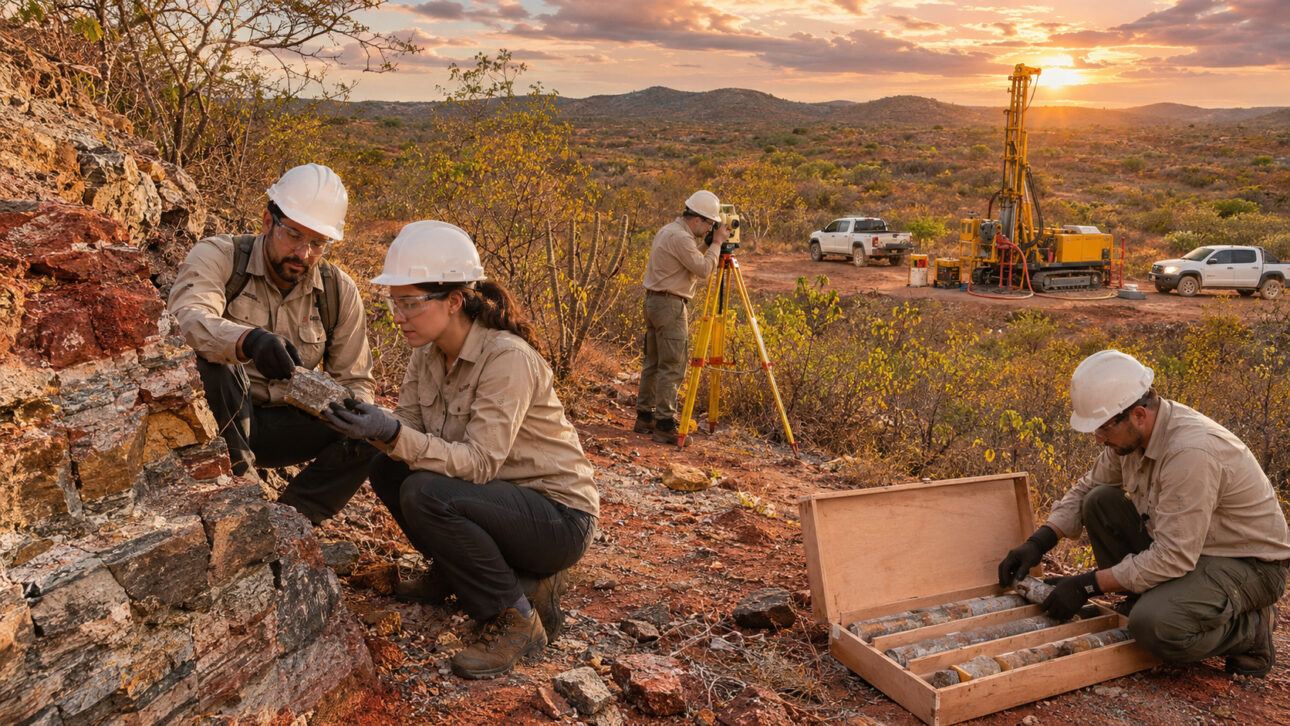


Piauí mineral complex could produce nickel and cobalt for batteries, electric vehicles and steelmaking
The project is in the Brejo Seco area of Capitão Gervásio Oliveira, about 530 kilometers from Teresina.
The area contains deposits of lateritic ore, which holds nickel and cobalt in geological formations created by rock-weathering processes.
The planned facility is designed to produce 27,000 metric tons of nickel and 900 metric tons of cobalt a year.
The company is also developing a mineral-processing technology based on heap leaching, a method that extracts metals by percolating a chemical solution through ore piled on prepared pads.
In this process, the ore is crushed and agglomerated before being moved to prepared structures for chemical treatment.
A controlled solution then flows through the material, allowing the metals it contains to be recovered.
The process continues with purification and precipitation steps, producing a material known as mixed hydroxide precipitate, or MHP.
The MHP is expected to contain an average of 48% to 50% nickel and about 2% cobalt.
This material is an intermediate product in the industrial supply chain. It is not a finished battery or fully refined metal.
After further processing, the nickel could be used to make components for lithium-ion batteries.
Nickel is also widely used to make stainless steel and metal alloys for a range of industrial applications.
Cobalt is used in some battery technologies, aerospace equipment and specialty materials.
Brazilian Nickel says heap leaching can use less energy than some conventional processing methods.
The company also points to water recirculation and the absence of conventional tailings dams at the project.
These features do not eliminate the environmental risks associated with mining and chemical treatment of the ore.
BNDES approves R$100 million for equipment as project seeks international financing
The project received a financial boost in July 2026, when BNDES approved R$100 million for Piauí Níquel Metais, a wholly owned subsidiary of Brazilian Nickel.
The funding comes from the BNDES Machinery and Services credit line and can be used to buy machinery, industrial systems, electronic equipment and automation components.
The financing also covers domestic services and certain imported equipment that has no equivalent available in Brazil.
The project was also selected through a public funding call by BNDES and Finep, Brazil’s innovation and research funding agency, focused on processing strategic minerals.
The initiative aims to increase the Brazilian industry’s role in processing, reducing reliance on exports of minimally processed raw materials.
As a result, the project could create opportunities for engineering, electromechanical assembly, instrumentation and mineral-processing equipment suppliers.
However, approval of R$100 million does not mean the entire project is financed.
In June 2026, Brazilian Nickel Chief Financial Officer André Simão told CNN Brasil that the company was seeking an anchor investor.
The goal was to raise enough capital to build the expanded operation, then estimated to cost US$1.4 billion.
The company is also considering financing options with international institutions.
One appears in documentation from IDB Invest, the private-sector arm of the Inter-American Development Bank, which lists a proposed structured financing package of up to US$415 million, subject to review and approval.
The IDB Invest document puts the total project cost at approximately US$1.5 billion, above the US$1.4 billion figure disclosed earlier.
The two figures therefore reflect estimates presented at different times and in different documents.
Company moves production startup to 2030 and plans to expand mining operations in northeastern Brazil
The expected startup date has also changed.
In July, a statement from BNDES, Brazil’s development bank, said production would begin in 2028, with full operations expected in 2029.
However, Brazilian Nickel’s updated website lists 2030 as the expected date for first production from the expanded operation.
The company also projects average annual output of approximately 28,000 metric tons of nickel and 1,000 metric tons of cobalt.
Those figures are slightly higher than the ones released by BNDES and reflect the company’s latest estimates.
Brazilian Nickel also says the project has the permits required for construction.
The next milestone will be a Final Investment Decision, which would allow the company to move forward with financial commitments and industrial construction.
The region has hosted a smaller-scale commercial operation since 2022. The multibillion-dollar expansion would therefore not be the first mineral-processing activity at the site.
The project submitted to IDB Invest also calls for crushing facilities, sulfuric acid production and hydrometallurgical processing.
Plans call for processing approximately 3 million metric tons of ore per year once the expanded operation reaches its full industrial capacity.
However, IDB Invest classifies the financing as a proposal and identifies potential significant environmental and social impacts that remain subject to assessment.
Construction could also boost the regional economy through service contracts, materials supply and workforce training.
However, the company has not yet confirmed a final job-creation figure for the expansion.
Brazilian Nickel plans to sell its products into international industrial supply chains, including markets seeking to diversify their sources of critical minerals.
The project will depend on completing financing negotiations, reaching a Final Investment Decision and meeting the requirements for large-scale operations.