Portuguese
 Spanish


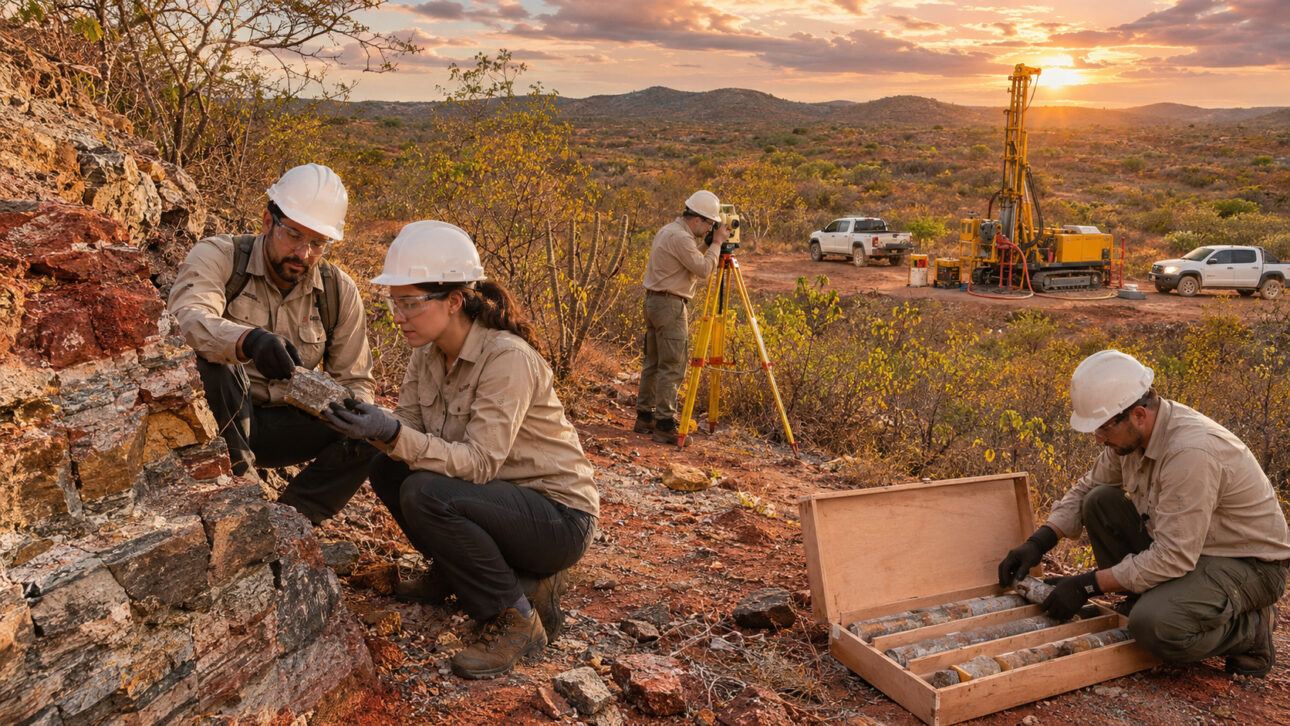

Santa Quitéria Consortium plans to produce fertilizers and uranium concentrate from the Itataia deposit, with operations slated to begin in 2031. A change in Funai’s position cleared one hurdle, but environmental permits and disagreements between the companies remain outstanding
The Santa Quitéria Project, a uranium and phosphate mining venture valued at R$2.5 billion, is back at the center of discussions about industrial investment in Ceará state. The initiative gained momentum after the National Foundation for Indigenous Peoples (Funai), Brazil’s Indigenous affairs agency, revised its position in August 2026 on the need for specific studies concerning nearby Indigenous communities. However, mining still requires environmental and nuclear permits, according to a survey published by Radar Capex on November 25, 2026.
The project brings together state-owned Indústrias Nucleares do Brasil (INB), Brazil’s nuclear industries company, and Galvani through its subsidiary Fosnor. The plan is to turn the Itataia deposit into a domestic source of fertilizers and uranium concentrate.
The project could also spur activity across the mining, equipment, infrastructure and specialized services industries if it receives the required authorizations.
-
BYD discusses investments in Brazil’s Minas Gerais state, focusing on lithium processing and battery manufacturing

-
BHP to invest up to US$17.4 billion in doubling South Australia’s copper output to 650,000 tons annually by 2040

-
Brazil’s Geological Survey projects R$10.1 billion in social returns for 2025, with R$14.47 in benefits for every real invested
-
Rare earths cost nearly 11 times more in the United States than in China, fueling competition for Brazilian mineral projects


Itataia mine could produce 1.05 million metric tons of fertilizers and 2,300 metric tons of uranium concentrate a year
The Santa Quitéria Project is located at Itataia Farm in the municipality of Santa Quitéria, in the interior of Ceará state.
The deposit contains phosphate and uranium, two mineral resources with different economic uses.
Phosphate is used to make agricultural fertilizers and animal feed supplements, while uranium is part of the nuclear fuel supply chain.
INB says the future operation could produce 1.05 million metric tons of phosphate fertilizers a year.
The plan also includes annual production of 220,000 metric tons of dicalcium phosphate, which is used in animal nutrition.
Uranium concentrate production is estimated at 2,300 metric tons a year, for Brazil’s nuclear industry.
These figures represent the project’s planned capacity, not production that has already begun.
The project is also significant for efforts to diversify Brazil’s supply of mineral inputs.
Brazil currently relies on imports to meet a substantial share of demand for fertilizers used in agribusiness.
That is why building new phosphate production facilities is part of a strategy to increase domestic supply.
In the nuclear sector, INB says the deposit could strengthen the supply of raw material for the Angra dos Reis power plants.
However, the concentrate produced will still need to go through the other industrial stages of the nuclear fuel cycle.
The R$2.5 billion investment figure comes from the Radar Capex survey. Other sources cite estimates of R$2.3 billion or about R$3 billion, depending on the date and reference used.
The figure should therefore be treated as an estimated investment, not an amount that has already been fully spent.
Funai changes position on Indigenous impacts, but Ibama still must review the mine’s environmental license
The main recent development came after Funai revised its position on Indigenous communities’ participation in the environmental licensing process.
In 2025, the agency had requested additional studies to assess potential impacts on Indigenous peoples living near the project area.
However, in July 2026, the agency’s leadership concluded that the available documents did not, at that time, justify requiring a specific study of the Indigenous component.
The decision drew public attention in August.
Funai, Brazil’s Indigenous affairs agency, says the nearest Indigenous community is approximately 20.5 kilometers from the project, beyond the reference distance normally used for its involvement in this type of environmental licensing.
The agency also acknowledged that it could reassess its position if new technical evidence emerges.
The Federal Public Defender’s Office (DPU), meanwhile, supports free, prior and informed consultation with potentially affected Indigenous peoples.
The institution has raised concerns about water supplies, community health and possible impacts on traditional territories.
It has also questioned the separate review of water supply infrastructure connected to the project.
Thus, Funai’s change in position does not amount to final authorization to build or operate the mine.
The Brazilian Institute of Environment and Renewable Natural Resources (Ibama), Brazil’s environmental agency, still needs to complete its environmental assessment.
At the same time, the National Nuclear Safety Authority (ANSN) is conducting the licensing steps related to nuclear activities.
Brazil’s state-owned nuclear company INB says the project has undergone technical changes to reduce its projected impacts.
In May 2026, the state-owned company said the changes had allowed it to cut projected water consumption by about 20% and the area occupied by up to 50%, as well as eliminate tailings dams from the design presented.
These improvements reflect information released by the project developer and remain subject to review by the relevant authorities.
INB challenges Galvani’s filing as project projects thousands of jobs and a 2031 start of operations
The environmental licensing process also faces disagreements between the consortium’s own members.
In a report published by CNN Brasil on November 23, 2026, INB said it had challenged a filing submitted to Ibama by Fosnor on behalf of the Santa Quitéria Consortium.
The private company had asked the environmental agency to take Funai’s latest position into account in the next stages of the process.
However, the state-owned company said it did not consider another legal entity’s filing on behalf of the consortium valid, arguing that it holds the mining rights and is the applicant of record.
The challenge does not necessarily mean that INB disagrees with the technical content of Funai’s filing.
In October, the two companies also clashed over co-ownership of a patent related to mineral processing.
Despite the disagreements, INB said it remained committed to developing the project.
The plan presented by the state-owned company projects about 8,000 direct and indirect jobs during construction, as well as 3,000 positions during operations.
However, these figures are projections contingent on the project moving forward.
The schedule released in May called for the installation phase to begin in 2027 and operations to start in 2031.
Until environmental licensing is complete, those dates remain subject to change.
Construction could generate demand for civil works, earthmoving, electrical systems, mineral processing equipment and water infrastructure.
Future operations will also require radiological monitoring, industrial safety and environmental control systems.
For now, the activities identified at Fazenda Itataia mainly involve pre-operational environmental monitoring.
Finalizing the permits, setting the construction schedule and resolving administrative disagreements will be decisive in turning the announced investment into a fully operational industrial facility.