





 English
  Francês
  Alemão
  Italiano
  Japonês
  Norueguês
  Portuguese
  Spanish
  3 min of reading


Rising Profession, ROV Pilots Come With Great Market Promises for Those Joining Now
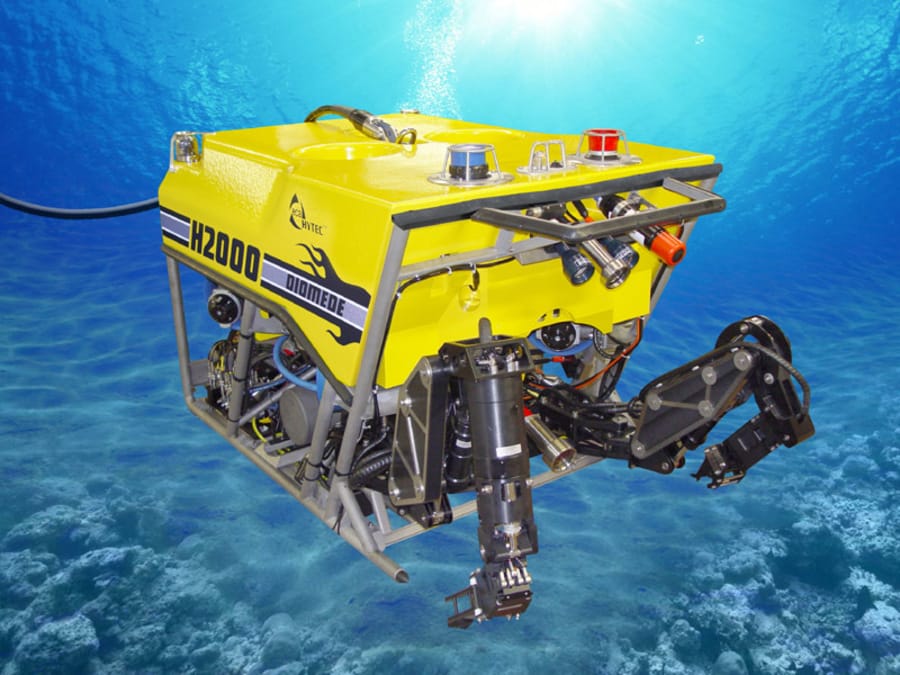
[supsystic-social-sharing id=’1′]The ROV is something out of fiction, but it’s not! Imagine piloting a submersible robot in the depths of the oceans, reaching and filming places where humans cannot. It may seem like those virtual reality games or some sort of game, but this is real, very real, and it is a highly lucrative profession, as the highest demand for professionals piloting these robots comes from the oil industry. These ROVs are essential for reaching deep and ultra-deep waters to perform operational maneuvers on equipment and observe them, which are often more than 3000m underwater.
-
Government unlocks R$ 554 million for a highway that has been requested for decades and accelerates the duplication of BR.

-
Without bricks, without cement, and without endless construction: the cardboard house that is assembled in modules and can be moved.

-
Billions of barrels on the equatorial margin could lead Amapá to double its oil production in Brazil — the state aims to enter the route of companies in the Campos Basin, attract investments, and boost jobs and businesses in the oil and gas sector.

-
Without bricks, without cement, and without endless construction: the cardboard house that is assembled in modules and can be moved.

Meaning of ROV
ROV comes from the acronym in English that stands for Remotely Operated Vehicle. These are robots designed for marine observation with various cameras, claws, and sensors attached. The pilot operates them remotely from a control room located on an oil platform or on vessels; all movement and trajectory of the vehicle are recorded and displayed in real-time on monitors. ROVs can search restricted spaces, examine pipelines, and even assist divers ( click here to learn about the profession of UNDERWATER WELDER).
Which Markets Are Hiring ROV Pilots?
As mentioned in the first paragraph, the market with the highest demand currently is offshore in the oil exploration sector. However, there are opportunities for these professionals in inspecting ships, rescue activities, underwater construction monitoring, as well as scientific fields aimed at monitoring and studying marine life.
Is This Market Promising in Brazil?
As it is a well-established segment nationally in the fossil fuels industry in Brazil, there is still much market potential for anyone wanting to enter this sector. This is further amplified by the discovery of oil fields in the pre-salt layer. (click here if you want to learn about some of these wells)
What Qualifications Are Required to Become an ROV Pilot?
In our country (Brazil), the oil industry requires minimal qualifications to pilot these robotic vehicles, but don’t worry because it’s nothing too difficult, such as spending years in a classroom or being some kind of engineer. A technical course in fields like Electrotechnics, Electronics, Mechatronics, Automation, Mechanics, and Electromechanics is required ( Explore some careers here). Registration with the professional council (CREA) is also required, but as far as we know, Brazil is the only country that asks for this certification; in other countries, it is sufficient to certify experience or a valid course in the field. Basic knowledge of English is also very important, as mechanisms, readings of measurements on the monitor, and manuals are in English.
What Is the Salary Range for an ROV Pilot?
As there are few professionals of this kind in the industry, they are consequently highly valued. For those working in training, the salary is around R$2,998.00. Now, when the pilot has a solid background and many years of experience, this amount ranges from R$6,000 and can exceed R$10,000 per month.
Are There Still Job Openings in This Field?
The trend is that, year after year, this market continues to grow larger over time. However, some candidates who do not dominate the English language may find it more difficult to secure positions. (Access here and see the article about the importance of English in professional life)
What Can We Expect from This Profession in the Coming Years?
As in any profession, those who study and improve themselves first in a rapidly rising field attain the best positions and salaries first. It truly is a very intriguing segment that has much still to be explored.
Some examples of operations with ROV can include explorations of the sunken ship Titanic, solving the oil leak problem at the British Petroleum oil platform in the Gulf of Mexico, locating the wreckage of the Air Bus flight 447, and many more technical applications.
Where to Take ROV Courses?
In trainee programs provided by large multinational companies, government-linked institutions like SENAI, or private vocational schools. In the latter, the typical course load is around 40 hours.









Seja o primeiro a reagir!