





 Portuguese
  English
  Spanish
  4 min of reading
  0 comments


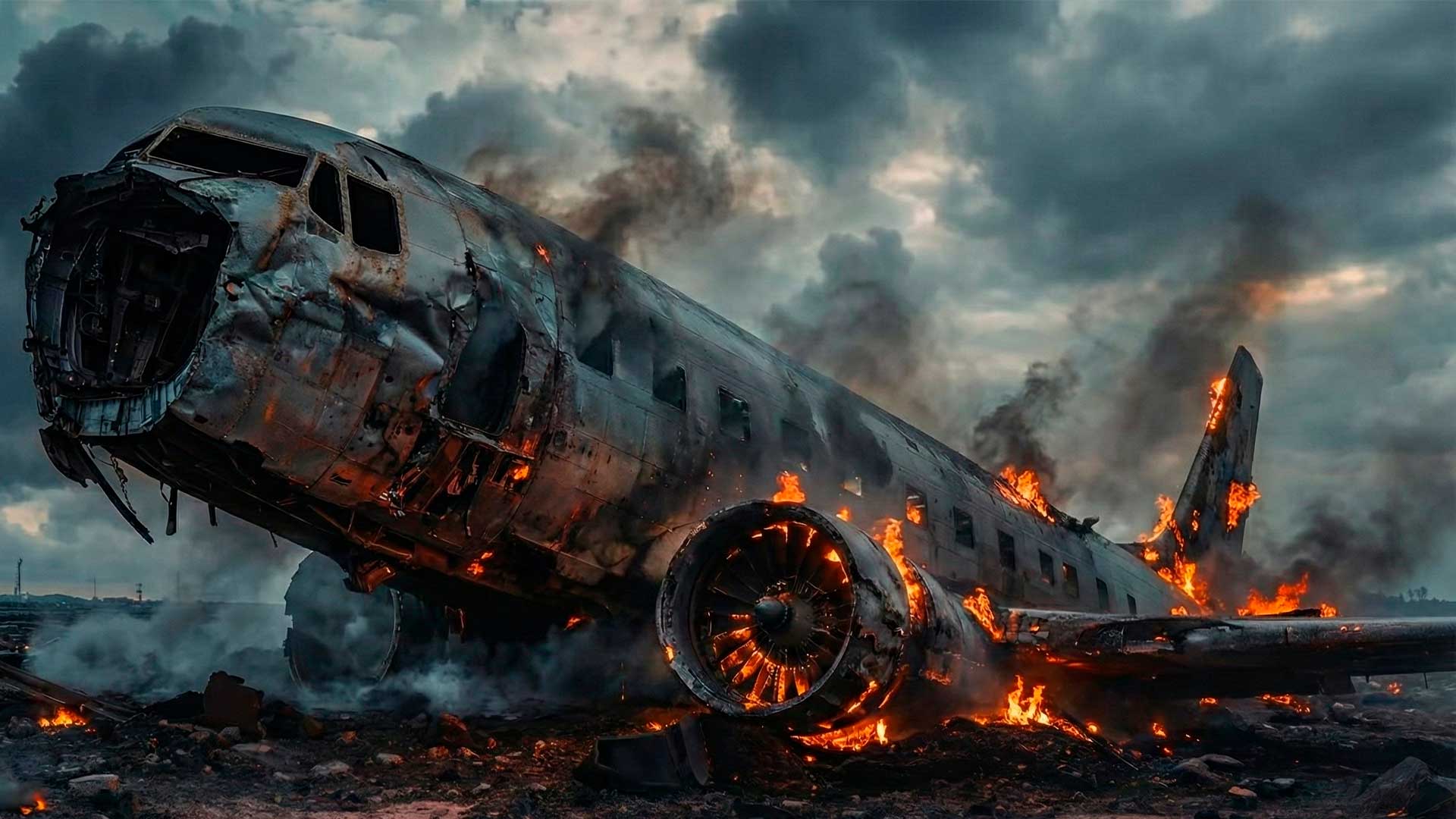
On November 12, 1996, Two Airplanes Crossed Paths in The Same Airway in India and The In-Air Collision Killed Everyone On Board, In A Case That Changed Communication And Safety Rules In Global Aviation
Shortly after 6:40 PM on November 12, 1996, the sky west of New Delhi became the scene of a disaster that would mark aviation history. A Saudia Boeing 747, on Flight 763, and a Kazakhstan Airlines Ilyushin Il-76, on Flight 1907, collided in mid-air over the Charkhi Dadri region in the state of Haryana in what became the worst air disaster ever recorded.
The official total of victims was 349 people, comprising 312 occupants on the Saudi jet and 37 on the Kazakh freighter. This number appears in the consolidated accident records, although internet publications sometimes cite different totals.
The case is remembered as the most lethal mid-air collision ever recorded in the world.
-
Tourists on Everest were poisoned by guides who mixed substances in food to provoke false symptoms of altitude sickness while helicopter operators and hospitals charged inflated rescue fees to insurance companies.

-
Few people know this, but Neil Armstrong, one of the most famous NASA astronauts in history, survived the Korean War after jumping from the plane during his seventh combat mission aboard the USS Essex aircraft carrier of the United States.
-
Diving with a camera in Lake Furnas reveals a submerged city with an entire street, almost intact houses, a preserved bridge, a wood stove, a Kombi, and even a bus at the bottom of the largest lake in the Southeast.

-
Iceland accidentally drilled into a magma pocket at 2,100 meters and revealed that the extreme heat beneath the crust could pave the way for a new source of continuous energy.


In the investigation, the central conclusion was straightforward. The Kazakhstan Airlines plane descended below the authorized level, entering the same flight level as the Boeing 747 that was climbing after taking off from Delhi, and there was no time to avoid the impact.
Two Flights In The Same Airway And The Sequence Of Minutes That Ended In A Collision In Indian Skies
Flight 763 from Saudia took off from Indira Gandhi Airport in New Delhi around 6:32 PM, on a route with a stopover in Dhahran and final destination in Jeddah, according to case records.
In the opposite direction, Flight 1907 from Kazakhstan Airlines was coming from Shymkent and was beginning its descent for landing in Delhi via airway G452. The approach put the two aircraft in the same air corridor, with vertical separation defined by air traffic control.
According to the summary of the investigative report, control directed the Kazakh aircraft to maintain a flight level of 15,000 feet, while the Boeing 747 was cleared to climb and maintain 14,000 feet until further instructions.
Even with traffic alerts, the Il-76 ended up descending below the authorized level. The air disaster occurred around 6:40 PM, about 100 kilometers west of the capital, with no survivors.
What The Investigation Revealed About Human Error And Communication Failure In Air Traffic Control
The likely cause recorded was the unauthorized descent of the Kazakh plane to the level where the Boeing 747 was, coupled with the failure to maintain the designated altitude.
Among the associated factors, the report highlights insufficient English proficiency in the cockpit, which would have contributed to misinterpretations of control instructions and worse comprehension of traffic situations.
Issues of cockpit coordination and operational discipline also appear, points related to what aviation calls crew resource management. In high workload situations, minor internal communication failures can turn into systemic risks in minutes.
Another detail that enters the context is the limitation of ground monitoring. The technical material of the case records that, at that time, Delhi did not have the same layers of surveillance that are now common in large terminals, which reduces the capacity to check vertical separation in real time.
Why Collision Avoidance Systems Became Priority And Turned Into Requirements In Many Countries
At the time of the air disaster, collision avoidance equipment was not universally present in all fleets and regions. The post-Charkhi Dadri debate accelerated decisions to make these systems more common and then mandatory in parts of the world.
A technical guide from Eurocontrol records that the 1996 collision propelled the proposal for global mandatory ACAS II systems, commercially known as TCAS II, specifically to reduce the risk of mid-air collisions even when there is human error.
At the international level, there is reference that the requirement for carrying ACAS II was incorporated into ICAO standards in operational annexes, applicable to turbine aircraft above certain weight limits or passenger capacity from the mid-2000s.
In practice, the principle is simple. The anti-collision system operates independently of air traffic control, “seeing” transponders around it and issuing alerts and commands, creating an extra layer when planned separation fails.
The Requirement For English Proficiency And The Debate That Still Divides Experts
The tragedy also reinforced a long-standing discussion, the standard language in radio communication. ICAO reports on the process of strengthening rules of English proficiency for radiotelephony, with resolutions and amendments that culminated in the adoption of criteria and scales for pilots and controllers in international operations.
An analysis published by Flight Safety Australia describes how the language issue gained strength in the period following the accident, with the adoption of the requirement for a minimum level of proficiency and a gradual implementation cycle by member states in the following years.
The sensitive point is that standardizing the language does not eliminate all ambiguities. The safety community itself discusses whether the assessments accurately capture the real context of cockpit and control, where accents, stress, noise, and operational culture interfere with the clarity of the message.
Still, the consensus is that clear communication, standardized phraseology, and cross-checking are important barriers, ones that prevent a misunderstanding from turning into tragedy. It is a lesson that remains alive in training, audits, and investigations to this day.
If you worked in the industry, would you think aviation took too long to make collision avoidance and stricter English communication standards mandatory? In your view, does responsibility lie more with the crew, with air traffic control, or with the rules of the system? Leave a comment with your opinion and tell us which change would have the best chance to prevent an air disaster like Charkhi Dadri today.







-

-

-

-

-

9 pessoas reagiram a isso.