





 Portuguese
  English
  Spanish
  3 min of reading
  0 comments


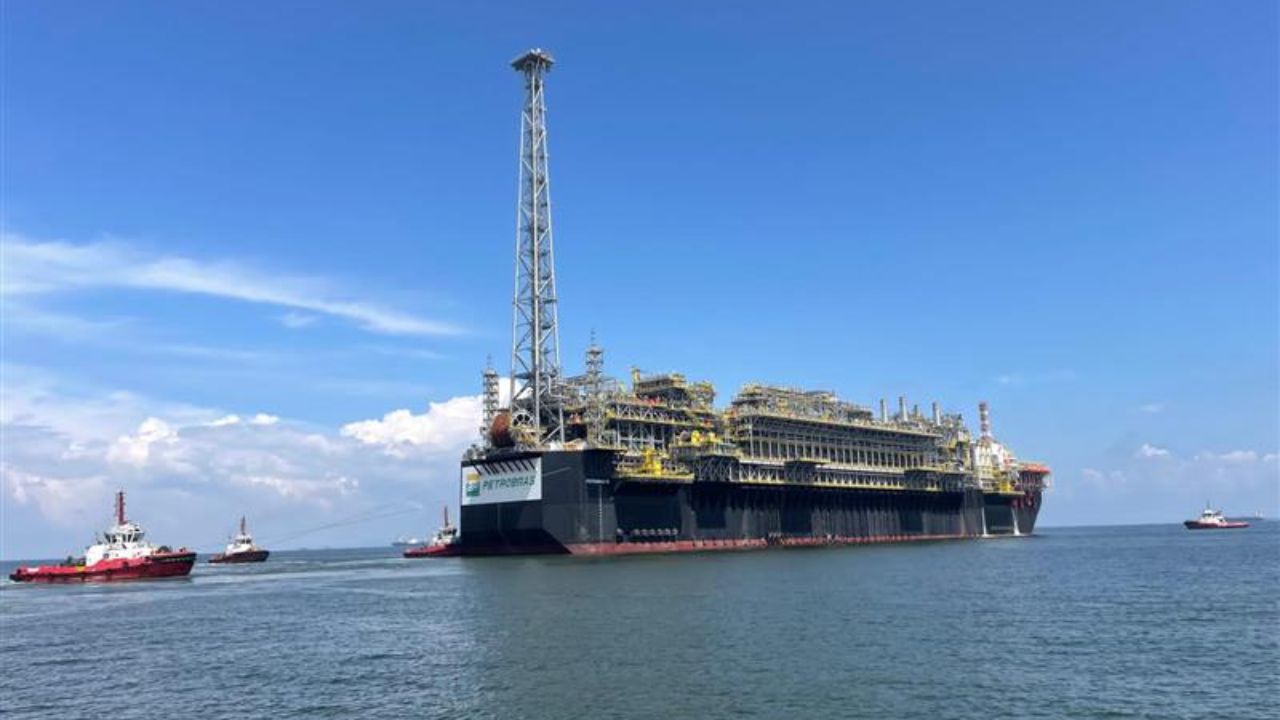
FPSO P-78, The New Petrobras Platform, Departed from Singapore to the Búzios Field. Pre-Salt Unit Promises to Increase Total Production by 18% and Start Operation in 2025.
Petrobras announced this Monday, (7/14) that the P-78 platform departed from the Benoi shipyard in Singapore, heading to the Búzios field, located in the Santos Basin, about 180 kilometers off the coast of Rio de Janeiro. The unit, an FPSO (Floating Production, Storage and Offloading Unit), left the shipyard with an onboard crew, a strategy that will allow for the start of operations in approximately two weeks.
Aboard, the professionals will ensure the continuous operation of technical systems, the completion of operational tests, and the training of the team, even during the crossing. With this, Petrobras maintains the forecast for the platform to enter operation in December 2025, adhering to the project schedule and reaffirming its ability to manage large ventures.
The Biggest Bet in the Pre-Salt: Seventh Unit in the Búzios Field
The P-78 platform will be the seventh production unit installed in the Búzios field, the largest field in Brazil’s ultra-deep waters of the pre-salt.
-
Petrobras evaluates suspension of sales to distributors and considers canceling the cooking gas auction following guidelines from the Federal Government.
-
Lula reveals a masterstroke by Petrobras to undo a deal made by Bolsonaro, which involves the return of an important refinery that currently produces less than half of what was expected and makes Brazil dependent on international diesel.
-
A study confirms that the natural gas sector will reduce greenhouse gas emissions in Brazil by 0.5% and accelerate the energy transition by 2026.

-
Petrobras implements a severe adjustment and confirms a 55% increase in the price of aviation kerosene with a proposal for installment payments for the companies.

Today, six FPSOs are already in operation in the area, producing approximately 975 thousand barrels per day.
With the arrival of the new unit, the installed capacity will be increased by 18%, reaching a daily mark of 1.15 million barrels, according to estimates from Petrobras itself.
The platform will have the capacity to produce up to 180 thousand barrels of oil per day and compress 7.2 million cubic meters of natural gas.
The project plans for the interconnection of 13 wells, including six producers — two of which are adaptable for injection —, six WAG-type injectors (water and gas alternating injection), and one exclusive gas injector.
Multilateral Construction of Petrobras’ New Platform
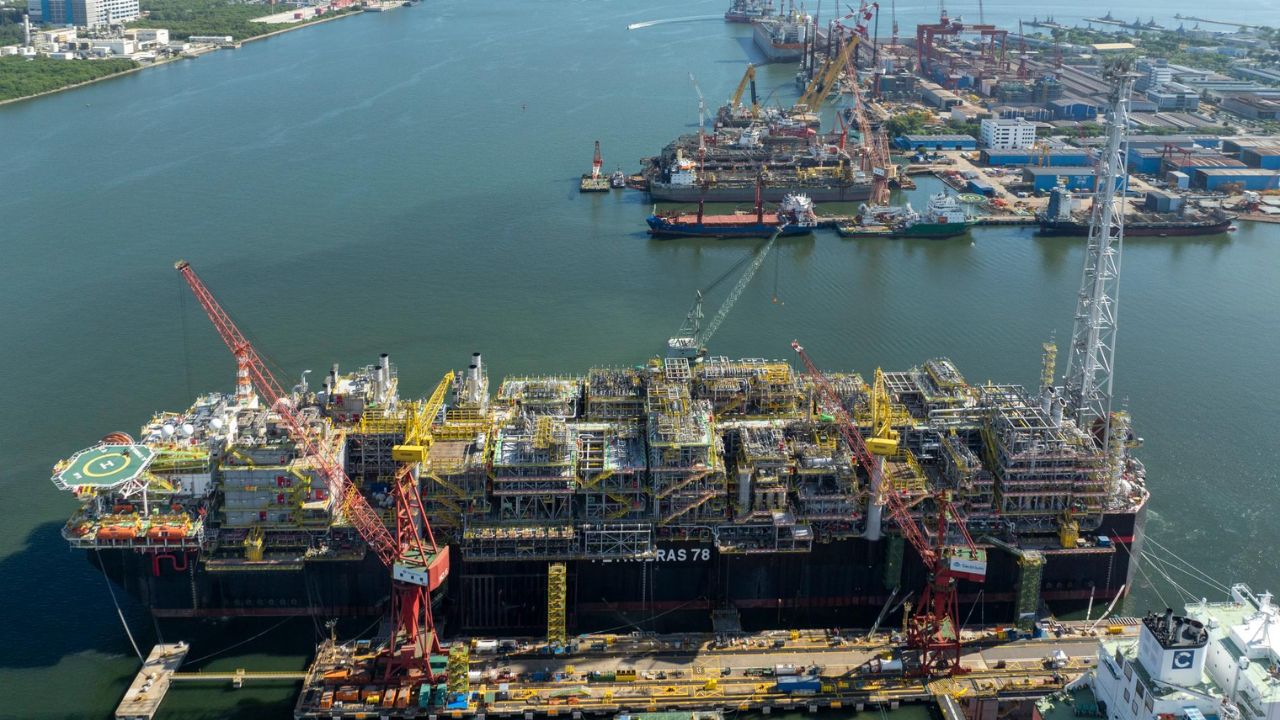
The path of the P-78 platform to Brazil passed through three continents. The hull was initially built in stages in China and South Korea, where the structural blocks were also assembled.
Subsequently, the structure was taken to Singapore, where the processing modules, produced in Brazil, Singapore, and China, were integrated.
At the end of June, directors Sylvia Anjos, from Exploration and Production, and Renata Baruzzi, from Engineering, Technology and Innovation at Petrobras, were in Singapore to oversee the completion of the platform’s integration phase and participate in the navigation release ceremony.
“It is very important to meet the schedule that was set for the successful completion of the platform, this reinforces our capacity to manage our projects and handle them more comprehensively, always observing safety and efficiency aspects,” declared Sylvia Anjos.
Renata Baruzzi also highlighted the strategic value of the P-78 platform for the company’s portfolio: “Leading large FPSO projects, like the P-78, is a source of pride for Petrobras, which, along with its partners, achieves the goal of installing the seventh platform in the Búzios field. Soon the P-78 will join the other production units, further increasing production.”
More Productive and Strategic Pre-Salt
With depths of up to 2,100 meters, the Búzios field is among the most promising in the world and represents a key piece in Petrobras’ long-term strategy.
The arrival of the P-78 platform bolsters the company’s technical capability and symbolizes Brazil’s advancements in exploring oil in ultra-deep waters.
Moreover, the use of an onboard crew during the voyage not only allows for an earlier operation but also ensures that all systems are fully tested before the connection to the field. This reduces risks, avoids delays, and increases the efficiency of the entry into production.
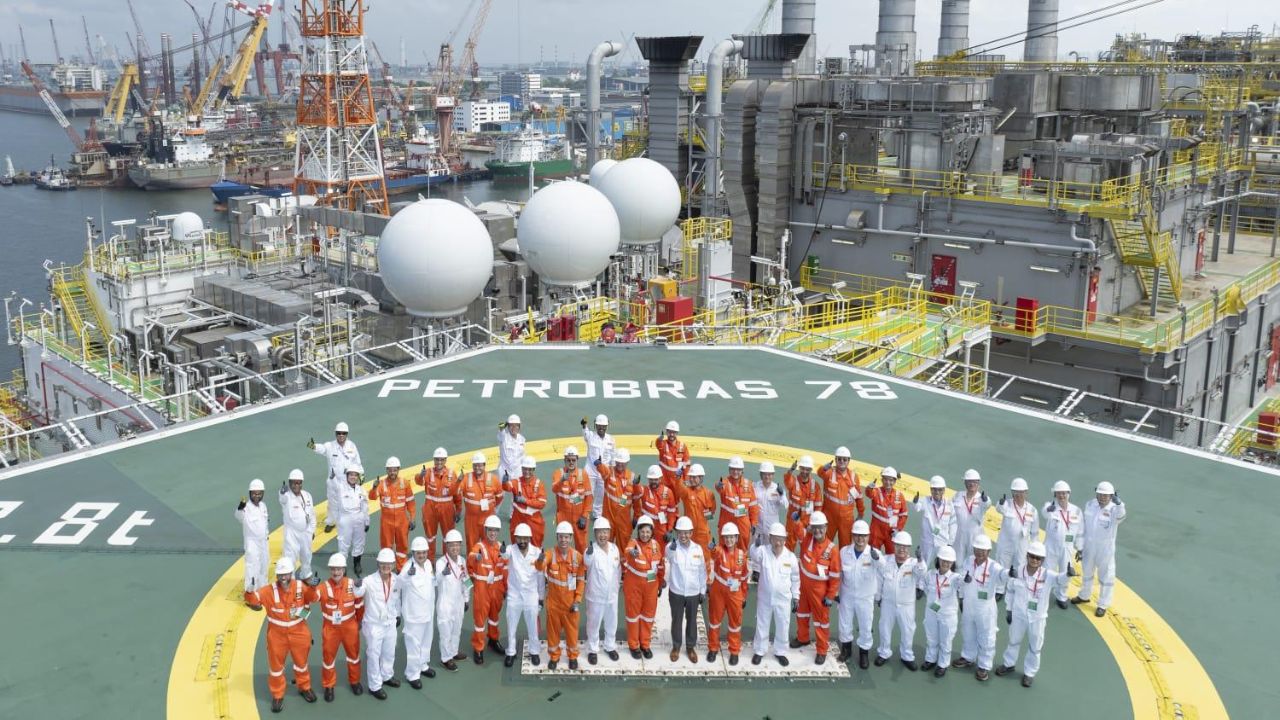
The construction and integration of the P-78 platform follow the highest international standards of safety and efficiency.
The unit represents an important step in Petrobras’ expansion plan, which aims to increase production in the Búzios field with advanced technologies and sustainable solutions for the oil and gas sector.
With an operational forecast for the end of 2025, the platform will be essential for consolidating the company’s leadership in oil production in the pre-salt, contributing to the country’s energy supply and strengthening the industrial chain linked to the sector.








-

Uma pessoa reagiu a isso.