





 Portuguese
  English
  Spanish
  5 min of reading
  0 comments


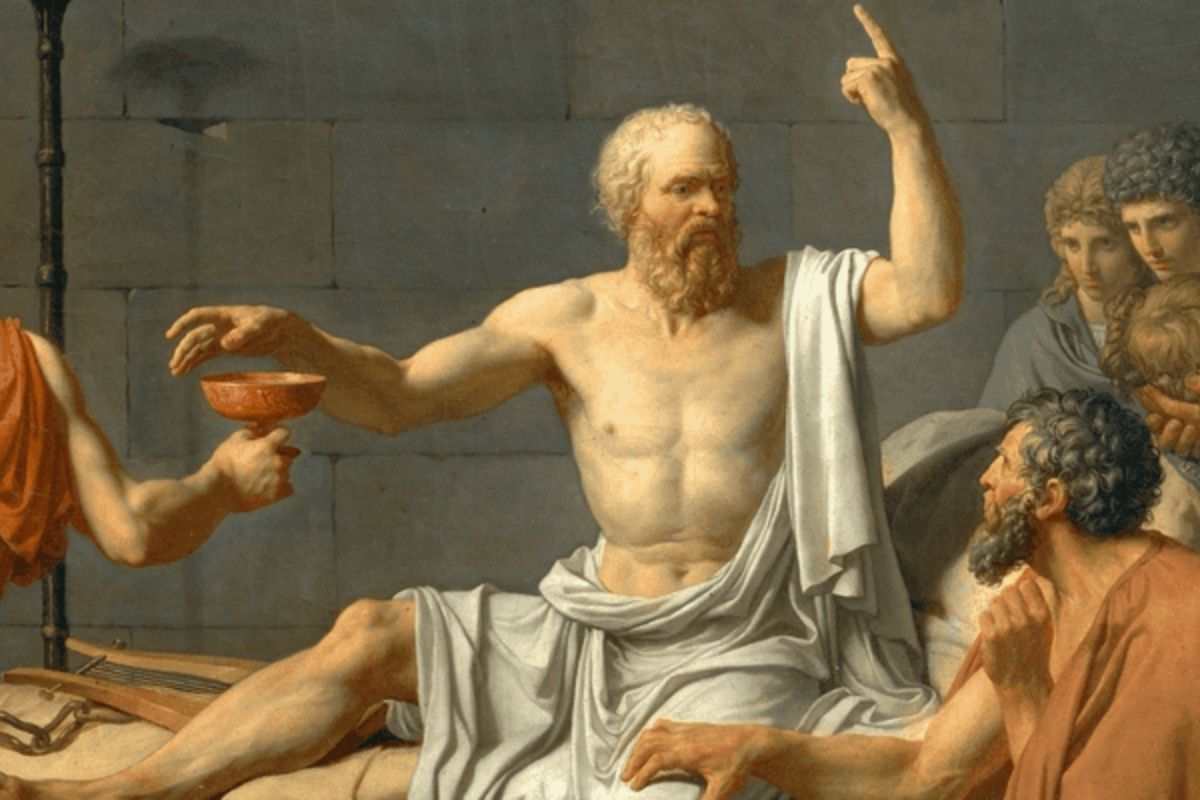
The phrase of the Greek philosopher who lived between 428 and 348 BC has never made more sense than now, in a world where the average Brazilian is bombarded by more than 6 thousand advertising stimuli per day, where social networks have turned comparison into sport and where family indebtedness has reached record levels even with incomes rising
Plato divided the human soul into three parts. The rational, which thinks. The irascible, which feels. And the appetitive, which desires. The Greek philosopher did not condemn desires. He warned about what happens when they take control: the person lives in a permanent state of lack, no matter how much they accumulate.
The phrase is straightforward: “Poverty does not come from the decrease of wealth, but from the multiplication of desires.” Spoken in 4th century BC Athens, it accurately describes the mechanism that drives shopping malls, purchase apps, and social media feeds in 2026.
Why does every satisfied desire generate an even greater desire?
Neuroscience explains what Plato intuited. The brain’s reward system releases dopamine not at the moment when a person achieves something, but at the moment when they anticipate the achievement. The expectation is more pleasurable than the realization. That’s why the euphoria of a purchase lasts hours, but the desire for the next object begins the next day.
-
“No one hires you based on your school record”: a drama in Brazil shows the difficulty of finding a job even with a deficit of 530,000 vacancies in IT, salaries of up to R$ 35,000, and 50% of hires without a diploma.

-
Research uncovers the 4.5 billion-year-old secret of Earth and locates a missing reservoir of lead within the planet.

-
Porsche’s luxury SUV arrives with technology inspired by Formula E, extreme power, and an innovative system that allows for high-efficiency wireless charging.

-
YouTube is testing a feature that resembles old TV and plays non-skippable 90-second ads in the middle of videos on smart TVs, despite the promise of 30 seconds, and makes it clear: pay for Premium or endure more advertising.

This mechanism had an evolutionary function. Our ancestors needed an internal drive that pushed them to seek food, shelter, and partners even after they had enough. The problem is that the same circuit that ensured the survival of the species is now exploited by algorithms, storefronts, and notifications designed to keep desires always ignited.
Plato did not have magnetic resonance imaging, but he reached the same conclusion by another path. In The Republic, he describes the man dominated by the appetitive part of the soul as someone who drinks salt water: each sip increases thirst instead of quenching it.
How do social networks multiply desires without the person noticing?
Plato spoke of comparison among Athenian citizens. Today, the comparison is with millions of people at the same time, 24 hours a day. Social networks do not show the real lives of others. They show the edited, filtered, and curated version, designed to provoke exactly the type of desire that Plato described: the one that arises from the perception that others have more.
The effect is measurable. Research in social psychology shows that time spent on social networks has a direct correlation with financial dissatisfaction, even among people with above-average income. The problem is not how much a person earns. It’s how much they think they should earn after seeing what others seem to have.
Plato would call this manufactured poverty: the feeling of scarcity artificially created by continuous exposure to an abundance that is not real.
What is the difference between desiring something and needing something?
Platonic philosophy makes a distinction that seems simple but changes everything. There are desires that point to real needs and desires that are merely a reflection of an external stimulus. The first type builds. The second traps.
In practice, the difference appears in concrete questions. Did this desire exist before I saw that post? Will it continue to exist a week from now? If I make this purchase, will I really use it or will I forget about it in a month? Plato believed that a philosophically educated person can make this separation before acting. And that this ability to examine one’s own desires is one of the most concrete forms of freedom.
The philosopher did not preach total renunciation. He preached awareness. Desire, but know why you are desiring. Buy, but know if it is you who wants it or if it is the algorithm that decided for you.
Why is Brazil in 2026 the perfect scenario to understand Plato?
The indebtedness of Brazilian families has reached record levels in recent years, even with average incomes rising. More people earn more and, at the same time, more people owe more. This paradox is exactly what Plato described: wealth has grown, but desires have grown faster.
The average Brazilian is exposed to more than 6 thousand advertising stimuli per day across television, internet, social networks, and urban space. Each of these stimuli was designed to create a desire that did not exist five seconds before. The installment payment in 12 times turned “I can’t” into “I can, but I shouldn’t,” and the credit card eliminated the physical pain of seeing money leave one’s hand.
The result is a generation that has more access to goods than any other in the country’s history, but reports levels of financial dissatisfaction comparable to decades when much less was had.
What would Plato say to those who feel poor even earning well?
He would probably ask a question before giving any answer: “Are you trying to have more or trying to need less?” For the philosopher, true wealth is not the ability to buy everything, but the ability to live well with what one has without the mind being permanently focused on what is lacking.
This does not mean settling for little out of resignation. It means realizing that there is a point at which accumulation stops generating satisfaction and starts generating anxiety. The Stoics, who came after Plato and drew from the same source, had a name for this: enough. It is not little. It is not much. It is the exact point at which a person can look at what they have and feel complete.
The poverty that Plato described cannot be solved with a salary increase, promotion, or a new car. It is resolved with a question that costs zero reais and that almost no one asks: is what I want really mine, or did someone put this desire in my head?
With information from Catraca Livre.









Seja o primeiro a reagir!