Portuguese
  Spanish


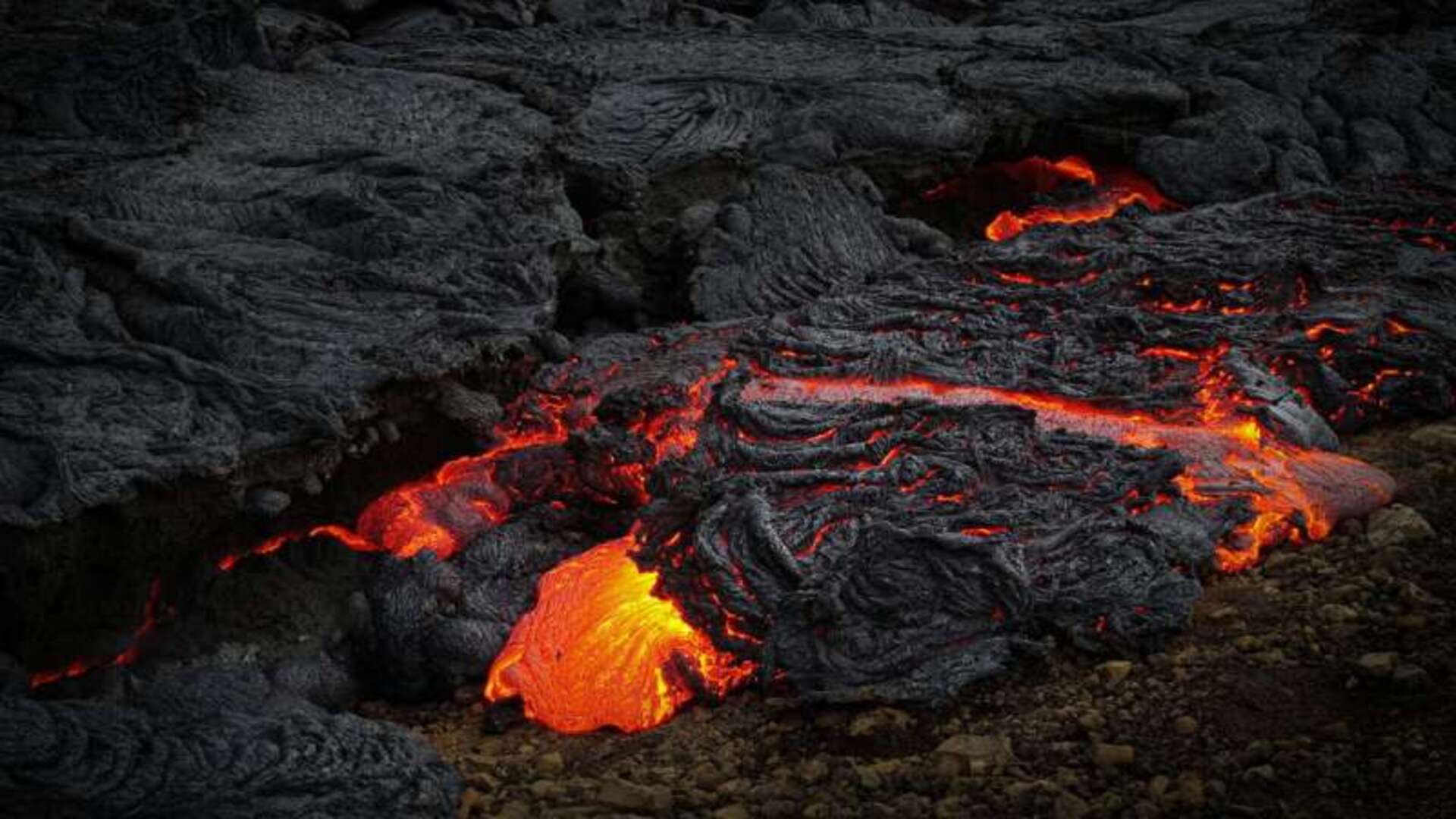

New geochemical analyses explain the location of metallic lead and help unravel the 4.5 billion-year secret of Earth.
An enigma that persisted for decades in geochronology has been addressed by researchers seeking to understand the 4.5 billion-year secret of Earth.
The so-called “lead paradox” refers to the discrepancy between the expected isotopic composition for the Earth’s mantle and what is actually found in volcanic samples. New analyses indicate that the missing lead reservoir in scientific calculations may be hidden in deep layers near the metallic core.
The isotopic paradox and planetary evolution
During the formation of the solar system, the distribution of chemical elements followed specific patterns, but terrestrial lead has always shown a signature that did not match theoretical models. In investigating the 4.5 billion-year secret of Earth, geologists identified that the lead found in the crust is “too radiogenic,” suggesting that a simpler part of the element was isolated early on.
-
How to Prevent Brown Recluse Spider Bites: Common Hiding Spots and Free Tips to Reduce Risks

-
Natto: The Unusual Japanese Superfood Gaining Popularity on Social Media and Driving Record Exports
-
Brazilian Mayor Goes Undercover as Homeless for 24 Hours to Assess Public Services

-
15-Year-Old Entrepreneur Malu Lira Publishes 20 Children’s Books on Financial Education, Earns $500,000, and Expands Her Project to the Amazon Rainforest




This isolation would have occurred during differentiation processes when molten iron sank to form the planet’s core.
The hypothesis that the missing lead behaved like a “siderophile” element, meaning it has an affinity for metal, gains strength with new high-pressure simulations. This process would have sequestered primordial isotopic signatures to the depths, out of reach of conventional probing. This initial chemical separation was the primordial event that defined the geochemical trajectory of the Earth’s mantle throughout geological eras.
New evidence in deep ocean samples
The search for clues about the 4.5 billion-year secret of Earth led scientists to analyze rocks from extremely deep mantle plumes.
These samples, brought to the surface by oceanic island volcanoes, contain traces of material that would have been preserved since the early history of the planet. The data suggest that the “hidden” reservoir is not completely sealed and interacts subtly with the upper mantle over billion-year timescales.
The study of these signatures allows for the reconstruction of how Earth cooled and how tectonic plates recycled materials from the surface to the interior. The precision of current instruments has made it possible to distinguish minimal variations between lead isotopes 204, 206, and 207. This differentiation is the missing piece to complete the puzzle of the evolution of the Earth’s mass since the original solar nebula.
Implications for solar system science
Understanding the fate of lead aids in calibrating models of how other rocky planets, such as Mars and Venus, may have developed.
The 4.5 billion-year secret of Terra reveals that the process of core formation was more complex and chemically selective than previously thought. This knowledge redefines estimates of the abundance of volatile elements and heavy metals throughout the inner solar system.
The resolution of this case allows scientists to refine uranium-lead dating techniques, essential for determining the age of ancient minerals. With the mystery of the missing lead solved, modern geology closes a fundamental gap in its historical narrative.
The discoveries consolidate a new view of the internal dynamics of our planet and its deep chemical composition.
Click here to access the study.