





 Portuguese
  English
  Spanish
  3 min of reading
  0 comments


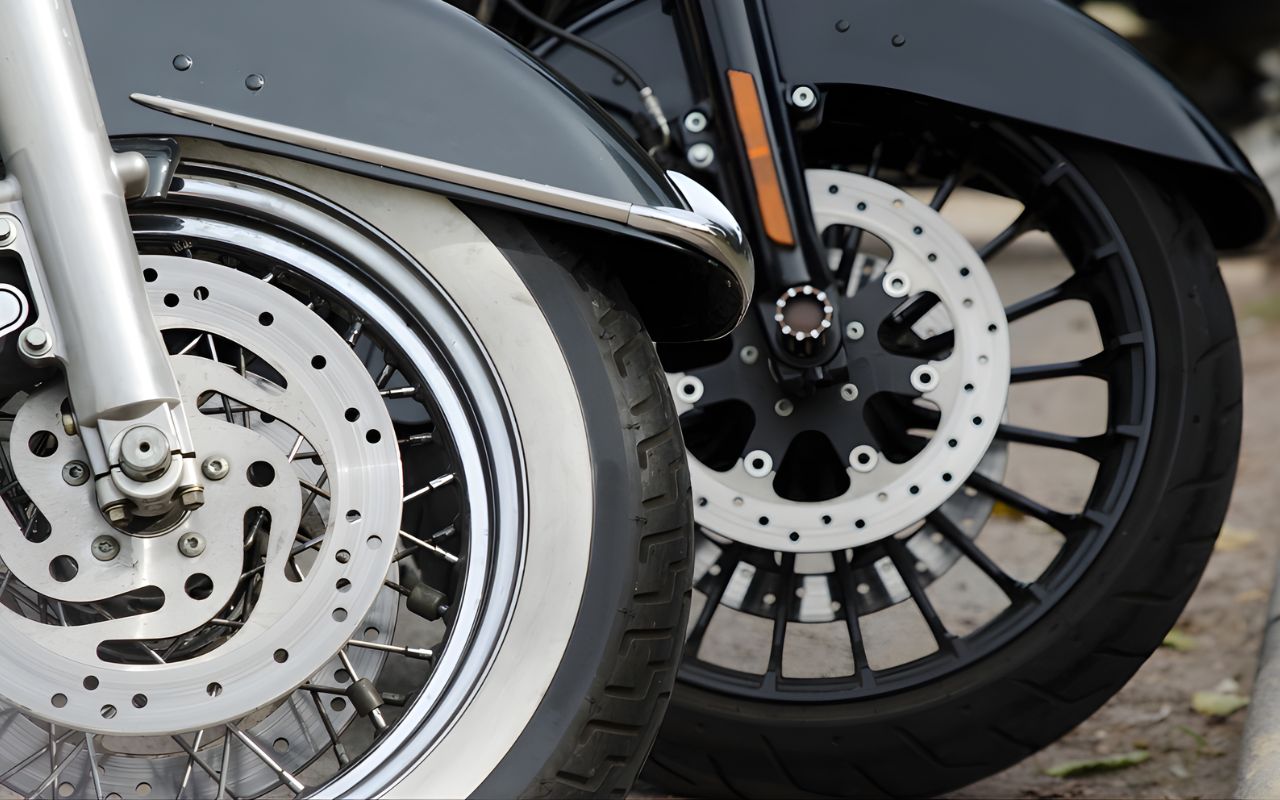
The White Tires of Classic Motorcycles Rose From Technical Limitations and the High Cost of Carbon Black. Understand How the Industrial Solution Became a Retro Trend.
The white tires that marked the classic motorcycles are now synonymous with vintage style. However, their origin is far from being an aesthetic choice.
They appeared in the early 20th century, when manufacturers were trying to cut costs at a time when carbon black — an essential component for making tires more durable — was expensive and difficult to produce.
The technical solution adopted inadvertently created a look that crossed generations.
-
A gigantic dam project in the Himalayas could solve one crisis but silently create another for millions of people.

-
Nikola Tesla said that intelligent people tend to have fewer friends, and now science partially confirms this: a study with over 15,000 people showed that for the more intelligent, socializing too much can even reduce life satisfaction.

-
A superyacht worth US$ 17 million is delivered in impeccable condition, sets out to sail, and hits a bridge in the Bahamas just two hours later.

-
Residents of Australia woke up to a sky completely red like blood before the arrival of Cyclone Narelle, which hit the coast with winds of 250 km/h, tearing off roofs and lifting iron dust in a scene they described as apocalyptic.


Curiously, the story begins not with the white stripe, but with its disappearance.
The Decline of White Tires in the Conventional Market
As the industry evolved, carbon black became more accessible and began to be used throughout the tire structure.
This caused tires to become completely black, more durable, and suitable for increasingly powerful vehicles.
Additionally, white rubber had significant disadvantages. It aged poorly, yellowed with dirt, brake dust, and exposure to ozone, quickly losing its visual appeal.
With the growing focus on performance and safety, the white tires virtually disappeared from the mass market.
The Return of White Tires as a Luxury Item
However, before they completely vanished, the white stripes went through a second phase.
In the 1930s, they began to be offered as a luxury option.
What was once an economical solution became a status symbol. Consumers who desired the distinctive look had to pay more for it.
Thus, the white tires stopped being a technical necessity and began to represent an aesthetic choice, especially in vehicles that sought sophistication.
The Economic Origin of White Tires in Classic Motorcycles
Returning to the beginning of the story, it is necessary to understand why the stripes emerged. Carbon black, responsible for increasing the rubber’s resistance, was revolutionary, but extremely expensive at the beginning of the 20th century.
To balance costs and performance, manufacturers applied the material only to the tread — the part of the tire that touches the ground. The sides remained with the lighter original compound.
This decision gave birth to the look that marked so many classic motorcycles: black center and light sides.

Before That, Tires Were Completely Clear
Even before the introduction of carbon black, tires were not black. Natural rubber is white or grayish.
During the vulcanization process, sulfur was added for strength and zinc oxide to stabilize the material. The latter made the compound even whiter.
The result was completely clear tires, but they were not durable and were vulnerable to the poor road conditions of the time.
Technical Limitations Shaped the Look of Classic Motorcycles
Uneven roads demanded greater resistance from the tires. Carbon black brought this improvement, strengthening the molecular structure of the rubber and significantly increasing its mileage.
However, since the cost was high, partial application was the alternative found. Thus emerged the white tires with light side stripes that began to characterize many classic motorcycles.
There was no design decision. It was a practical solution that ended up creating visual identity.
Over time, the all-black standard became established. Still, the white tires did not disappear completely.
Today, they survive mainly in restorations of classic motorcycles and in models with a vintage proposal.
Manufacturers like Harley-Davidson and Indian Motorcycle still use the white stripe on some lines, betting on historical heritage as a differentiator.
From Industrial Necessity to Cultural Symbol
The trajectory of white tires shows how technical decisions can transcend the field of engineering and gain cultural significance.
What began as an attempt to save on expensive materials ended up shaping the aesthetics of an entire era.
When observing classic motorcycles equipped with white stripes, we see more than just a visual detail.
We see the reflection of industrial limitations, chemical advances, and economic choices that helped build the history of mobility.
In the end, the retro charm was born out of necessity — and that was precisely what made it so authentic.
With information from Xataka








-

-

-

-

-

-

182 pessoas reagiram a isso.