





 Portuguese
  English
  Spanish
  2 min of reading
  0 comments


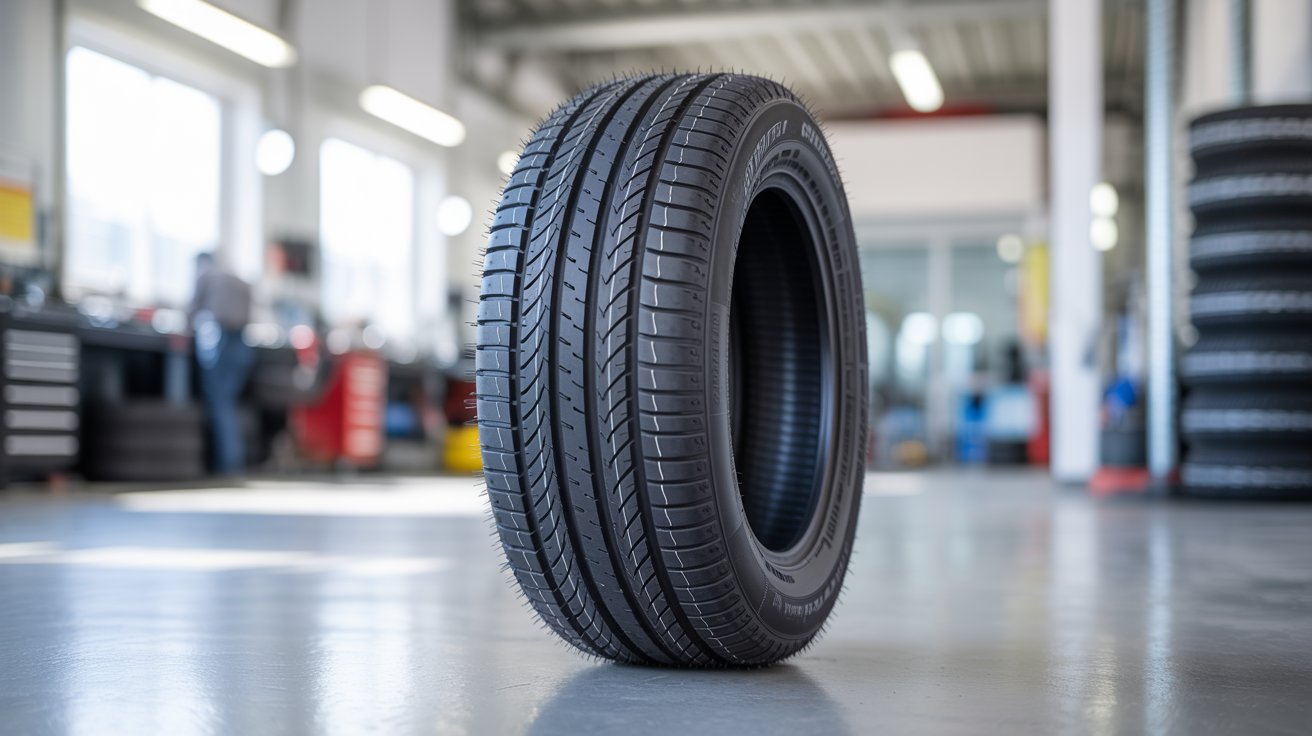
Although they may seem like a sign of quality or novelty, the small filaments on new tires — known as “hair” — are merely remnants of the vulcanization process and do not affect performance, durability, or safety.
Hair on Tires: Visual Curiosity or Sign of Something More?
Drivers and even sellers often use the visible “hair” on new tires as an argument for quality or preservation. However, according to manufacturers and industry experts, these small filaments do not indicate superior performance nor do they serve any technical function. They appear during the vulcanization process and are byproducts of industrial manufacturing.
The manufacturer Bridgestone clarifies that these filaments are formed by rubber scraps that escape through ventilation channels of the mold while the tire is shaped under high pressure and temperature. These channels help prevent air bubbles and ensure the correct filling of the mold during production.
-
Electric car surprises on the Transamazon Highway as it tackles a mud pit; Saveiro and Hilux get stuck and need to be pulled out, while a milk truck crosses alongside with ease and draws attention.

-
The war in Iran could be the push needed for the electric vehicle market to truly explode because when the price of oil exceeds 100 dollars a barrel, combustion cars become a luxury, and China already dominates 60% of the global electric market.

-
Fiat is preparing an offensive with a 7-seater SUV larger than the Fastback, debuting in October 2026 with the Smart Car platform, electric versions with up to 400 km of range, turbo hybrid, new pixelated LEDs, and an advanced ADAS package.

-
OMODA 7 transforms the car into a global aesthetic expression by combining automotive design and fashion in London.


Although visible on the tread, the filaments do not compromise the safety or durability of the product. They tend to disappear naturally as the tire comes into contact with the ground during the first few kilometers of use.
Popular Myth: Do “Hairs” Indicate Quality?
On the internet and at used car dealerships, theories circulate that the presence of these “hairs” indicates good grip, quiet running, or ideal balancing. Other versions even claim that the resistance to pulling them off is proof of high-quality rubber. However, these ideas are popular myths without technical basis.
According to a video published on the channel Instante Volante, these filaments are internationally known as vent spews or nippers, and have been eliminated by some manufacturers. Continental, for example, already uses technology to remove them shortly after vulcanization, claiming that they harm the acoustic performance of the tires by causing small disturbances in airflow.


Modern Technology Tends to Eliminate the Filaments
With the evolution of industrial processes, several brands have already adopted molds that prevent or completely eliminate the formation of these filaments. This indicates a trend toward standardization in finish and noise reduction. Still, their presence in new tires should not be a cause for concern for consumers.
As stated by Bridgestone and reinforced by specialized content such as the channel Instante Volante, the presence or absence of these “hairs” does not interfere in any functional aspect of the tire. What truly matters in assessing tire quality is to check the manufacturing date, technical specifications, and usage history.







-

-

-

5 pessoas reagiram a isso.