





 Portuguese
  English
  Spanish
  4 min of reading
  0 comments


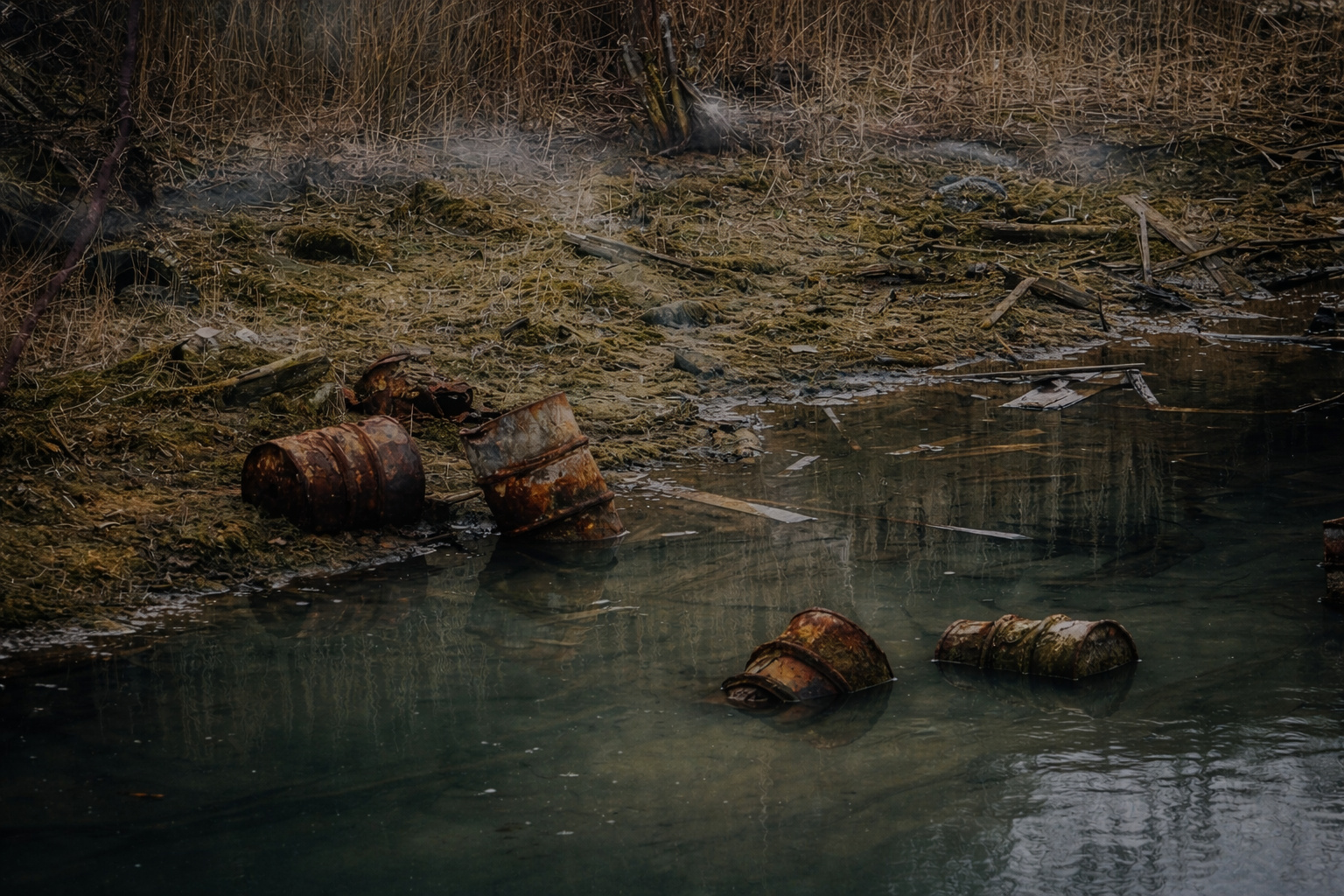
Seasonal Restrictions Emerge As a Response to Contamination Caused by Agricultural Runoff, While States Adopt Their Own Measures to Reduce Environmental Risks and Public Health
The quality of water in the United States has entered a critical stage in recent years, drawing the attention of environmental authorities and state governments.
Unlike scenarios of scarcity or excess, the central problem has become contamination, especially in agricultural regions.
In this context, some states have adopted measures deemed drastic, such as banning the use of manure and fertilizers during the winter.
Water degradation is directly linked to agricultural runoff, a phenomenon widely monitored by environmental agencies.
According to assessments by the Environmental Protection Agency (EPA), released over the past decade, industrial agriculture is the primary source of deterioration in water quality in rivers, lakes, and aquifers.
This diagnosis has begun to guide local decisions, as there is no uniform federal policy.
EPA Classification Exposes the Origin of the Water Problem
The EPA identified that excess nitrogen, phosphorus, and other nutrients, coming from chemical fertilizers and animal manure, infiltrate the soil and reach the groundwater.
Currently, it is estimated that 12 million tons of nitrogen and about 4 million tons of phosphorus are applied annually to crops in the United States.
Furthermore, intensive livestock farming increases this volume, raising the waste load in the environment.
-
With earth, bamboo, straw, and lime mortar, a specialist builds a house for just over $460 and draws attention for its cost being much lower than traditional construction.

-
Rodrigo de Freitas Lagoon advances in environmental recovery with sanitation, elimination of irregular sewage, and the resumption of water sports in Rio de Janeiro.
-
Sustainable housing gains strength with a nationally awarded project in Campo Grande, highlighting innovative solutions that combine sustainability, urban integration, and efficiency in the use of natural resources.

-
City Where Residents Live Underground to Escape 52°C May Be a Picture of the Future on an Increasingly Hot Planet

This process occurs throughout the year.
However, during the winter, the situation worsens in regions where the soil freezes or is covered by snow.
Under these conditions, nutrients cannot infiltrate properly.
Thus, when thawing occurs, contaminants are carried directly to rivers and lakes.
Surface Runoff Intensifies Environmental Damage
This mechanism, known as surface runoff, causes severe environmental consequences.
The excess nitrogen in the water stimulates the proliferation of algae and aquatic plants.
As a result, dissolved oxygen is consumed, creating hypoxic zones where aquatic life cannot survive.
Two cases have become references for this impact. In the Gulf of Mexico, the runoff of fertilizers from the corn-producing region of the Midwest, transported by the Mississippi River, has formed one of the largest dead zones on the planet.
In Midwest rivers, especially in rainy years, nitrate concentrations in drinking water have exceeded safe levels for dozens of consecutive days, according to recent state records.
Contamination of Aquifers Concerns Authorities
In addition to rivers and lakes, aquifers have also been affected, especially those that supply private wells.
These systems receive less monitoring compared to public supply.
A report released in the state of Wisconsin indicated that 90% of nitrate contamination in drinking water originates from agricultural runoff.
According to the survey, 10% of private wells exceed the legal limit, while in areas of intensive agriculture, the rate ranges from 20% to 30%.
The situation has ceased to be just environmental. Chronic exposure to nitrates is associated with cancer, pregnancy complications, and infant methemoglobinemia, known as blue baby syndrome.
Thus, the problem has also come to be treated as a public health issue.
States Respond With Seasonal Bans
In light of this scenario, states like Michigan, Maryland, Ohio, and Vermont have begun to implement restrictions.
Since the mid-2020s, these federal units have banned the use of manure, fertilizers, and other agricultural inputs during the winter.
In general, the bans start in December and last until March or April, depending on local legislation.
Although the restrictions are unpopular in the agricultural sector, they have been classified as reactive measures.
This is because the main objective is to prevent new damage, as the existing contamination cannot be immediately reversed.
Federal Strategy Relies on Voluntary Changes
At the federal level, the approach takes a different path. The United States Department of Agriculture (USDA) and the Natural Resources Conservation Service (NRCS) have prioritized, since the 2010s, voluntary technical and financial assistance programs.
These initiatives encourage the use of cover crops, which absorb excess nitrogen, as well as the proper application of fertilizers at the right time.
According to guidelines from the EPA itself, the solution lies in the correct amount of inputs and keeping livestock away from waterways.
Still, each state adopts its own strategies, while agriculture and livestock remain priority sectors for domestic consumption and for the export of the United States.
In light of this scenario, to what extent will reactive measures be sufficient to protect water and public health, without requiring a deeper change in the country’s agricultural model?









-

-

-

3 pessoas reagiram a isso.