





 Portuguese
  English
  Spanish
  3 min of reading
  0 comments


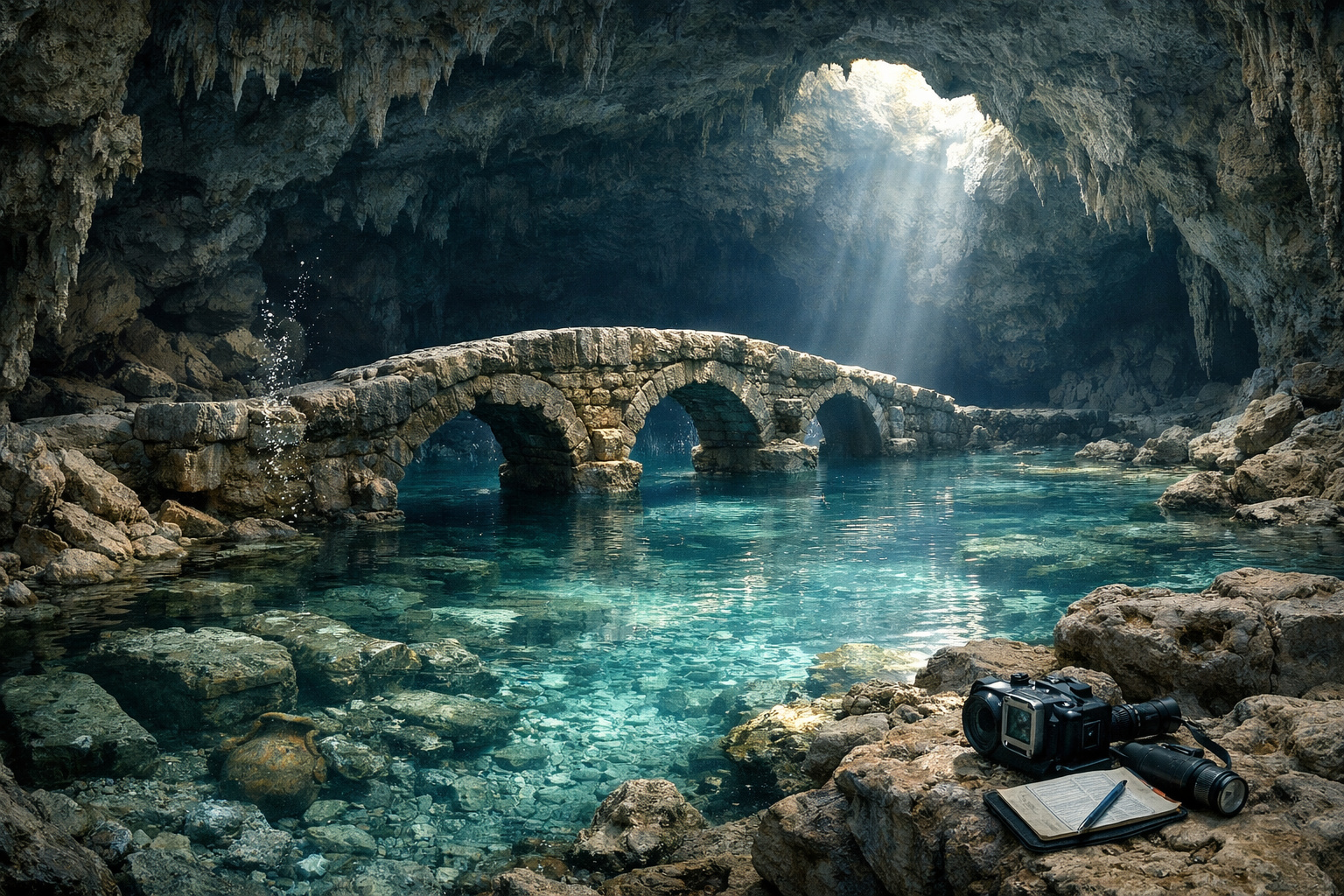
Structure Discovered Underwater Exposes Unprecedented Evidence of Human Presence, Reinforces Theories of Ancient Coastal Migration, and Helps Rewrite the History of the Mediterranean

The underwater bridge in the Mediterranean, nearly 6,000 years old, has brought new answers about ancient human occupation in coastal regions. The structure was found in the Genovesa Cave, located on the island of Mallorca, and surprised archaeologists and geologists.
From the beginning of the analysis, researchers dismissed the hypothesis of natural formation. On the contrary, the data indicates that the bridge was built by humans. This occurred during a time when sea levels were lower. Thus, the discovery helps fill important gaps about the colonization of the Mediterranean.
The information was disclosed by “Communications Earth & Environment”, a scientific journal that published the study’s results. According to the article, the structure provides new clues about human migration, environmental adaptation, and ancient climate changes.
-
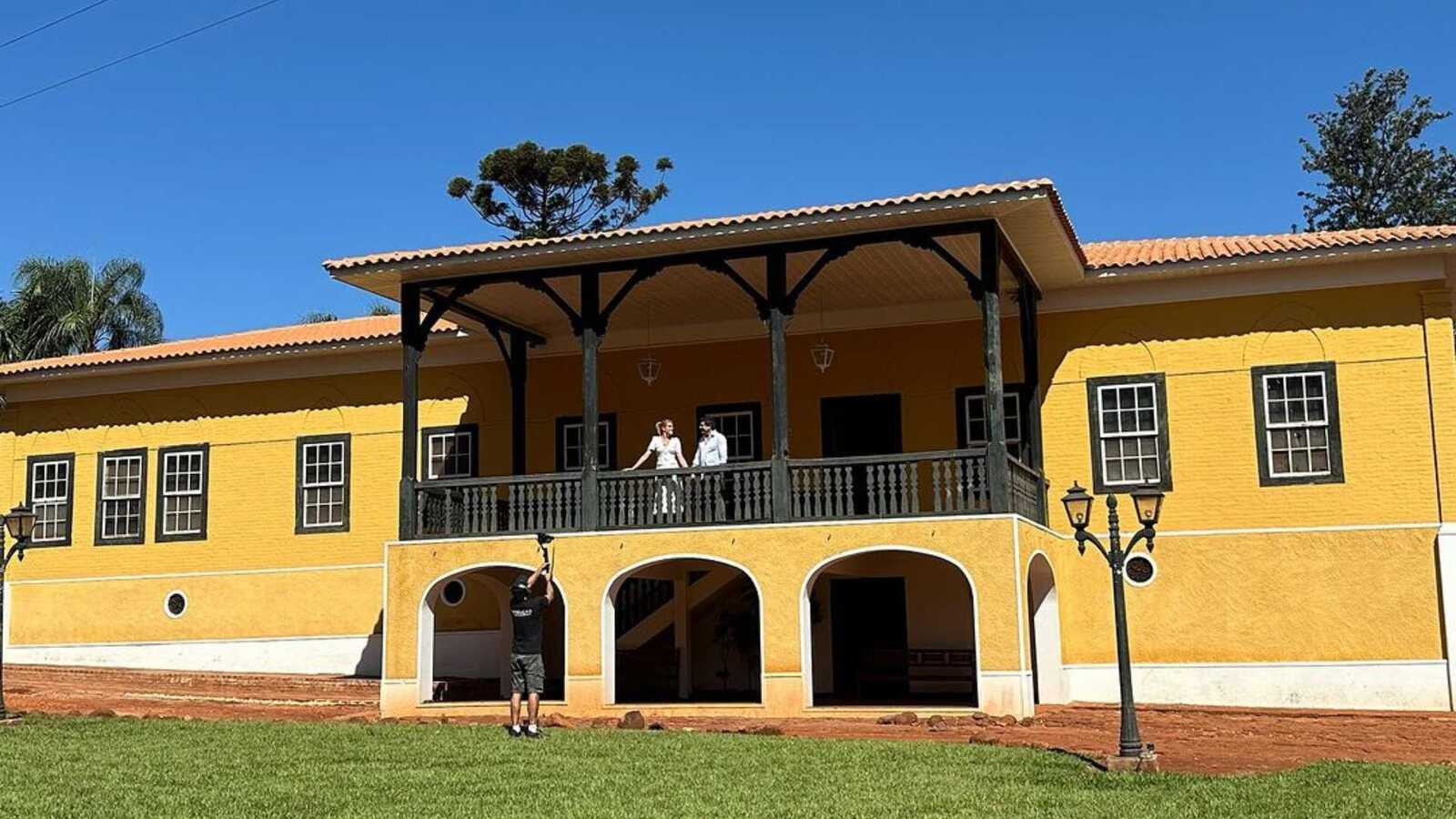
A Brazilian millionaire couple restores a farm over 150 years old in the interior of São Paulo and transforms the historic property with Portuguese tiles, antique furniture, and new spaces into a refuge that blends tradition, comfort, and sophistication.
-
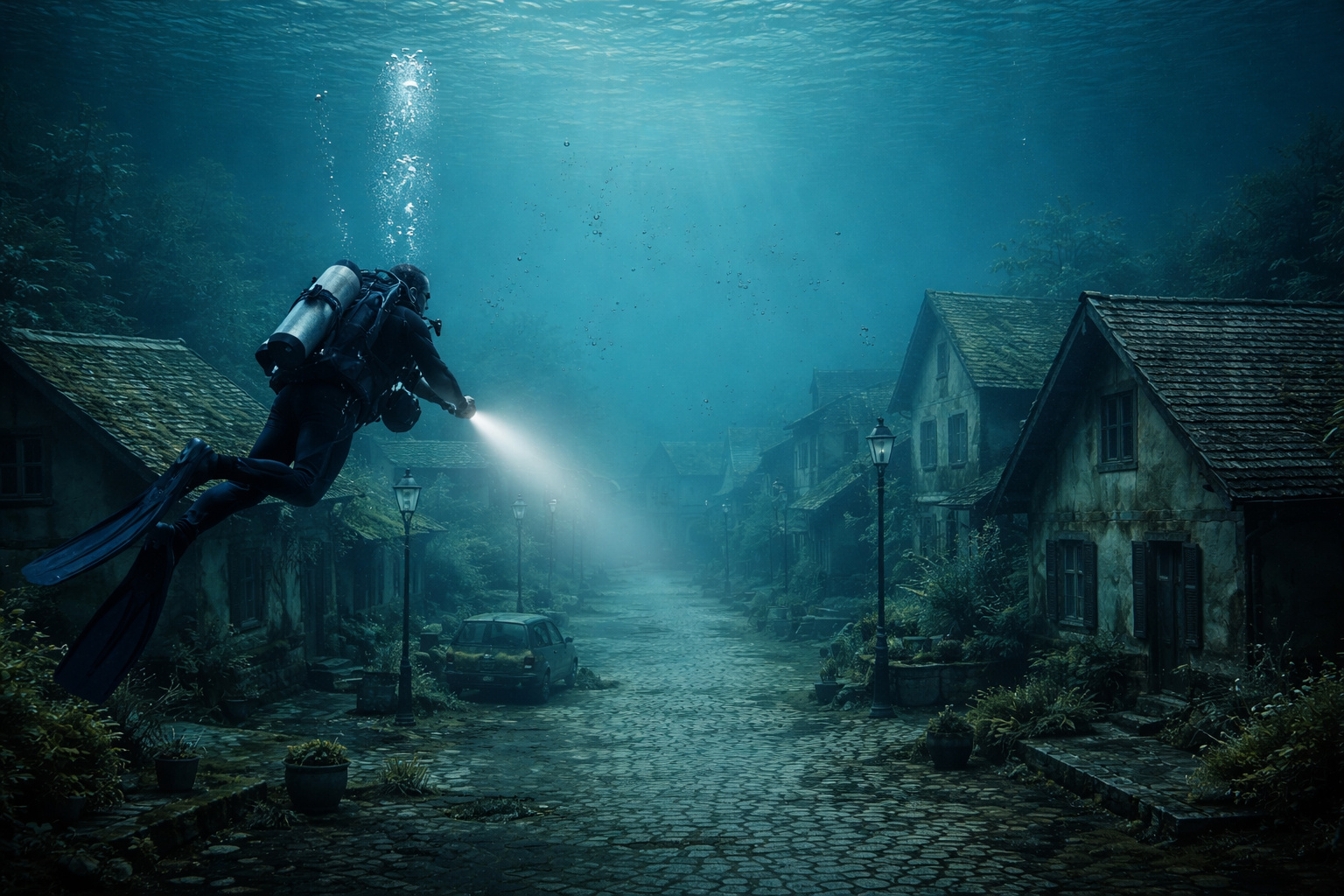
Submerged city in a lake in Minas reveals intact streets, preserved vehicles, and houses after more than 60 years, impressing divers.
-
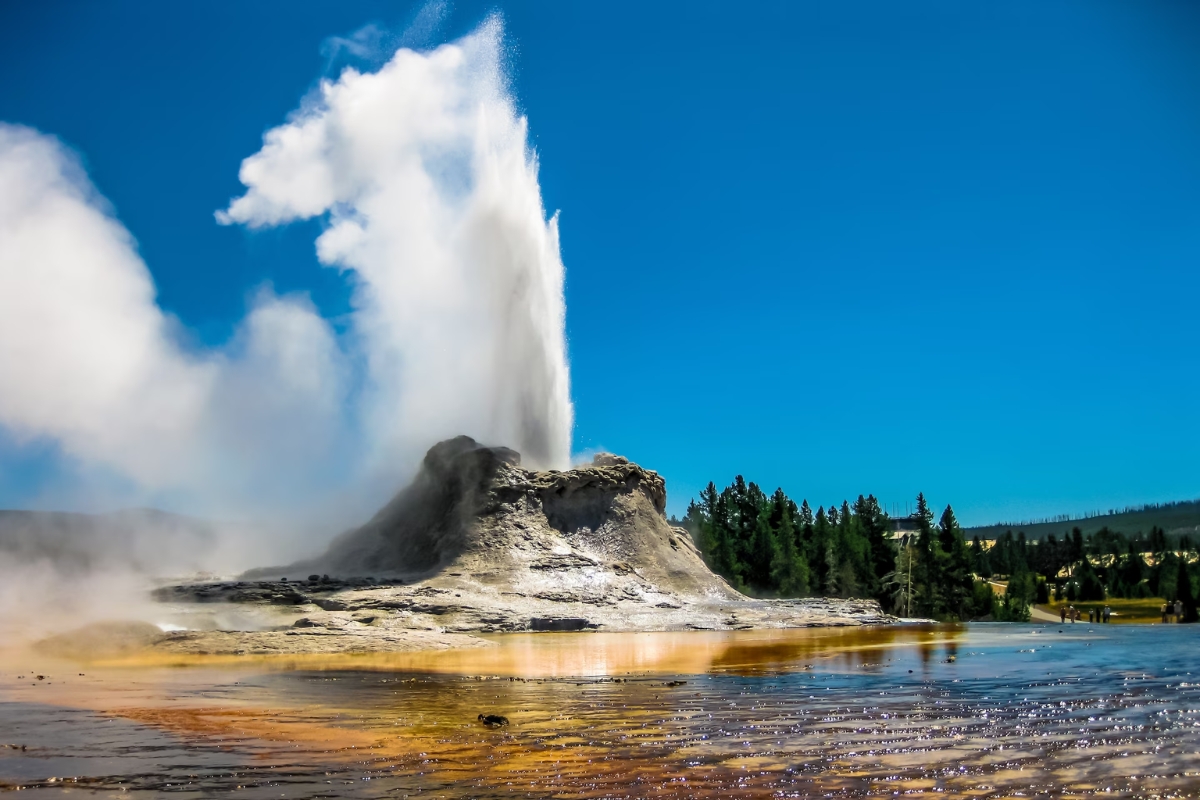
Yellowstone has started to rise again in an area of the caldera, and the movement rekindles fears surrounding the U.S. supervolcano, as scientists monitor the deformation and try to understand what is happening underground.
-
Woman arrested after receiving $1.2 million due to banking error and not returning the amount.


Underwater Bridge Reveals Human Engineering Before the Sea’s Advance
The scientists analyzed a 7.6-meter-long bridge, now entirely submerged. The data indicates that the construction occurred about 6,000 years ago. Additionally, researchers estimate that the bridge was used for approximately 500 years.
According to Bogdan Onac, a professor at the School of Geosciences at the University of South Florida, the structure connected interior areas of the cave when the environment was still dry. Over time, the sea level rose and flooded the site.
Therefore, the bridge became a rare archaeological record. It preserves direct evidence of human action in a scenario now inaccessible without technical diving. Furthermore, the discovery reinforces that prehistoric communities mastered more advanced construction techniques than previously thought.
Consequently, the Genovesa Cave emerges as a key point for understanding how ancient populations explored caves. They served not only as shelter but also as routes, circulation areas, and strategic spaces.
Caves Around the World Help Retell Human History
Although the underwater bridge in Mallorca draws attention, it is not an isolated case. On the contrary, caves in several countries reveal important remnants of human presence and the planet’s natural evolution.
In Mexico, for example, researchers from the National Institute of Anthropology and History (INAH) identified Mayan structures in caves in Tulum. They were used to collect rainwater. In France, the Castelbouc Cave revealed dinosaur footprints measuring 1.25 meters long.
In Russia, the Veryovkina Cave reaches a depth of 2,223 meters, making it the deepest in the world. In the United States, the Mammoth Cave has about 591 km in length, making it one of the largest known systems.
Thus, caves function as natural archives. They preserve geological, climatic, and archaeological data. At the same time, they help understand how humans adapted to extreme environments.
Underwater Discoveries Help Predict Climate Change Impacts
Beyond its historical value, the underwater bridge in the Mediterranean has current relevance. By reconstructing the ancient landscape, scientists can simulate future scenarios. This becomes essential in light of the advancing global warming.
The mapping of these structures allows for an understanding of how ancient communities reacted to rising sea levels. Thus, the data helps predict impacts on modern coastal areas, now densely populated.
Therefore, the discovery goes beyond archaeology. It connects the past, present, and future. The underwater bridge shows that the relationship between humanity and climate has always existed. Learning from this evidence can be crucial for facing current environmental challenges.
If sea levels continue to rise, how many other pieces of evidence of human history are still hidden beneath the planet’s waters?





-

-

-

-

-

-

8 pessoas reagiram a isso.