





 Portuguese
  English
  Spanish
  5 min of reading
  0 comments


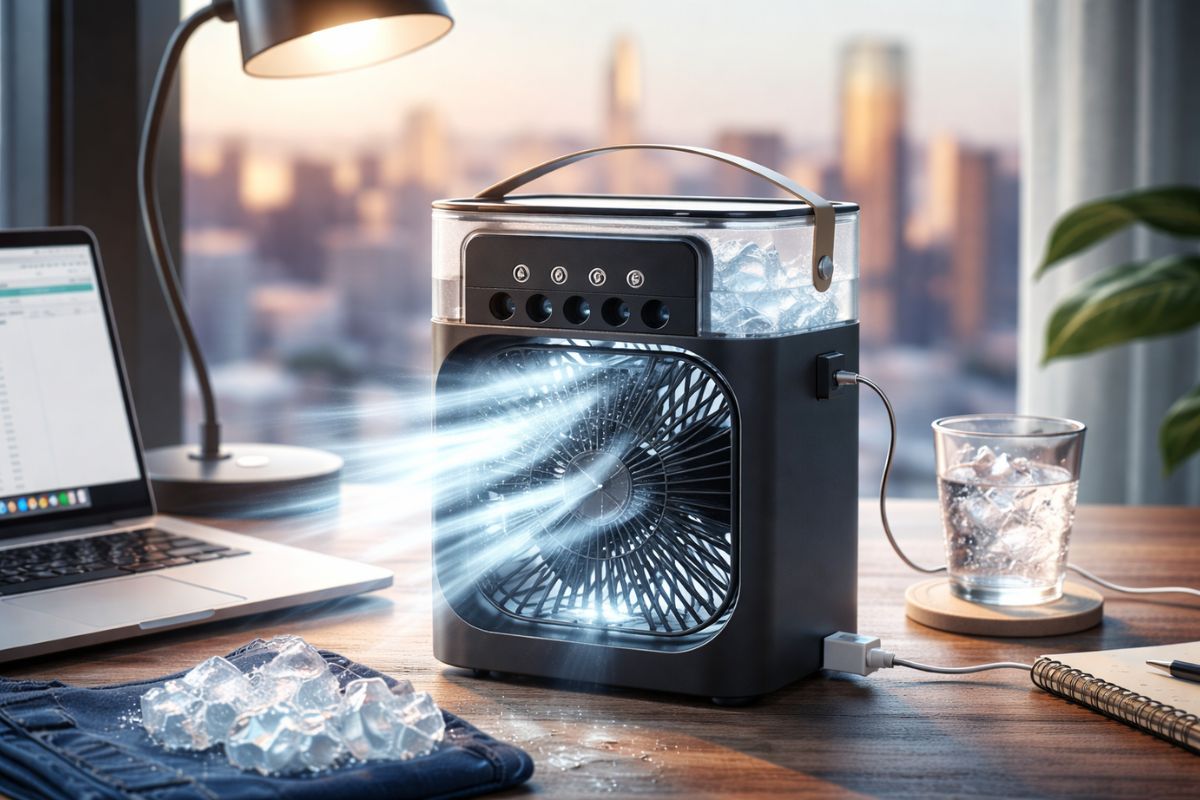
With USB Connection, Water or Ice Reservoir and Price Between R$ 40 and R$ 80, the Mini Air Conditioner Gained Traction Among Those Who Work, Sleep or Study in Small Environments, Because It Delivers Local Relief, Low Energy Consumption and Simple Use, Without Technical Installation or Construction During the Hottest Days.
The mini air conditioner has rapidly spread as a low-cost alternative to relieve intense heat without renovations, without a technician, and without high consumption. The appeal is straightforward: for around R$ 80, the user connects the device to USB, adds water or ice, and receives a cooler airflow in the immediate area.
In practice, interest is growing among people who spend hours in home office, students at compact desks, and residents of rooms with poor air circulation. The appeal is not in promising total cooling of the house, but in providing targeted comfort, portable and predictable for those who need a quick response in their daily lives.
What Explains the Fever for the Device in Summer

The popularization of the device combines affordable price, intuitive use, and a sense of immediate results. Instead of a large investment in fixed equipment, many people test a portable model in the price range of R$ 40 to R$ 80 to face temperature peaks. This lower entry cost reduces the purchase barrier and accelerates adoption during more aggressive heat periods.
-
Airbnb now offers private car service to pick you up at the airport in 125 cities around the world with a fixed price and no extra fees: the platform aims to become a complete hotel within your smartphone.

-
Japan tests for the first time a hydrogen-powered engine for large cargo ships and achieves over 95% of the fuel’s energy at full load, paving the way to equip a 17,500-ton cargo ship already planned for 2027.

-
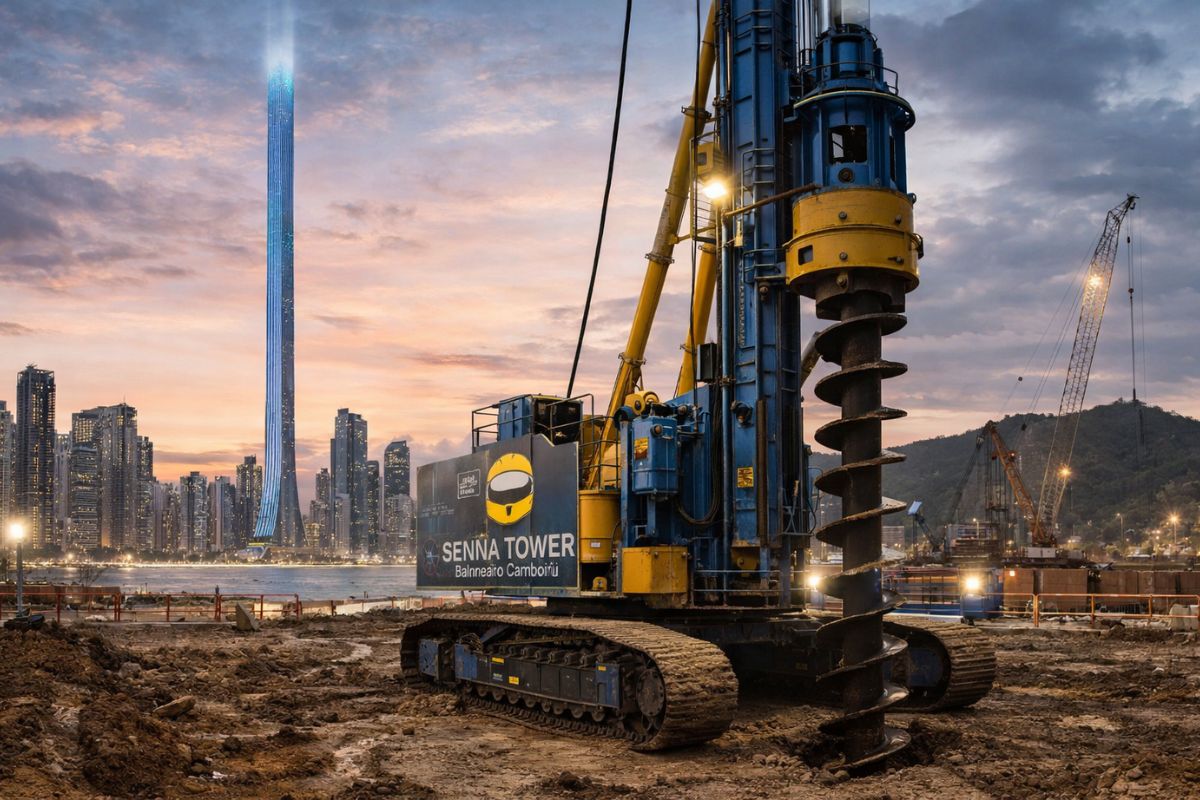
A mega drill costing R$ 50 million, weighing 130 tons, and the only one of its kind in Brazil has arrived in Balneário Camboriú to build the foundations of the Senna Tower, the skyscraper that honors Ayrton Senna.
-
The first cold front of autumn arrives in São Paulo this Tuesday with a risk of storms, hail, and gusts of wind, but the real cold is not coming now: April will be dominated by above-average heat and may even see a heatwave.


Another decisive point is the flexibility of use. The device can be connected to a laptop, power bank, or phone adapter, which expands the usage scenarios both indoors and outdoors. In small offices, at study corners, or beside the bed, it caters to the logic of personal comfort: less coverage in the environment, more focus on the user.
The context of routine also matters. Those who sit for long periods in the same position tend to value a constant airflow close to the face and torso, especially in dry climate regions. The promise of practicality makes sense for those who need local relief, without relying on installation and without altering the structure of the property.
How the Mini Air Conditioner Works in Practice
The system is based on evaporative cooling. The equipment pulls in hot air through a fan, passes this air through a wet filter, and returns a more pleasant airflow around the user. When the reservoir receives cold water or ice, the cooling effect tends to be felt more quickly in the area near the device.
Most models feature three ventilation levels, allowing users to adjust intensity according to time, temperature, and sensitivity. Some include integrated LED lights, but the main technical gain remains the combination of ventilation + local humidification. It does not operate as a central system, but rather as a personal cooler focused on short-range comfort.
With continuous use, the reservoir’s autonomy usually varies between 8 and 12 hours, depending on the chosen speed. This range assists in daily planning: usage during office hours, water replacement at the end of the shift, and a new round at night, for example. In operational terms, USB operation also benefits environments with simple electrical infrastructure.
Real Limits of Performance, Consumption, and Comfort
The device delivers better results in small or enclosed spaces, where the airflow can concentrate where the person is. In large and very open areas, the effect tends to dissipate more quickly. This is the central point to avoid creating false expectations: it works better as a personal solution than as a universal replacement for conventional air conditioning.
In terms of consumption, the advantage appears because the equipment is designed for reduced power and localized operation. Instead of cooling an entire room, it operates in a short range, reducing the energy expenditure associated with immediate thermal comfort. This helps to explain why the model gained traction among users looking for a balance between electricity bills and thermal sensation.
Another factor is the perception of comfort in dry climates. Since the air passes through a wet filter, some users report improved respiratory sensation in the direct vicinity of the device. Nonetheless, performance depends on basic maintenance and proper use of the reservoir. Without regular care, any efficiency gains diminish over time.
Where It Delivers More Results and How to Extend Its Lifespan
The most favorable scenarios are work desks, headboards, study counters, and compact stations with little circulation. In these locations, the short distance between the air outlet and the user amplifies the perceived effect. In an office routine, it often functions as an extra layer of comfort, not as the sole solution for the entire room.
To extend its lifespan, operational care makes a direct difference. The practical recommendation is to alternate use every 8 hours to avoid overheating, as well as to maintain the reservoir and filter in appropriate conditions. With this discipline, there are models that can last up to 10 years of use, according to references provided for this type of equipment.
Performance gains also improve when using ice in the compartment and keeping the device in a smaller environment. The logic is simple: the more controlled the space, the more consistent the thermal result around the user. This combination of context + maintenance is what separates a positive experience from frustration.
The mini air conditioner has advanced because it addresses a concrete pain point: intense heat with a tight budget, the need for mobility, and limited space for installation.
The device does not promise miracles, but it offers a specific and useful delivery when the user understands its limits and applies the device in the right scenario.
In your case, did the mini air conditioner work better in the bedroom, at the work desk, or in the office? And between price, consumption, and comfort, which factor weighed more in your purchasing decision?








Seja o primeiro a reagir!