





 Portuguese
  English
  Spanish
  9 min of reading
  2 comments


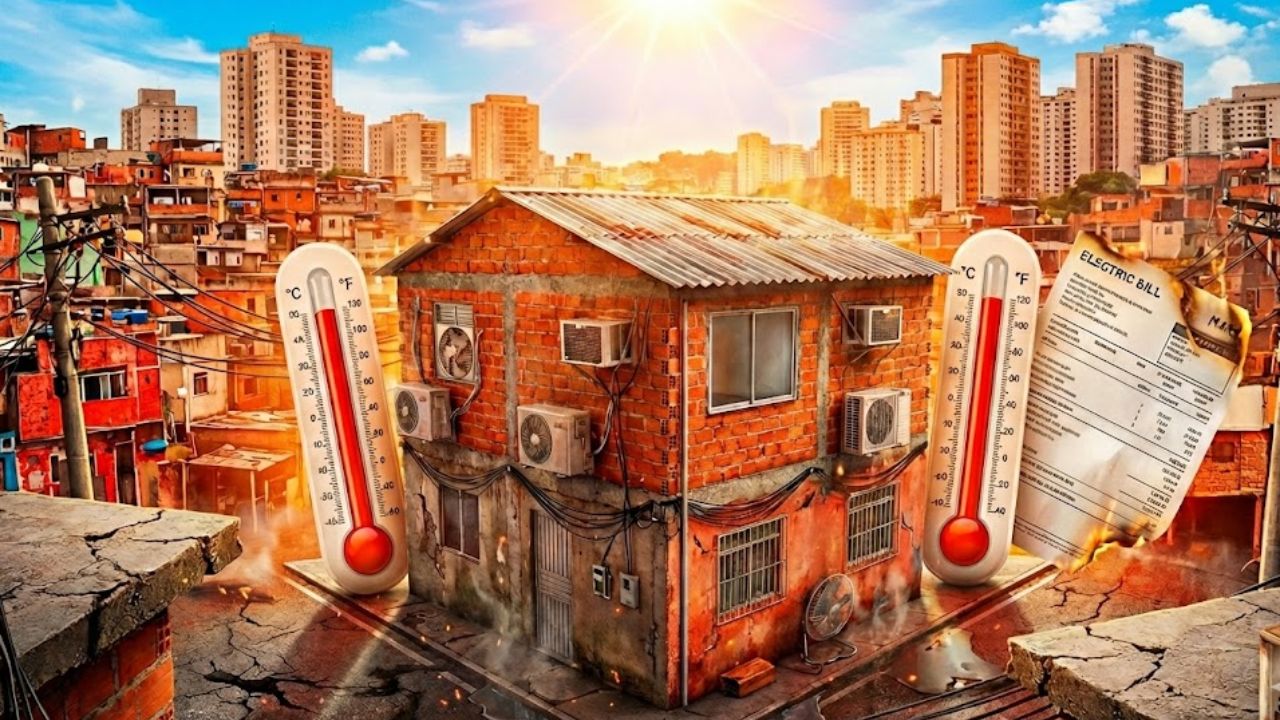


The Brazilian House That Should Be Shelter and Rest Is Becoming a Kind of Urban Greenhouse: It Retains Heat All Day, Worsens Health, Raises Electricity Bills, and Reveals a Deep Crisis in the Way Cities Are Built and Planned in the Country.
Between thin walls, cheap roofs, renovations focused on appearance, and increasingly hotter neighborhoods, the Brazilian house shows that the problem is not just the tropical climate or global warming. The thermal discomfort you feel inside your house is the direct result of economic, aesthetic, and political decisions that ignore the needs of those who live there.
Instead of being born first as shelter for the resident, the Brazilian house is born as a financial product. It must fit within the construction budget, the developer’s timeline, the bank’s requirements, and profit goals. Only after this is comfort, solar orientation, ventilation, and thermal performance considered. In this model, it’s no surprise that so many Brazilian houses behave like a greenhouse, storing heat during the day and releasing it inside at night.
To make matters worse, this Brazilian house does not exist in isolation. It is surrounded by paved streets, cemented backyards, few trees, and lots of concrete. Cities heat up like heat islands and push this excess temperature into houses. The most common response is air conditioning, which solves individual comfort but further increases urban heat and energy costs. In the end, the hot Brazilian house is a symptom of a system that fails on multiple levels, from brick to urban planning.
-
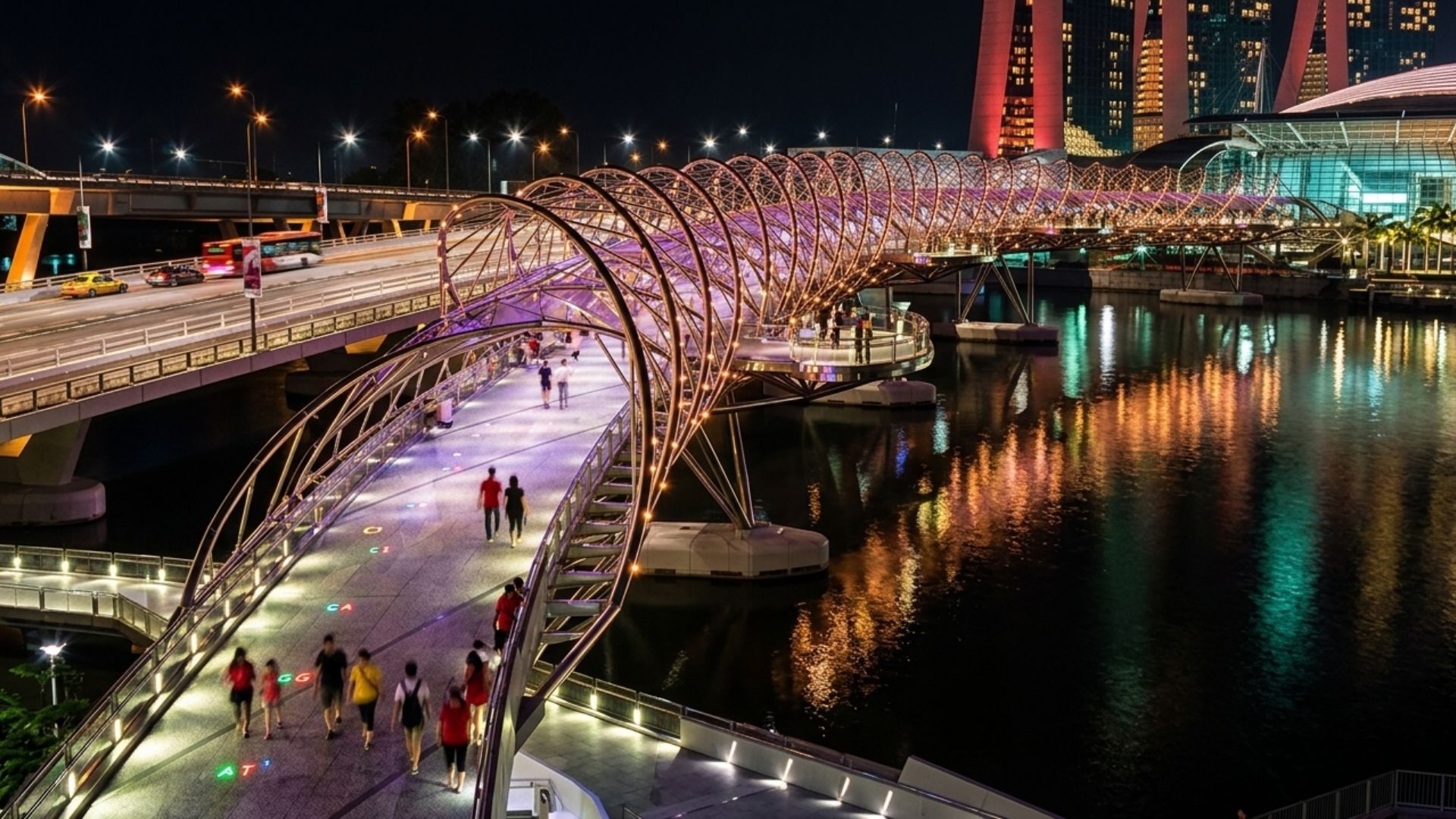
With a DNA shape, this bridge in Singapore draws attention in modern architecture and surprises tourists by transforming a simple crossing into an unforgettable visual experience in the urban heart.
-
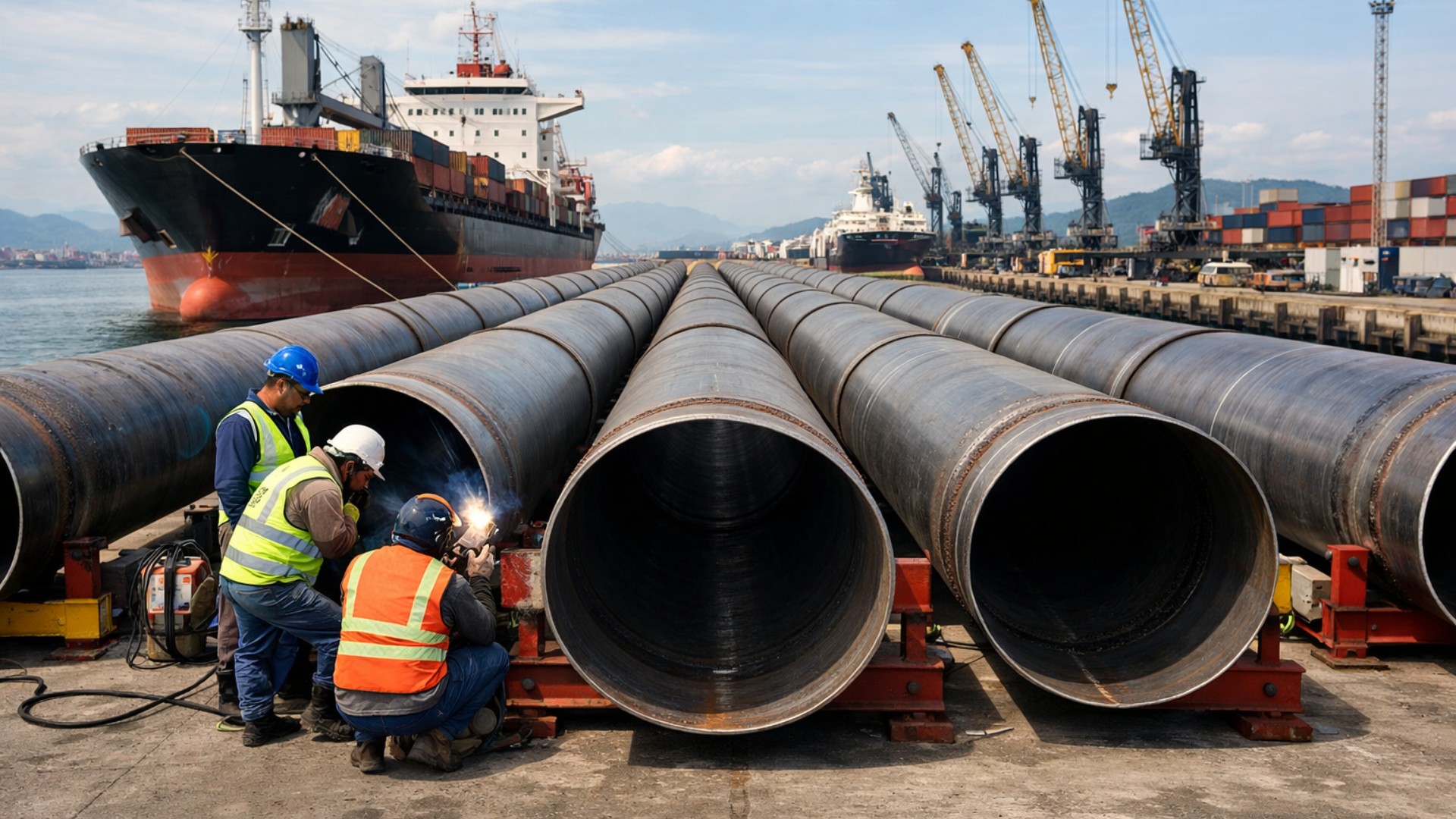
Giant underwater pipeline begins to take shape with a R$ 134.7 million project at the Port of Santos: the 1.7 km structure uses 12-meter and 700 mm pipes to supply water to 450,000 people in Guarujá.
-
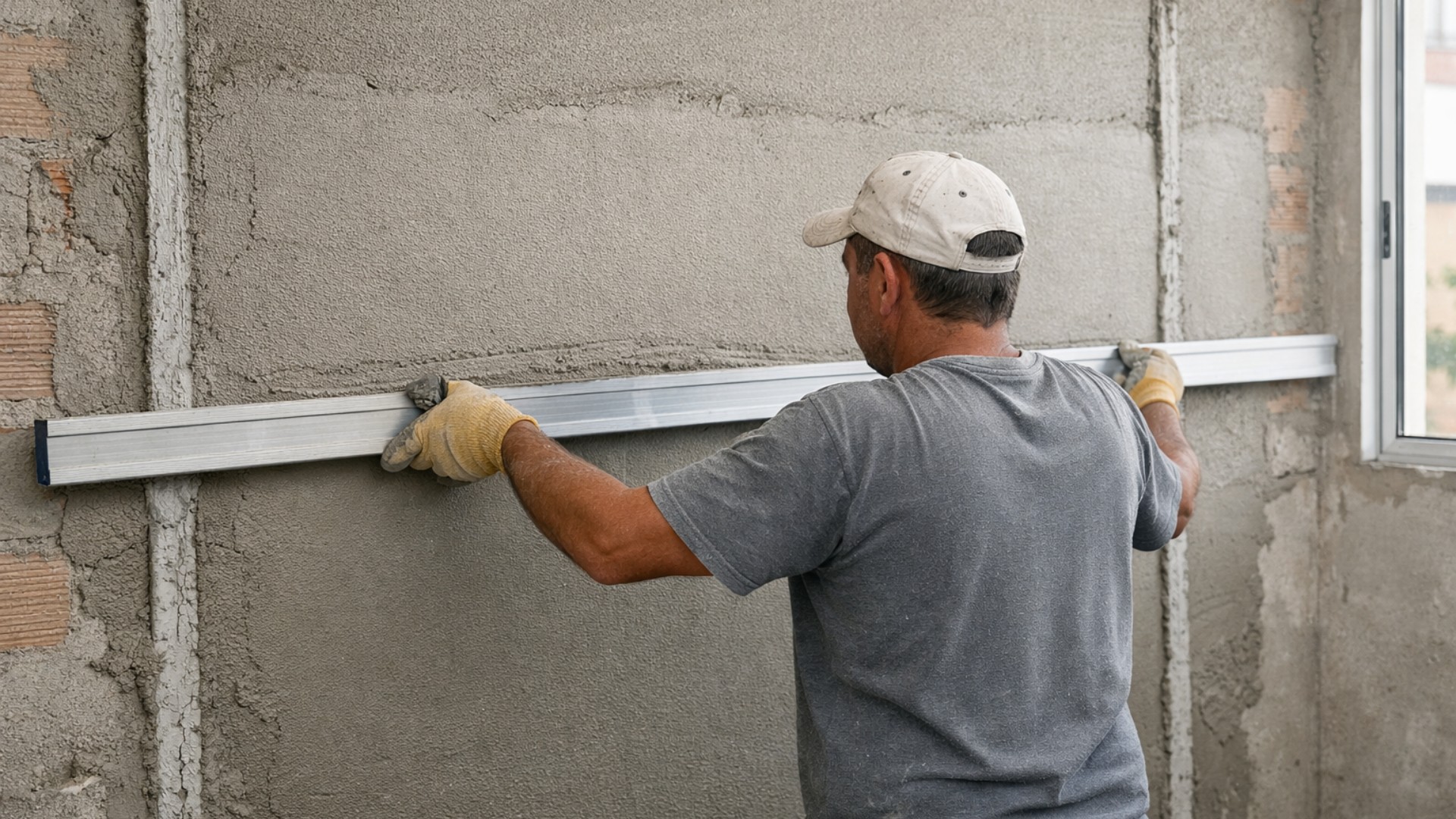
A mason reveals a professional plastering technique that uses aligned guides and a 3-meter ruler to plaster an entire wall in up to 3 hours, without visible seams, with uniform thickness, perfect plumb, and a finish ready for painting without rework.
-
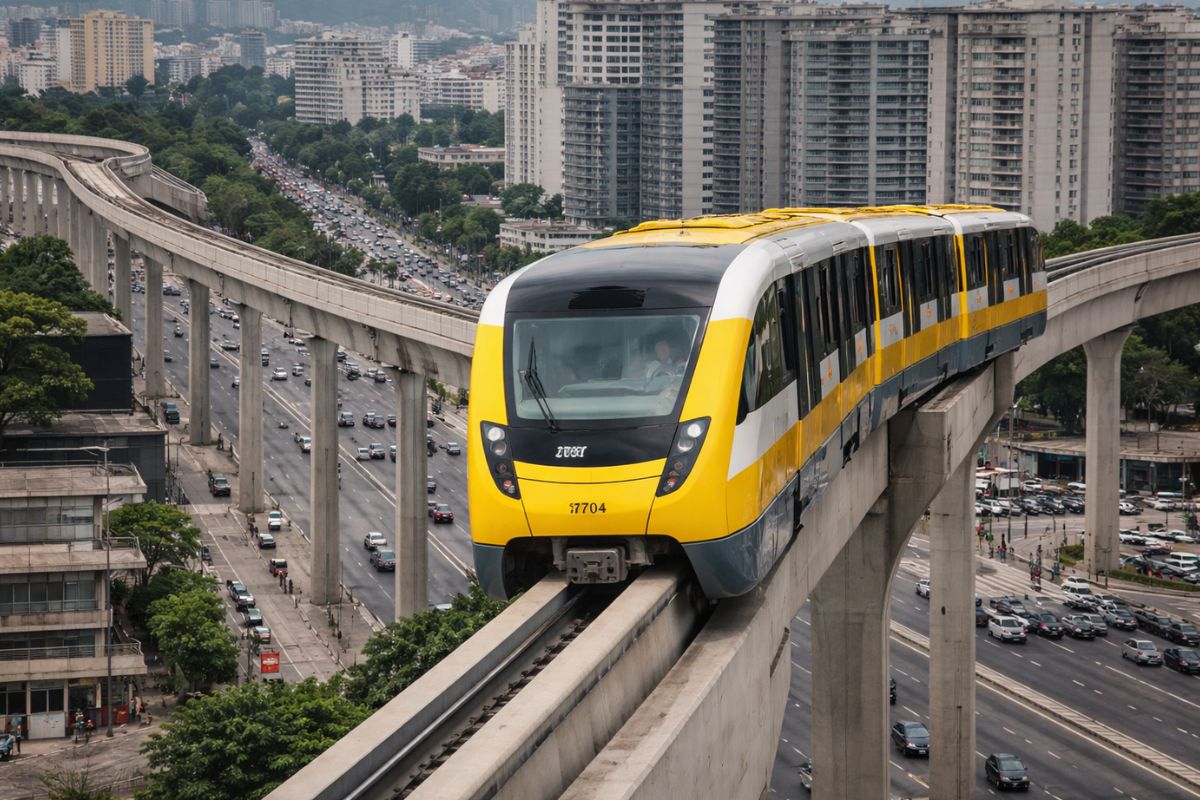
The project that was supposed to be ready for the 2014 World Cup in Brazil debuted with a 12-year delay and nearly R$ 6 billion invested: the Line 17-Gold of the São Paulo monorail opened with reduced hours and is only expected to operate fully in October.

When the Brazilian House Stops Being Shelter and Becomes a Commodity
To understand why the Brazilian house is so hot, one must return to the logic that governs the construction industry. In a peripheral capitalism, housing does not first arise as human shelter. It is born as a commodity. The land, the building, and the apartment are treated as financial assets that need to generate quick returns.
In this context, wall thickness, thermal mass, solar orientation, or cross ventilation are only taken into account after the economic model is viable. What comes first is profitability and the rush to turn over capital, not the comfort of those who will live in the Brazilian house.
Historically, Brazilian vernacular architecture was better at dealing with the climate. Thick adobe, stone, or traditional masonry walls acted as heat batteries. They absorbed radiation throughout the day and slowly released it at night, smoothing temperature variations. Today, with the industrialization and financialization of the real estate market, time has become the main parameter. Thick walls mean more material, more weight, more foundation, and more construction time.
Result: the Brazilian house has thinned out. Concrete and ceramic blocks create walls that are 9 or 15 centimeters thick, with little thermal mass, allowing heat to pass through quickly and warm the interior even in the morning. The savings made in construction become chronic spending on fans, air conditioning, medication, and energy throughout the entire lifespan of the Brazilian house.
The Economy of Thin Walls and Cheap Roofs

It is in low-cost housing that this logic appears most brutally. When the goal is to erect as many units as possible in the least amount of time, the Brazilian house project operates at the minimum viable limit. Every centimeter of wall, every layer of insulation, every material improvement is viewed as extra cost, not as a human necessity.
In many single-story houses, the roof is replaced with PVC ceilings or simply eliminated. The roof receives thin, cheap, lightweight fiber cement tiles, with high thermal conductivity and almost no inertia. Without insulation, without ventilated ceiling, the set functions like a radiator: the tile heats up greatly under the sun and radiates heat directly into the Brazilian house.
At the same time, small standardized windows are installed to reduce costs. They may meet the legal minimum but fail to ensure real cross ventilation. The Brazilian house ends up surrounded by surfaces that easily absorb heat and have almost no capacity to delay or dissipate that heat. In very dense housing complexes, one block shades another but also blocks the wind, creating entire neighborhoods that are stifling.
On roofs and façades, the race for the lowest cost favors metallic and lightweight materials, often applied without insulation. Thus, the popular Brazilian house accumulates hot tiles, thin walls, and little ventilation until it becomes an internal environment hotter than the street itself.
Aesthetics, Status, and Renovations That Worsen the Heat of the Brazilian House
It would be easy to imagine that only low-income Brazilian houses suffer from overheating. But the problem also affects the middle and upper classes, albeit masked by expensive finishes and a “modern” façade.
Residential and corporate architecture has begun to mimic models from cold countries, with large glass planes, clean façades, and volumes without exterior solar protection. In the Northern Hemisphere, the challenge is to capture heat. In Brazil, the challenge is to protect against it. When the Brazilian house adopts fully glass walls without brise-soleil, eaves, or canopies, it behaves like a greenhouse: the sun enters easily, heats floors, furniture, and walls, and the heat gets trapped.
In renovations, the logic is similar. The resident of the Brazilian house wants polished porcelain flooring, lowered plaster ceilings, ledges, and a “clean” façade. Few people look at eaves, thermal mass, cross ventilation, or roof color. Wide eaves that protected walls and windows are replaced with ledges that expose everything to the sun. Lowered plaster ceilings reduce the height and bring warm air closer to the heads of the residents.
The Brazilian house begins to seek visual status but pays a high thermal price. The shiny floor may cool the feet for a few seconds but does not resolve the heat accumulated in the ceiling and walls. At night, dark surfaces and materials with high storage capacity release heat and prevent the interior from cooling down.
Hot City, Brazilian House Even Hotter
No Brazilian house exists in isolation. It is set within a neighborhood, which is within a city. If the surroundings are hard, gray, and impermeable, the thermal problem worsens.
Urban heat islands cause concrete and asphalt regions to register temperatures several degrees higher than areas with vegetation. In large Brazilian cities, densely populated neighborhoods with few trees and cemented backyards can be many degrees hotter than parks and green zones. This extra heat envelops the Brazilian house and prevents it from cooling down at night, even with open windows.
Inequality even appears in temperature. Wealthy neighborhoods tend to have wider streets, gardens, squares, and many trees. In contrast, in the peripheries and favelas, the Brazilian house is built closely together, with narrow alleys and almost no vegetation. The cemented backyard is seen as an improvement: less mud, easier cleaning, and a sense of “finished construction.” But by replacing soil and plants with concrete, the house loses one of the best allies against heat.
When the entire neighborhood heats up, the Brazilian house has nowhere to dissipate internal heat. The external environment stops functioning as a nighttime relief and instead feeds a cycle of continuous warming.
Air Conditioning, Electricity Bills, and Cooling Poverty

When the Brazilian house and neighborhood fail, the most common solution is to buy an air conditioner. Sales of these devices increase with each hotter summer. In the short term, the resident achieves some thermal relief. In the medium and long term, the issue changes form.
Each air conditioning unit cools the interior of the Brazilian house but releases heat outside along with the heat produced by the compressor itself. If many neighbors do the same, the street gets even hotter. The external temperature rises, forcing everyone to use their equipment for longer and at higher power. It’s a cycle of heat feedback: hot city, more air conditioning, hotter city, more energy consumption.
Moreover, the intense use of air conditioning creates spikes in demand on the power grid. Street transformers become overloaded, expensive and polluting thermal plants are activated, and energy tariffs increase, impacting the entire population. The private comfort of the Brazilian house turns into a collective problem of the electrical system and cost of living.
For millions of families, this transforms into cooling poverty. It is not simply about not having access to energy. It’s having electricity, having a fan, or even an old air conditioner, but not having enough income to use these appliances safely. In many households, any increase in the electricity bill jeopardizes the budget for food or medicine.
Heat, Health, and the Body Inside the Brazilian House
Excessive heat in the Brazilian house is not just a matter of discomfort. It is also a public health problem. Intense heatwaves are associated with increased hospitalizations and deaths, especially among the elderly, children, and people with chronic diseases.
When the Brazilian house remains hot even at dawn, the body cannot recover. Sleep worsens, irritability increases, concentration falls, and feelings of exhaustion and anxiety grow. In families that work all day exposed to the sun, such as bricklayers, drivers, street vendors, or delivery people, returning to a hot house means continuing to experience thermal stress.
The Brazilian house, which should be a place for rest and recovery, turns into yet another source of physical and mental wear. This is already beginning to appear in the legal sphere, with decisions recognizing excessive heat as an unhealthy condition in work environments, including in construction and real estate sectors.
Materials, Roof, and Possible Choices for the Brazilian House


Although the diagnosis is harsh, the Brazilian house is not doomed to be a greenhouse forever. Much of the solution lies in relatively simple choices that combine traditional techniques and bioclimatic knowledge.
The most critical point is the roof. Between thin fiber cement tiles without insulation and a well-insulated covering, the difference in internal temperature is enormous. Exemplary green roofs, coverings with vegetation, demonstrate that it is possible to drastically reduce heat, but they are still expensive and complex for most people. Between the worst and the ideal, there are intermediaries: tiles with better thermal behavior, light colors on top of the Brazilian house, reflective blankets, and ventilated ceilings.
On the façades, returning to the use of wide eaves, brise-soleil, and canopies would already change a lot. External solar protection is always more efficient than trying to remove heat after it has entered. Perforated elements such as cobogós, shutters, and internal patios allow the Brazilian house to breathe, ensuring ventilation and shade at the same time.
On the ground, removing pavement from parts of backyards and replanting grass, trees, or a garden helps cool the microclimate. Each Brazilian house that regains some vegetation around it reduces the heat load of the entire neighborhood a little.
What Needs to Change in the Way of Thinking About the Brazilian House
Ultimately, the question “why is my house so hot?” reveals a system in which thermal performance has been treated as a luxury, not as a basic requirement. The Brazilian house was designed to fit within financing, to multiply units, and to become a number in a spreadsheet, not to protect the body from heat.
Changing this scenario requires reviewing regulations, public policies, housing finance, and also project and renovation culture. It means treating thermal comfort, ventilation, and shading as central to housing quality, not as optional details. It also means recognizing that the Brazilian house is within a city and that greening, permeable soil, and less concrete are as important as a good roof.
Coolness should not be a privilege for those who can afford a high electricity bill or install several air conditioning units. The Brazilian house needs to return to being shelter, not a greenhouse. And in your Brazilian house, which change do you feel would make the most difference in facing the heat of daily life?







Gente que matéria top! Muito boa….li cada linha…super interessante e verdadeira. Gente precisa mudar conceitos e adotar políticas públicas para mudar esse cenário de casas estufas, mudar os bairros. Mais verde e menos cimento! Infelizmente esse calor, efeito estufa só vai aumentar cada vez mais devido mudanças climáticas . Parabéns pela matéria 👏🏻
Parabéns à equipe. Excelente pauta. Essa questão da qualidade das habitações ocupa meu pensamento há décadas, mas quando toco no assunto parece que estou blasfemando. E a política habitacional é cruel, tanto da parte dos governos quanto da iniciativa privada – a matéria deixa isso bem claro.
Além das questões técnicas da construção e do urbanismo, tem outro fator que condena o brasileiro a viver em habitações de péssima qualidade: é a escassez de moradias. As metas dos programas habitacionais são sempre insuficientes para resolver o problema do brasileiro que precisa de uma casa, e o que se concretiza desses programas oficiais é ridículo, enquanto que a iniciativa privada só se ocupa das classes médias. Em consequência, você consegue um emprego, mas precisa morar na favela. O problema é tão generalizado e persistente que dá a impressão que a escassez de moradias é proposital.
Sugiro à chefia de redação dessa revista que paute muitas matérias sobre o assunto, especialmente sobre alternativas e técnicas construtivas: materiais de paredes e divisórias, uso do bambu e da argila, soluções para circulação do ar, poço canadense, formas de exaustão vertical, pé direito, beirais e assim por diante.
Nada disso é novidade, mas acredito que elevar a consciência do problema e das soluções é o caminho.