





 Portuguese
  English
  Spanish
  7 min of reading
  0 comments


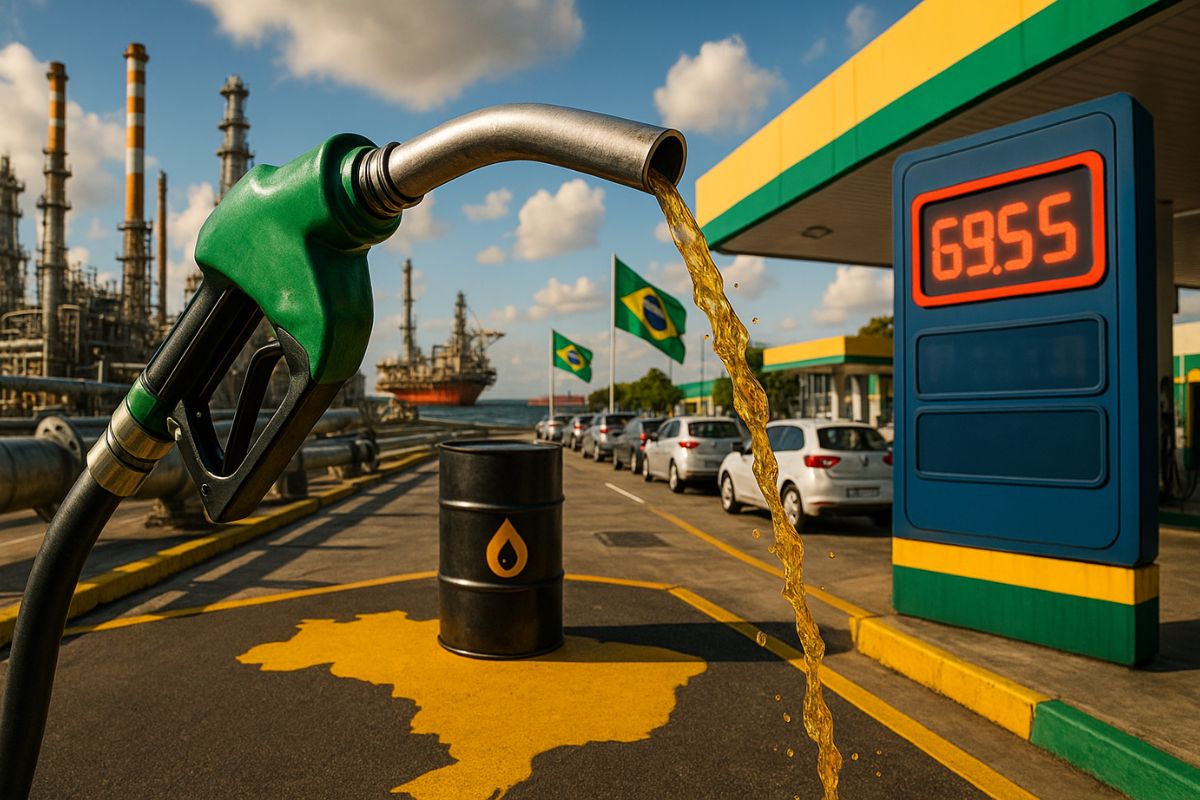
Understand How Gasoline Prices, Fuel Prices, and Petrobras’ Pricing Policy Connect Gasoline in Brazil to Oil in Brazil and the External Scenario.
The price of gasoline in Brazil is the result of a complex sum of internal and external factors, which go far beyond the gas station pump and Petrobras. From the cost to extract oil from beneath the sea to the tax burden, including the dollar exchange rate, geopolitics, and the limitations of national refineries, each stage adds weight to the final value.
In practice, every increase in gasoline prices spreads impact across the economy, because almost everything we consume is transported by trucks, cars, or motorcycles powered by fossil fuels. When fuel prices rise, freight costs increase and this shows up in the prices of food, services, and practically any product. Understanding why the liter is so expensive helps to see why simple solutions, such as “producing more oil,” do not solve the structural problem.
Where Gasoline Comes From and How Oil Factors In
To understand the price of gasoline, one must start with oil.
-
3 times more ethanol per hectare can be produced with Eike Batista’s supercane amid rising gasoline prices — how can this technology change fuel prices in Brazil?
-
Former president of IBP highlights that dependence on diesel imports pressures prices in Brazil, increases vulnerability to global crises, and underscores the need for more robust and sustainable energy policies.
-
Middle East War Drives Up Oil Prices, And Petrobras Increases Diesel: Fuel Reaches R$ 3.65 Per Liter At Distributors
-
Oil Soars to Nearly $120, Middle East Tensions Shake Global Market, and a Little-Known Detail Returns to Energy Debate: The Gigantic Strategic Reserves Hidden by G7 Countries — See How Many Millions of Barrels Each Nation Holds in Reserve to Face a Global Crisis
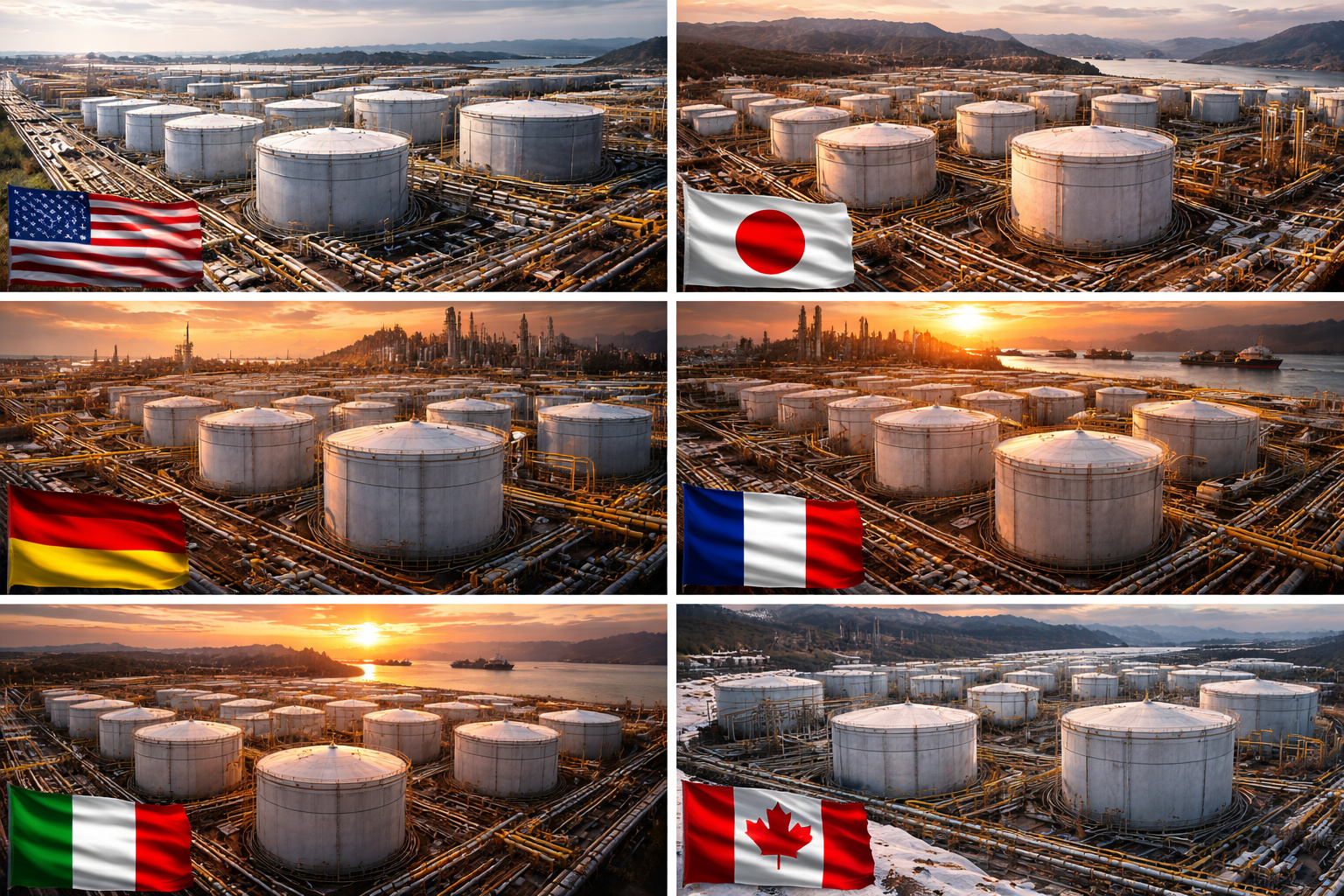

Contrary to a still-common myth, it does not come from dinosaurs, but from the decomposition of small marine life forms, mainly microscopic algae, accumulated on the seafloor millions of years ago.
This material, subjected to pressure and temperature over geological eras, transformed into a mixture of hydrocarbons and other substances, such as sulfur.
Oil is found at great depths, often several kilometers below sea level. In some wells, it is like drilling the equivalent of an inverted Everest at the ocean floor.
Extracting oil requires advanced platforms, high-cost equipment, and a sophisticated technological chain, which already sets a high floor on production costs.
In Brazil, Petrobras concentrates practically all this operation, from geological mapping to extraction and refining, which helps explain why it is one of the largest oil companies in the world.
How Gasoline Prices Are Formed in Brazil
Even with this prominence, Petrobras’ share in the price of gasoline is just a part of the equation.
If we consider, as a reference, a purchase of 100 reais in gasoline, around 36 reais corresponds to Petrobras’ value.
About 17 reais go to distribution and resale, 13 reais relate to the ethanol mixed with gasoline, and the remainder consists of federal and state taxes.
This means that almost half of the gasoline price can be explained by taxes and the ethanol blend, two elements directly tied to internal decisions.
Federal and state taxes and the policy of adding ethanol to gasoline are defined in Brazil by economic, fiscal, and environmental choices.
The other part of the equation, however, is strongly anchored in external factors, such as the international price of crude oil and the dollar exchange rate.
Taxes, Ethanol, and Internal Decisions That Weigh on the Wallet
In the internal component of the gasoline price, taxes are the main actors.
Governments need revenue to finance public policies, and fuels are a broad and relatively easy tax base to collect.
The problem is that any adjustment in this burden immediately reflects in the driver’s wallet and the production chain, creating political pressure.
Additionally, the ethanol blend in gasoline also influences prices.
Ethanol, produced mainly from sugarcane, has costs influenced by crop, climate, productivity, and agricultural logistics.
Poor harvests, production failures, or increased demand can raise ethanol costs, driving up gasoline prices.
Since taxes and ethanol together represent a significant portion of the pump price, decisions made in Brasília or state assemblies have a direct impact on consumers’ bills.
Why Brazil Remains Dependent on the International Market
One of the big questions is: if the country produces more oil than it consumes, why does the price of gasoline remain so exposed to the external market?
The answer revolves around two central points: the type of oil and the refining capacity.
There are different types of oil. One is classified as light or heavy, depending on density.
Light oil is more suitable for gasoline production because its refining is simpler and less costly.
Another criterion is the sulfur content: the so-called “sweet” oil emits fewer pollutants than “sour” oil, which is richer in sulfur.
Not all oil produced in a country is ideal for its internal needs, which necessitates adjustments, mixtures, or exports in exchange for other types of oil.
The Bottleneck of Refineries and Its Impact on Gasoline Prices
Even with large production, Brazil faces a structural problem: limited refining capacity.
National refineries are few and, in many cases, old, with designs intended for processing heavier oil.
Most of the pre-salt oil discovered in 2007 is light, more suitable for gasoline, but not always fully utilized domestically.
Because of this, the country exports a significant portion of its crude oil and imports already refined products.
It’s like selling raw materials and buying the finished product while paying the added value abroad.
This dependence on imported derivatives directly links gasoline prices to the international scenario, in dollars.
Whenever the American currency rises or the barrel increases in price abroad, the impact reaches Brazilian pumps, regardless of high local production.
Dollar, Barrel, and Geopolitics: Gasoline Prices Determined Elsewhere
Oil is priced in dollars in international markets. This means that the dollar exchange rate and barrel value form a kind of “invisible commitment term” regarding gasoline prices.
Information about the job market or interest rates in the United States can affect the dollar, and this fluctuation ultimately translates to fuel prices in Brazil.
Furthermore, barrel prices are highly sensitive to geopolitics. Crises in the Middle East, sanctions on large producers, wars and strategic decisions of member countries in major cartels can reduce supply and raise prices.
Historical examples, such as the oil shock of the 1970s or the rise during the war in Ukraine, showed how two countries in conflict thousands of kilometers away can cause the price of gasoline to skyrocket in Brazil.
The effect is clear: conflicts, production cut decisions, and international demand shocks reach Brazilian pumps within months.
When Prices Rise Like a Rocket and Fall Like a Feather
Events like the pandemic also exposed the volatility of gasoline prices. In 2020, lockdowns reduced global fuel demand, and production was curtailed to prevent stagnant inventories.
As economic activity resumed, the demand for transportation and energy quickly returned, but the supply took longer to respond.
This mismatch pulled gasoline prices in Brazil from around 4.50 reais to above 7 reais in a short period, with increases exceeding 50 percent in just over two years.
Increases are usually immediate, “at rocket speed”, because companies quickly pass on costs to preserve margins.
On the other hand, decreases are slower, “at feather speed,” because sellers tend to hold prices while consumers are still accustomed to the higher level.
Petrobras’ Pricing Policy and the Limit of Internal Adjustment
For many years, Petrobras followed the so-called Import Parity Policy, in which the price of gasoline in the country was aligned with the international oil value and exchange rates.
Any increase in the dollar or barrel was quickly passed on. This made prices transparent relative to the global market, but pressured consumers and increased sensitivity to external shocks.
More recently, the company began adopting a more complex model that combines external indicators with internal variables, such as market conditions in each region.
The idea is to find a balance point between the maximum a buyer is willing to pay before seeking another supplier, and the minimum the company can practice to maintain profit.
In practice, however, the average reduction compared to the former parity has been modest, around a few percent, which does not address the structural nature of fuel price inflation.
Refining, Energy Matrix, and the Future of Gasoline Prices
A long-term solution to reduce the exposure of the gasoline price to the external market would be to expand and modernize the refining sector by constructing new refineries and adapting existing ones to better process pre-salt oil.
This would permit greater usage of oil produced domestically to meet internal demand, decreasing the need to import derivatives.
The issue is that projects of this scale cost billions of reais and take many years to pay off, especially while the world discusses the transition to cleaner energy sources.
Heavily investing in infrastructure focused on fossil fuels at a time of accelerating climate change poses economic and environmental risks, given that demand for gasoline is expected to decrease in the coming decades as other technologies gain scale.
Transport, Alternatives to Oil, and What Could Truly Lower Costs
The real structural point is that one of the main uses of oil is transportation. Cars, buses, trucks, and airplanes consume a huge share of global energy.
To reduce reliance on gasoline, it is not enough to just tweak Petrobras or taxes; it requires rethinking the mobility model.
Electric cars are a partial alternative, with lower direct emissions, but present challenges such as battery production and disposal.
More decisively, investing in quality public transport, bus corridors, metro systems, urban trains, and adequate infrastructure is essential to reduce congestion and fuel waste.
Cities with efficient public transport, well-maintained streets, and urban planning manage to lessen dependence on individual fleets, which, in the long run, reduces pressure on gasoline consumption and the public’s sensitivity to each fluctuation at the pump.
What Really Needs to Change for Gasoline Prices to Drop for Real?
The price of gasoline is high in Brazil because it carries, at the same time, the cost of a complex production chain, a significant tax burden, the limitations of refining capacity, and all the fluctuations of international economy and politics.
Point adjustments in taxes or pricing policy may provide momentary relief, but do not change the fact that the mobility model and energy matrix remain deeply dependent on oil.
As long as infrastructure continues to be organized around combustion cars and the country remains exposed to dollar and barrel shocks, the consumer will feel every global crisis at the pump.
In light of all this, the question for you is: in your opinion, does the path to improving gasoline prices lie more in changes to Petrobras’ pricing policy, tax reductions, or significant investment in public transport and new energy sources?









-

Uma pessoa reagiu a isso.