





 Portuguese
  English
  Spanish
  4 min of reading
  0 comments



Check The Differences Between Asphalt And Concrete, The Advantages And Disadvantages Of Each Type Of Paving, And How They Impact The Streets In Brazil.
The paving of roads in Brazil is a crucial part of the development of the country’s urban and road infrastructures. Although the concept of paving is relatively new in our history, the use of roads and streets dates back to the colonial period. Today, we will explore the predominant choice between asphalt and concrete for the streets in Brazil, their advantages and disadvantages, and why asphalt is the most common option.
History And Evolution Of Street Paving In Brazil
The paving refers to the surface layer of roads, designed to support vehicle and pedestrian traffic.
This layer is essential to ensure the safety, comfort, and durability of the roads.
-
American Airlines starts selling trips as if they were flights, with check-in and baggage check at the airport, but on short routes, passengers board luxury buses connecting cities to major hubs in the U.S.

-
São Paulo surprises the world with a colossal railway network project that promises over 1,000 km of tracks, R$ 194 billion in investments, and 40 projects connecting the capital to the interior with fast and sustainable trains.

-
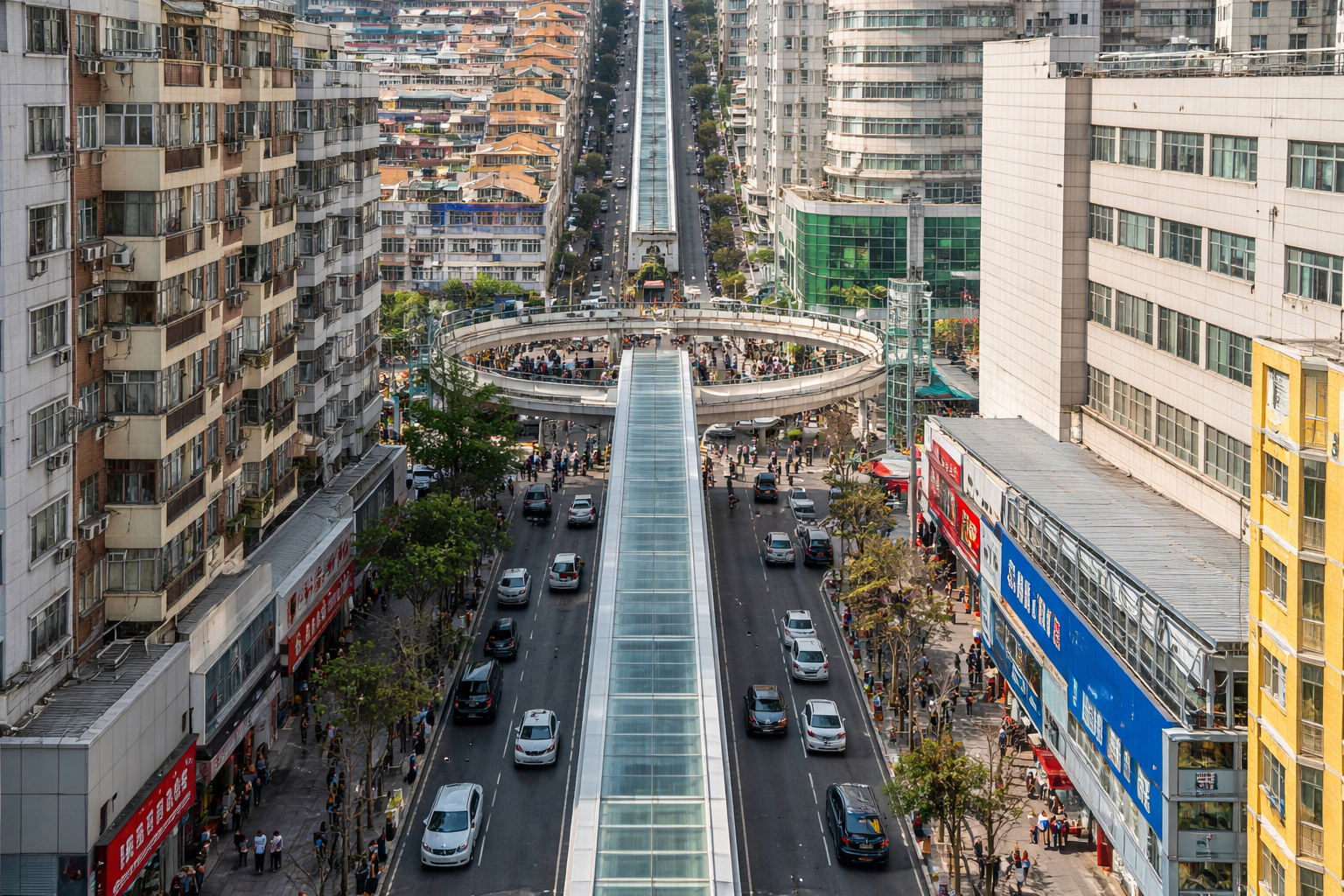
The world’s largest escalator, measuring 905 meters in China, reduces urban travel time from 1 hour to about 20 minutes and transforms mobility in mountainous regions with an engineering solution adapted to the terrain.
-
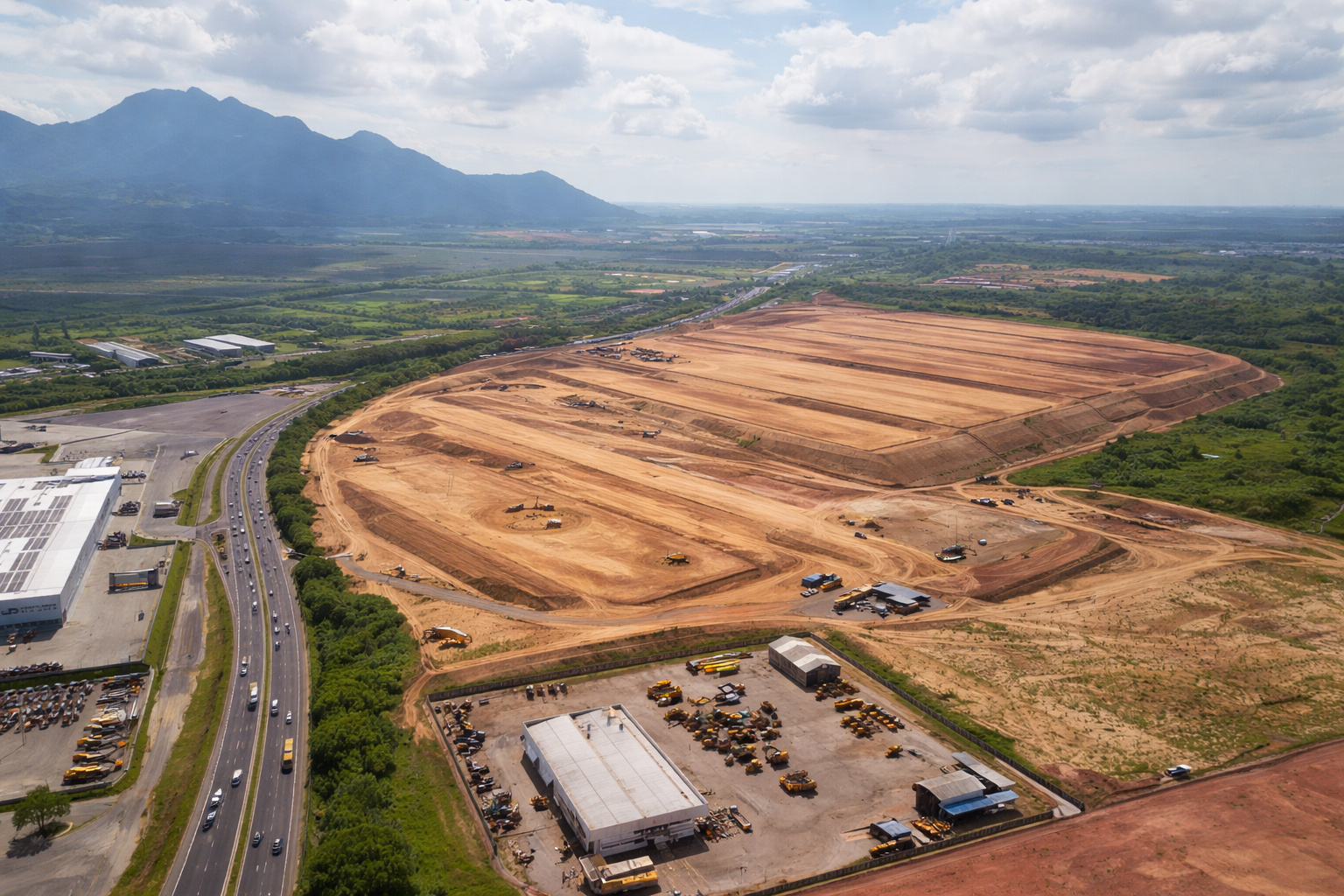
A R$ 300 million logistics giant is taking shape in Serra with over 100,000 m² and raises a question: how can this transform e-commerce and distribution in the state?

The most common types of paving are asphalt and concrete. But what makes one option chosen over the other?
Before modern paving, the streets and roads in Brazil were made of dirt, sand, gravel, or stones.
These materials did not provide a smooth and durable surface, making traffic difficult and exposing the roads to the effects of the weather, such as rain and erosion.
In Brazil, the first paving on a highway occurred on the Estrada União e Indústria, inaugurated in 1928, which connects Petrópolis to Juiz de Fora.
The first paved street was in Fazenda Carioba, in Americana, São Paulo, in the 1930s.
As the number of vehicles grew and mobility needs increased, asphalt paving became more necessary and popular.
Types Of Paving: Rigid Vs Flexible
In Brazil, asphalt is a predominant choice, but there are two main types of paving: rigid and flexible.
Rigid Pavement: Also known as concrete paving, it is less flexible and made of a mixture of cement, water, sand, and gravel.
It is ideal for withstanding heavy stresses and loads, performing well under climate and temperature variations. To increase its strength, it can be reinforced with steel bars.
The concrete is placed over a base of granular or cement material and divided into slabs by expansion joints.
Flexible Pavement: Asphalt is the primary representation of this type of pavement.
Made from a mixture of aggregates (sand and gravel) and bitumen (asphalt mass obtained from petroleum), asphalt is laid at high temperatures and compacted to form a surface that can adapt to thermal variations and soil deformations.
Advantages And Disadvantages Of Asphalt And Concrete
Asphalt:
Advantages:
- Speed Of Execution: Asphalt can be applied quickly and opened to traffic in a short time.
- Lower Initial Cost: Compared to concrete, asphalt generally has a lower initial cost.
- Lower Roughness: Provides a more uniform and comfortable surface.
- Ease Of Repairs: Damage and potholes can be easily repaired by adding more asphalt over the affected areas.
Disadvantages:
- Greater Need For Maintenance: Asphalt wears out more quickly and requires frequent maintenance.
- Thermal Sensitivity: It can soften in the heat and harden in the cold, which can cause deformations and cracks.
- Environmental Impact: The production of asphalt releases a significant amount of carbon dioxide, contributing to the greenhouse effect.
Concrete:
Advantages:
- Durability And Lifespan: Concrete has a much longer lifespan, lasting up to 30 years if well maintained.
- Lower Need For Maintenance: Requires less maintenance compared to asphalt.
- Greater Strength: Offers better resistance to deformations and greater tire grip.
Disadvantages:
- Higher Initial Cost: The initial cost of concrete is approximately 30% higher than that of asphalt.
- Slower Execution: The application of concrete is more time-consuming and complicated.
- More Noise And Vibration: Concrete pavements can generate more noise and vibration than asphalted ones.
The Choice For Streets In Brazil
In Brazil, the choice between asphalt and concrete depends on several factors, such as volume and type of traffic, climate, soil, cost, and availability of materials.
Asphalt is generally preferred due to its ease of installation, lower initial cost, and adaptation to Brazilian climatic conditions.
However, concrete is still used on roads with heavy traffic, where its durability and strength characteristics are more advantageous.
Some examples of concrete paving include the Rodovia Anchieta, the Rodovia dos Imigrantes, and the Rodoanel Mário Covas, among others.
Additionally, airports also use concrete due to the weight of commercial airplanes.
With the increasing difficulty and cost of oil, and considering the durability of concrete, it is important for governments and infrastructure managers to carefully consider the paving options.
Concrete can be a sustainable and economical alternative in the long term, despite the higher initial cost.










-

3 pessoas reagiram a isso.