





 Portuguese
  English
  Spanish
  2 min of reading
  0 comments


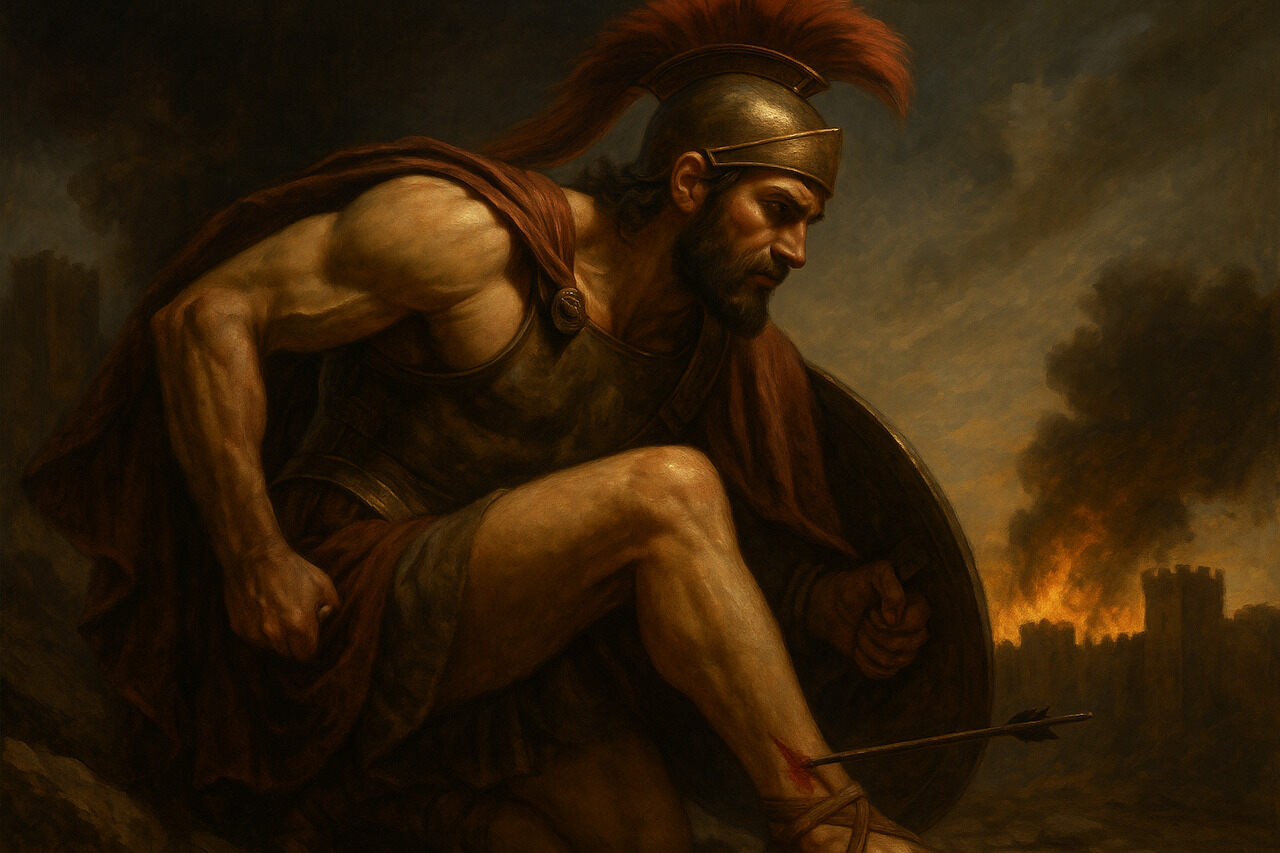
Much More Than A Medical Term, The Name “Achilles Tendon” Rescues An Ancient Greek Legend About Heroism, Invulnerability, And Tragedy
The name “Achilles tendon” is not just a random medical choice. It carries centuries of history and symbolism, based on legends from Greek mythology and much later scientific records. Although it is an essential structure of the human body, the reason for the name is linked to the story of one of the most famous heroes of antiquity: Achilles.
According to Greek myths, Achilles was the greatest warrior in the Trojan War. From before he was born, his life was surrounded by prophecies.
Achilles’ mother, named Thetis, was a sea nymph or goddess. Two powerful gods—Zeus, the king of the gods, and Poseidon, the king of the seas—competed for her love.
-
The Mediterranean has become the target of the largest underwater archaeological mission ever coordinated by UNESCO: eight countries have joined forces to map shipwrecks and protect a historic corridor.

-
In France, a group of artisans spends 28 years building a medieval castle with 13th-century tools, without machines, without measuring tapes, and with almost zero carbon footprint, and the rediscovered techniques helped in the reconstruction of Notre-Dame.

-
Tourists on Everest were poisoned by guides who mixed substances in food to provoke false symptoms of altitude sickness while helicopter operators and hospitals charged inflated rescue fees to insurance companies.

-
Few people know this, but Neil Armstrong, one of the most famous NASA astronauts in history, survived the Korean War after jumping from the plane during his seventh combat mission aboard the USS Essex aircraft carrier of the United States.


Shortly after her son’s birth, Thetis learned of a prophecy: Achilles would die young. To try to prevent this tragic fate, she took the baby to the River Styx, a sacred place that supposedly granted invulnerability to anyone who touched its waters.
She submerged Achilles’ body in the river but held the boy by his heels. That part was not touched by the magical waters.
The flaw would become crucial in the future. Achilles grew up to be an invincible warrior in combat. He fought in various battles and always emerged victorious.
However, during the events of the Trojan War, he was struck by an arrow in his heel—the only vulnerable point of his body. The wound was fatal.
Achilles’ death does not occur in the famous “Iliad” by Homer, but appears in other stories and poems written later, which deal with the conclusion of the war.
Some versions say that the arrow was shot by Paris, a Trojan prince, and that it might have been poisoned. The target? The heel that was not bathed in the River Styx.
The connection between the hero’s name and the tendon we know today came much later. The first known record is from 1693, made by the Dutch anatomist Philip Verheyen.
In his work “Corporis Humani Anatomia,” he described the location of the tendon and referred to it as the “Achilles cord.”
The use of the expression “Achilles heel” as a symbol of weakness only began to gain popularity in the 19th century, almost two centuries after the medical term emerged.
With information from Wikipedia.







Seja o primeiro a reagir!