





 Português
  Inglês
  Espanhol
  7 min de leitura
  0 comentários


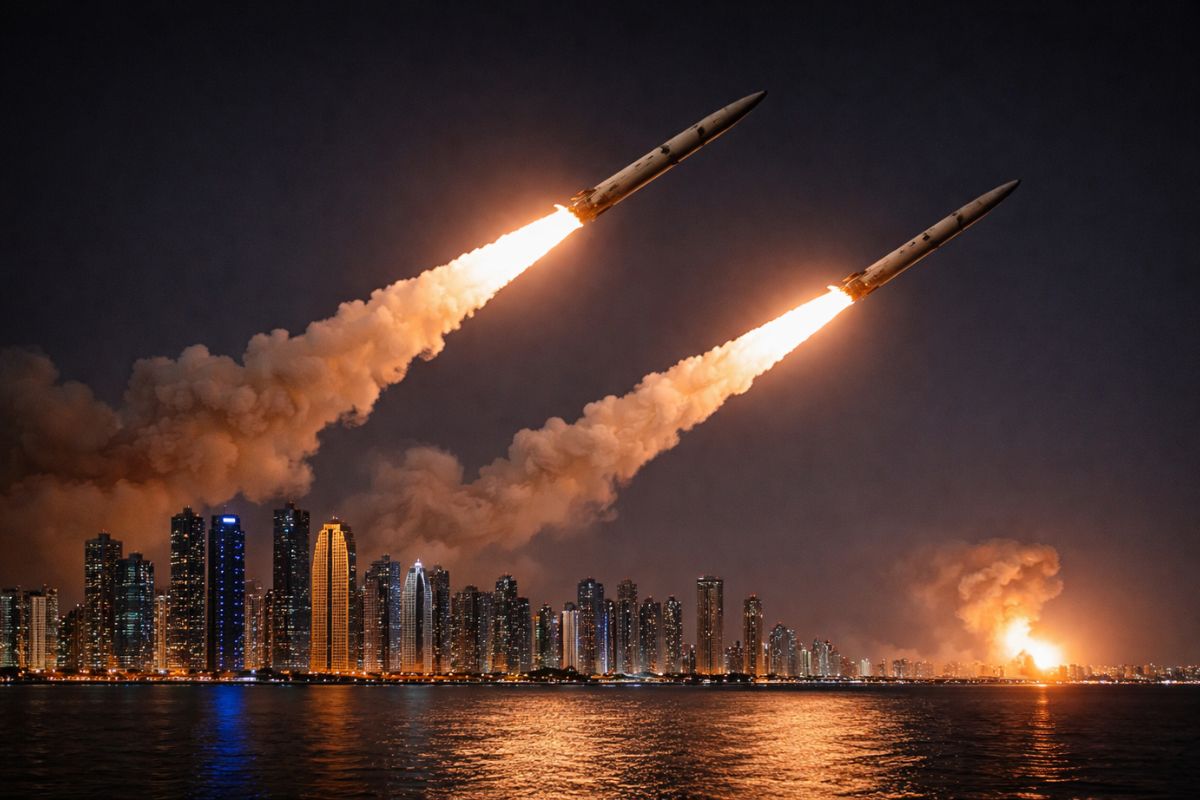
Instead Of Focusing Its Attacks Only On Israel, Iran Has Started Hitting Neighboring Arab Countries, U.S. Bases, Ports, Airports, And Energy Facilities To Spread Economic Costs Across The Gulf, Pressuring Washington Allies And Transforming A Localized War Into A Regional Crisis With Urgent Global Appeal For Diplomatic Ceasefire.
The Arab countries of the Gulf have moved from being mere diplomatic surroundings to occupying the center of Iran’s strategy. Since February 28, missiles and drones have hit Bahrain, Kuwait, Qatar, the United Arab Emirates, Saudi Arabia, and Oman, expanding a conflict that, at first glance, seemed concentrated in Israel.
The movement does not suggest illogical dispersion, but a calculated attempt to raise the regional cost of war. By attacking refineries, ports, airports, industrial areas, and energy-related points, Tehran tries to shift the cost of confrontation to sensitive economies and, with that, force external pressure for a ceasefire.
Why Arab Countries Became The Main Target
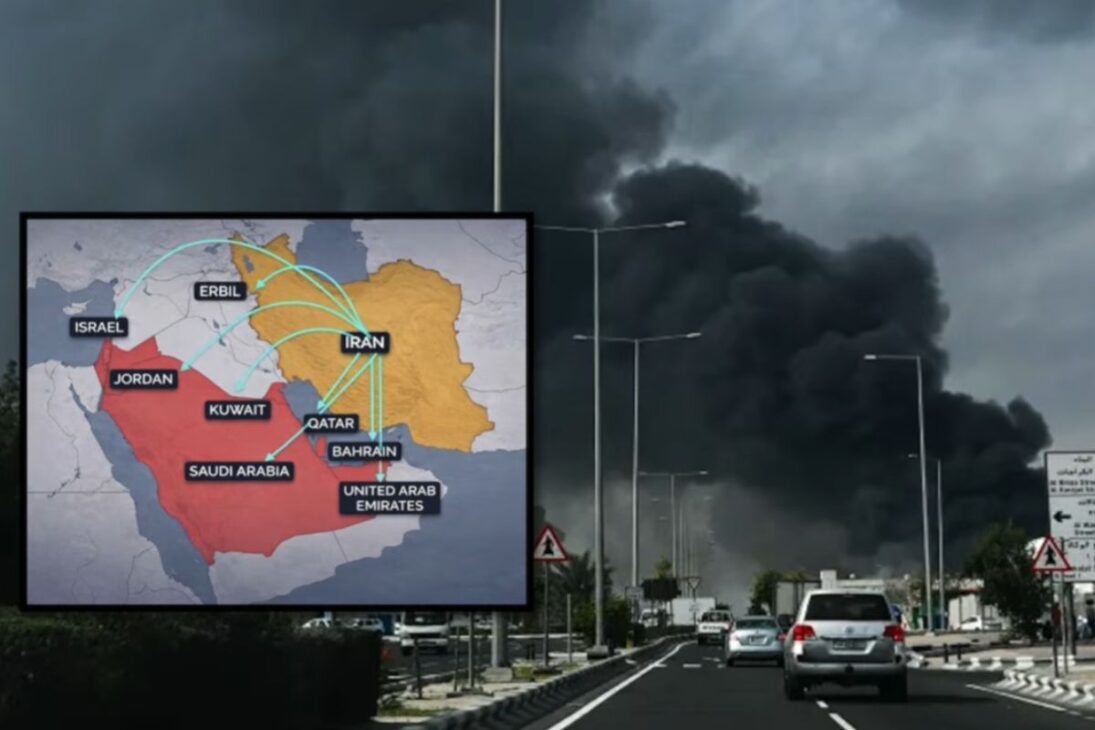
The official Iranian explanation is relatively straightforward: the United States maintains bases, military personnel, and infrastructure spread throughout the Gulf, and Iran cannot project power against American continental territory with the same ease.
-
With an unusual prize, Japan transforms office chairs into a resistance race on the streets, ISU-1 Grand Prix grows, fills stages, and pays 90 kilograms of rice.

-
House in England with a 7.6-meter shark embedded in the roof attracts attention worldwide and becomes a curious attraction in Oxford.

-
Masterpiece in Spain, under construction since 1882, receives 4.8 million visits in a year and impresses with its gigantism and architecture.

-
Attracting around 250,000 people a year, a lighthouse 200 meters from the sea, on a 60-meter high cliff, on the North Sea coast in Denmark, becomes one of the most impressive examples of how nature can threaten historical buildings.


In this reasoning, hitting the neighboring Arab countries would theoretically mean striking at the U.S. military presence where it is accessible. On paper, this seems like a strategy of indirect reach. In practice, the targets show something much bigger.
If the objective were purely military, it would be hard to explain why civilian airports, hotels, residential areas, refineries, and gas facilities have also come under fire.
The United Arab Emirates, for example, would have been the target of over 1,000 missiles and drones in less than six days, with fires in industrial areas at the Jebel Ali port and debris hitting the surroundings of the Burj Al Arab. This shifts the discussion from strictly military grounds to the economic heart of the Gulf.
In other Arab countries, the pattern repeats. Bahrain reported it has destroyed 75 missiles and 123 drones since the beginning of the conflict.
Qatar intercepted 98 of 101 ballistic missiles, 24 of 39 drones, and three cruise missiles, in addition to shooting down two Iranian SU-24 jets.
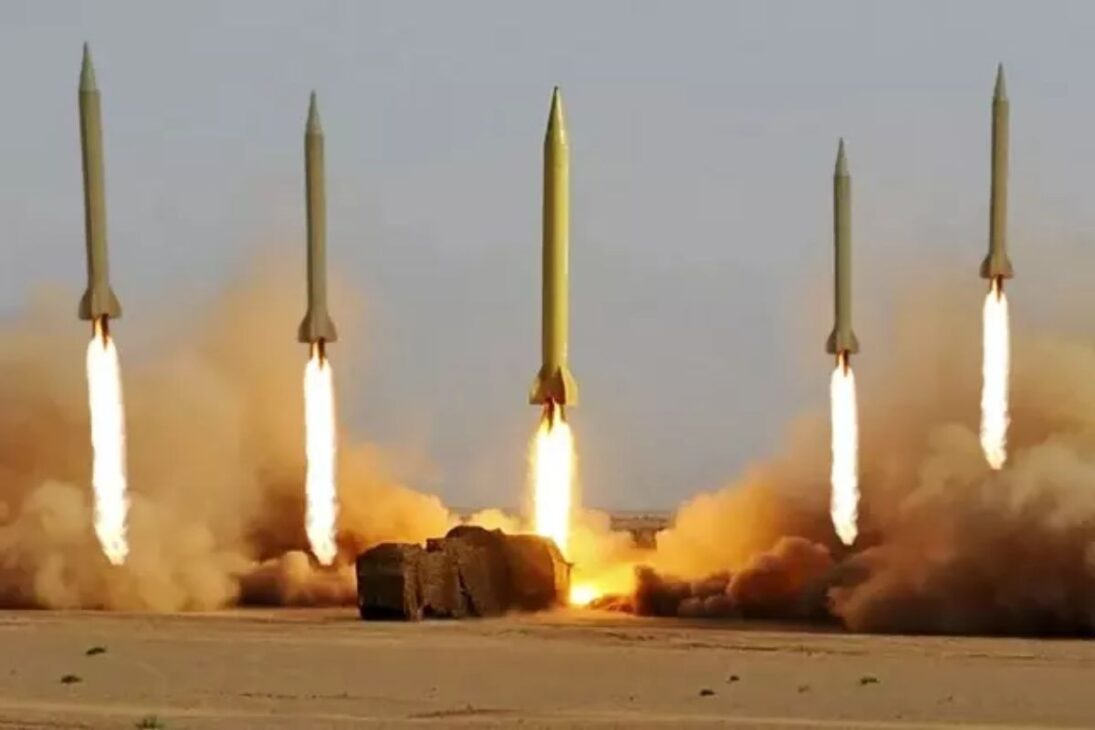
In Kuwait, the airport was among the points hit on the first day, and an 11-year-old girl died after being injured by interception shrapnel.
Saudi Arabia saw drones hit the U.S. embassy in Riyadh and the Ras Tanura refinery, one of the largest in the world, forcing a partial shutdown.
Oman, which had mediated negotiations between Washington and Tehran weeks earlier, was also attacked, with a local state oil tank being hit.
When even a mediator makes it onto the target list, it becomes clear that the message goes far beyond Israel.
The Economic War Behind Drones And Missiles
The center of the strategy seems to be less about immediate military damage and more about eroding the stability that sustains the Arab countries of the Gulf.
Dubai, Doha, and Abu Dhabi have built international projection based on security, connectivity, tourism, finance, logistics hubs, and a favorable investment environment. This model relies on predictability.
When drones and missiles start falling, confidence exits the equation even before the smoke clears.
That’s why refineries, ports, airports, and industrial areas are so relevant in this calculation. The attack on energy and logistics infrastructure does not just affect one building or one runway, but the entire economic ecosystem surrounding them.
Every fire in a port, every canceled flight, every siren, and every operational disruption impacts the international reputation of these centers and generates a ripple effect.
Commercial navigation has also entered this board with equal force.
According to the data presented, major maritime insurers have canceled war risk coverage for vessels in the Gulf, leaving over 150 tankers anchored outside the Strait of Hormuz.
Traffic through the strait has reportedly plummeted by more than 90%, precisely on a route carrying about 20% of global oil.
The missile, in this design, does not act alone; it pulls in insurance, freight, energy, trade, and risk perception.
This is the central point: Iran seems to be betting that by hitting the Arab countries most integrated into the global economy, it can transform a regional confrontation into an international problem.
Instead of convincing Washington with direct military force, Tehran would try to convince the world through the fear of broader economic disorganization, especially in a vital corridor for oil, gas, insurance, transport, and logistical chains.
The Iranian Calculation And The Precedents That Feed The Bet
The logic behind this choice stems from a harsh realization for Tehran.
Iran would not have the capacity to defeat the United States and Israel in a prolonged conventional war, especially with military bases, nuclear facilities, and launchers continuously pressured.
When direct military victory seems distant, the alternative becomes to raise the political and economic cost of the conflict for third parties.
This is where the Arab countries of the Gulf come in as instruments of pressure.
The Iranian regime seems to believe that by seeing closed airports, paralyzed refineries, stalled ships, and growing risk over energy and trade, neighboring governments will begin to pressure Washington for a negotiated exit.
This would not be an attempt to directly defeat the central adversaries but to make the continuation of the war uncomfortable enough for allies, partners, and markets.
There are also historical precedents in this reading. During the Iran-Iraq War in the 1980s, the so-called “tanker war” showed how the internationalization of violence in the Gulf could push external actors towards seeking a ceasefire.
More recently, the firing of missiles at the U.S. base at Al Udeid in Qatar in June 2025 was followed just hours later by an announcement of a ceasefire by Donald Trump.
The lesson that Tehran seems to have retained is simple: the larger the circle of harm, the greater the chance of diplomatic pressure.
This reasoning helps explain why even Azerbaijan was hit on March 5, despite not being directly part of the described regional conflict.
When the reach expands beyond the immediate core of the war, the intention shifts from merely retaliating to contaminating the regional environment with a broad sense of vulnerability.
It is not just about hitting a target; it is about making everyone feel within the same risk.
The Risk Of The Plan Producing The Opposite Effect
So far, however, the result seems far from the ideal envisioned by Tehran. Instead of pushing the Arab countries towards a position of restraint on Washington, the attacks have resulted in almost unanimous condemnation and greater rapprochement with the United States.
Joint exercises, defense of the right to legitimate defense, and even support for tougher actions against the source of the threat show that the regionalization of the war may be spiraling out of the control desired by Iran.
This point is decisive because it dismantles the main bet of the strategy.
If the neighbors start to see Iran as an immediate threat to their civil, energy, and commercial infrastructure, the natural trend is not to pressure the American ally to back down but to seek reinforced protection.
The Iranian calculation depends on economic fear; the problem is that fear may produce even greater military alignment against Iran itself.
The Arab countries are thus caught in a difficult dilemma. If they formally enter the war alongside the United States, they become even more explicit targets.
If they maintain neutrality, they continue to be hit. And if they push for a ceasefire, they run the risk of seeming to yield to Tehran’s military and economic coercion. The Iranian strategy exploits exactly this discomfort.
In the end, what is at stake is not just the aim of drones and missiles but the attempt to convert regional insecurity into geopolitical blackmail.
Iran seems to act with a survival logic: not to win in the classic field, but to make the conflict broad, expensive, and politically toxic enough that external actors demand immediate interruption.
The open question is whether this method still forces negotiation or merely accelerates the isolation of the regime itself.
The offensive against the Arab countries of the Gulf shows that the war has ceased to be merely a dispute over borders, influence, or direct retaliation.
It has also begun to operate as a dispute over cost, risk perception, and the ability to contaminate entire economies with insecurity.
When refineries stop, insurers pull back, airports close, and global cities go on alert, the objective is no longer just to hurt the most obvious enemy.
That is why the central question is not just why Iran attacks neighboring Arabs instead of focusing only on Israel.
The larger question is whether transforming the Gulf into a zone of economic pressure can truly extract a ceasefire or if this choice tends to consolidate an even more hostile regional front against Tehran.
In your view, can this strategy force negotiation or is it pushing the Arab countries towards an even harder alignment against Iran?








-

-

-

3 pessoas reagiram a isso.