





 Portuguese
  English
  Spanish
  3 min of reading
  0 comments


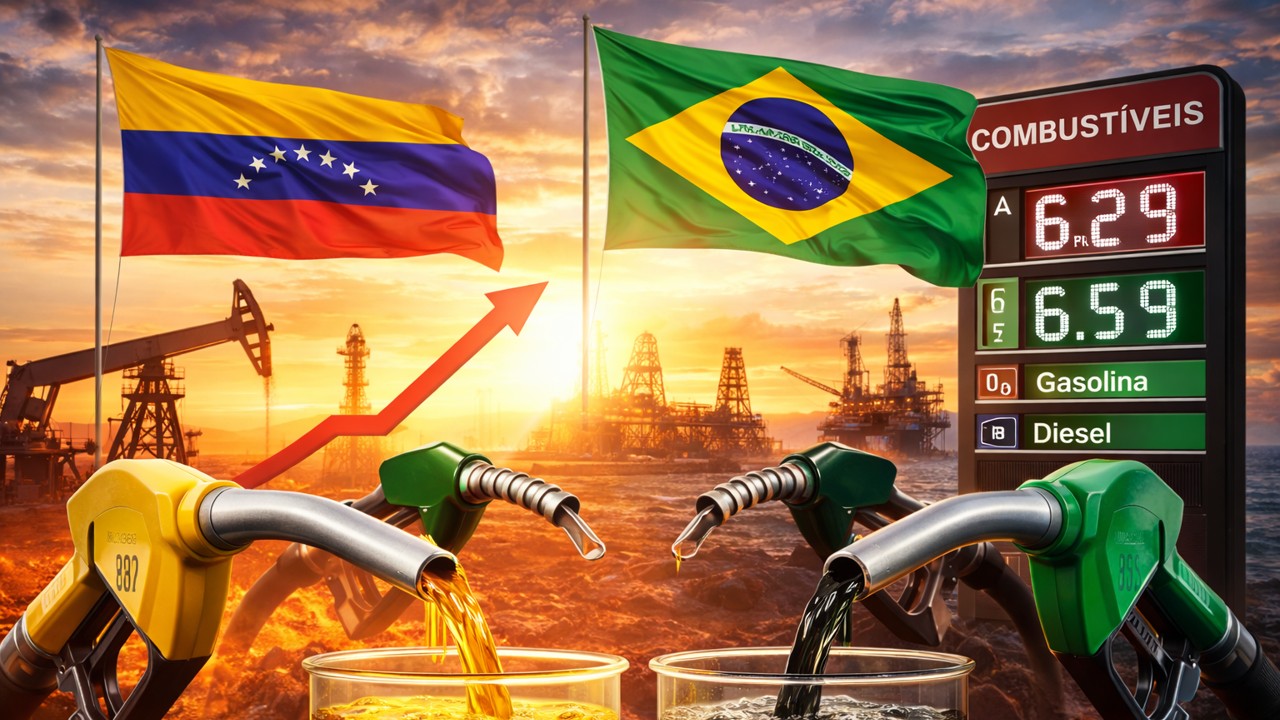
Differences in Crude Oil Explain Why Fuels Remain Expensive Even with High Production in Brazil and Help Understand the Weight of Venezuelan Heavy Oil in the Global Market.
Heavy Oil, Expensive Diesel: Why Venezuelan Oil Makes Such a Difference in Fuel Prices
Whenever oil comes into discussion, the main question from consumers is straightforward: why do gasoline and diesel remain expensive?
The answer involves a factor little known outside the energy sector: not all oil is the same, and the type produced in each country directly influences the cost of fuels.
Venezuela, the United States, and Brazil produce crude oils with very different characteristics — and this helps explain price formation in the global market.
-
“No one will make us change the Pix,” says Lula after the US report.

-
Lula responds directly to Trump and says that Pix is from Brazil and will not change under pressure from anyone, after a report from the United States pointed out the Brazilian payment system as an American trade barrier.

-
Amazon has just announced a new fee on all deliveries, and your online purchases will become more expensive starting April 17, including for those buying from the United States here in Brazil.

-
He sold his share for R$ 4 thousand, saw the company become a giant worth R$ 19 trillion, and missed the opportunity of a lifetime.


Types of Crude Oil: The Difference That Affects Your Wallet
Crude oil is primarily classified by density and sulfur content, factors that determine refining costs and which fuels can be produced more efficiently.
- United States:
- Predominance of light, sweet crude Simpler refining
- Ideal for gasoline
- Venezuela:
- Heavy and extra-heavy crude More complex refining
- Essential for diesel, asphalt, and industrial fuels
- Brazil:
- Major production of medium to light crude, especially in the pre-salt layer
- High quality but with limitations for large-scale diesel production
In practice, this means that having a lot of oil does not guarantee cheap fuel if the type produced is not the most suitable for a given derivative.

Venezuela Concentrates the Most Critical Oil for Diesel
Venezuela has about 303 billion barrels of proven reserves, the largest volume in the world, according to data from EIA and OPEC+.
A large portion of these reserves is heavy oil, precisely the one most used to produce diesel.
The reduction of this oil’s presence in the international market in recent years has contributed to:
- decrease in global diesel supply
- greater dependence on a few suppliers
- direct pressure on prices
And the Oil Produced in Brazil?
Brazil is currently one of the top 10 oil producers in the world, with emphasis on the pre-salt layer. National production is led by Petrobras, responsible for most offshore extraction.
Despite the high volume produced, Brazilian oil:
- is lighter
- generates higher returns on export
- does not fully meet domestic diesel demand
Therefore, the country still depends on:
- diesel imports
- mixing different types of crude oil
- variations in the international market
Why Diesel is the Most Sensitive Fuel in the Market
Diesel fuels strategic sectors such as:
- cargo transportation
- agriculture
- industry
- energy generation
When there is a shortage of heavy oil, diesel production falls, even if there is plenty of light oil. This imbalance affects:
- freight costs
- food prices
- inflation

That’s why diesel tends to react more quickly to crises in the oil market than gasoline.
The price of fuels does not depend only on the amount of oil produced but on the type of oil available in the market. The combination of Brazilian production, the absence of Venezuelan heavy oil, and refining limitations helps explain why diesel and gasoline remain sensitive to global fluctuations.








Seja o primeiro a reagir!