





 Portuguese
  English
  Spanish
  4 min of reading
  0 comments


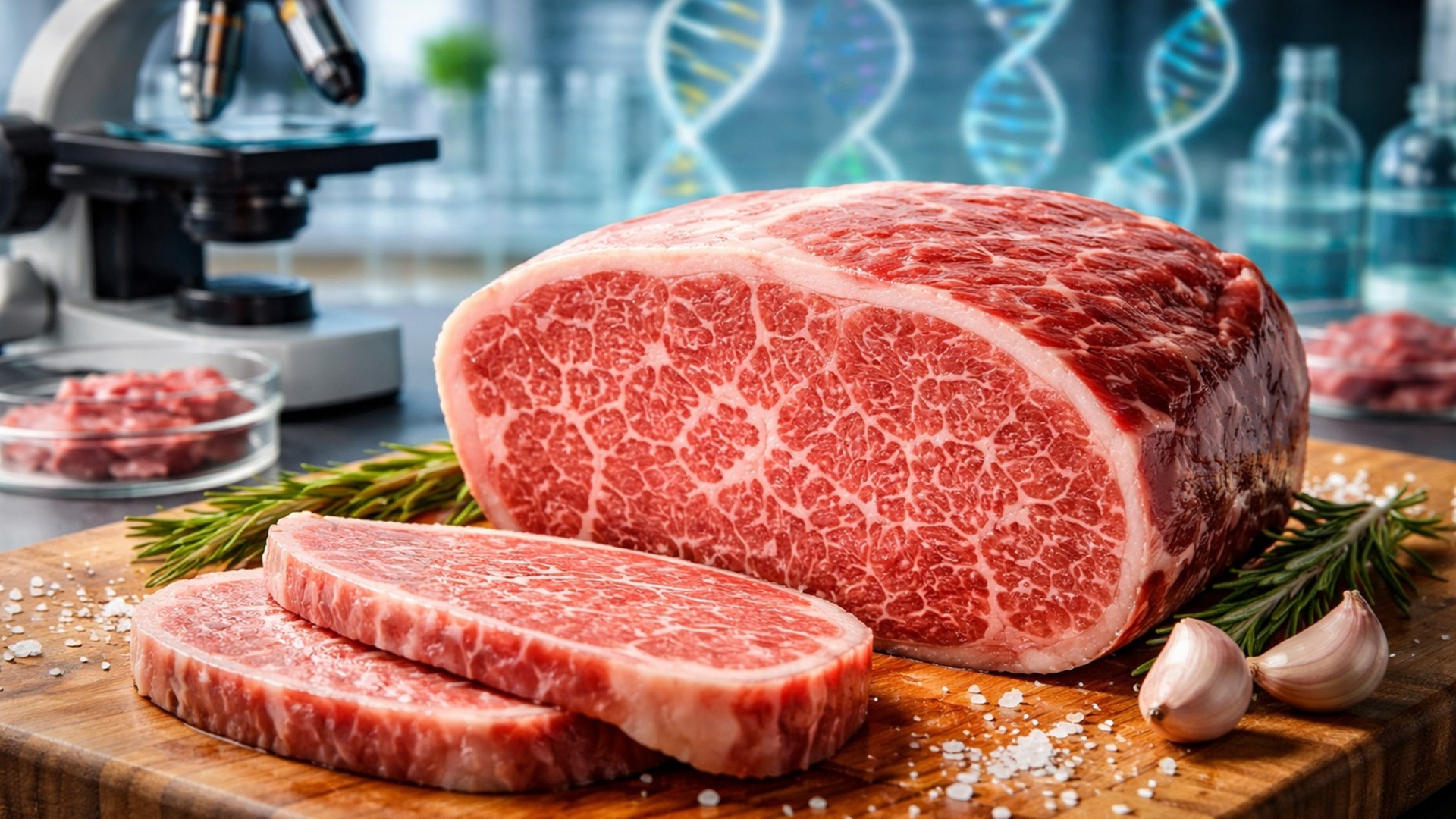
Researchers Assembled a Nearly Complete Cattle Genome, 16% Longer Than the Current Reference, Identifying Hundreds of Additional Genes and Novel Structural Variants That Help Explain Marbling, Flavor, and the High Economic Value of Wagyu Beef
A new nearly complete Wagyu cattle genome, assembled by researchers at the University of Adelaide in collaboration with the United States Department of Agriculture, details previously inaccessible genes and variants, with a direct impact on selection, marbling, and the economic performance of cattle ranching.
The work was conducted by the Davies Research Center for Livestock at the University of Adelaide and described in a study published in Nature Communications. The authors report the assembly of the most comprehensive cattle genome to date, 16% longer than the current reference genome, providing a more accurate insight into the genetic basis of Wagyu.
Genomic Advancement and Novel Expansion of Bovine DNA
According to the researchers, the new Wagyu genome reaches a level of completeness not previously observed in cattle. The team was able to detect hundreds of additional genes and a much larger number of structural variants compared to the previous reference used by the scientific community.
-
Considered almost extinct and found in only three municipalities in Ceará, one of the rarest birds on the planet has just recorded 12 nests and the birth of healthy chicks in the Chapada do Araripe, renewing hope that the species can still be saved.

-
The coffee that has already been repurposed into biofuel, concrete, and roadworks now takes on a new unexpected function: becoming a sustainable insulator with six times greater capacity and real potential to replace petroleum-derived foams.

-
Hidden in a 75-hectare forest within a university in Minas Gerais, a newly discovered fungus reprograms the brains of spiders, turns the victims into obedient zombies, and forces them to die exactly where it needs to spread its spores.

-
The largest oil field in the United States had entire layers that no one knew existed, and the U.S. government has just confirmed 1.6 billion barrels hidden in rocks that have been invisible for decades.

According to Dr. Lloyd Low, the senior author of the study, the new assembly represents a much more complete genetic model of one of the world’s most valued beef cattle breeds. Co-lead author Paulene Pineda highlighted that the achieved accuracy allows for a more detailed understanding of the genetic factors associated with desired traits.
The advancement included the successful assembly of the first complete X chromosome from cattle and four autosomes. Despite this, the researchers acknowledge that finalizing the remaining chromosomes at the same level of completeness remains a future goal for the group.
Identification of Structural Variants and Hidden Diversity
With the new genome, scientists identified an expanded set of structural variants, considered a genetic resource still little explored. These variants may be linked to economically valued traits, such as marbling, productive efficiency, and adaptation.
For Dr. Callum MacPhillamy, co-lead author of the study, the discovery of these variants also highlights hidden genetic diversity in a breed that appears homogeneous. This finding broadens the understanding of how subtle genetic differences can influence complex traits of beef.
The more precise identification of these variations enables previously unfeasible genetic analyses, providing a more solid foundation for future studies and practical applications in cattle ranching. This genomic detailing reinforces the importance of more comprehensive references for animal science.
Direct Impacts on Selection and the Economy of Beef
The authors assert that the new Wagyu genome may play a significant role in enhancing the economic performance of the beef industry. Professor Wayne Pitchford, director of the Davies Research Center for Livestock, emphasized that the genetic resource facilitates the identification of variants associated with marbling and other traits that directly affect profit.
With greater genetic precision, breeders can improve selective breeding programs, reducing uncertainties and increasing productive efficiency. The study indicates that the tool can contribute to more informed decisions in different production systems.
Data cited in the material show that Australian beef production totaled 706,296 tons in the quarter ending in June 2025. In the same period, the gross value of cattle and calves slaughtered reached US$ 4.9 billion, with exports exceeding US$ 1 billion.
Applications Beyond Wagyu and International Cooperation
Associate Professor Cynthia Bottema stated that the impact of the new genome goes beyond Wagyu. According to her, the tool will allow greater precision in identifying and selecting traits such as marbling, fertility, and disease resistance in other cattle breeds.
The study results from a long-standing international collaboration between the University of Adelaide and the USDA. Dr. Low emphasized that this partnership has already led to the assembly of some of the world’s most complete livestock genomes, consolidating a continuous line of technical advancements.
Among these advancements is the trio binning method for genomic assembly, also published in Nature Communications. The approach was pioneering in allowing more precise separation of parental genetic information during assembly.
Next Steps and Bovine Pangenome
Although the new genome represents a significant leap, the researchers indicate that the work is not finished. The next goal is to combine the Wagyu assembly with other high-quality bovine genomes to create a pangenome graph.
This pangenome aims to better represent the entire spectrum of genetic diversity present in the bovine species. According to the authors, this integration will further enhance genetic analysis capabilities and practical applications in global cattle ranching.
The research, published on November 28, 2025, emphasizes how advancements in genomics can transform scientific understanding and the productive management of one of the world’s leading agricultural supply chains, even as some chromosomes still await complete assembly in the future.







-

-

-

-

-

15 pessoas reagiram a isso.