





 Portuguese
  English
  Spanish
  3 min of reading
  1 comment


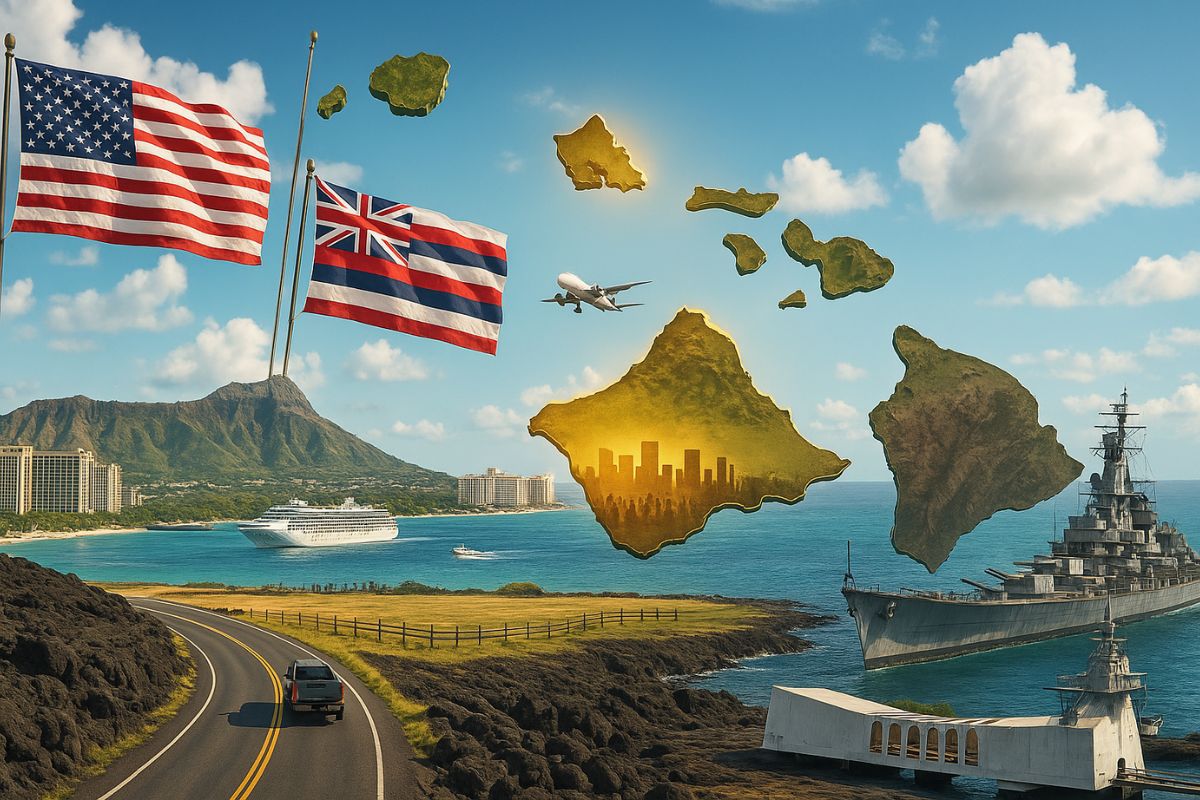


Hawaii Concentrates Population, Infrastructure, and Costs in Oahu, Keeps the Big Island Mostly Rural, and Bears Marks of Unification, Annexation, Pearl Harbor, and an Expensive Tourism That Pushes Natives Out
Hawaii is the only fully tropical U.S. state and, even so, remains 91% vacant in terms of occupancy when we look at territorial distribution. The population dynamic has solidified with Oahu housing about 70% of the inhabitants, while the Big Island, despite being larger, has remained rural, shaped by active geological history, cycles of colonization, political unification, annexation, and Pearl Harbor as the military hub of the Pacific.
This configuration is no accident: geology, security, logistics, and price pushed jobs and services to Oahu, while the Big Island maintained low density. The shock of annexation, the centrality of Pearl Harbor, and the transformation of tourism into a dominant industry made Hawaii expensive to live in, forcing natives to migrate and reinforcing the emptiness outside the main urban archipelago.
Geology That Distributes the Table
The Hawaii archipelago arises from a hot spot that forms islands in a series, with the Big Island being the youngest and geologically active.
-
Sprinkling dry baking soda directly on the carpet neutralizes odors from sweat and food without wetting the fibers, allowing you to forget about the vacuum cleaner for weeks using a product that costs less than five reais.

-
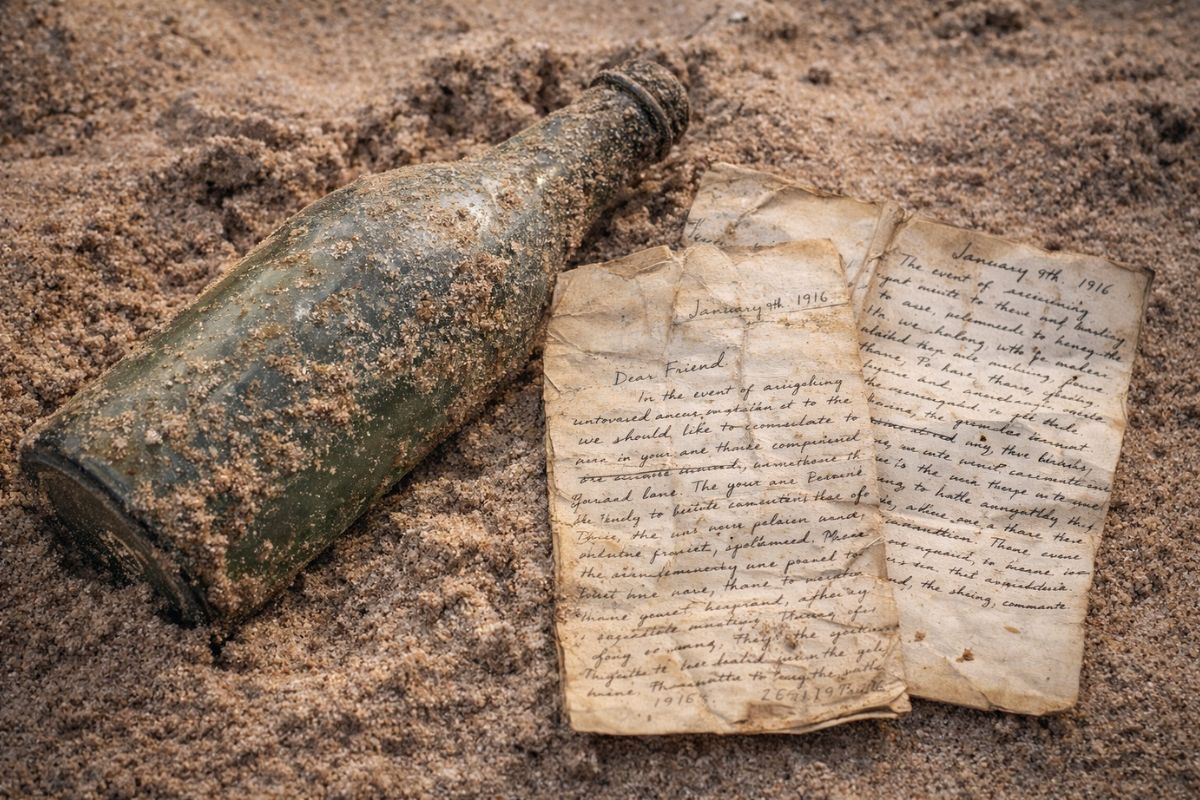
A bottle thrown into the sea by two Australian soldiers in 1916 on their way to the trenches of World War I was buried in the sand for over 100 years, and the letters inside it were still legible when they were found.
-
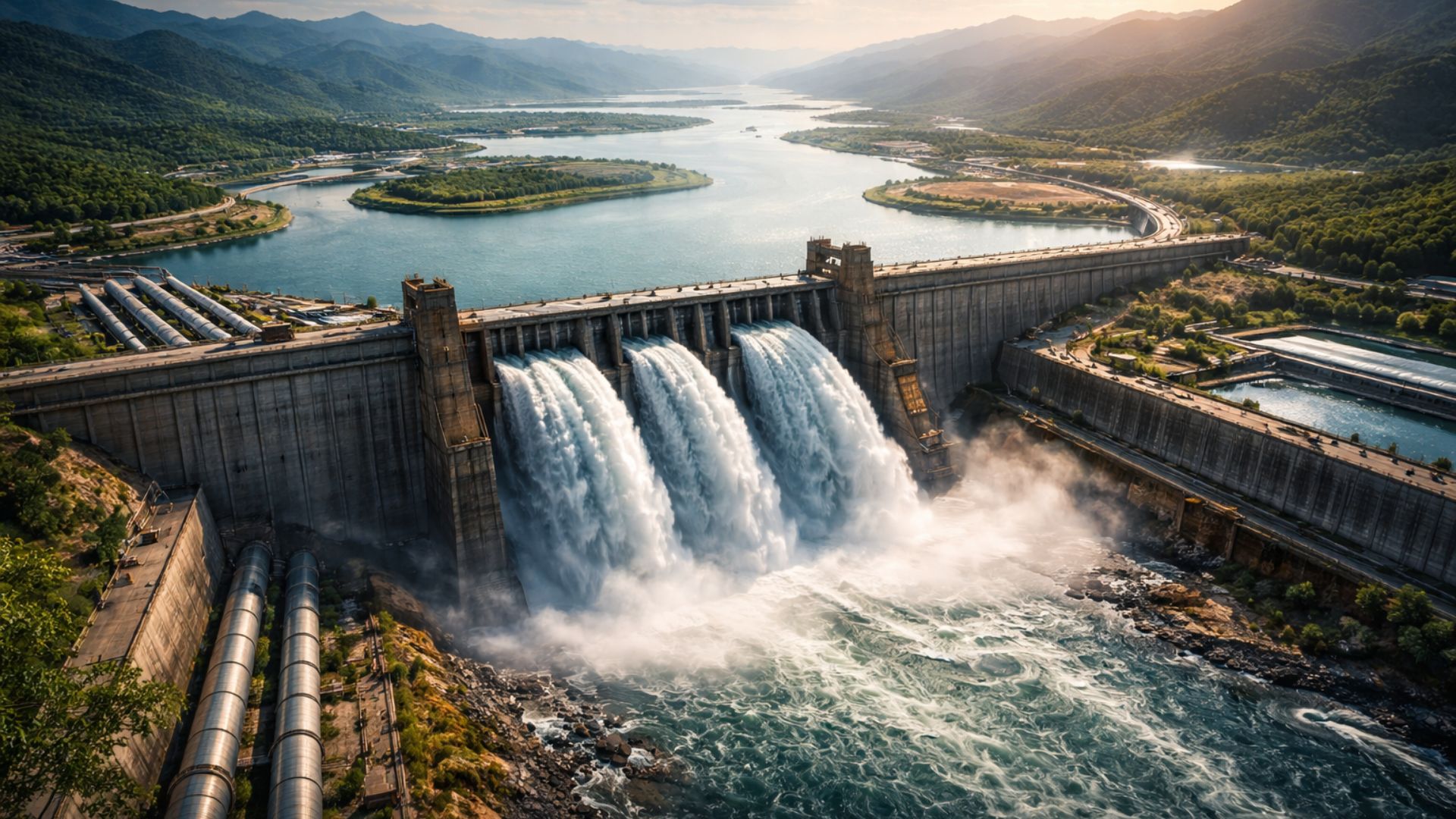
China invests over R$ 4.2 trillion, builds the largest water network in the world with 95,000 reservoirs and 1 trillion m³, expands piped water access to 96% of rural areas, attracts R$ 565 billion in foreign investments, and advances with the “longevity gene” in rice.
-
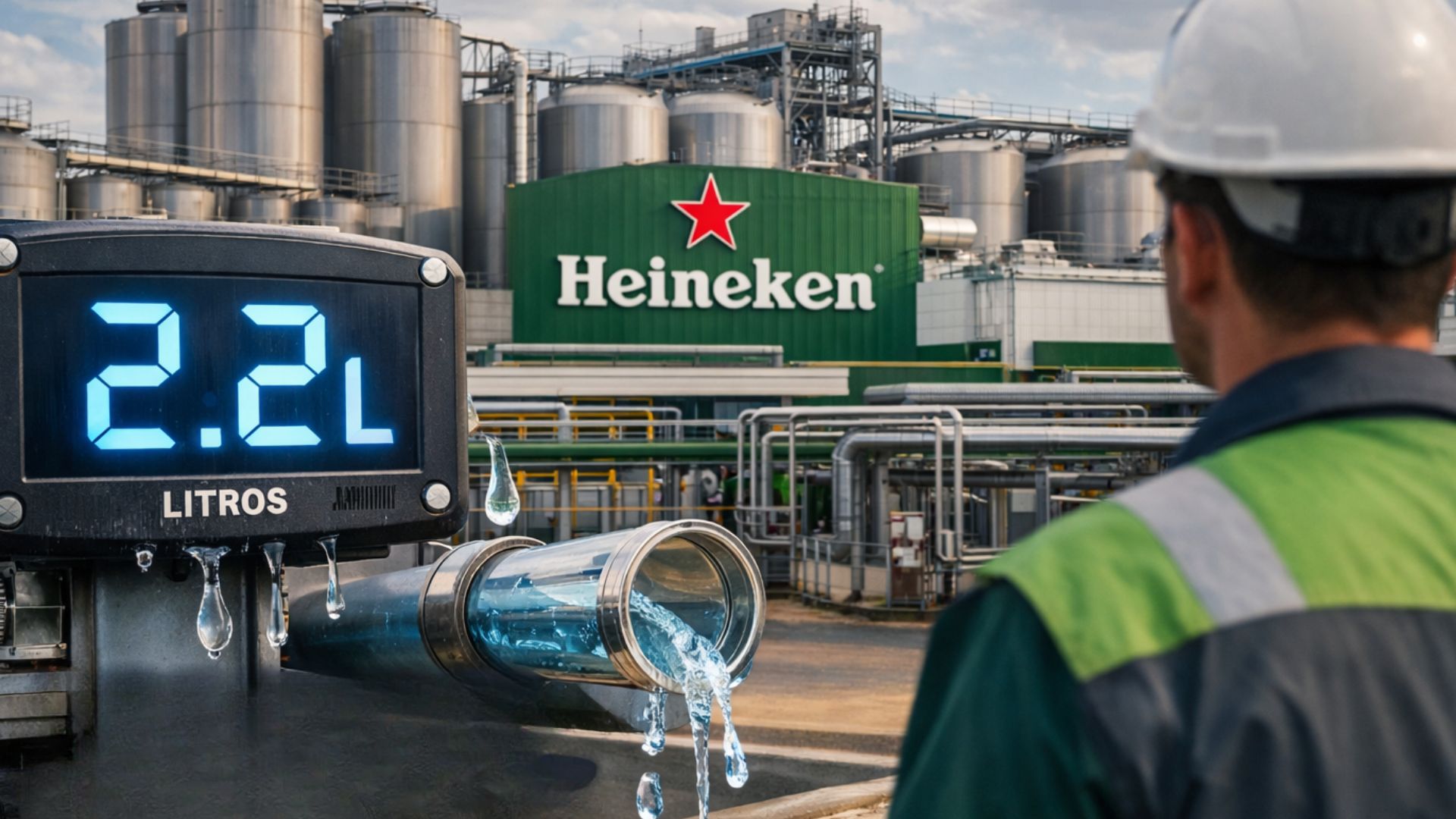
Heineken’s factory in Brazil surprises the world by reducing water consumption for beer production from nearly 10 liters to just 2.2 liters per liter produced, achieving a 23% decrease with real-time technology.

The succession of volcanoes created different terrains and risks, favoring rural, dispersed uses with more expensive infrastructure in new areas, while older islands consolidated urban centers.
Oahu, stabilized, became a stage for density, services, and connections.
The unification under Kamehameha reorganized Hawaii into a central system.
A century later, the annexation to the United States shifted priorities to defense and maritime trade.
The annexation introduced rules, capitals, and flows that concentrated investments where logistics were most efficient.
Without annexation, Pearl Harbor would not have become the military pivot that anchored jobs, roads, and housing in Oahu.
Pearl Harbor as an Anchor of Power
Pearl Harbor was chosen as a base for its deep, protected bay.
Pearl Harbor attracted the navy, suppliers, and military families, expanded neighborhoods, and pressured prices, reinforcing the centrality of Oahu.
Pearl Harbor also connected Hawaii to the Pacific theater, which multiplied flights, ports, and services in Honolulu and nearby areas, while the Big Island continued with a rural profile and sparse networks.
Oahu concentrates state government, mass tourism, universities, and high-complexity healthcare. Result: density, jobs, and high rates.
The Big Island preserves rural dispersion, attracts agriculture, volcanic science, and nature tourism, but with lower formal work opportunities and high costs due to distance, reinforcing the statistical “emptiness” of Hawaii outside its metropolitan hub.
Expensive Tourism and the Expulsion of Natives
Hawaii has adopted tourism as its engine.
Daily rates, rents, and food have increased with the pressure from visitors and second homes.
In Oahu, the combination of sectoral wages and cost of living pushes natives to leave; in the Big Island, income does not keep pace with logistical inflation.
The consequence is a spiral: more dependency on expensive tourism, less permanence of local communities, and densification where infrastructure already exists.
Three causes are self-reinforcing:
1. Geological structure and risk limit quick densification in the Big Island.
2. State decisions post-annexation prioritized Oahu and Pearl Harbor as hubs.
3. Service and tourism economy raises costs in central areas of Hawaii, displacing residents and leaving large portions underutilized.
What Can Change
Planning and affordable housing outside of Oahu, productive diversification in the Big Island, and management of tourist flow can reduce pressures.
However, as long as Pearl Harbor and the Oahu hub concentrate logistics and government, inertia will continue to favor centrality.
Hawaii remained 91% vacant because geology, politics, and economics converged on Oahu, while the Big Island remained rural and dispersed.
Annexation and Pearl Harbor anchored the metropolis; expensive tourism completed the picture, pushing natives out.
Without a rebalancing of costs and opportunities, concentration tends to persist.
Quick Question: If you lived in Hawaii, would you choose to live in the density of Oahu or the rural pace of the Big Island, even with the high cost and commuting?




Na boa. Moro no Hawai’i numa casa na frente da praia em O’ahu ao lado do Hotel da Disney…aqui ainda tem alguns Hawaianos e eles tem menos cérebro que os Maranhenses…são preguiçosos iguais os baianos! É muito complicado conviver com pessoas que gostam de uma bebida e drogas!