





 Portuguese
  English
  Spanish
  5 min of reading
  10 comments


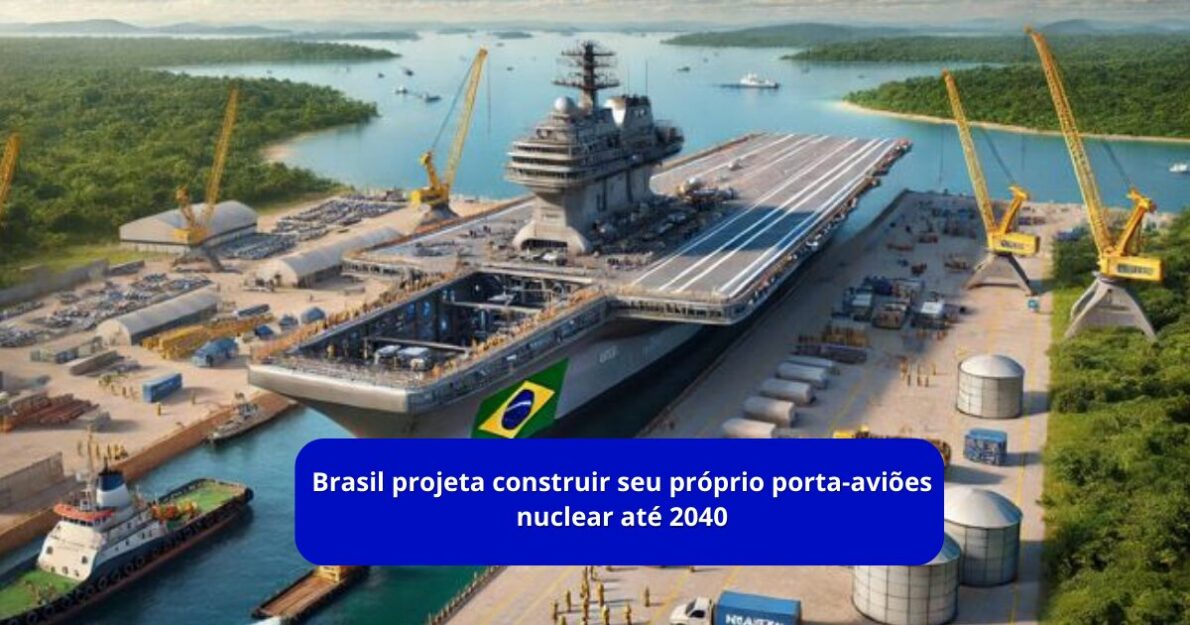

With Bold Plan, Brazil Aims to Build Its Own Nuclear Aircraft Carrier by 2040. Goal Promises to Elevate the Naval and Geopolitical Power of the Country, but Faces Technical and Budgetary Challenges. Meanwhile, Navy Considers Acquiring HMS Prince of Wales from the United Kingdom to Strengthen Defense
As countries move strategically to strengthen their maritime defenses, Brazil reveals ambitious plans that could change the geopolitical landscape of Latin America: a nuclear aircraft carrier by 2040.
If realized, the project will place the country alongside the world’s largest naval powers and have a profound impact on power projection and security in the region.
In a scenario where maritime disputes are gaining increasing importance, the Brazilian Navy has presented a bold plan: to build a nuclear-powered aircraft carrier by 2040. This unprecedented project in Latin America is part of a strategic defense plan that aims to project Brazil’s naval power on an unprecedented scale.
-
The German “steel monster” weighing 55 tons fires up to 10 projectiles per minute at over 40 km and avoids counterattacks on the battlefield by moving quickly to escape enemy attacks; meet the Panzerhaubitze 2000.

-
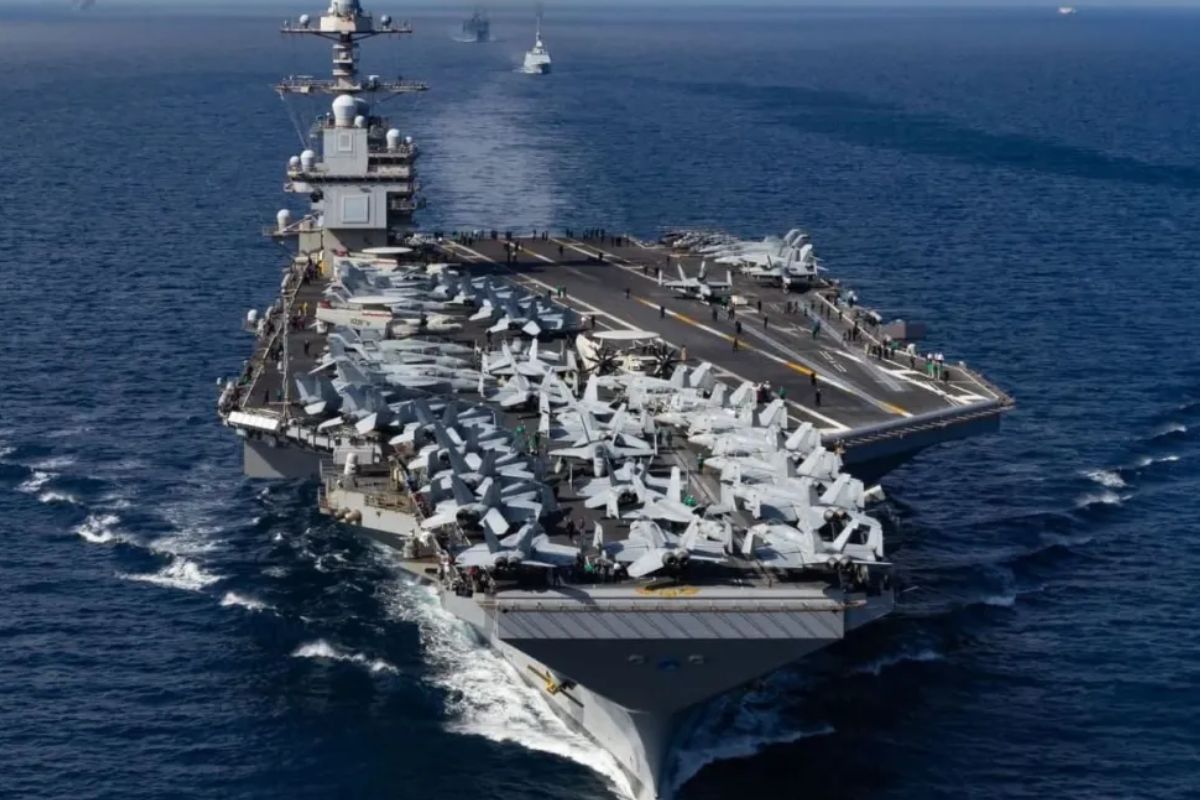
USS Gerald R. Ford, the largest aircraft carrier in the world, returns to sea after a fire in the laundry in the Red Sea; repaired in Crete, it resumes missions of Operation Epic Fury against Iran.
-
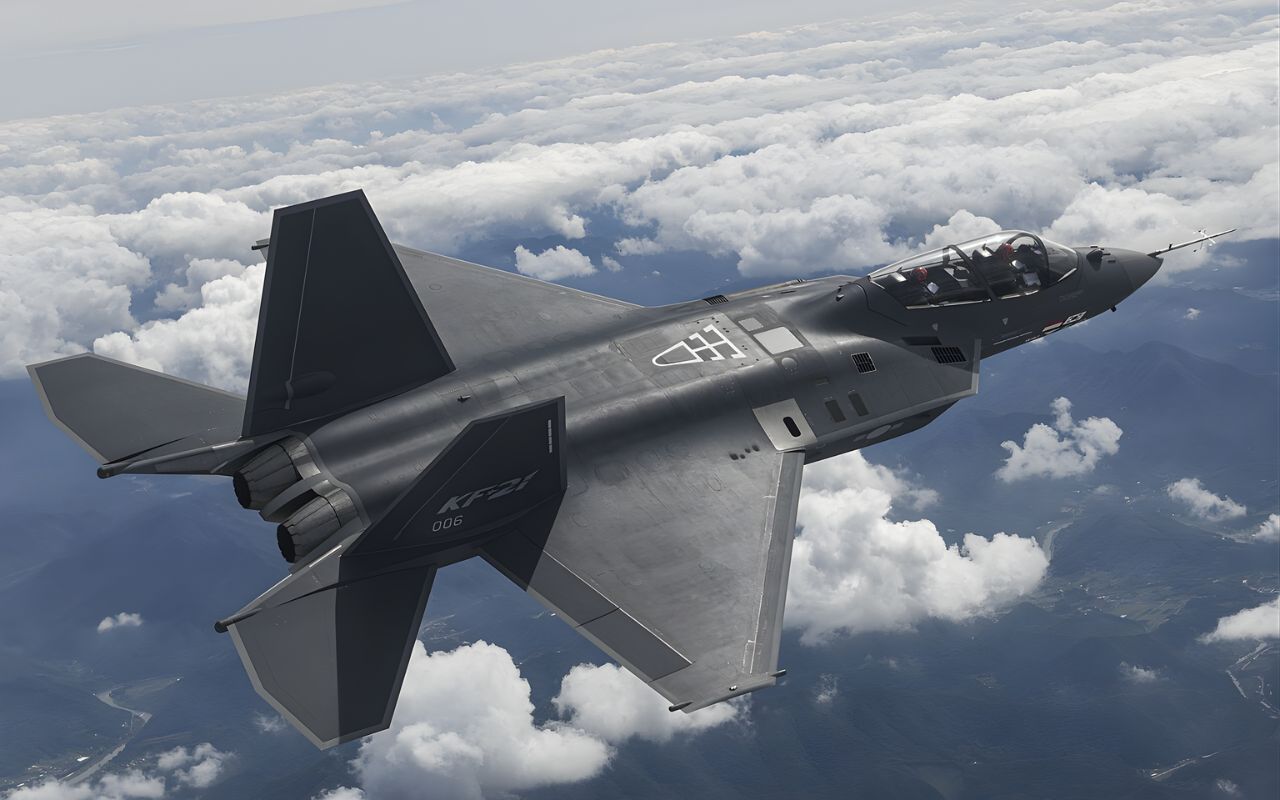
Military power: South Korea’s new KF-21 fighter jet will be a key component in replacing the aging aircraft of the air force, placing the country on the map of air military powers.
-
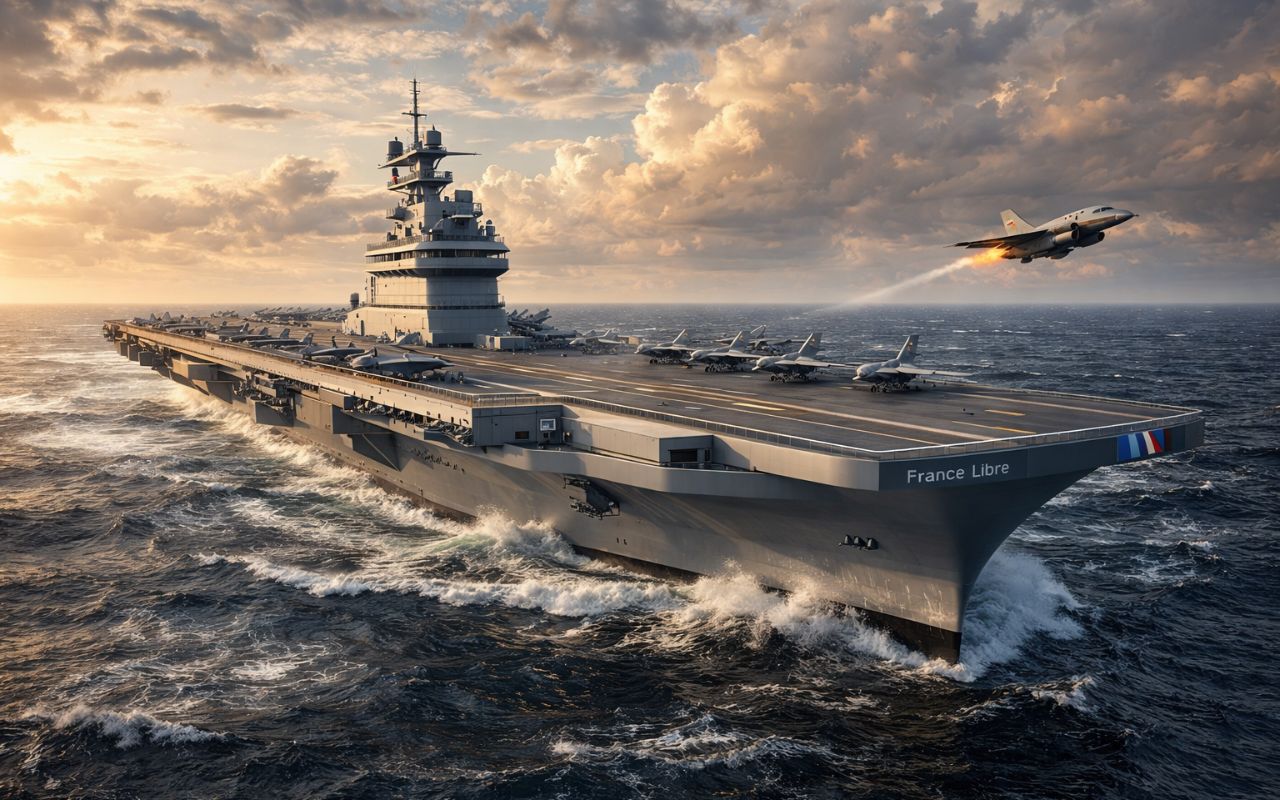
With 310 meters, 80 thousand tons, and capable of operating for 45 years, the new nuclear aircraft carrier France Libre will be the largest in France and will enter service in 2038.

However, the journey to achieve this goal is filled with complex challenges, both operational and financial.
Strategic Plan: Power of Projection and Protection of the Blue Amazon
To understand the impact of this initiative, it is important to remember that Brazil has the longest coastline in South America, bordered by the Atlantic Ocean and protected by a maritime zone rich in biodiversity and natural resources known as the Blue Amazon.
This region is of extreme strategic importance to the country, which seeks to preserve its economic and environmental interests.
According to the Navy, a nuclear-powered aircraft carrier would allow Brazil to reinforce the protection of this territory and participate in operations in international waters, expanding its presence on the global stage and strengthening the national defense system.
“This nuclear capability would place us at another level, enabling broader and more strategic operations,” said a Navy representative during an interview.
Engineering and Logistics Challenges for a High-Complexity Project
Despite the ambition, experts warn of the challenges of the project. The development of a nuclear aircraft carrier requires considerable technological and financial resources.
To operationalize the plan, Brazil needs massive investments in infrastructure and training.
According to Admiral Marcos Sampaio Olsen, there is an urgent need to strengthen the Navy’s financial base and build a reliable supply chain to support this colossal vessel.
The experience of other countries, such as the United States and France, shows that the operation of nuclear aircraft carriers involves complex logistics, with high-cost security and maintenance systems.
“It’s an investment that is not justified without a solid economic structure to ensure continuous operation and maintenance,” Olsen emphasizes.
Furthermore, analysts question whether Brazil is prepared to handle the technical aspects and inherent risks of developing a vessel of this size.
Brazil Considers Acquiring the HMS Prince of Wales
While the plan for a nuclear aircraft carrier remains a long-term goal, Brazil is also exploring a more immediate acquisition to strengthen its fleet.
Recently, the Navy has shown interest in acquiring the British aircraft carrier HMS Prince of Wales, a large vessel with modern infrastructure, but which also brings significant cost and maintenance challenges.
According to sources close to the negotiations, the purchase would be a quick alternative to expand the country’s naval capacity while the nuclear aircraft carrier is not ready.
In addition to financial challenges, there is international competition in the race for the Prince of Wales. Australia has also expressed interest in acquiring the vessel, which could raise the costs for Brazil.
As noted by industry analysts, a decision like this must consider the economic and strategic impact, given that maintaining a vessel of this size requires ongoing expenses for modernization and maintenance.
History of Naval Ambitions and the Importance of Power Projection in the South Atlantic
Since the early 20th century, Brazil has already stood out in the naval scenario by acquiring the powerful battleships Minas Gerais and São Paulo, which placed the country on the map of maritime forces at the time.
This history of naval investment demonstrates that the Brazilian strategy seeks to maintain a presence in South America, a role that has been consolidated over the decades with the expansion of the Navy’s fleet.
Today, the largest ship in the Brazilian Navy is the helicopter carrier Atlântico (A140), acquired from the United Kingdom, which plays an essential role in amphibious and humanitarian operations.
However, building a nuclear aircraft carrier is an undertaking that could define Brazil as one of the leading military powers in the South Atlantic.
This positioning is strategic, as it would significantly expand the country’s response capability in crisis scenarios and ensure protection for maritime resources.
Geopolitical Debate and International Lessons
Other countries, such as Russia, have chosen not to prioritize aircraft carriers in their naval strategies, pointing out the fragility of these assets in modern war scenarios, where hypersonic missiles and submarines play an increasing role.
The decision of Brazil, therefore, also involves evaluating the relevance of this vessel in a constantly evolving military scenario.
For the Brazilian nuclear aircraft carrier to come to fruition, continuous investments and an adapted military doctrine will be necessary.
Just as seen in the USA and France, countries that operate nuclear aircraft carriers, Brazil will need to follow a series of strategic steps, ranging from developing robust infrastructure to training qualified personnel.
This includes international cooperation and studies of foreign cases that can provide insights into the operation of a project of this magnitude.
Final Considerations and Next Steps for Brazil’s Maritime Defense
The Brazilian Navy faces the challenge of aligning ambitions with budgetary and operational reality, a process that requires financial commitments and technological partnerships.
The journey to realize the nuclear aircraft carrier is a long-term path that will place Brazil in front of complex strategic choices and at the same time offers the opportunity to consolidate the country as a regional military leader.
What do you think? With so many challenges and costs involved, is it worth it for Brazil to invest in a nuclear aircraft carrier?








Rápido! Que a terceira guerra mundial está logo ali.
Com Lula **** na presidência desse país de terceiro mundo, nunca sairá do papel. A corrupção, desvios de verbas e os mensaloes da vida serão os grandes protagonistas nesse desgoverno irresponsável.
Save your bitterness for a different opportunity. First off, if you ever looked at the numbers during Lula’s 3 terms government, your jaws would drop. Numbers talk loud and never lie. Get out of the archaic structure that many low self-esteem-old fashioned political parties that were in charge of the country for so long and NEVER met Brazilians expectation – Brazil is NO longer a third world country, only the old brazilian elites are third world
If you really want to talk about corruption, look at the “centrist” congress and PL, the political party who represents the organized crime, lead by the convicted ex president ***bolsanaro
*this is an old post but better now than never to clarify what Brazil is really about
Se o projeto do submarino nuclear virou uma novela que nunca termina, imagina um portão aviões.