





 Portuguese
  English
  Spanish
  8 min of reading
  0 comments


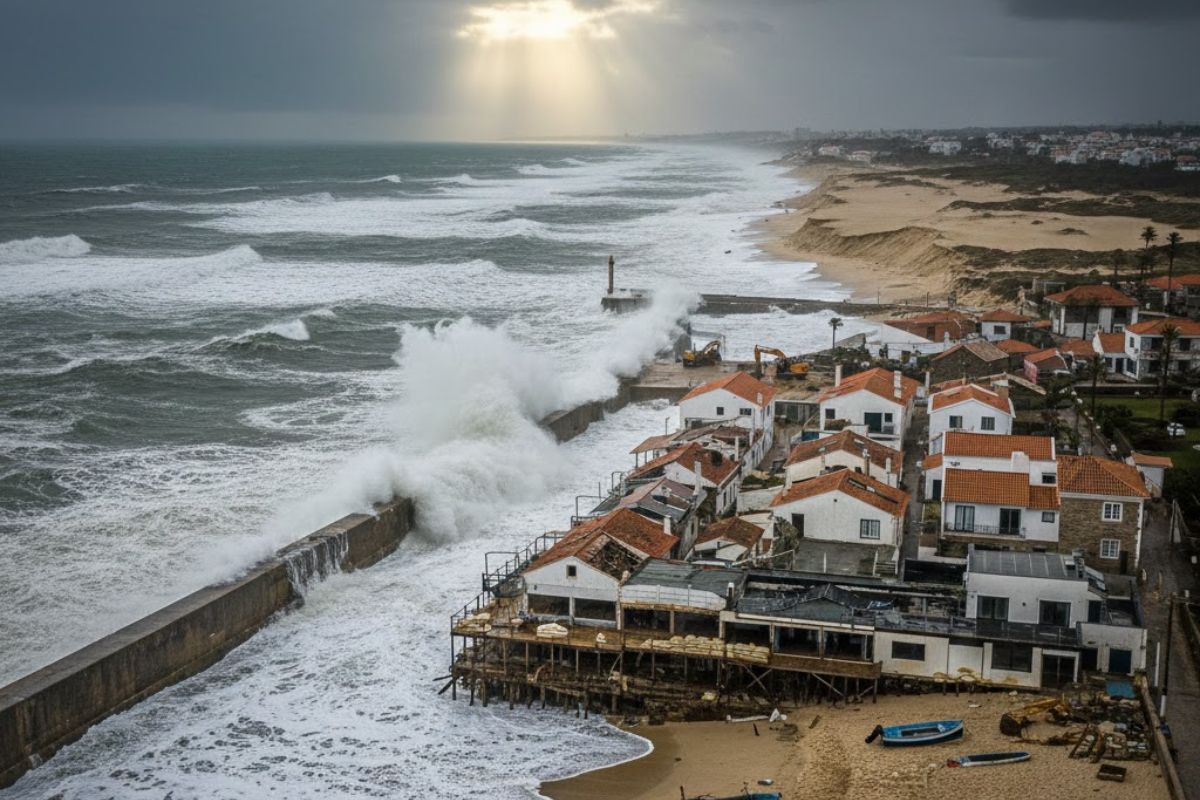
Stronger Winter Storms And Rising Seas Accelerate Erosion On Portugal’s Atlantic Coast, Swallowing Beaches And Dunes, Putting Homes, Restaurants, Fishing, And Tourism At Risk, While Billion-Dollar Sand Expansion And Wall Projects Still Fail To Protect Whole Villages In The So-Called Century Catastrophe
On the Atlantic coast of Portugal, the advance of the sea is no longer a distant projection and has already knocked down houses, destroyed dunes, and shortened beaches in places like Torreira, Esmoriz, Apúlia, Furadouro, and Caparica, forcing family relocations and emergency operations every winter with higher tides and more intense storms.
Between 1958 and 2018, the country lost about 13 square kilometers of coastline, and in the last ten years, invested more than 1 billion euros in beach nourishment, protective walls, and geo-cylinders, in a costly race to delay a process of coastal erosion that experts already describe as a century catastrophe for the territory, the local economy, and the Portuguese way of life.
Stronger Storms And Erosion Along 900 Kilometers Of Coastline

With nearly 900 kilometers of Atlantic coastline, Portugal has a historical relationship with the ocean that is now out of balance.
-
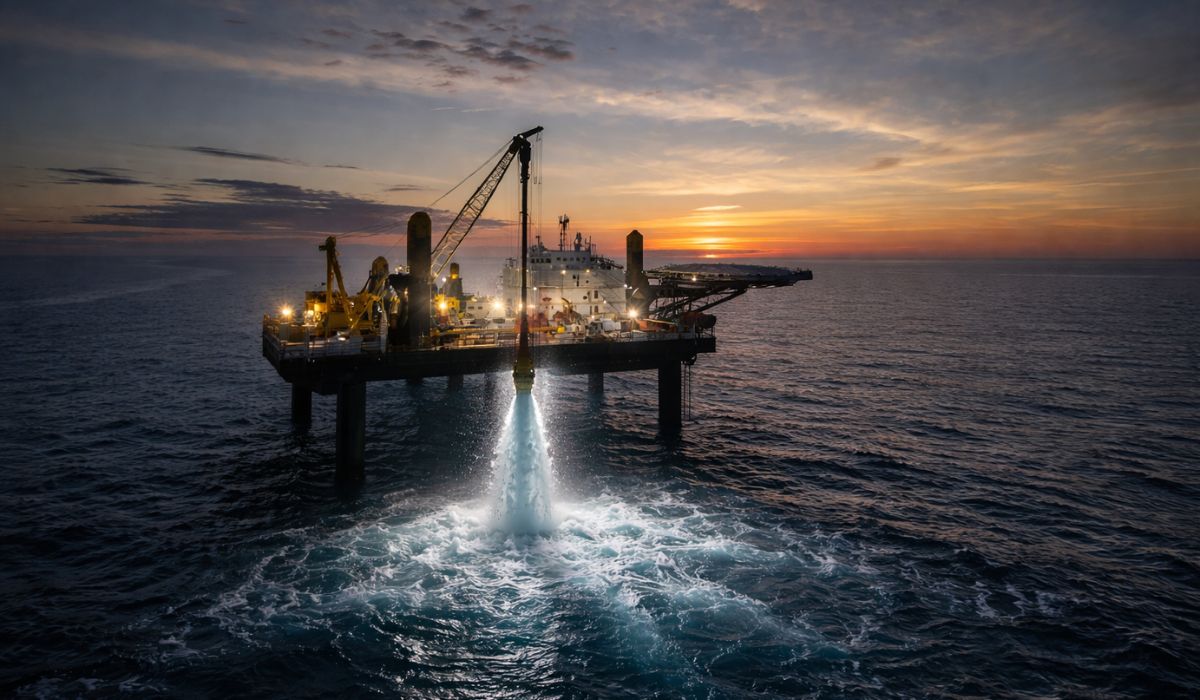
Expedition 501: Scientists drill into the ocean floor and discover a giant reserve of fresh water hidden beneath the sea, extracting nearly 50,000 liters and revealing an invisible system that could reshape the map of water scarcity.
-
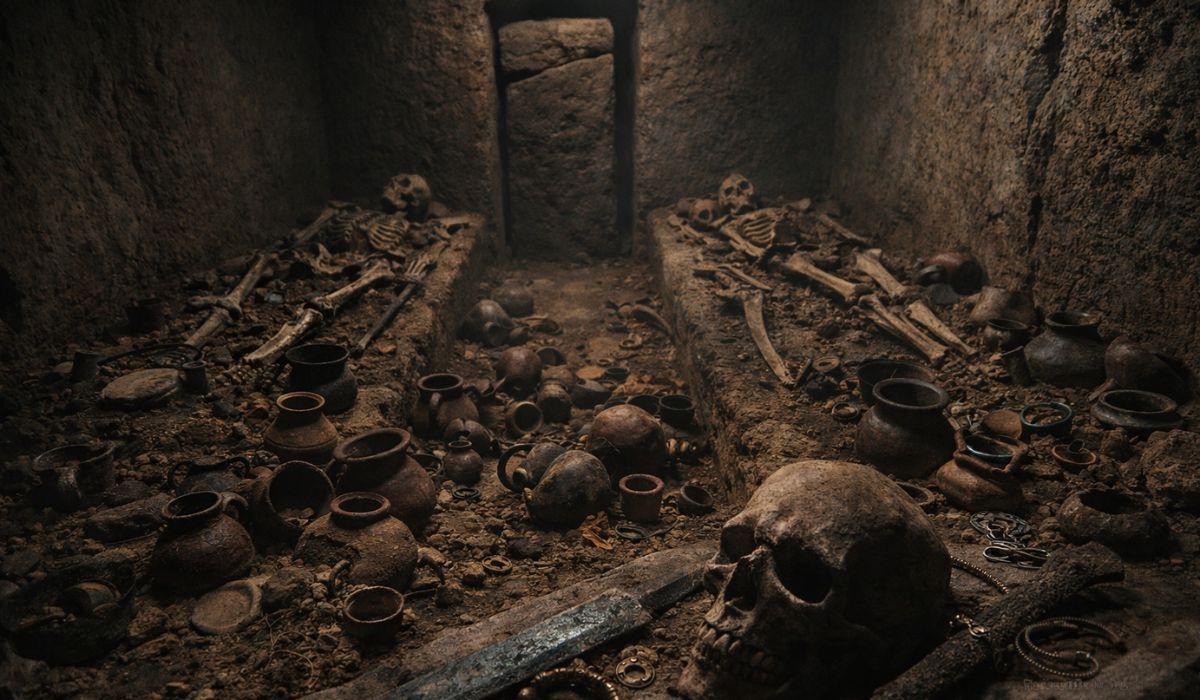
Archaeologists find an intact tomb over 2,500 years old, with more than 100 preserved objects, weapons, jewelry, and human remains never touched.
-
Volcanic lava transforms into threads as fine as human hair that travel over 30 kilometers by wind and fall like cutting rain on roofs and backyards in Hawaii and Iceland.

-
NASA issues a warning for the feared Godzilla El Niño that could change the planet’s climate in 2026 with extreme warming of the Pacific capable of causing devastating droughts in some regions and historic floods in others simultaneously.


Every winter brings stronger storms, higher tides, and more aggressive swells, which advance over promenades, seaside houses, and recreational structures.
Every year, authorities resort to million-euro projects to try to contain the advance of the sea and buy time: reinforcement of walls, construction of rigid barriers, beach nourishment with sediment dredged from the seafloor, and targeted interventions in critical areas.
Even so, entire rows of houses have already been swallowed up, and sections of beaches have practically disappeared.
Three-quarters of the Portuguese population live near the coast.
The question that arises for many communities is straightforward: what to do when the sea ceases to be a landscape and becomes a daily physical threat, with water hitting walls, vibrating structures, and making escape routes virtually impossible on stormy nights.
Coastal Fishing Under Pressure In Torreira And Esmoriz

In the Aveiro region, fisherman Vítor Cachoeira symbolizes the pressure on traditional coastal fishing.
Aboard the boat Maria de Fátima, he recounts decades of life at sea, driven more by passion than by income, which is becoming increasingly tight today.
Catches that used to be reasonable have become scarce.
After hours of work, nets that once came back full now bring only a few horse mackerels, sardines, and few gilt-head breams.
Small fishermen can barely sustain themselves with what they catch and have come to rely on social assistance and subsidies, while the advance of the sea shortens beaches and even complicates the simple act of pulling boats onto the sand.
In Esmoriz, where Vítor lives, the situation is even more critical.
At high tide, the sea reaches the rocks and even prevents spreading a towel on the beach.
Fishing is on the brink of extinction in some areas, not just due to the decline in fish but because the very strip of sand where daily fishing took place has been almost erased by winter tides.
Dunes Collapsing And Villages Encircled In Apúlia


Further north, in Apúlia, fisherman Adriano Ribeiro faces erosion on another front: the sand dunes that historically protected the village.
He reports that, in just a few decades, the dune has receded several meters and gained height, clearly showing the sand cut away by the advance of the sea and projected into the coastal system.
Residents have been trying for years to hold the line of defense with sandbags and wooden stakes. Community efforts are insufficient.
Houses are being hit by high tides, especially in winter, and the feeling expressed is one of abandonment.
Scientists and residents converge on one point: in some sections, the only viable strategy may be to retreat inland.
Adriano criticizes a spur built offshore, which he claims has altered currents and worsened erosion in the area.
His proposal is to remove this structure and restore the dunes as a natural barrier.
While structural measures do not arrive, the perception in the community is that the coast is being sacrificed inch by inch, with no proportional response from the government.
Restaurants At Risk And Jobs At Stake On The Coastal Strip
In the same Apúlia, about 30 seafood restaurants are lined up behind the dunes, along the coastal road.
The restaurant A Cabana, supplied by Adriano several times a week, summarizes the dilemma of a whole local economy that depends on gastronomy and tourism.
The sea already threatens to swallow this zone of restaurants, and rumors of demolitions for safety reasons are circulating.
Local estimates indicate a direct impact on 80 to 100 jobs and another 300 indirect jobs linked to bakeries, fishing, and agriculture.
For owners like Abel Vieira, it would be the collapse of a production chain that relies on the sea, but is now threatened by it.
Abel advocates creating a new, set-back gastronomic area on vacant land further from the coastline, with taller buildings still offering a view of the sea.
He points to the site, sees a viable project, and claims that everyone would benefit if the city hall takes on this plan.
However, the real expectation in the short term leans more towards demolitions and loss of livelihoods than planned reconstruction.
Surfing At Risk And Tourism In Danger At Furadouro
In Furadouro, a former surfing landmark, the reality has also changed.
Where there used to be sand and dunes, large granite blocks now prevail, installed to protect the town.
João Paulo, who runs a surf school, depends on tourism and wave quality, but sees the scenario deteriorating year after year.
He still manages to keep a class of about twenty young people on weekends, moving lessons to a stretch where the beach remains wider, about a kilometer from the center.
This means transporting equipment over increasing distances, as the advance of the sea shortens traditional accesses and makes daily logistics heavier.
João reports that what used to be a highly sought-after surfing beach is no longer a reference, as visitors migrate to other destinations.
The combination of erosion, rigid blocks, and altered seafloor affects wave quality.
The impact is economic but also symbolic: a piece of local identity connected to water and sport is lost.
Lisbon Invests In Costly Projects To Contain The Advance Of The Sea
In Lisbon, the responsibility for coastal erosion falls on the central government.
The then-secretary of state Inês Costa classifies coastal protection as the biggest challenge of Portuguese environmental policy and recognizes that purely structural or engineering measures cannot defend all points along the coastline.
In the last decade, more than 1 billion euros have been spent on protecting coastal cities and beaches, focusing on beach nourishment and defense infrastructure.
One of the most costly solutions involves sucking sand from the seafloor and dumping it back onto the beaches through giant tubes, in operations that consume hundreds of thousands of euros just in diesel.
In the central region, artificial sediment renourishment operations move about 1 million cubic meters of sand in one phase and anticipate future replenishments of up to 3 million cubic meters.
Geo-cylinders placed along 300 meters, at three levels, form a sort of submerged skeleton that, according to local engineers, helps retain sand and reduce the direct impact of waves.
Relocations And New Homes Away From The Sea Attack Line
While machines work on the coastline, the advance of the sea forces profound changes in the urban fabric.
In Esmoriz, fisherman Vítor also acts as a political mediator between the city hall and affected residents.
One of the families that experienced the transition is Carla Santos’, previously settled just behind a wall by the sea.
Carla reports that the sea hit the wall of her house so hard that the building shook. Escaping with her children in the event of a sudden sea invasion seemed practically impossible.
The solution came in the form of a newly built settlement, about 300 meters inland, funded with municipal funds after a broken promise of support from the central government.
In the new house, Carla describes basic changes that represent a leap in dignity: separate rooms for the children, a bathroom with a shower, a roof that doesn’t leak.
The relocations show that, in some cases, the response to the advance of the sea is not to build more walls, but to move people from risk zones, which requires complex social planning and consistent resources.
Local Campaigns And The Struggle For Coastal Protection Projects
In the final phase of a local election campaign in Esmoriz, Vítor serves as a volunteer councilor for the social democrats and places coastal erosion at the center of the debate.
He seeks votes among residents relocated to housing units, reminding that many lived in constant dread during winter when the sea easily engulfed dunes and walls.
For the city hall, advancing with its own resources, without waiting entirely for national funds, was decisive in moving families from the most vulnerable points.
The Boa Esperança settlement materializes this strategy. Still, not everyone believes that constructing new houses is a definitive solution, as the advance of the sea may continue to pressure other areas of the city over the coming decades.
Alternative Plans In Apúlia And Frustration With The Central Government
In Apúlia, the mood is more pessimistic. News came that the government in Lisbon is considering the demolition of restaurants on the dunes, arguing it would allow for the gradual recovery of the natural landscape.
For fisherman Adriano, the measure would mean losing cabins, restaurants, and jobs without ensuring effective protection.
He has developed, with the support of an architect, an alternative plan to redesign coastal defense and reduce wave force before they reach the coastline.
Adriano shows maps, explains that the idea would be to reproduce the effect of natural stones that dissipate energy, and insists that his proposal could benefit fishermen, dunes, and residents.
Frustration arises in the comparison with other coastal areas that, according to him, receive more attention and investment.
Adriano claims he has heard promises for fifty years without seeing consistent changes in his community and questions why some sections are defended while others seem doomed to lose the battle against nature.
Century Catastrophe And The Dilemma Between Defending And Retreating
At Caparica Beach, near Lisbon, security measures have been intensified, but Inês Costa’s message is clear: the sea level will continue to rise as one of the impacts of climate change.
Portugal has already lost about 13 square kilometers of coastline in six decades, and a quarter of the shoreline is affected by coastal erosion.
Teachers, surfers, and residents observe damaged promenades, cafés destroyed by isolated waves, and stones from walls thrown dozens of meters inland.
In outdoor classes, surf teacher João shows students secondary dunes that have disappeared, vegetation torn away, and stretches where the replenishment of sand, despite costing millions of euros, did not prevent the sea from entering on land.
Experts classify the ongoing process as a existential threat to Portugal’s coast, with a direct impact on cities, fishing villages, tourism, and cultural identity tied to the Atlantic.
Between defending everything with high-cost works and retreating in a planned manner, the country is being pushed towards difficult choices that will define which communities will remain by the sea in the coming decades.
In your opinion, should Portugal continue investing billions in works to hold back the advance of the sea on all fronts, or accept planned retreats and abandon some stretches of the coast to the ocean’s force?





-

-

-

5 pessoas reagiram a isso.