





 Portuguese
  English
  Spanish
  5 min of reading
  79 comments


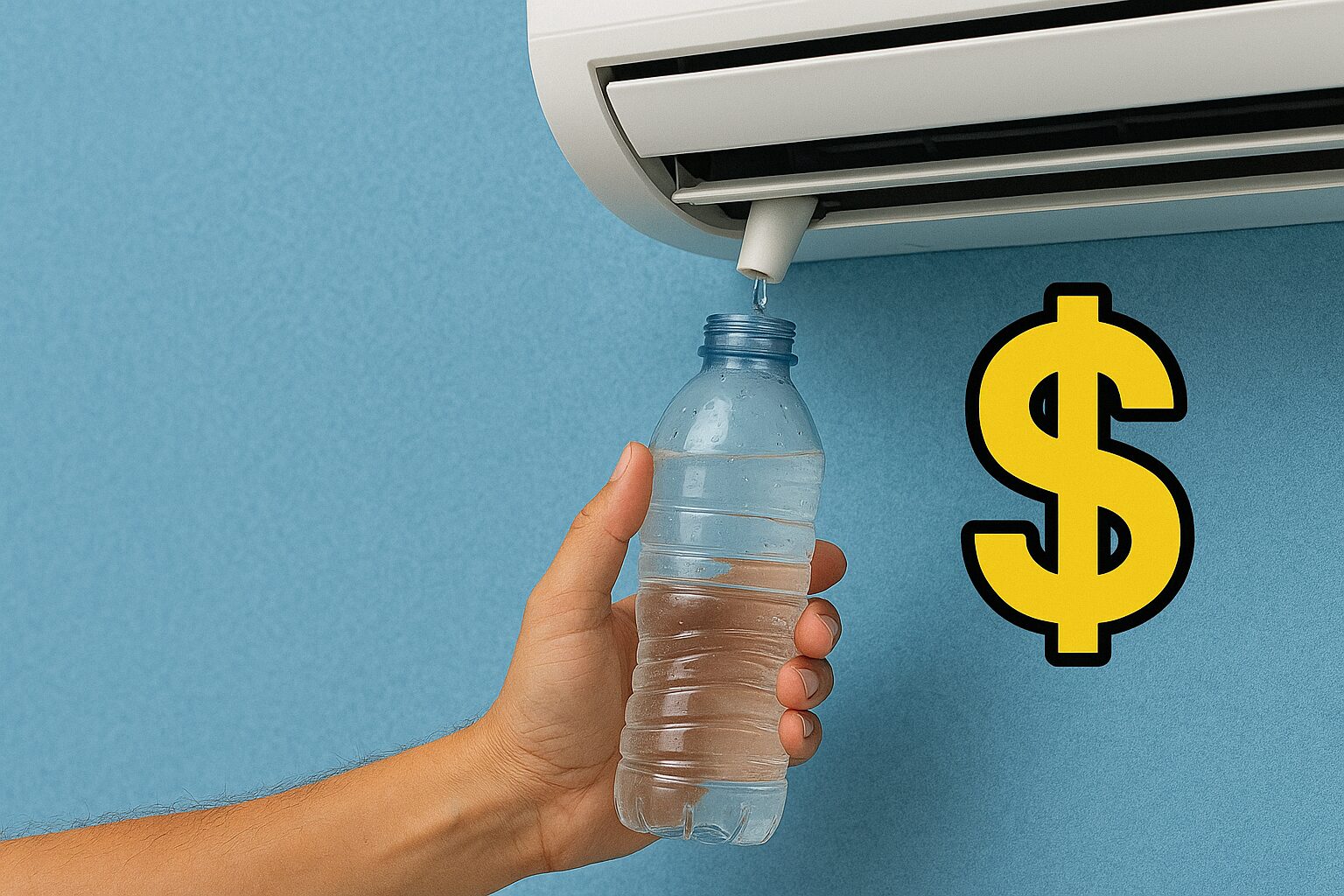


In Times of Concern Over Water Waste, Small Changes Can Make a Difference. The Water Generated by Air Conditioners Is a Valuable Resource That Can Be Reused in Various Ways, Such as in Cleaning, Gardening, and Even in Some Industrial Applications.
In Brazil, where the hot climate prevails, the use of air conditioning has been growing rapidly each year. Currently, there are about 36 million units installed, but by 2050, this number is expected to jump to an impressive 160 million, representing an increase of nearly 350%.
The projection, released by the International Energy Agency (IEA), only considers the impact of the growth of GDP.
Worldwide, the scenario is also significant, with the total number of units rising from 2 billion to 5.5 billion installed units over the same period.
-
The oceans are darkening all over the planet – what is happening?
-
An engineer designs a solar plane to fly on Mars at an altitude of 1,000 meters and a speed of 300 km/h, covering 16,000 kilometers in a Martian year, 900 times the distance traveled by the Ingenuity helicopter in three years on the planet before experiencing a rotor failure, and NASA is already funding the feasibility study.

-
A new phenomenon of contactless magnetic friction intrigues scientists and questions a theory that has been valid since the 17th century.
-
An impressive phenomenon in Northern Brazil causes rivers of different colors to flow side by side, revealing secrets about sediments, currents, and biodiversity.

In 2024, the air conditioning market in Brazil recorded historic growth, driven by intense heat waves, reduced appliance prices, and increased credit availability.
According to data from the National Association of Manufacturers of Electro-Electronic Products (Eletros), sales increased by 38% compared to the previous year.
During the hot summer months, air conditioning units become indispensable allies in combating the heat.
Water from Air Conditioners Is More Valuable Than It Seems
However, many do not realize that, besides cooling environments, they also produce a valuable byproduct: water.
The liquid that drips from the air conditioner’s drain may seem worthless, but its potential for reuse is quite surprising.
Let’s explore how this water is generated, its properties, and how to use it effectively.
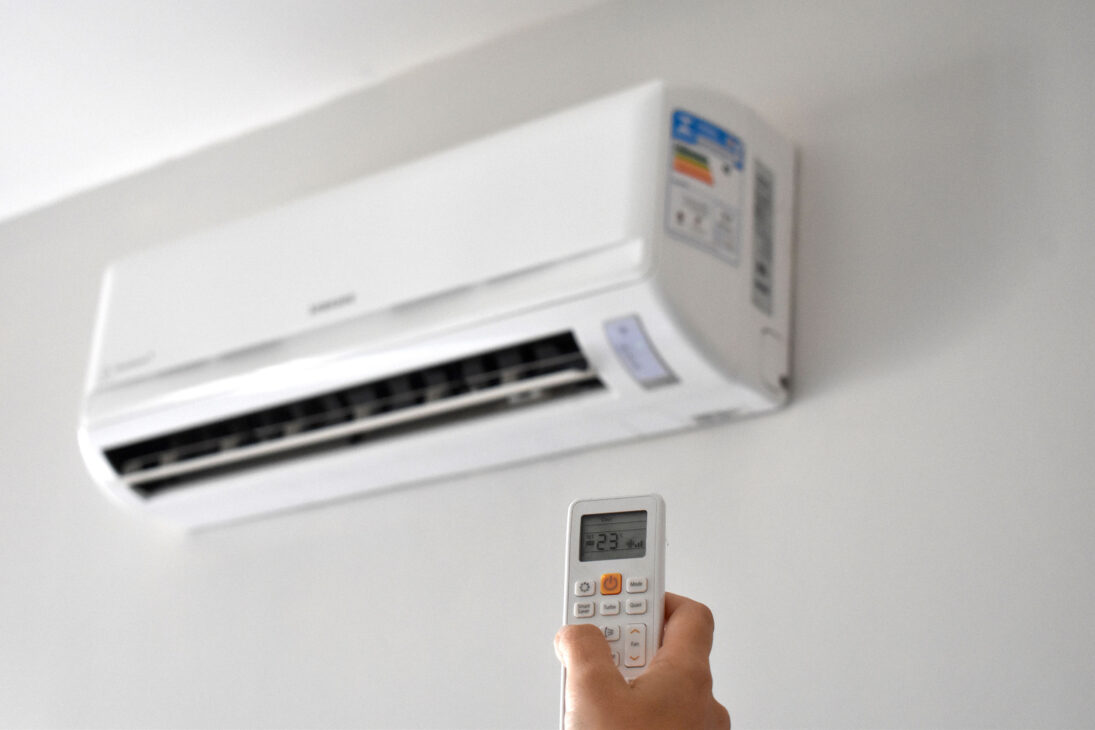
Why Does Water Come from Air Conditioners?
The operation of air conditioners is based on physical and chemical processes that involve cooling the indoor air.
The refrigerant fluid present in the unit absorbs heat from the environment through a component called the evaporator.
During this process, the warm air is cooled, and the relative humidity increases until it reaches the dew point.
At this moment, the water vapor present in the air condenses, forming small droplets that accumulate at the base of the evaporator. This water, which has no direct utility for the operation of the unit, is eliminated through the drain.
Is the Water Potable?
The short and direct answer is no. Although the water that comes from the air conditioner is technically “pure” because it originates from condensed water vapor, it is not safe for human or animal consumption.
As it passes through the air conditioning system, the water comes into contact with filters, collection trays, and hoses that may contain dust, bacteria, and other contaminants.
Studies confirm that this water is unfit for drinking but can be safely used in various non-potable activities.
UFPB Study Confirms the Potential

Researchers from the Federal University of Paraíba (UFPB) conducted a study between 2018 and 2020 that indicated that water generated by air conditioning units can be used for purposes such as floor washing, watering plants, and flushing toilets.
The analysis of the collected water showed that its parameters comply with the NBR 16.783/2019 standard, which regulates the use of alternative water sources.
This means that, with simple treatments like filtration and chlorination, it can be safe for uses that do not involve human consumption.
The researchers also observed that the amount of water generated varies according to the units’ power.
For example, units with 7,500 BTUs produce about 0.20 liters per hour, while larger models, with 80,000 BTUs, can generate up to 6.81 liters per hour. This amount may seem small, but accumulated over days or weeks, it represents a significant volume.
“In order to ascertain the generated volume, water was collected from 38 units with varying power, between 7,500 and 80,000 BTU/h, located in six types of environments: auditoriums, libraries, copy rooms, administrative offices, classrooms, and laboratories. Even without special treatment, the clear water produced was found to be a highly viable solution,” explained researcher Jéssika de Oliveira.
“A large part of the water used at UFPB comes from the water utility company. With the growing water scarcity, alternative water sources are emerging year after year. One example of these sources is water vapor and droplets present in the atmospheric air, extracted by machines through air condensation,” she explains.
How to Reuse Water from Air Conditioners
Water from air conditioners can be used in various practical and sustainable ways. Here are some ideas:
- Gardening: Use the water to irrigate plants that do not require potable water, such as gardens or mini-gardens.
- Cleaning: It’s an excellent option for washing floors, yards, or even utensils that do not come into direct contact with food.
- Reservoirs: Redirect the drain piping to a water tank or cistern, and use this water to supply watering cans, hoses, or smaller reservoirs.
- Vehicle Maintenance: The water is useful for filling the windshield washer reservoir or for washing the car. It’s also great for topping off the vehicle’s radiator.
In Pernambuco, Law 16.584/19 already regulates the use of condensed water from air conditioning systems in public and private buildings.
The legislation requires that the water be captured and reused for non-potable activities. In Recife, some shopping malls and hardware stores have already adopted this practice, contributing to the conservation of water resources.
The Sustainable Context
In a world where the search for sustainable solutions is increasingly urgent, the reuse of water from air conditioners represents a viable and efficient alternative.
The condensed water, which was previously discarded without any use, can now be an ally in saving natural resources.
A clear example is the use of water in areas with water scarcity, where every liter saved makes a difference.
This practice is also aligned with global sustainability initiatives, such as the United Nations Sustainable Development Goals (SDGs), which encourage the responsible management of water and other natural resources.
Small changes, such as installing collection systems in residential and commercial buildings, can have a significant long-term impact.
Necessary Care When Reusing Water
Despite the potential for reuse, it is essential to adopt safety measures when handling water from air conditioners.
Ensure that collection systems are clean and well-maintained, avoiding the accumulation of dirt or the proliferation of bacteria.
Additionally, never use this water in applications involving human consumption, such as food preparation or hydration for people and animals.
In a typical household, water from the air conditioner can be stored in a bucket and used to water plants daily.
In condominiums or commercial buildings, larger systems can redirect water to cisterns, which can serve various activities, such as cleaning common areas or watering gardens.
The idea of reusing water from air conditioners may seem small, but it exemplifies how simple resources, often overlooked, can make a significant difference.
With the growing awareness of sustainability and water conservation, transforming “waste” into a solution is a step forward in environmental conservation.









Eu trabalho com isso a muitos anos, a calha de um ar condicionado é imunda, ela acumula tanta sujeira e bactéria que parece pele de frango, nos Estados unidos não usam essa agua para absolutamente nada e olha que as centrais de la produzem 10 vezes mais condensação do que um split.
Gostei ja tinha pensado em usar no jardim. Agora vou fazer o encanamento.
Já adoto o aproveitamento da água de condensação do ar condicionado a muito tempo, uso no regamento das plantas do jardim da minha casa e na limpeza do quintal. As redes sociais poderiam ajudar na divulgação desta prática sustentável e com certeza fará muito bem ao nosso planeta.