





 Português
  Inglês
  Espanhol
  7 min de leitura
  0 comentários


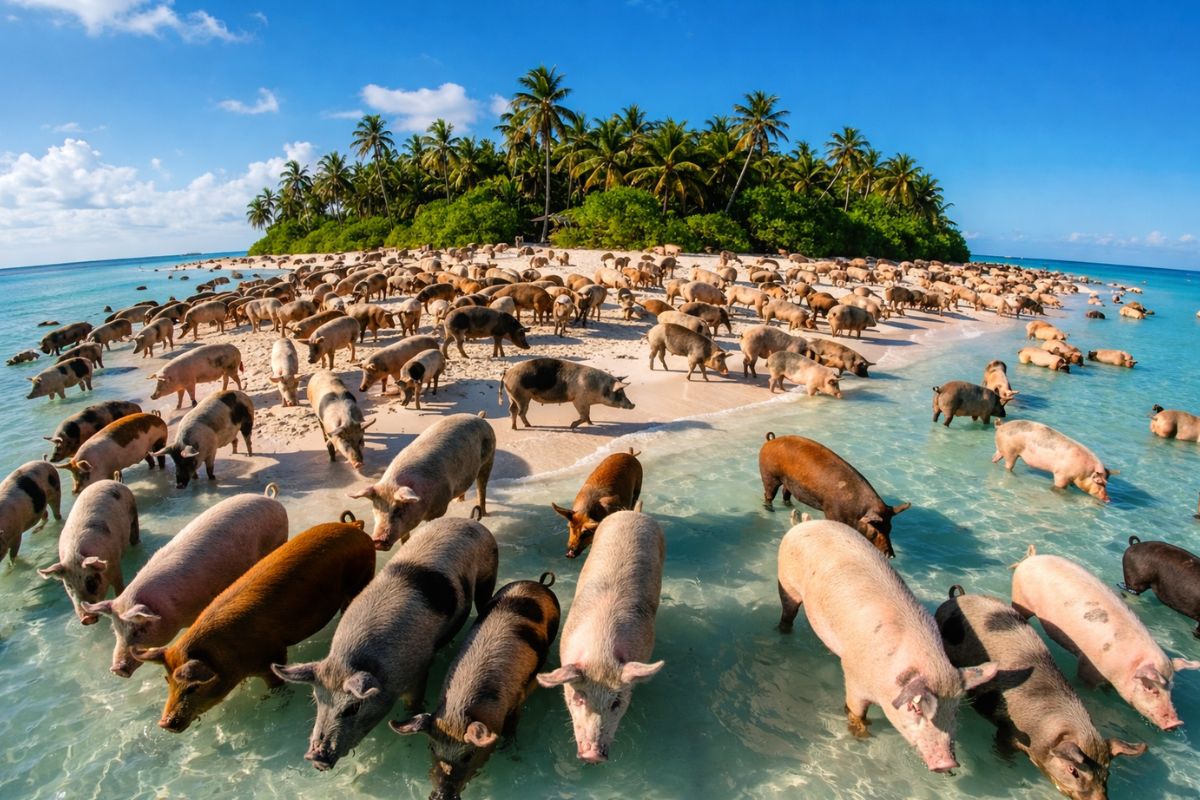
At Big Major Cay, the Famous Pig Island Transforms a Paradise Beach in Exuma, Bahamas, into a Setting of Swimming Pigs That Boost Tourism in the Bahamas.
Since it was discovered by travelers and photographers, Pig Island has ceased to be just an isolated piece of Big Major Cay to become a scene that looks like a montage: swimming pigs advancing in clear waters, surrounding tourists in the middle of a paradise beach. But behind the cute photos, the story mixes mystery about the animals’ origin, welfare controversies, and a powerful tourism machinery.
In the heart of the Caribbean, in Exuma, Bahamas, Pig Island stands out in an archipelago of over 300 islands. There, an entire paradise beach has literally been taken over by swimming pigs that learned to surround boats as soon as the motor approaches. For some, it’s the perfect encounter between nature, cuteness, and adventure. For others, it’s a clear example of how tourism in the Bahamas can go overboard when it clashes with the health of the animals.
The Paradise Beach That Became Pig Island

The world already knows Brazil for the snake-infested island. But far from here, in Exuma, Bahamas, there is an even more improbable scene: a paradise beach in Big Major Cay dominated by pigs of all sizes.
-
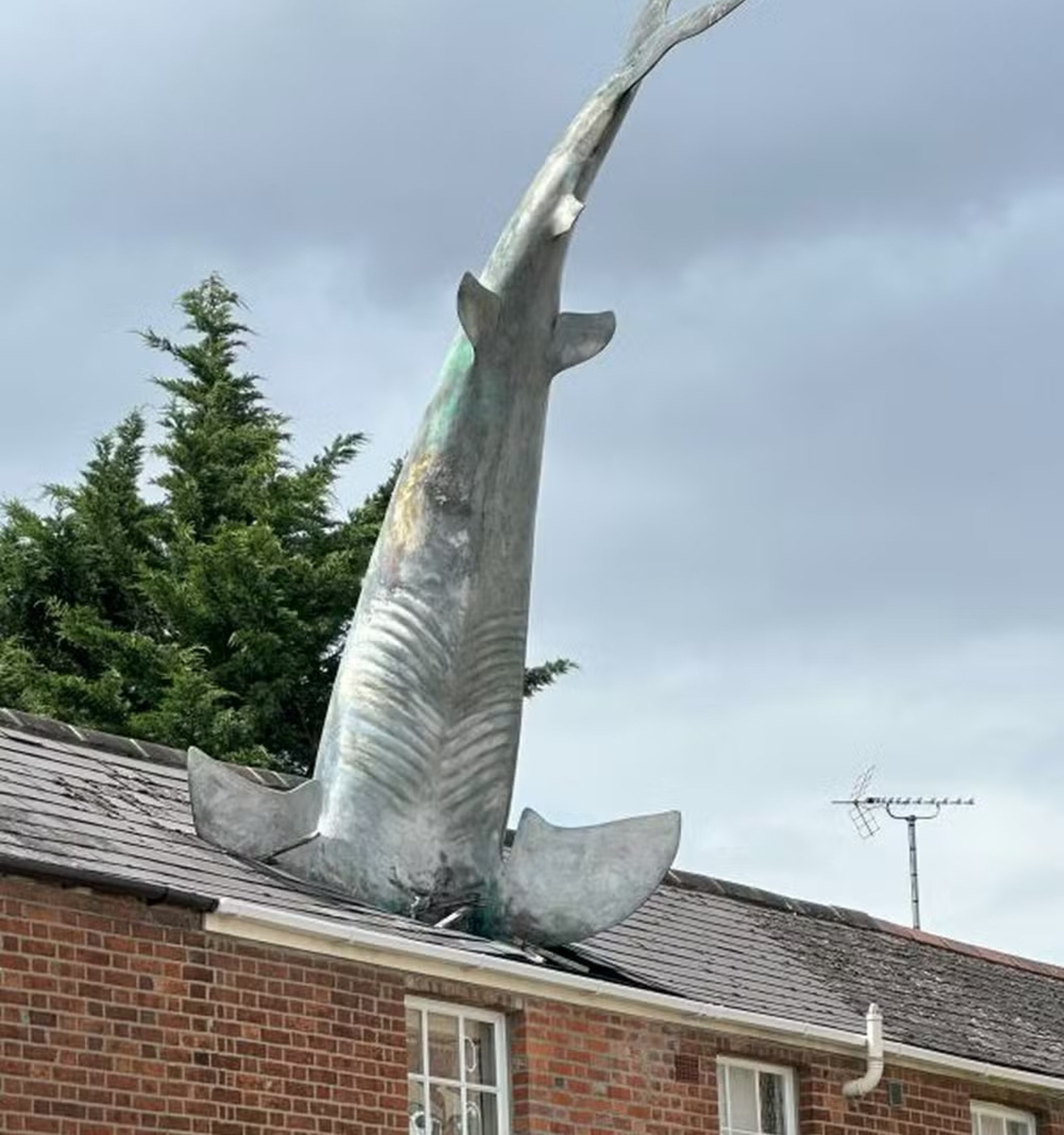
House in England with a 7.6-meter shark embedded in the roof attracts attention worldwide and becomes a curious attraction in Oxford.
-
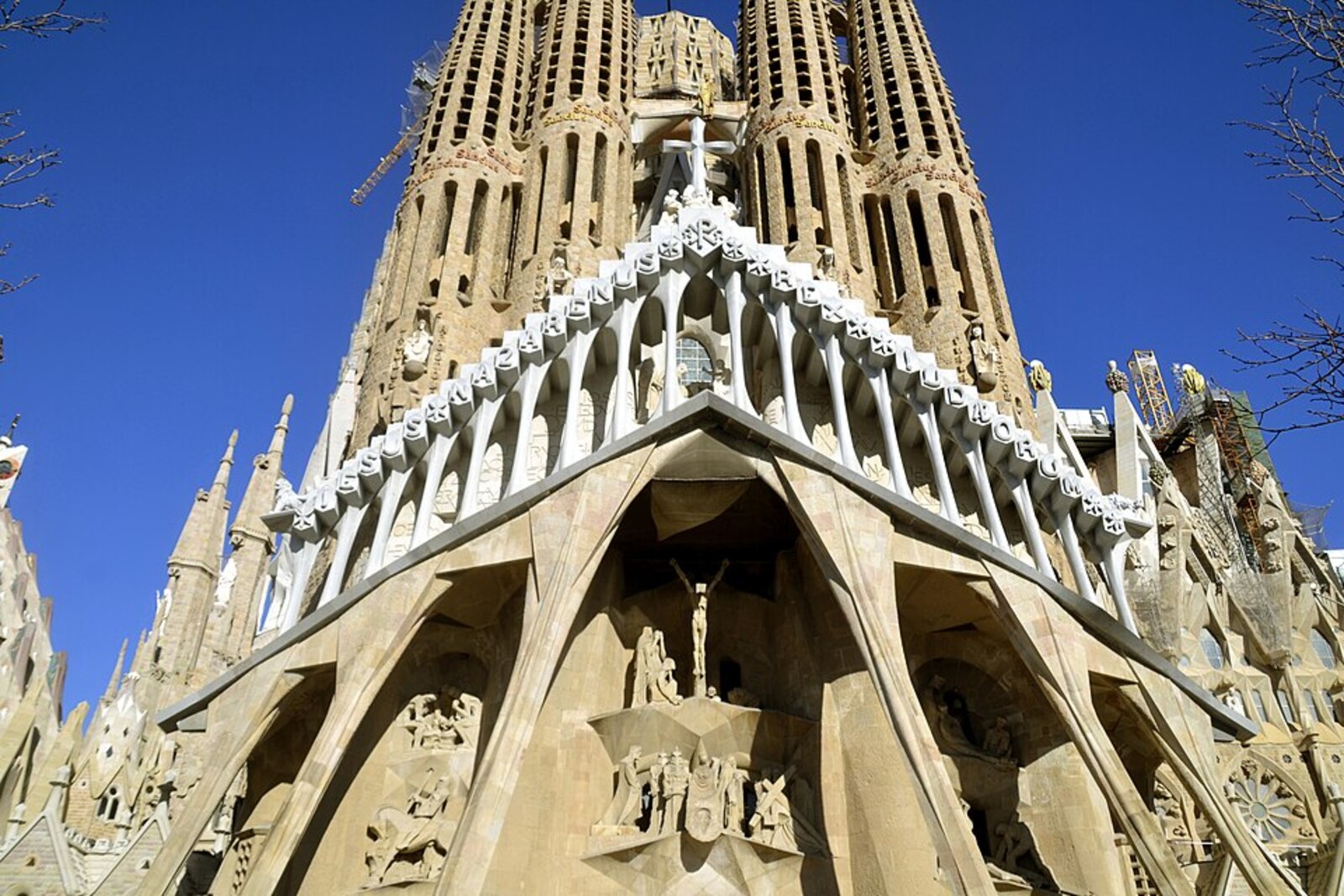
Masterpiece in Spain, under construction since 1882, receives 4.8 million visits in a year and impresses with its gigantism and architecture.
-
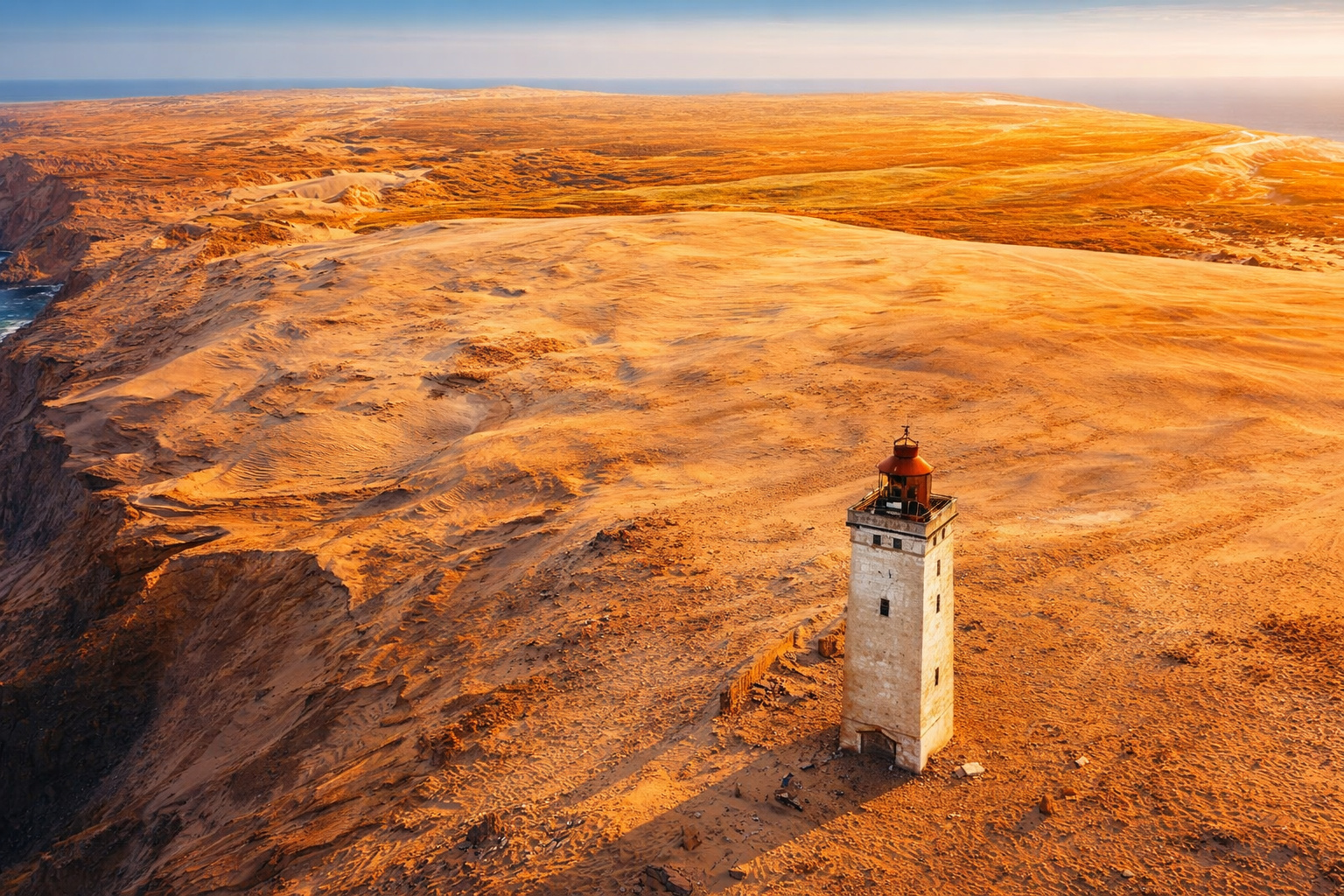
Attracting around 250,000 people a year, a lighthouse 200 meters from the sea, on a 60-meter high cliff, on the North Sea coast in Denmark, becomes one of the most impressive examples of how nature can threaten historical buildings.
-
The narrowest house in the world is only 63 centimeters wide, but inside it can accommodate a bathroom, kitchen, bedroom, office, and even two staircases.


Officially, the island is called Big Major Cay, but practically no one uses that name. In the mouths of tourists and tour operators, it’s Pig Beach or simply Pig Island.
The scenery is the classic postcard of the Caribbean: crystal blue water, bright white sand shining under the sun, and suddenly, a crowd of swimming pigs advancing towards the boats.
They walk across the sand, dive into the sea naturally, and have perfectly understood how the game works: boat arriving means food arriving, so they approach fearlessly, surround the vessels, and even try to climb aboard to secure a snack.
Where Did the Swimming Pigs Come From?

The origin of the population of Pig Island is one of the points that most fuels the myth surrounding the place. No one knows exactly which story is true, and what exists today is a set of theories circulating among locals, guides, and visitors.
The most repeated version says that sailors left the animals on Big Major Cay a long time ago, before setting off on a long journey. The idea would be simple: leave the pigs there, free, fattening up, to serve as food on the way back.
The plan, however, never materialized. The sailors never returned, and the pigs stayed, adapted, and multiplied.
Another explanation points to hotels and neighboring islands. When the pigs began to spread too much and cause problems for guests, someone presumably decided to take them to the then-isolated Big Major Cay, which ended up becoming Pig Island.
The intention would be to remove the animals from more urban areas and, in the process, concentrate them in a place where they wouldn’t be such a bother.
There are also those who say that it all started from an idea already thought out for tourism in the Bahamas: putting pigs on a paradise beach to create a curious and different attraction.
This hypothesis is contested by those who assert that the discovery of Pig Island was made by chance by a photographer who stumbled upon the scene and spread the images around the world.
Whichever version it is, the result is the same: domestic pigs and hybrids with wild boars, robust and strong, have established themselves in Exuma, Bahamas, and transformed Big Major Cay into a unique spot on the planet.
What It’s Like to Visit Pig Island in Exuma, Bahamas
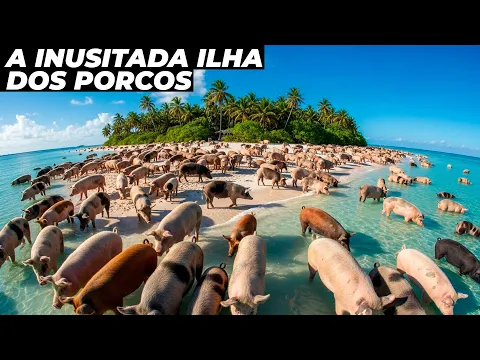

Getting to Pig Island is already part of the experience. Those in Nassau, the capital of the Bahamas, hire boat tours that take several hours to Exuma.
The crossing goes through incredibly blue waters, by almost deserted islets, and eventually ends up in Big Major Cay, the main stage of this story.
As soon as the boat approaches the paradise beach, the scene begins to unfold: several swimming pigs emerge from the water and approach the boat in a disorganized yet determined line.
They have already associated the sound of the engine with the arrival of tourists and food, so they run – or swim – to secure their share.
The custom is for visitors to bring fruits, vegetables, and pieces of bread. The guides recommend feeding the animals in the water or right at the edge of the sand.
The swimming pigs of Pig Island do not show fear of people, getting close to adults and children, and allowing people to enter the water next to them, leading to the photos that go viral on social media and promote tourism in the Bahamas.
For many travelers, swimming surrounded by pigs on a paradise beach is one of the most surreal experiences they have ever had in Exuma, Bahamas. Pig Island has become synonymous with selfies, videos, and unforgettable travel memories.
Behind the Photos: Animal Welfare and Controversies on Pig Island

But behind the fun images of Pig Island lies a much less romantic side. The very structure that drives tourism in the Bahamas raises questions about the quality of life of the animals inhabiting Big Major Cay.
Unlike pigs raised on farms, which can cool off in the mud and easily seek shade, the pigs of Pig Island live on a stretch of sand with little vegetation.
They are exposed to the strong sun all day long, with little natural protection, which can lead to burns and skin problems.
Feeding is another sensitive issue. Big Major Cay does not offer abundant food sources, and most of what the animals consume comes from tourists and locals from nearby islands who bring food and water.
When the flow of visitors decreases, competition for food increases, and there have been reports of fights among pigs over limited food.
In 2017, Pig Island made headlines worldwide with the mysterious death of several animals. Initial suspicions pointed to inadequate food offered by visitors, such as alcoholic beverages or spoiled food.
Other versions suggested that the pigs may have ingested too much sand along with the garbage thrown on the beach, causing severe internal problems.
The episode raised a red flag about how the attraction was being managed. Since then, Pig Island has divided opinions between those who see it as an exotic paradise and those who view it as a case of tourist exploitation disguised as a cute experience.
On one side, critics claim that the animals are used as part of a tourism business in the Bahamas without strict welfare controls.
On the other side, locals defend that the pigs receive fresh water, food, veterinary care, and even small wooden shelters to alleviate the heat.
Many tourists report that the animals appear healthy and active, running on the sand and swimming full of energy.
Pig Island and Other Places Dominated by Animals
Pig Island is not the only example in the world of territory taken over by animals that adapted to an apparently improbable scenario.
The very initial comparison with the snake island in Brazil shows how this type of place arouses fascination and fear at the same time.
In Japan, there is the famous cat island, called Aoshima. Less than 15 people live there, but the population of felines exceeds 300 individuals.
The cats were brought in to control rats on fishing boats, remained in the area even after the reduction of human activity, and ended up turning the place into yet another curious tourist attraction.
These examples reveal a pattern: when humans and animals cross paths on isolated islands and the story spreads on social media, new travel routes, tour packages, and unexpected postcards quickly emerge. Pig Island in Exuma, Bahamas, has become one of the most recognized faces of this global phenomenon.
A Beautiful, Curious, and Controversial Postcard
Today, Pig Island is one of the most recognizable symbols of tourism in the Bahamas, appearing in commercials, TV shows, and even reality shows.
The image of swimming pigs advancing toward the boats on a paradise beach has practically become synonymous with Exuma, Bahamas, in the imagination of many people.
At the same time, the case raises an important discussion: to what extent is transforming animals into a permanent attraction compatible with welfare and environmental balance?
The line between dream destination and exploitation can be very thin, especially when the success of the place depends on keeping Pig Island always full of animals, always ready for photos, and always functioning as a showcase for tourism in the Bahamas.
In the end, Pig Island is a mirror of our time: a perfect setting for social media, but also an invitation to reflect on the real impact we leave when seeking “unique” experiences in sensitive places.
Would you have the courage to enter the sea surrounded by swimming pigs on Pig Island, or do you think this type of tourism in the Bahamas has crossed the line in treating animals?






-

-

-

-

-

17 pessoas reagiram a isso.