





 Portuguese
  English
  Spanish
  3 min of reading
  0 comments


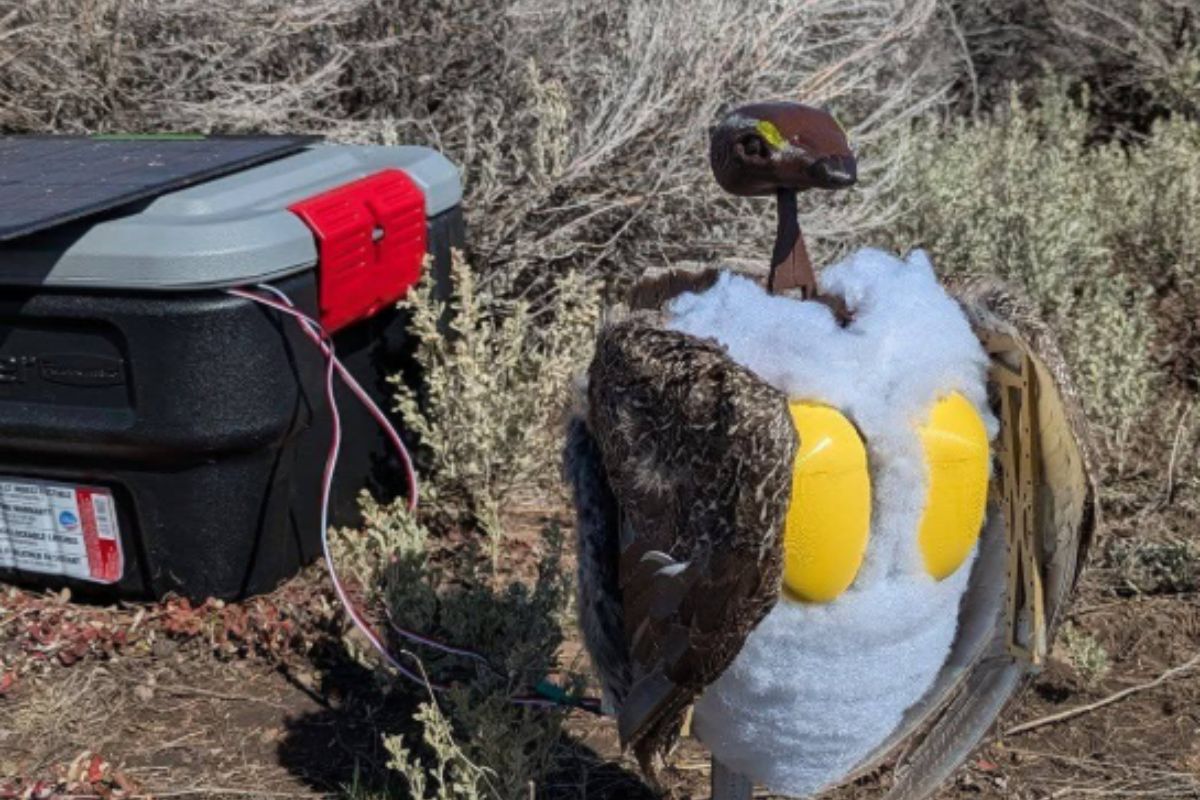
Robots in the shape of prairie chickens simulate lek rituals in restored habitat near Jackson Hole, after decline from 73 to 3 males, and try to reduce collisions with planes
The robots have become an unusual conservation tool in Wyoming, United States. Robotic decoys in the shape of prairie chickens are being installed in restored areas to simulate mating dances and vocalizations, attracting real birds back to safer breeding sites.
The strategy has gained urgency because the local population has plummeted: in a lek in Jackson Hole, the number of males fell from 73 in 1950 to just three last year, according to the database. The plan also aims to divert breeding away from the vicinity of Jackson Hole Airport, where air activity poses risks to the birds.
Why robots entered the conservation plan
The robots are part of a larger effort in Grand Teton National Park to influence bird behavior and accelerate the recolonization of restored habitats. The logic is that, even when the habitat is ready, wildlife does not always reappear immediately, so the simulation tries to create the feeling that the site is already active.
-
Scientists discover how a gigantic ocean current emerged 34 million years ago and began to move 100 times more water than all the rivers on the planet, changing the Earth’s climate and helping to freeze Antarctica.

-
The new TCL smartphone arrives with a battery that lasts up to 7 days and screen technology that simulates paper, promising to reduce eye strain during daily use; check the price and availability of the NXTPAPER 70 Pro.

-
For the first time in history, a probe photographed the Sun’s pole outside the orbital plane of the solar system and discovered that the star’s magnetic field is disorganized, a revelation that forces scientists to rethink the models used to predict solar storms capable of knocking out satellites, GPS, and electrical grids on Earth.

-
A law that no one knows requires oil companies to invest billions in technology in Brazil, and the result is autonomous robots, AI that predicts failures, and cameras that see danger before humans do on offshore platforms.

In addition to rebuilding populations, the use of robots addresses a practical problem mentioned in the database: dozens of birds have already died in collisions over the years, associated with the risk of air activity near the airport.
How robots imitate the lek ritual
The robots are programmed to reproduce the typical lek behavior, where males perform coordinated displays to attract females. The decoys execute repetitive sequences of movements and are combined with recordings of vocalizations, creating the illusion of an active breeding site.
Robotics mentor Gary Duquette described these machines as a kind of “Frankenbird”, because they mix realistic appearance with improvised solutions to function in the field.
Simple materials, sensors, and motorized versions

The robots were built with a mix of realistic and improvised materials. They include feathers provided by wildlife authorities, as well as components like foam and fabric. Some units remain static, while others are motorized to repeat movement patterns observed during mating displays.
This approach was designed to be modular and low-cost, with participation from local students and robotics teams, making it easy to test and adjust quickly.
Restored habitat and data monitoring
The restoration effort has already converted about 100 acres of former pastures into suitable habitat, but natural recolonization has been slow. Therefore, the robots come in as a push to stimulate activity, encouraging birds to gather and start nesting in safer locations.
In parallel, wildlife authorities, including the Wyoming Game and Fish Department, are expanding the use of data-driven tools to monitor populations.
According to Interesting Engineering, a tool that analyzes annual lek activity and combines it with historical data to track trends at local and state levels.
Testing in the current season and what may come next
The robots are being tested during the current breeding season, with cameras monitoring whether real birds respond to the simulations.
If they work, similar systems could be applied in other conservation projects, especially where restoring habitat alone is not enough to attract wildlife.
Do you think decoy robots are a good solution for conservation, or does this type of intervention change the natural behavior of species too much?









Seja o primeiro a reagir!