





 Portuguese
  English
  Spanish
  4 min of reading
  0 comments


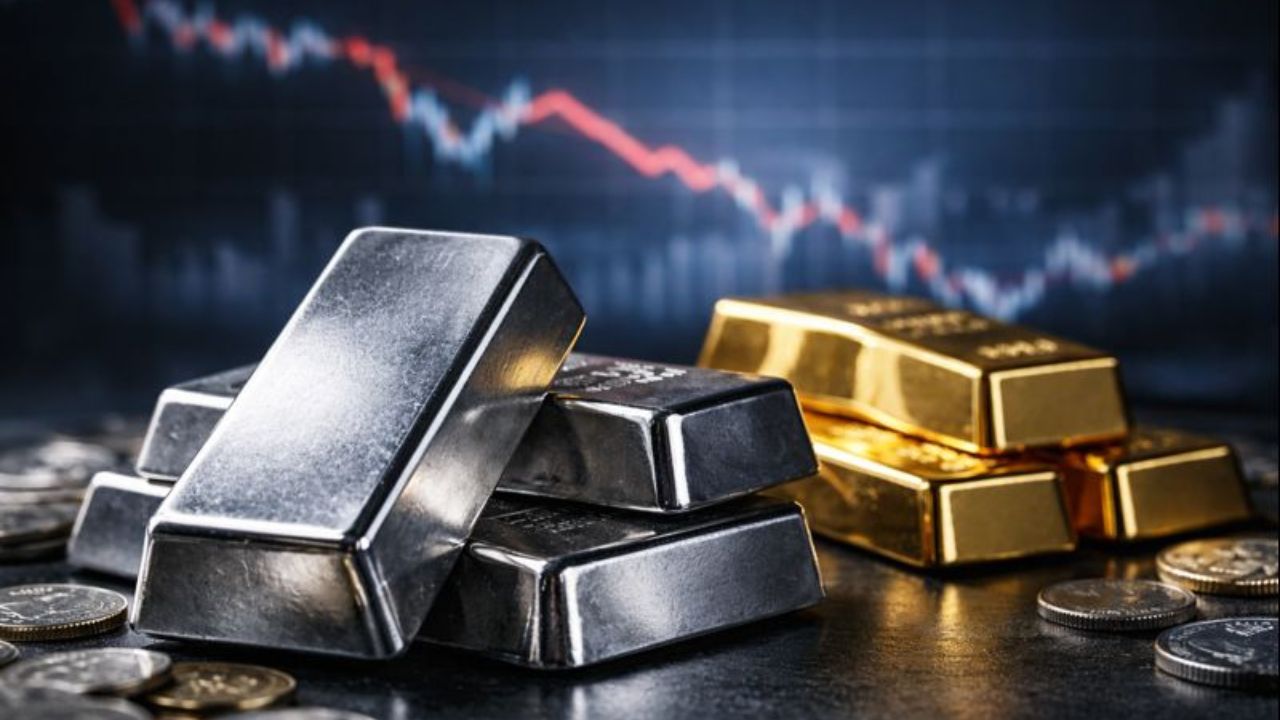
Silver Outperforms Gold With Growth Above 200%, Driven By Global Tensions, Economic Uncertainties, And U.S. Decisions.
Silver recorded a historic appreciation of over 200% in just one year, easily surpassing gold’s performance and attracting the attention of investors amid a backdrop of strong economic uncertainties, geopolitical tensions, and controversial decisions by the United States.
The movement, observed between January 2025 and January 2026, reflects the global search for wealth protection, but also reveals structural differences between the main precious metals.
On January 22, 2025, silver was trading at around US$ 31. A year later, it reached US$ 102, accumulating a rise of 224.98%.
-
After China, it’s now the turn of the USA to ‘secure’ a share of Brazil’s natural resources: the country buys critical rare earths for R$ 3 billion and enters the center of the global technology dispute.
-
Rare earths are in everything, from cell phones to bullet trains, and what almost no one realizes is why they have become the target of such a delicate global war.
-
Brazil extracts 26.3 million tons of ore from what was previously treated as waste, transforming residues into wealth, producing over 3 million tons of sand, and demonstrating how national mining is relearning to generate value.

-
A $3.5 billion megaproject in Latin America pumps desalinated seawater at 1,050 liters per second over 194 km to keep a copper supermine in the Andes operational for another 20 years.

During the same period, gold advanced 75.65%, rising from US$ 2,797 to US$ 4,913 per ounce, according to a survey by Elos Ayta.
Although both are considered defensive assets, experts explain that the role of each metal in the global economy is distinct.
See More: India Advances In Agreement With The EU And Plans To Reduce Import Tariffs On Cars
See More: Dollar Significantly Falls Amid Political Uncertainty In The U.S. On The Eve Of The Fed
Precious Metals Gain Strength As Protection In Times Of Uncertainty
Historically, precious metals, especially gold, are used by investors and central banks as a store of value. However, the recent price escalation does not stem from a single factor.
On the contrary, it results from the convergence of geopolitical risks, changes in monetary policy, and greater caution from large global managers.
According to experts, whenever there is a risk of military escalation or instability in strategic regions for the international economy, there is a migration of capital to assets considered “safe havens.”
This behavior gained momentum in light of recent episodes, such as the U.S. military action in Venezuela, conflicts involving Iran, and diplomatic tensions surrounding Greenland.
For Patrícia Palomo, an economist at Arau Consultoria, these events act as classic triggers for protection.
“They increase the demand for assets that do not depend on the economic performance of a specific country, do not carry sovereign credit risk, and are historically perceived as a store of value.”
Lower Interest Rates And Central Banks Drive Gold
In addition to the geopolitical environment, financial factors also sustain the metals rally. The expectation of lower real interest rates in the medium term reduces the opportunity cost of holding gold in a portfolio.
“Since gold does not generate cash flow, the opportunity cost of holding it decreases when the market begins to price in cuts. This effect makes the metal relatively more attractive compared to fixed-income securities,” Palomo explains.
This movement is reinforced by the actions of central banks. According to Marco Harbich, CIO of Gordon Capital, countries like China, India, and various emerging economies have significantly increased their gold reserves.
“This behavior is linked to the attempt to diversify foreign exchange reserves and reduce dependence on the dollar,” he states.
Why Silver Rises More But Is More Volatile
Although often associated with gold, silver plays a different role in the global economy. For Harbich, the silver metal also acts as protection, but has one additional relevant component: industrial use.
“A significant portion of its demand comes from sectors such as solar energy, semiconductors, electronics, and technology. This makes its price more volatile than that of gold.”
The accelerated expansion of solar energy in countries like China, the United States, and India has significantly increased the demand for silver, essential in manufacturing photovoltaic panels.
At the same time, supply limitations and difficulties in opening new mines have pressured prices.
According to Palomo, in risk-averse scenarios, silver may follow gold. However, in deeper economic slowdowns, its connection to industrial activity may result in more intense fluctuations.
“Gold tends to serve better as a risk buffer in extreme scenarios,” she assesses.
Gold Hits Historical Records Amid Crisis Of Confidence In The United States
While silver surprises with the intensity of its increase, gold continues to extend a historic rally. The metal surpassed the US$ 5,100 mark per ounce for the first time, accumulating a rise of 64% in 2025, the largest annual gain since 1979, and over 18% just this year.
The rise is attributed to the demand for safe haven, the easing of U.S. monetary policy, consecutive purchases by central banks—especially by China—and record inflows into exchange-traded funds.
“The latest catalyst is effectively this crisis of confidence in the U.S. administration and in U.S. assets,” stated Kyle Rodda, senior market analyst at Capital.com.
According to him, erratic decisions by the U.S. government intensified the rush for gold as a protection alternative.
How To Invest In Silver, Gold, And Other Precious Metals
For individual investors, there are different ways to access precious metals. Physical purchases, in bars or coins, are possible, but involve custody costs and security risks. Therefore, it is usually less recommended.
A more practical alternative is ETFs and BDRs traded on the stock exchange, which offer exposure to gold and silver with greater liquidity.
“For those seeking operational simplicity, these assets allow tracking the metal’s variation and, in many cases, the exchange rate effect,” recommends Palomo.
Harbich emphasizes that the central point is to understand the role of these assets in the portfolio.
“Precious metals should not be viewed as instruments for quick gain, but as tools for diversification and wealth protection, especially in scenarios of uncertainty, persistent inflation, or loss of confidence in currencies.”
Thus, although silver has recently outperformed gold in appreciation, both continue to play complementary roles in the global economy.
In an environment marked by instability, controversial political decisions in the United States, and increasing geopolitical risks, precious metals remain at the center of investors’ protection strategies.









-

Uma pessoa reagiu a isso.