





 English
  Francês
  Alemão
  Italiano
  Japonês
  Norueguês
  Portuguese
  Spanish
  3 min of reading


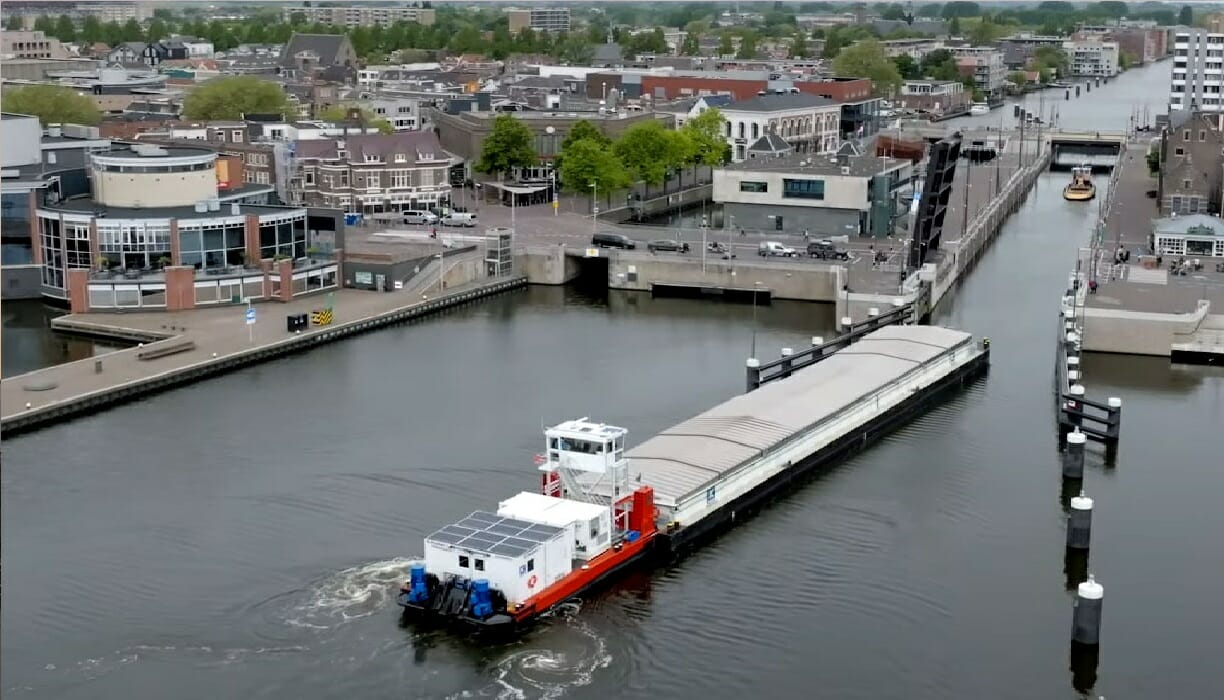
The Electric Boat From Cargill Is A Pioneer In The Naval Sector Of Electric Tugs And Zero Emissions Of Polluting Gases
Cargill, in partnership with Kotug International, has achieved a significant milestone by operating the world’s first fully electric tugboat, along with a barge, to transport cocoa beans from the Port of Amsterdam to Cargill’s cocoa factory in Zaandam, Netherlands, according to the website Portos e Navios.
This innovative transport solution uses Kotug’s E-Pusher and E-Barges, which are free of emissions and noise. With this initiative, Cargill becomes the first company to fully adopt electric tugs and barges for inland navigation, eliminating both carbon emissions and noise pollution, in a significant step towards sustainability in the naval industry.
With its advanced technology and cutting-edge propulsion systems, equipped with innovative features, Cargill’s new boat is capable of completely eliminating emissions, including carbon dioxide (CO2), sulfur oxides (SOx), nitrogen oxides (NOx), and particulate matter (PM).
-
Historic bankruptcy of Centauro shocks the market, and the century-old company puts more than 500,000 products, machines, and complete infrastructure up for online auction.

-
New shoe factory in Ceará is expected to create 400 jobs and strengthen the local economy.

-
No one imagined it, but a mixture of sawdust with a mineral that fights fires surprises scientists with a result that changes the course of fire-resistant construction.

-
From empty land to a high-end house, wooden construction uses a lightweight system, metal structure for the foundation, ventilated ceramic cladding, and special windows to create an efficient and comfortable living space throughout the year.


Cargill’s New Boat Has Fully Electric Propulsion
Cargill’s new electric boat, consisting of tugs and barges, plays a crucial role in the reduction of CO2 emissions. It is estimated that the electric boat can reduce about 190,000 kg of CO2 per year, which is equivalent to approximately 15,000 truck trips from the Port of Amsterdam to Cargill’s cocoa factory in Zaandam, considering only land transport.
This impressive reduction in emissions is a direct result of the adoption of electric propulsion technologies and the elimination of fossil fuel use. By replacing conventional energy sources with electric systems, Cargill’s electric boat offers a significant advancement towards sustainability in the maritime sector.
In addition to significantly contributing to the reduction of CO2 emissions, the zero-emission boat also plays a key role in improving air quality and preserving the environment. The elimination of pollutants such as SOx, NOx, and PM ensures that coastal communities and marine ecosystems are protected from the negative impacts of pollution.
The Zero Carbon Emission Initiative
This initiative represents an important milestone in the development of cleaner and sustainable solutions for maritime transport. By investing in electric propulsion technologies, we are paving the way for a future where carbon emissions and pollution are drastically reduced.
The zero-emission boat is an inspiring example of how technological innovation can drive the transition to a more sustainable maritime sector. Through continuous investments in research and development, we are building a future where emissions are minimized and natural resources are preserved.
As more zero-emission vessels are introduced, we can envision a cleaner, more efficient, and environmentally responsible maritime sector. This is a significant achievement not only for the maritime industry but also for society as a whole, as it represents a crucial step in the fight against climate change and the pursuit of a more sustainable world.








Seja o primeiro a reagir!