





 Portuguese
  English
  Spanish
  4 min of reading
  1 comment


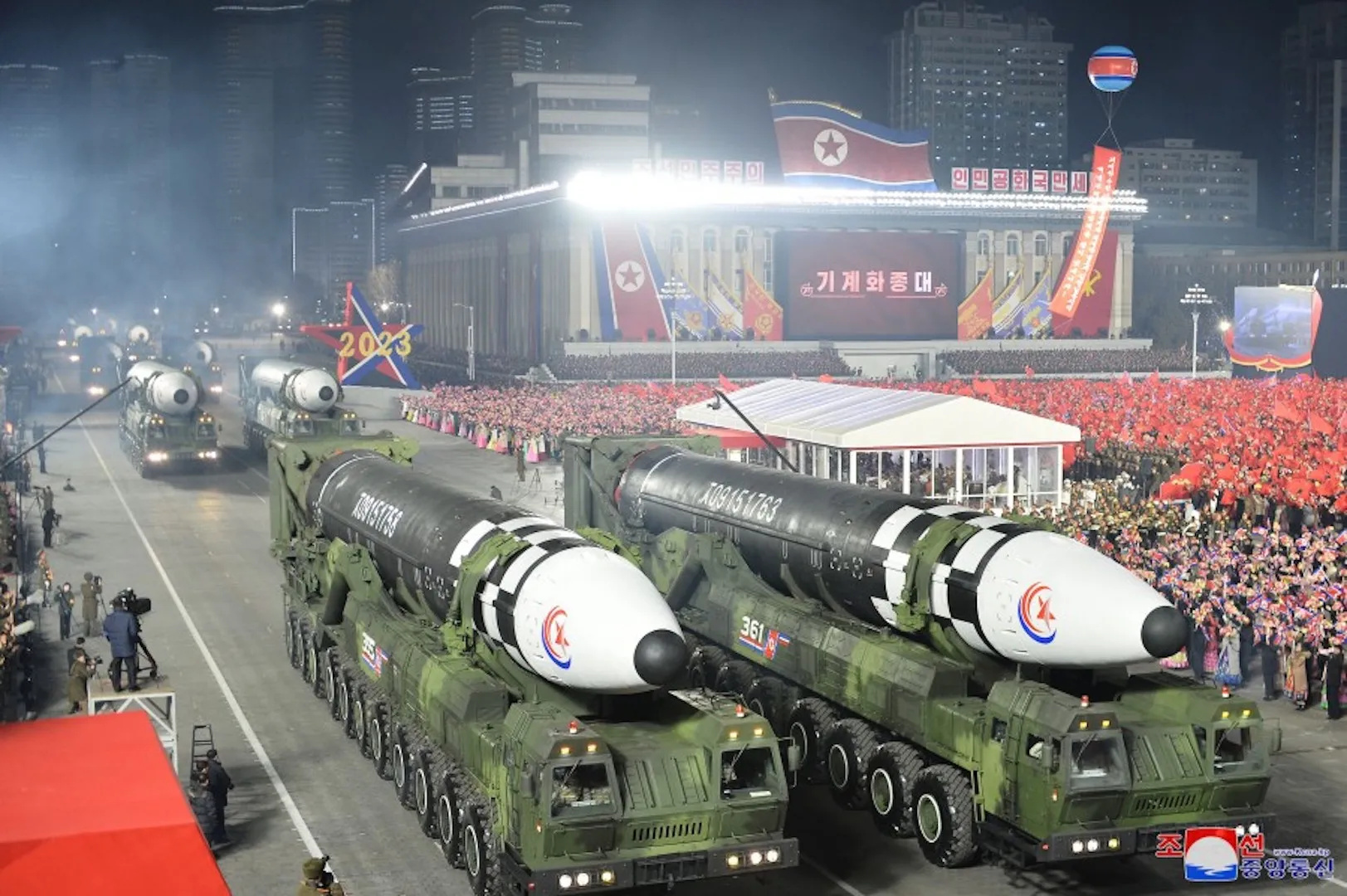


With Over 25 Meters and Estimated Range Above 15,000 Km, the Hwasong-17 Expands North Korea’s Nuclear Deterrence.
When publicly showcased during a military parade in Pyongyang, the Hwasong-17 did not go unnoticed. Its size immediately drew the attention of international analysts. At over 25 meters in estimated length and transported by a multi-axle mobile launcher, the missile has become the largest ever displayed by North Korea. Successfully tested for the first time in March 2022, according to state agency KCNA and confirmed by independent intelligence analyses from South Korea and Japan, the Hwasong-17 was described by Pyongyang as a new ICBM (intercontinental ballistic missile) intended to bolster its strategic deterrence capability.
The impact of the system lies not only in its physical size but in the combination of range, potential payload, and architecture designed for multiple warheads.
Structural Architecture and Dimensions of the Hwasong-17
The Hwasong-17 is classified as a two-stage liquid-fueled ICBM. Estimates from international experts suggest the missile measures between 24 and 26 meters in length, with a significantly larger diameter than previous models in the Hwasong series.
-
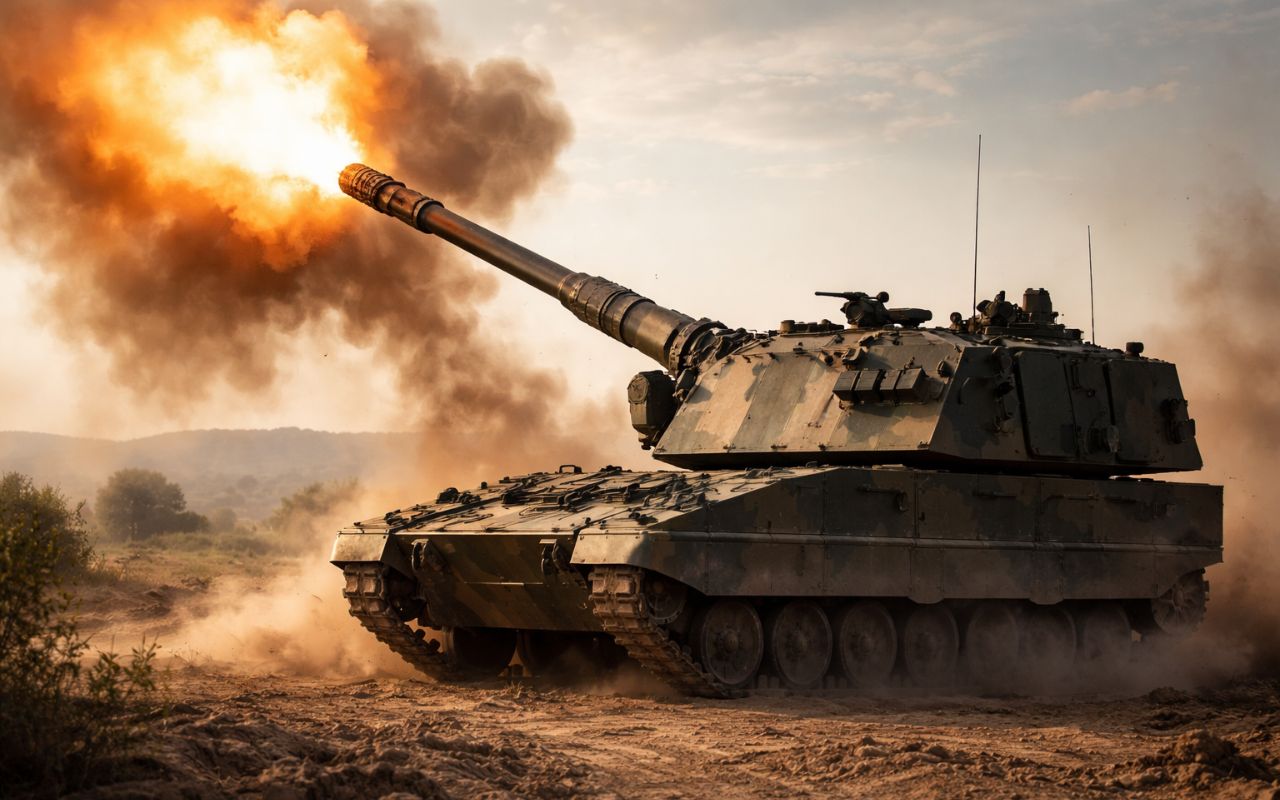
The German “steel monster” weighing 55 tons fires up to 10 projectiles per minute at over 40 km and avoids counterattacks on the battlefield by moving quickly to escape enemy attacks; meet the Panzerhaubitze 2000.
-
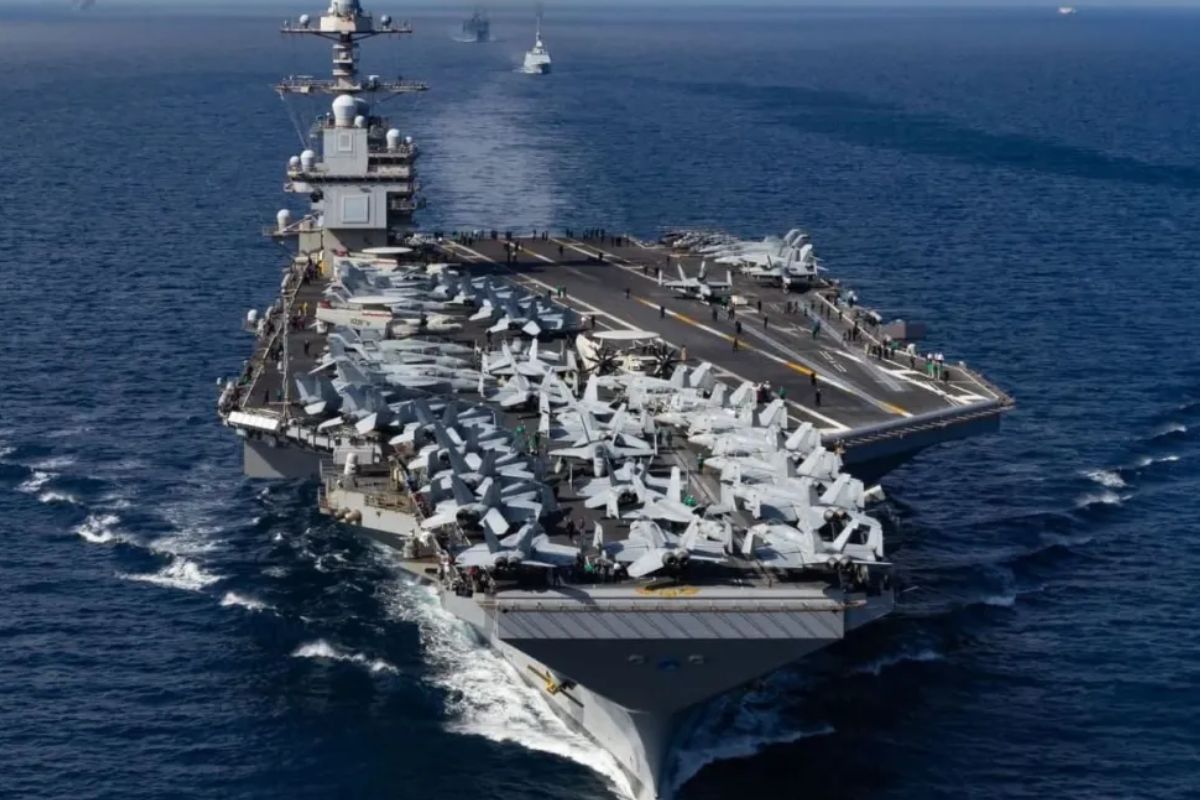
USS Gerald R. Ford, the largest aircraft carrier in the world, returns to sea after a fire in the laundry in the Red Sea; repaired in Crete, it resumes missions of Operation Epic Fury against Iran.
-
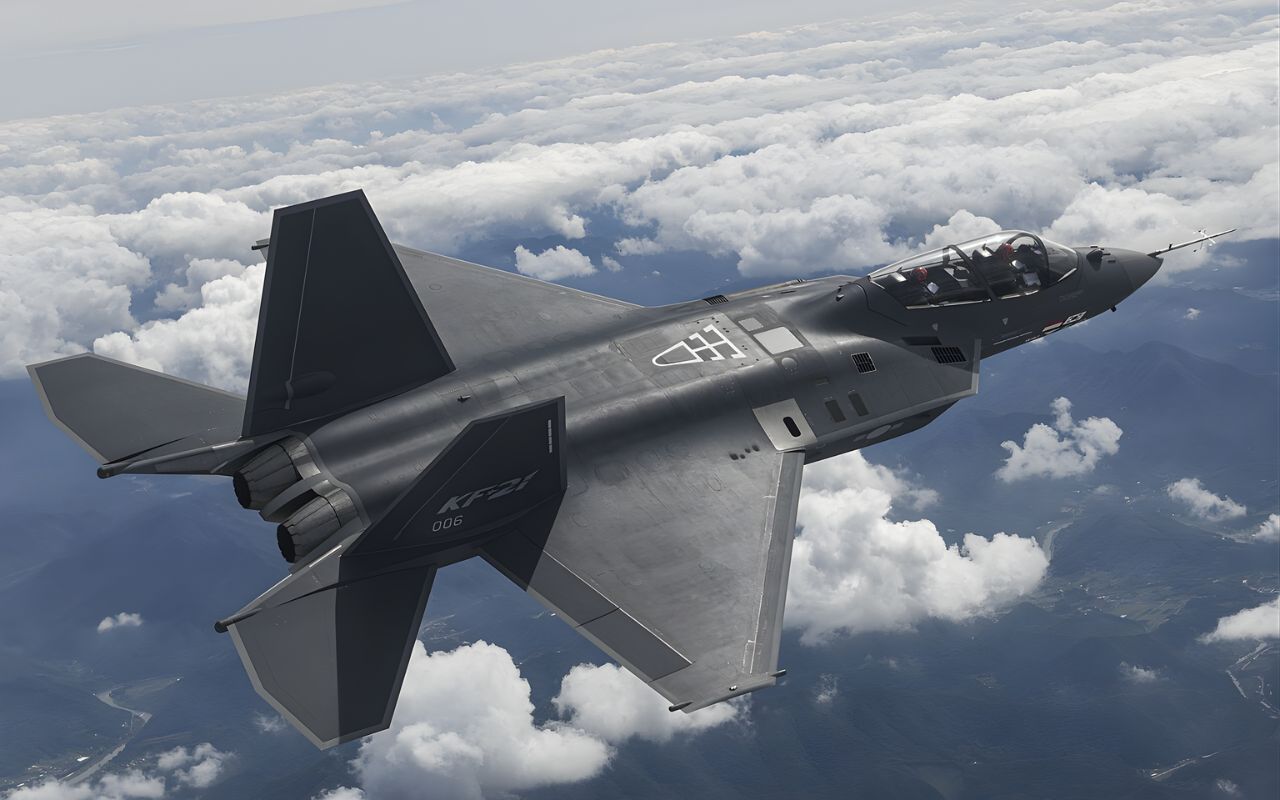
Military power: South Korea’s new KF-21 fighter jet will be a key component in replacing the aging aircraft of the air force, placing the country on the map of air military powers.
-
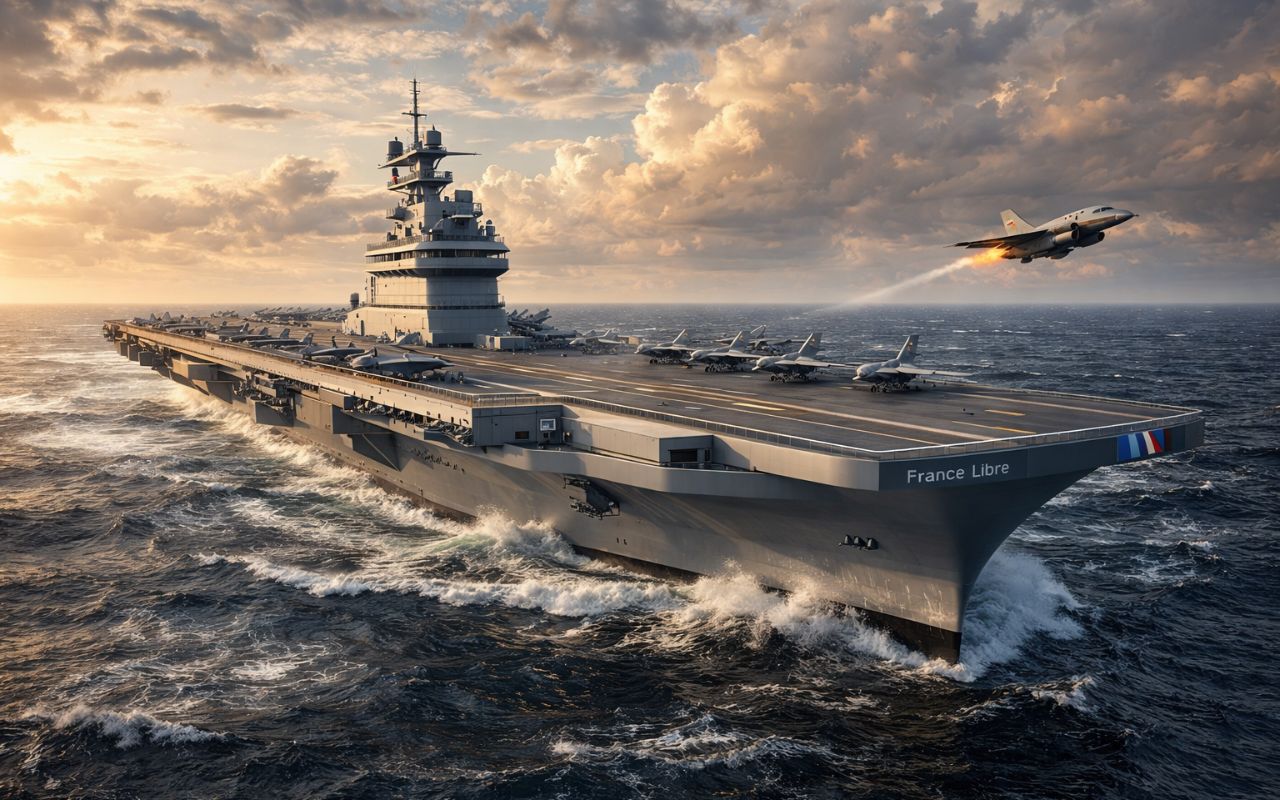
With 310 meters, 80 thousand tons, and capable of operating for 45 years, the new nuclear aircraft carrier France Libre will be the largest in France and will enter service in 2038.

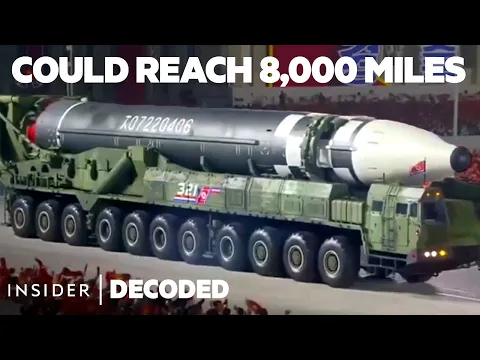

Its transport is carried out by a mobile launcher vehicle (TEL) with 11 axles, one of the largest ever seen for ground ballistic systems. This mobility enhances the system’s survivability, making preventive neutralization more challenging.
The use of liquid fuel implies preparation before launch, but allows for greater initial thrust, necessary for intercontinental trajectories.
Estimated Range Above 15,000 Km
Following the March 2022 test, data released by North Korea indicated that the missile reached a maximum altitude exceeding 6,000 km and traveled approximately 1,000 km in a lofted trajectory, meaning a raised vertical path to limit horizontal range.
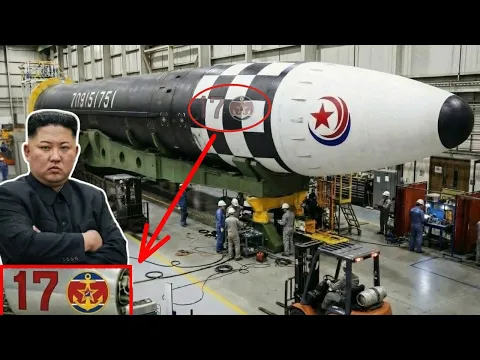
Analyses from experts in Japan, South Korea, and the United States suggest that if launched on a standard trajectory, the Hwasong-17 could reach over 15,000 km, a distance sufficient to hit continental United States territory.
This estimated range positions the system within the category of long-range ICBMs capable of covering virtually any point on the globe.
Capability for Multiple Independently Targetable Warheads
One of the primary focuses of strategic analyses is the possible capacity for MIRV (Multiple Independently Targetable Reentry Vehicle). Although North Korea has not officially confirmed this capability, the expanded diameter of the Hwasong-17 suggests potential to carry multiple warheads or penetration devices.
In MIRV systems, a single missile deploys several independent warheads during the exoatmospheric phase, each following its own trajectory toward distinct targets.
Furthermore, the architecture may include countermeasures such as inflatable decoys and penetration devices aimed at saturating missile defense systems.
If fully operational with functional MIRV capability, the Hwasong-17 would significantly increase the complexity of missile defense against North Korean vectors.
Pressure on Global Missile Defense Systems
The development of the Hwasong-17 occurs in the context of increasing investment in missile defense systems by the United States and regional allies.
Systems like the Ground-based Midcourse Defense (GMD), based in Alaska and California, and THAAD, deployed in South Korea, are part of the defensive architecture intended to intercept ballistic missiles during the mid-phase.
The introduction of a ICBM with greater payload and potential for multiple warheads increases the technical challenge for these defenses. Saturation with multiple reentry vehicles can reduce the likelihood of successful interception.
This dynamic fuels what experts call a strategic action-reaction cycle, where offensive advancements stimulate defensive upgrades and vice versa.
Deterrence and Second Strategic Response
In the field of nuclear strategy, the central concept is not necessarily the use of weaponry but its deterrent function.
By extending range and payload capacity, the Hwasong-17 enhances North Korea’s so-called second strike capability, meaning the ability to retaliate even after a potential initial attack.
The terrestrial mobility of the system contributes to this logic, making preventive destruction more difficult.
This capability is a key element for regimes seeking to ensure strategic survival against technologically superior adversaries.
Technical Limits and Operational Stage
Although the tests conducted indicate significant advancements, international experts point out that the full reliability of the system depends on multiple factors, including warhead miniaturization, robustness of the reentry vehicle, and terminal precision.
There is no independent public confirmation that the Hwasong-17 is fully operational with functional MIRV capability.
Nonetheless, its existence and flight demonstrations have already altered the regional strategic calculus.
Reconfiguration of the Balance in the Indo-Pacific
The development of the Hwasong-17 does not occur in isolation. It is part of a broader North Korean military modernization program, which includes intermediate-range missiles, submarine systems, and experimental hypersonic vehicles.
In the context of the Indo-Pacific, the system expands the theoretical range of North Korean deterrence and pressures U.S. allies to strengthen their defensive capabilities.
For international security analysts, the Hwasong-17 represents more than just a large missile. It symbolizes North Korea’s entry into a more sophisticated level of intercontinental ballistic engineering.
Designed at a colossal scale and with an estimated range exceeding 15,000 km, the system not only expands the geographical radius of North Korean deterrence but also reinforces the complexity of the global strategic balance.
In a scenario where each technological advancement influences political and military calculations, the Hwasong-17 becomes a central piece in the contemporary nuclear architecture of East Asia.









O cara promete causar dano no aventureiro. Pode até perder a guerra, mas com elevado custo ao agressor. Isso muda o jogo. Quando o sistema estiver pleno, talvez esse país se aventure mais como parceiro russo em outras invasões.