





 English
  Francês
  Alemão
  Italiano
  Japonês
  Norueguês
  Portuguese
  Spanish
 1 min of reading


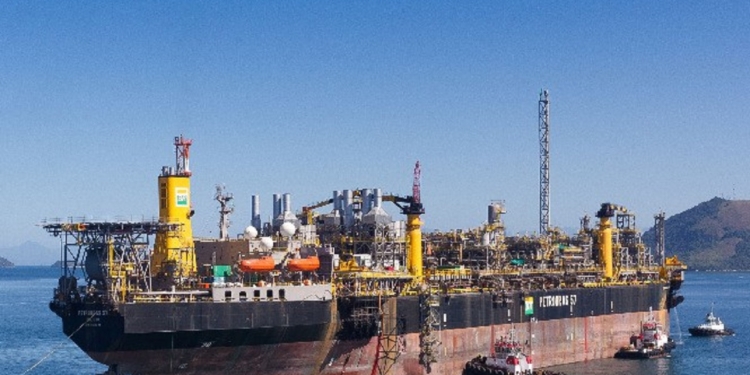
Petrobras Delays Parque das Baleias Project in ES to 2024 Due to Investment Delays
The Brazilian state oil company Petrobras has decided to delay its oil production zone known as Parque das Baleias in ES by one year to 2024 due to the coronavirus pandemic.
Also Read
- Ocyan Sees Current Scenario as Opportunity for Asset Preservation Area
- Petrobras Reaches 1 Billion Barrels of Oil at Parque das Baleias in the Campos Basin
- Covid-19 Will Delay Delivery of 5 Chinese FPSOs from Petrobras, See Other Impacts of the Pandemic on the O&G Market
- Petrobras Announces That First Oil from Búzios V Will Only Be in 2022 Covid-19 Impacts Naval Construction in Brazil and China and May Affect the Delivery Schedule of the Mero 2 FPSO
Petrobras States That It Intends to Preserve Project Investments
The Brazilian oil giant intends to preserve the “scope of the project that provides for the relocation of wells between platforms in operation in 2022,” announced Petrobras on October 16, 2020, in an official statement.
-
Brazilian giant expands borders in the Southeast: Petrobras confirms new oil discovery in ultra-deep waters in the pre-salt of the Campos Basin.

-
Alert in the global energy market: Severe tropical cyclone hits the coast and disrupts gas production at major plants in Australia, threatening global supply.

-
Petrobras finds high-quality oil in the pre-salt at 113 km from RJ and reignites expectations about strategic reserves in the Campos Basin.

-
Chinese giant worth nearly R$ 4 billion that manufactures cables for electric cars, solar energy, and robotics wants to open a factory in SC.

The floating production, storage, and offloading vessel (FPSO) for the Parque das Baleias project will have the capacity to produce 100,000 barrels per day (b/d) of crude oil and 5 million cubic meters per day (MMcm/d) of natural gas, according to Petrobras data.
Learn About the Parque das Baleias Project
The new FPSO will accommodate a total of 19 wells, including seven new production wells and four injection wells from the Jubarte field; two production wells and four injectors from the P-58 FPSO, one of the main platforms in operation in the country, and two additional production wells that are currently interconnected to the Capixaba FPSO.
All wells, including injectors, will be equipped with DHSV, and producers will use gas-lift as the lifting method. Oil will be offloaded to shuttle tankers, and gas will be routed through the Gasoduto Sul-Norte Capixaba (GSNC) to the Cacimbas Gas Treatment Unit (UTGC).
To adapt the gas offloading, a diversion will need to be made at the Gasoduto Sul Capixaba (GSC), interconnecting the Gasoduto Sul Capixaba (GSC) to the Gasoduto Sul Norte Capixaba (GSNC) via a flexible pipe.







Seja o primeiro a reagir!