





 Portuguese
  English
  Spanish
  3 min of reading
  0 comments


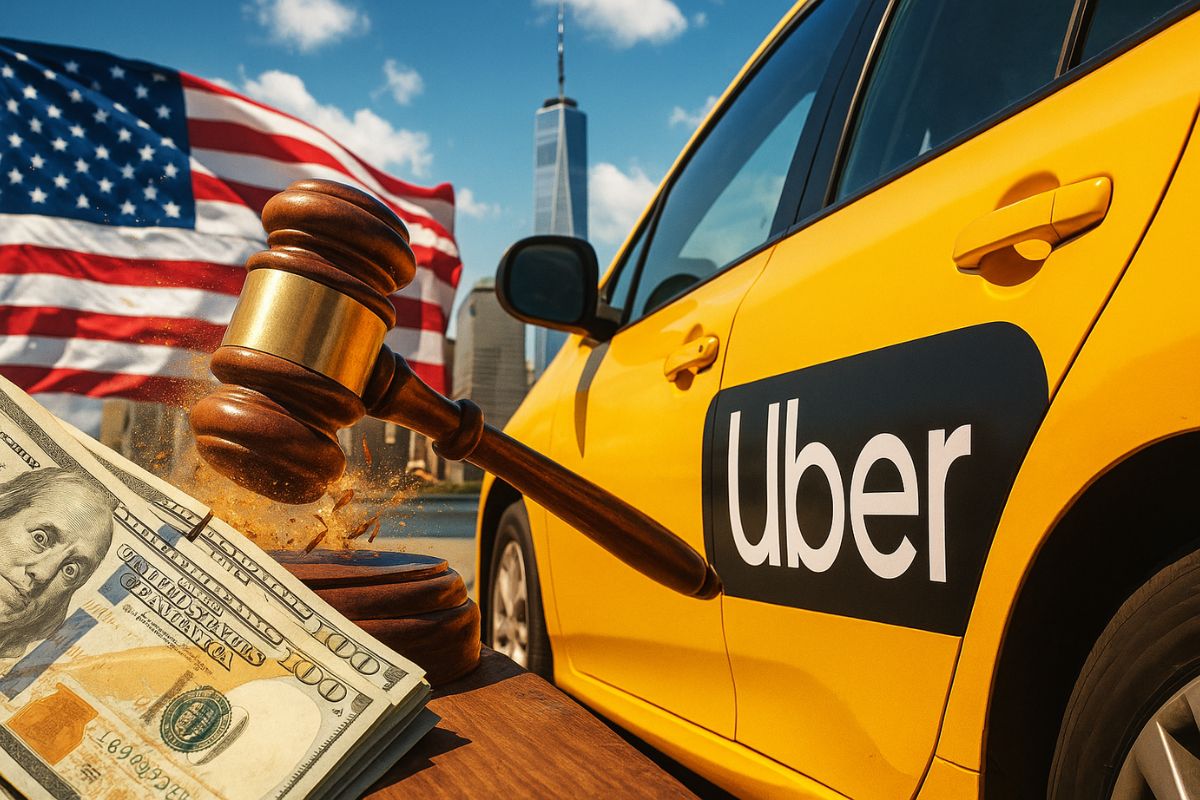
Bill Project Foresees That App Drivers Will Receive 14-Day Notice, Financial Compensation, and Even Reinstatement in Cases of Suspension Without Just Cause, According to Investigation by O Globo
App drivers in New York may be on the verge of achieving an unprecedented labor milestone in the United States. A bill in progress in the City Council proposes more transparency in termination rules, with a 14-day notice, financial indemnities, and even the possibility of reinstatement when the suspension lacks “just cause,” reports O Globo.
The proposal emerged after a series of protests by drivers who reported sudden terminations without clear explanations on platforms like Uber and Lyft. Many alleged they had made significant investments in vehicles and maintenance to meet company requirements, only to be surprised by blockages with vague justifications — such as the accusation that “another person was driving the car.”
What Is at Stake with Bill 276
According to O Globo, Bill 276 was introduced by Democratic councilman Shekar Krishnan.
-
The noise law will no longer be in effect at 10 PM starting in June with a new rule valid during the 2026 World Cup.

-
The Chamber opens a debate on driver’s licenses at 16 years old as part of a reform that includes around 270 proposals to change the Brazilian Traffic Code and may redesign rules for licensing, enforcement, and circulation in the country.
-
The new Civil Code could revolutionize marriages in Brazil with “express divorce” and changes that could exclude spouses from inheritance.
-
Banco do Brasil sues famous influencer for million-dollar debt and intensifies debate on delinquency, risks of seizure, and direct impact on Gkay’s credibility.

The proposal not only establishes mandatory notice but also ensures that drivers unjustly terminated may be compensated retroactively.
In some cases, the law also provides for the immediate return to the platform.
The text is seen as a turning point in the app transport sector in New York.
For the first time, the government seeks to balance the relationship between drivers and companies, limiting the reach of unilateral decisions that affect the income of thousands of workers.
Why Is This Law Emerging Now
The initiative arose amid growing social and political pressures.
According to O Globo, drivers have been denouncing a pattern of terminations without defense, which has become unsustainable in light of the rising cost of living in New York.
The lack of stability has led some workers to abandon the profession, also affecting the supply of transportation.
Furthermore, the measure reflects a global movement to revise working conditions in the technology sector.
European countries, such as Spain and the United Kingdom, have already adopted legislation that recognizes minimum rights for app workers, albeit in different formats.
New York, as an economic and cultural hub, could set a national precedent.
Economic and Social Impacts of the Proposal
According to experts consulted by O Globo, the approval of the bill may generate additional costs for app companies, which will need to bear indemnities and greater bureaucracy for terminations.
However, the social gains include more predictability for those depending on transportation income, reduced stress, and greater sense of professional dignity.
For the city, the measure may have indirect effects on traffic and ride prices.
If protection increases the retention of drivers in the profession, there may be a greater supply of rides.
On the other hand, if costs are passed on, passengers may face higher fares.
Who Enforces and How Will the Law Be Applied
If approved, the law provides that the City Department of Transportation is responsible for enforcing and applying penalties to companies that violate the rules.
For drivers, this represents the possibility of an official defense channel — something nonexistent until now.
The expectation is that new appeal protocols will be created to analyze termination cases.
According to O Globo, app companies are expected to resist the measure, claiming that they need autonomy to ensure the security and trust of users.
The legal battle may extend, but, for experts, the mere progression of the bill already pressures the sector to revise internal practices.
Bill 276 in New York is described by O Globo as a potential milestone in the relationship between drivers and apps: right to defense, prior notice, and financial compensation.
If approved, it could inspire similar legislation in other American states — and even in other countries.
In your opinion, should app drivers have this type of protection in Brazil as well? If you’ve ever worked on platforms like Uber or 99, what was the biggest difficulty: instability, maintenance costs, or the risk of sudden blockages? Share your real experience in the comments.







-

2 pessoas reagiram a isso.