






 Portuguese
  Spanish


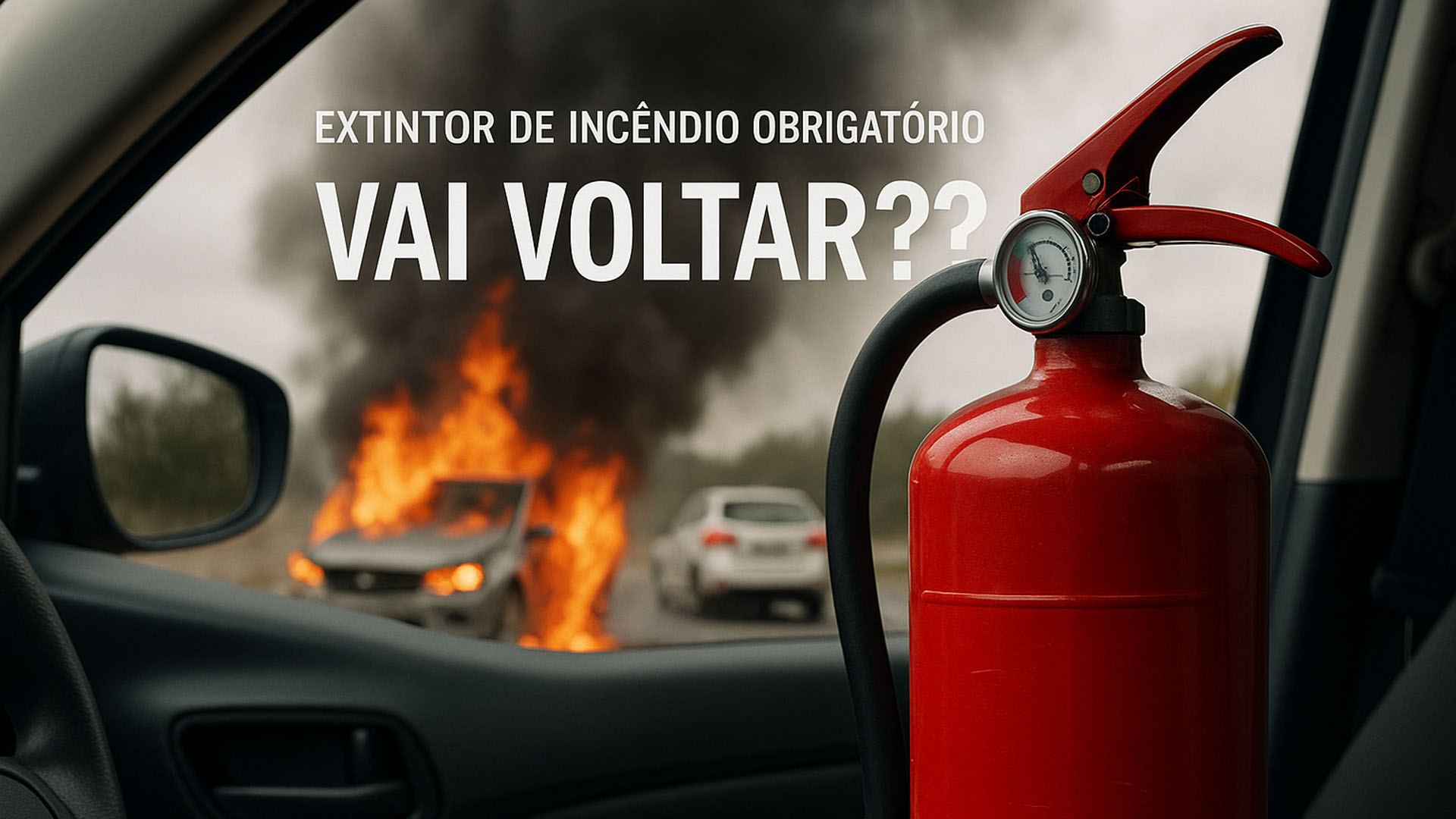

PLC 159/2017, under discussion in the Senate, aims to reintroduce the ABC-type fire extinguisher as a mandatory item in the Brazilian Traffic Code. Understand why the topic has returned to the agenda, what may change for drivers, and the arguments for and against the measure.
The return of the mandatory fire extinguisher in passenger cars has once again become the focal point of debate in Brasília. The reason is the Chamber of Deputies Bill PLC 159/2017, which amends the Brazilian Traffic Code (CTB) to reintroduce the equipment as a mandatory item in all vehicles.
Currently, the extinguisher is only optional for private automobiles and light utility vehicles. Its mandatory status was abolished in 2015 by a resolution from the National Traffic Council (Contran), which cited technological advancements and a reduced risk of fires in such vehicles.
With the progress of the bill in the Senate, the discussion has gained momentum again. Supporters argue that the equipment can prevent tragedies in initial fires and is inexpensive compared to the potential damage. On the other hand, critics point to its limited effectiveness, handling risks, and the absence of this requirement in developed countries.
-
Indian Government Offers Up to $1,000 Incentive for Drivers to Swap Old Cars for Electric Vehicles

-
Tesla Begins Testing Two-Seater Autonomous Robotaxi Without Steering Wheel or Pedals, Featuring Onboard Safety Monitor

-
Renault Sandero: Affordable Used Models Feature 1.6 Engine, 106 HP, 14.7 km/l Fuel Efficiency, and Cruise Control Options.

-
Volkswagen Jetta Highline Remains Popular Years After Discontinuation: Features 2.0 TSI Engine, DSG Transmission, and Spacious Trunk, All for Less Than a New Fiat Argo


The proposal has not yet become law and is still “in progress” in the Federal Senate, where it awaits inclusion in the Plenary agenda. Meanwhile, drivers are trying to understand whether it is worth keeping an extinguisher in their cars now and what the impact will be if the mandatory requirement is approved.
Extinguisher Became Optional in 2015; Remember What Changed


Until 2015, the fire extinguisher was part of the list of mandatory equipment for virtually all vehicles, based on old Contran resolutions, such as No. 157/2004. In September 2015, Resolution No. 556 made its use optional for automobiles, utility vehicles, vans, pickup trucks, and closed-cabin tricycles.
At that time, the federal government and Contran justified the change with the evolution of safety systems, the use of cleaner fuels, and improvements in vehicle electrical components.
Reports of improper use of the extinguisher, lack of driver training, and cases of injuries caused by the equipment in crash tests also weighed in.
Even with the rollback, the extinguisher remained mandatory for trucks, buses, microbuses, vehicles that transport flammable products, and public transport of passengers in general. For passenger cars, it became optional: those who wish can keep the equipment, but there is no risk of a fine just for the absence of the item.
What Does PLC 159/2017 Say and What Is the Status of the Vote in the Senate
The PLC 159/2017 was initially approved in the Chamber of Deputies, at the initiative of Deputy Moses Rodrigues (Cidadania-CE). The text amends the CTB to include among the mandatory equipment for vehicles a fire extinguisher with ABC-type chemical powder, capable of acting on different types of fires.
In the Senate, the project underwent lengthy proceedings and was divided among committees. The proposal was approved in the Commission of Transparency, Governance, Oversight and Consumer Protection (CTFC), under the rapporteurship of Senator Eduardo Braga (MDB-AM), but was rejected in the Commission of Economic Affairs (CAE), reported by Senator Styvenson Valentim (Podemos-RN).
Today, the text is ready to be analyzed by the Plenary and, if approved, will proceed to presidential sanction.
Why Supporters Want a Mandatory Extinguisher in Every Passenger Car
Supporters of the project argue that the extinguisher is a simple resource for combating early-stage fires. The idea is that, in cases of short circuits, fuel leaks, or fire starts in the engine, the driver or another nearby conductor can act quickly, preventing the fire from spreading and causing greater damage.
Another argument is that the ABC-type extinguisher offers broader protection, as it acts on different classes of fires (solid materials, flammable liquids, and electrical equipment). According to technical materials and guidelines from specialized traffic safety entities, the correct use of the equipment can be decisive in the first seconds of an incident.
Parliamentarians in favor of the measure also highlight the reality of Brazilian roads. In many rural stretches, the response time of firefighters can be lengthy. In those scenarios, an extinguisher in trained hands can help save lives and reduce damage, both in private cars and commercial vehicles sharing the same roads.
Industries related to fire prevention and fighting also point out that, even where the item is not mandatory, several European countries recommend that drivers have extinguishers in their vehicles. Reports and technical articles argue that supporting the return of the extinguisher can be interpreted as a stance of “zero tolerance” for avoidable risks on the road.
For these groups, the technological advancement of automobiles does not completely eliminate the risk of fire. They argue that more complex systems, such as turbo engines, onboard electronics, and even hybrid vehicles, can create new types of failures. The presence of an extinguisher would, in this view, be an additional layer of safety, not a substitute for innovations.
Critiques of the Project: Cost, Limited Effectiveness, and Comparison with Other Countries
On the other side, critics of PLC 159/2017 argue that the mandatory presence of the extinguisher in passenger cars would be an outdated measure. Reporters against the text in the CAE and automotive sector entities argue that fires in passenger cars are relatively rare and usually reach a stage quickly where only the Fire Department can act effectively.
There are also questions about the cost-benefit ratio. Extinguishers expire, require periodic recharging, inspection, and may be rejected in inspections if they do not meet specifications. With a fleet of tens of millions of vehicles, the measure would create a recurring expense for drivers in a context of tightened income and a general increase in maintenance costs.
Another point of criticism is the international comparison. In countries like the United States and much of Europe, the extinguisher is not mandatory in passenger cars, and authorities prefer to focus on engineering projects, safer fuels, product recalls for defective components, and traffic education. The requirement tends to be more common in some South American countries, such as Argentina and Chile, or in specific uses.
Experts who participated in congressional hearings also warned about the risk of incorrect handling. In panic situations, untrained drivers may get too close to the fire source, expose themselves to toxic smoke, or even injure themselves with the equipment. For this group, reinforcing guidelines for quick evacuation and contacting the firefighters would be more effective than requiring a rarely used item.
If the Project Is Approved, What Changes in the Lives of Brazilian Drivers
If the PLC 159/2017 is approved by the Senate Plenary and sanctioned by the Presidency of the Republic, the CTB will list the fire extinguisher with ABC powder as mandatory equipment for all vehicles. In practice, this means that passenger cars would once again leave the factory with the item installed, and vehicles already in circulation would have to comply after deadlines to be established in Contran regulations.
The extinguisher would have to meet already known technical requirements: being within the validity period, sealed, with the pressure indicator in the correct position, and properly mounted. Currently, the absence of the equipment is a serious infraction for categories where it is already mandatory, with fines, five points on the driver’s license, and detention of the vehicle until regularization. If the law is expanded, the trend is that this same logic will apply to passenger cars, reigniting the discussion about yet another obligation for those already facing high costs with their vehicles.
To keep track of the project’s progress, citizens can consult the Federal Senate portal, which gathers the official text, committee reports, requests for urgency, and the current status of the measure. Online platforms allow for tracking the proceedings in near real-time and, in some cases, even registering opinions on the subject, bringing the public closer to the debate on road safety.
Do you think the return of the mandatory extinguisher is a necessary protection or an outdated obligation that only weighs on drivers’ wallets? Leave your opinion in the comments and participate in the debate on how Brazil should balance safety, cost, and modernization in traffic legislation.


