





 Portuguese
  English
  Spanish
  4 min of reading
  0 comments



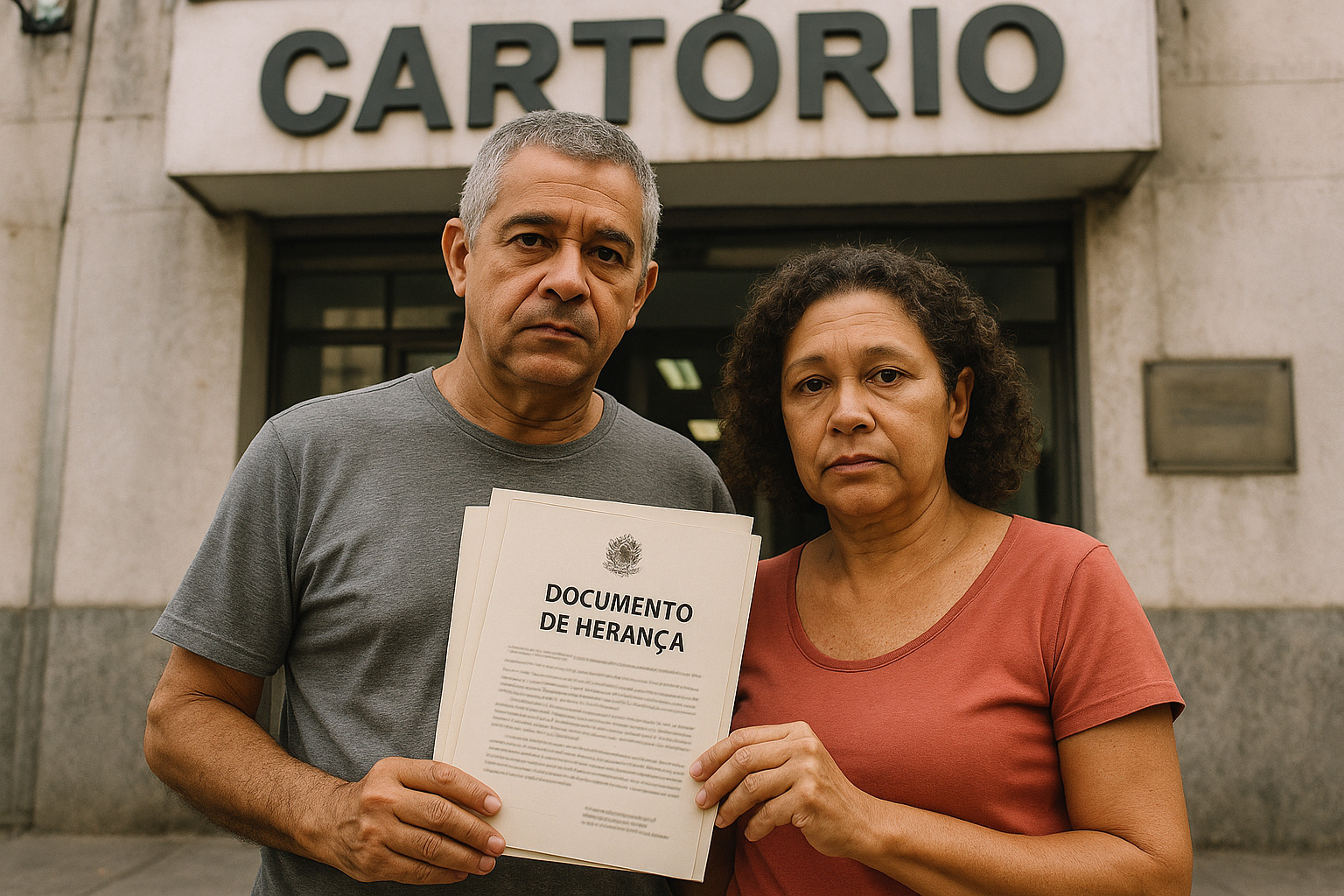
Discussion Related to Bill No. 4/2025 Reignites the Debate on Who Should Have Mandatory Protection in Succession and What Happens to Blended Families.
The committee responsible for the preliminary draft of the new Civil Code brought to the center of the debate a sensitive change in inheritance law, the removal of the spouse from the list of necessary heirs.
This proposal disrupts the logic of minimum protection in inheritance and may influence how couples and families plan their assets, especially when there are children from previous relationships.
The topic gains weight because the Civil Code of 2002 placed the spouse alongside descendants and ascendants, guaranteeing mandatory participation in the inheritance in various situations.
-
The noise law will no longer be in effect at 10 PM starting in June with a new rule valid during the 2026 World Cup.

-
The Chamber opens a debate on driver’s licenses at 16 years old as part of a reform that includes around 270 proposals to change the Brazilian Traffic Code and may redesign rules for licensing, enforcement, and circulation in the country.

-
The new Civil Code could revolutionize marriages in Brazil with “express divorce” and changes that could exclude spouses from inheritance.
-
Banco do Brasil sues famous influencer for million-dollar debt and intensifies debate on delinquency, risks of seizure, and direct impact on Gkay’s credibility.


What Happened and Why This Caught Attention
The Civil Code of 2002 changed important rules of inheritance law in relation to the model from 1916. One of the most striking changes was to include the spouse in the list of necessary heirs.
In practice, this brought the spouse closer to the deceased’s children and parents in terms of minimum asset protection, directly impacting the division of inheritance.
The historical justification was based on a scenario where there was often economic dependence and less patrimonial autonomy within marriage, which reinforced the idea of protection.
Why the Spouse May No Longer Be a Necessary Heir
As the years went by, families began to assume new configurations, with an increasing frequency of divorce, separation, and family recomposition. This movement increased situations where there is a current spouse and descendants from previous relationships.
At the same time, there has been a rise in interpretations that highlight greater financial independence and individual patrimonial identity among spouses, reducing the role of the spouse as a vulnerable party in many cases.
This context has opened up space to rethink the position of the spouse in inheritance law, focusing on how to balance private autonomy and family protection.
What Changes in Practice with Bill No. 4/2025
The Bill No. 4/2025 proposes that the spouse return to the status of the last century, no longer being a necessary heir as provided in Article 1,845.
As a result, the spouse would become only a legitimate heir, called to inherit in the third class of successors and without competition with the deceased’s children and parents.
The change reinforces the primacy of blood ties over marital ties, with the idea that children and parents hold a position of greater relevance in the succession core.
Sharing Continues, but Inheritance May Shrink in Various Scenarios
The proposal does not change the sharing rule. The surviving spouse continues with the part stemming from the marital bond, maintaining protection over assets acquired during the marriage.
The impact tends to be smaller for couples under conventional separation of assets, as the patrimony is treated independently during the union and this is reflected in death.
In community property regimes, the change may reduce asset redistribution when there are separate assets outside the sharing. In these cases, the spouse may end up with a lower share, as they lose competition with ascendants or descendants.
Relationship Between Current Spouse and Children from Previous Marriages
The change may directly affect blended families. A deceased person who enters into a new marriage and has descendants from another relationship would no longer require those children to share the inheritance with the surviving spouse, in the inheritance portion.
This tends to reorganize expectations within families with multiple personal and patrimonial relationships, altering how the final estate is shared.
The debate also involves the intentions of many couples in defining, while alive, the property regime and the boundaries between individual and common assets.
Points of Attention and Common Questions
The discussion raises questions about the adequacy of inheritance law to the modernization of Brazilian families and about what the minimum protection conferred on marriage should be after 23 years of the current model’s validity.
It also draws attention to the historical interval of reforms: the shift from approximately eight to two decades between changes to the Civil Code, as the text prior to the current one dates back to 1916.
At the heart of the analysis is the balance between freedom of succession choice, family security, and the weight given to blood ties in comparison to marital bonds.
The proposal to remove the spouse from the list of necessary heirs highlights a structural change in inheritance law and its effects on the division of inheritance.
If approved, the measure maintains the sharing, but may reduce the spouse’s participation in the hereditary portion, especially when there are descendants or ascendants, requiring heightened attention to asset planning within families.










Seja o primeiro a reagir!