





 Portuguese
  English
  Spanish
  5 min of reading
  0 comments



Research Suggests That Certain Colors May Be Linked to Focus, Creativity, and Introspection, Revealing Curious Patterns Between Chromatic Preferences and Cognitive Characteristics, Without However Determining a Direct Relationship Between Favorite Color and Intelligence.
Research in color psychology and neuroscience has been suggesting links between chromatic experiences and mental processes, but the direct evidence linking high IQ to a specific favorite color is still limited.
What studies show with greater certainty is that colors can influence attention, memory, mood, and performance on certain tasks, while chromatic preferences reflect cultural contexts and accumulated experiences.
Amid this picture, three shades frequently appear in reports linked to focus, creativity, and introspection: blue, purple, and black.
-
According to an analysis by NASA, only one human-made structure is visible from space, and it is not the Great Wall of China or the Pyramids of Egypt.

-
After 377 years of history, the Brazilian Army will have its first female general: Colonel Claudia Cacho has been promoted to brigadier general by Lula and will receive the sword and command baton this Wednesday in Brasília.

-
A Mercado Livre customer opened their package and found 32 resumes of people looking for jobs crumpled as protective paper inside the box, exposing names, addresses, documents, and phone numbers of dozens of candidates.

-
Iceberg A23a, one of the largest in the world, is undergoing accelerated collapse and may disappear: what explains the end of the ice giant?


The relationship, however, is correlational, not causal, and there is no scientific consensus that “more intelligent” people necessarily choose these colors.
Blue and the Power of Mental Focus
Among the colors mentioned in studies on performance, blue tends to emerge in contexts associated with calmness, emotional stability, and clarity, useful traits for activities requiring sustained attention and problem-solving.
Experimental research examining color and psychological functioning reports that stimuli in blue ranges can increase subjective alertness and favor attention tasks, especially when it comes to blue light and vigilance control.
This helps explain why environments dominated by soft blues are often used in study and work spaces.
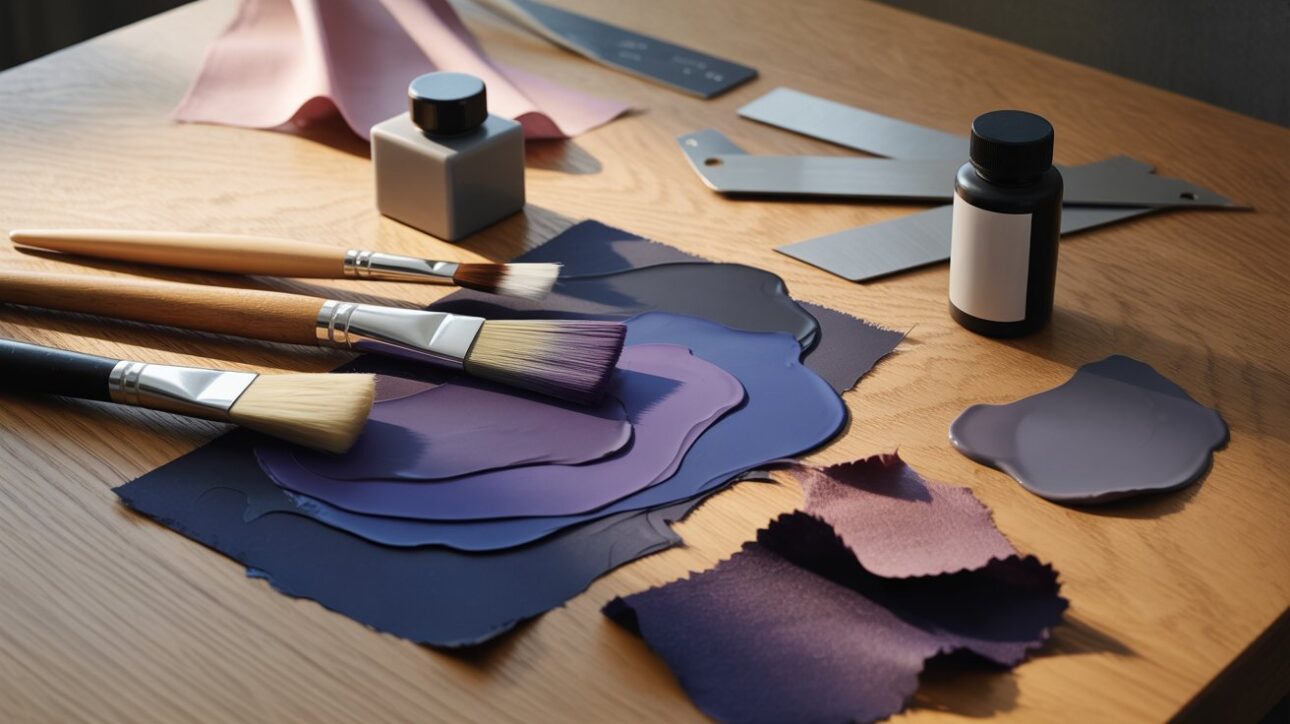
Still, a personal preference for blue is not an unequivocal sign of greater intelligence; it is an approximation based on average effects observed in the laboratory and influenced by variables such as lighting, task, and culture.
On the other hand, systematic reviews on “warm” colors like red show more cautious results than popular dissemination suggests.
The supposed consistent decline in cognitive test performance in the presence of red finds limited evidence when examined rigorously.
This point reinforces the caution in extrapolating chromatic preferences to fixed traits of intellectual capacity.
Purple and the Stimulation of Creativity
Purple appears, in different cultural traditions, linked to originality, symbolism, and imagination.
This association has historical and social roots, but contemporary scientific literature recommends separating cultural symbols from the measurable effects on performance.
Broad reviews on the relationship between colors and emotions point to consistent correspondences between chromatic categories and affective states, which can indirectly stimulate creative thinking modes depending on the task context.
Still, linking purple to “brilliant mind” as a rule would be a step beyond what the data sustains.
In summary, purple may serve as a cultural signal of creativity and, in specific tasks, contribute to affective climates conducive to ideation, without this equating to an objective marker of intelligence.
Moreover, experiments manipulating background color, objects, or lighting show that the chromatic environment can influence attention, memory, and problem-solving strategies.
These findings help to understand why some people report performing better under cooler or more neutral palettes, but do not allow concluding that those who prefer purple are intrinsically more capable from a cognitive standpoint.
Black and the Association with Introspection
Although it technically represents the absence of light, black holds a prominent place in social codes linked to sobriety, formality, and discretion.
In reports from people with introspective profiles, the appeal of black appears through the promise of neutrality and focus on content, not appearance.
Research on chromatic preferences and personality suggests that tastes for certain palettes dialogue with experiences and meanings associated with colors throughout life, which includes status, rituals, and group norms.
However, attributing to black a specific link with “deep thinking” or with superior intellectual ability extrapolates what the literature currently validates.
Neutral Tones and Cognitive Balance
Gray and other neutral shades frequently appear in contexts that value balance and reduction of stimuli, especially in work environments.
Choosing neutrals may be less about intelligence and more about practical objectives: minimizing distractions, standardizing materials, and facilitating visual reading of information.

Theoretical models like Ecological Valence Theory argue that preferences for colors arise, in part, from positive or negative evaluations associated with worldly things that have those colors.
From there, individual tastes organize.
Thus, a professional accustomed to clean and gray interfaces may develop a preference for gray without it being directly related to their cognitive ability.
What Research Says About Color and Mind
The robust literature converges on two points: colors influence cognitive and affective processes in a contextual and task-dependent manner; chromatic preferences emerge from personal histories and cultural associations.
Studies with controlled designs indicate that manipulating the color of an environment or stimuli modifies, on average, attention, memory, and performance on certain tasks, both in traditional laboratories and in virtual reality.
In parallel, investigations into preference and personality find relationships but do not establish a firm link between “high IQ” and favorite color.
Practically, colors can be used as tools to adjust emotional climate and focus, but they do not serve as reliable indicators of individual intelligence.
Still, it is worth distinguishing between “preferred color” and “effective color for the task.” A person may prefer yellow for emotional reasons and, at the same time, perform better in a space dominated by soft blues during analytical activities.
The same reasoning applies to purple in creative processes and to black in clothing or design choices that signal sobriety without saying anything, in itself, about cognitive performance.
Meanwhile, scientific dissemination and news tend to simplify the issue with headlines like “the color of the intelligent.”
Accuracy demands caveats: there is evidence that blue favors states of attention and emotional regulation, but the leap to associate it with superior intelligence does not hold up as a general rule.
Purple carries symbolisms of creativity without equating to a measurable IQ marker.
And black communicates reserve and focus, without proof of an intrinsic bond with intellectual capacity.
In summary, colors can be allies in designing study and work environments; personal preferences are mirrors of trajectories and contexts, not tests of intelligence.
Do you perceive your color choices influencing your focus, creativity, or mood in everyday life, or are your preferences more a matter of style and context?








-

-

-

-

-

-

34 pessoas reagiram a isso.