





 Portuguese
  English
  Spanish
  7 min of reading
  0 comments


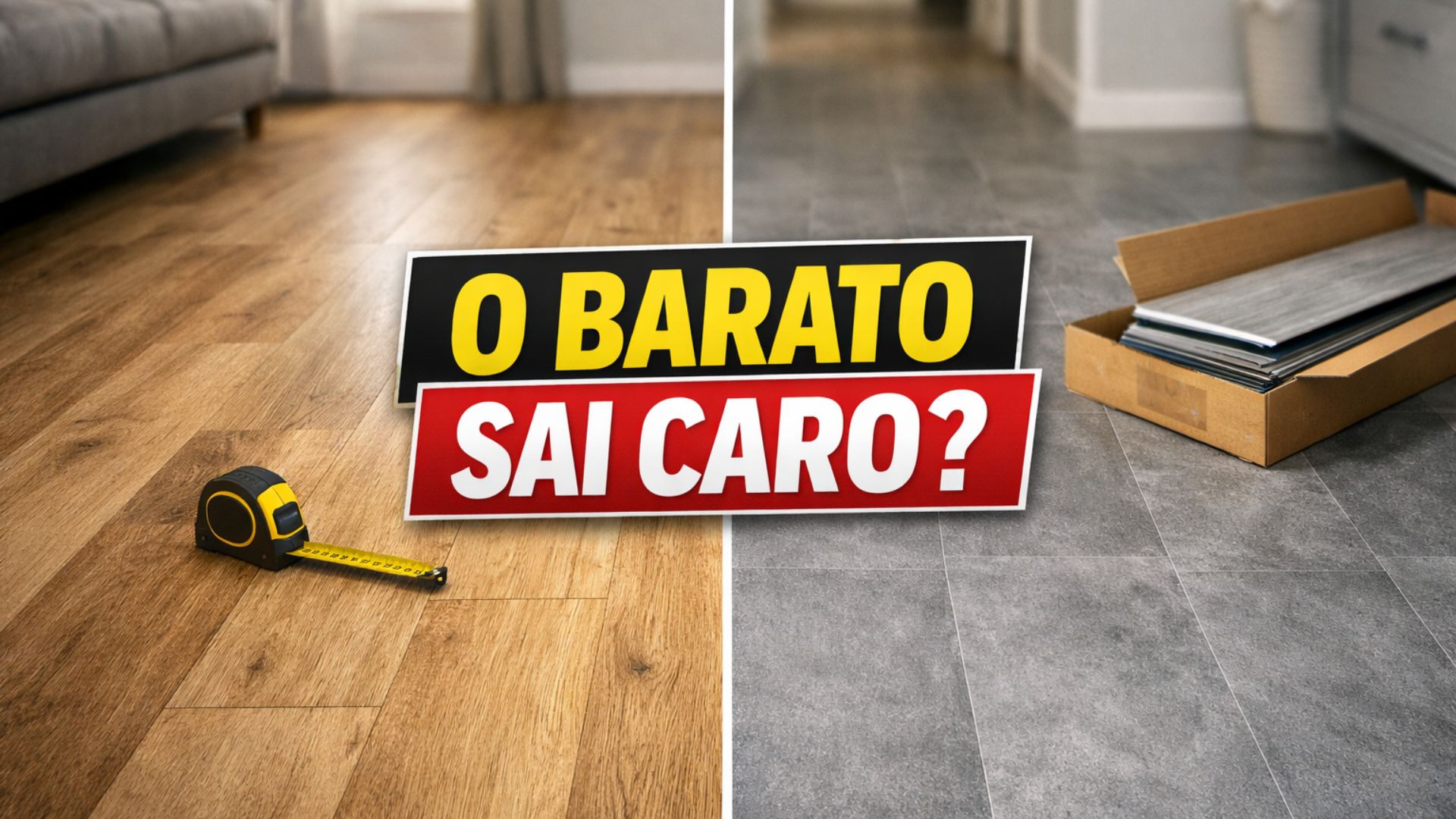
Comparison of Real Costs Between Vinyl Click and Laminated Flooring Exposes Differences Beyond Box Price, Involving Installation, Subfloor Preparation, Accessories, and Technical Limitations by Environment, with Retail Numbers and References from Public Spreadsheets.
The cost of replacing the flooring in a house or apartment in Brazil can vary significantly when the choice is between vinyl click flooring and laminated flooring.
In retail prices consulted at major chains, laminated flooring is advertised starting at around R$ 52.90 per square meter, while an SPC type vinyl floor with “click” installation appears in the range of R$ 145.39 per square meter on a product page.
The difference per square meter stands out in the purchase of the material, but the final cost of the project depends on items that are not always included in the initial calculation, such as underlayment, baseboards, transition profiles, subfloor preparation, and the budgeting model adopted by the contractor.
-
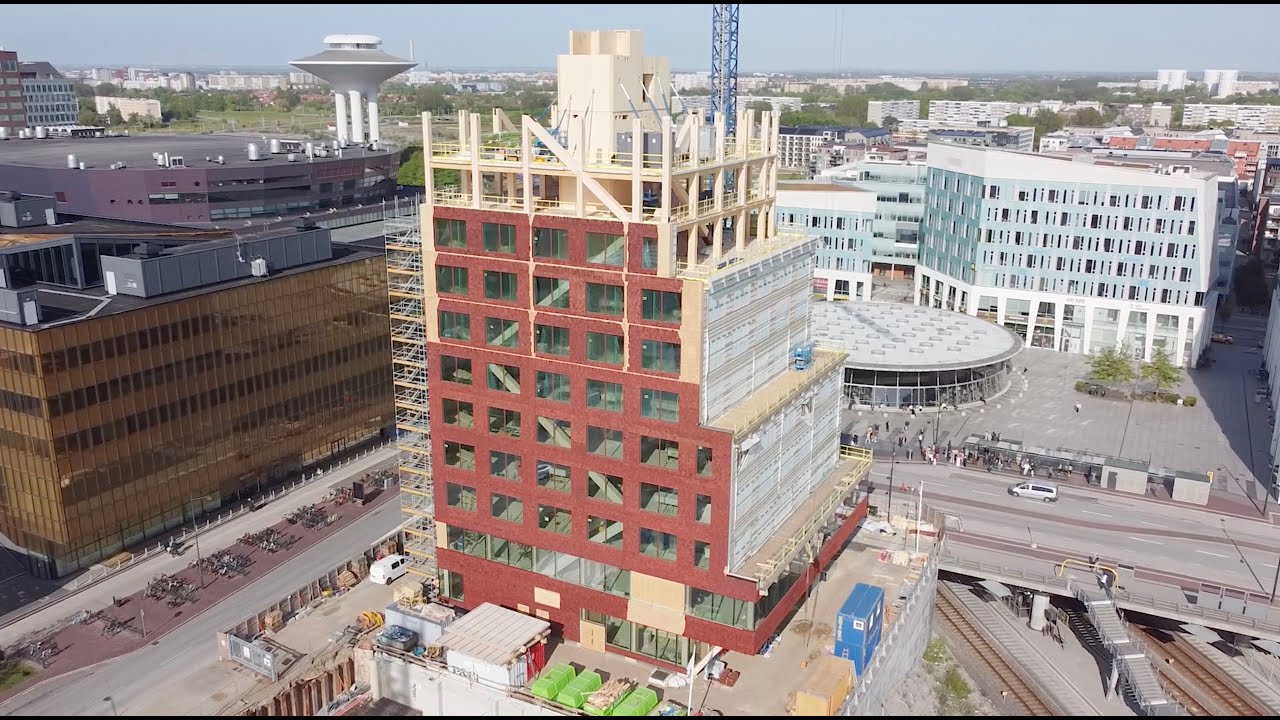
In Sweden, a 51-meter tower was built almost entirely of wood, without a concrete structural core and with solar panels integrated into the facade, using CLT and laminated beams to challenge the dominance of steel and concrete in modern buildings.
-
The section of Serra da Rocinha on BR-285 is now open in Timbé do Sul: 50 m tensioned curtains and top-down technique stabilize the slope, with a stairway duct controlling the water.

-
Scientists use sawdust mixed with clay to create a lighter brick, promising efficient thermal insulation and impressing by transforming waste into a solution for construction.

-
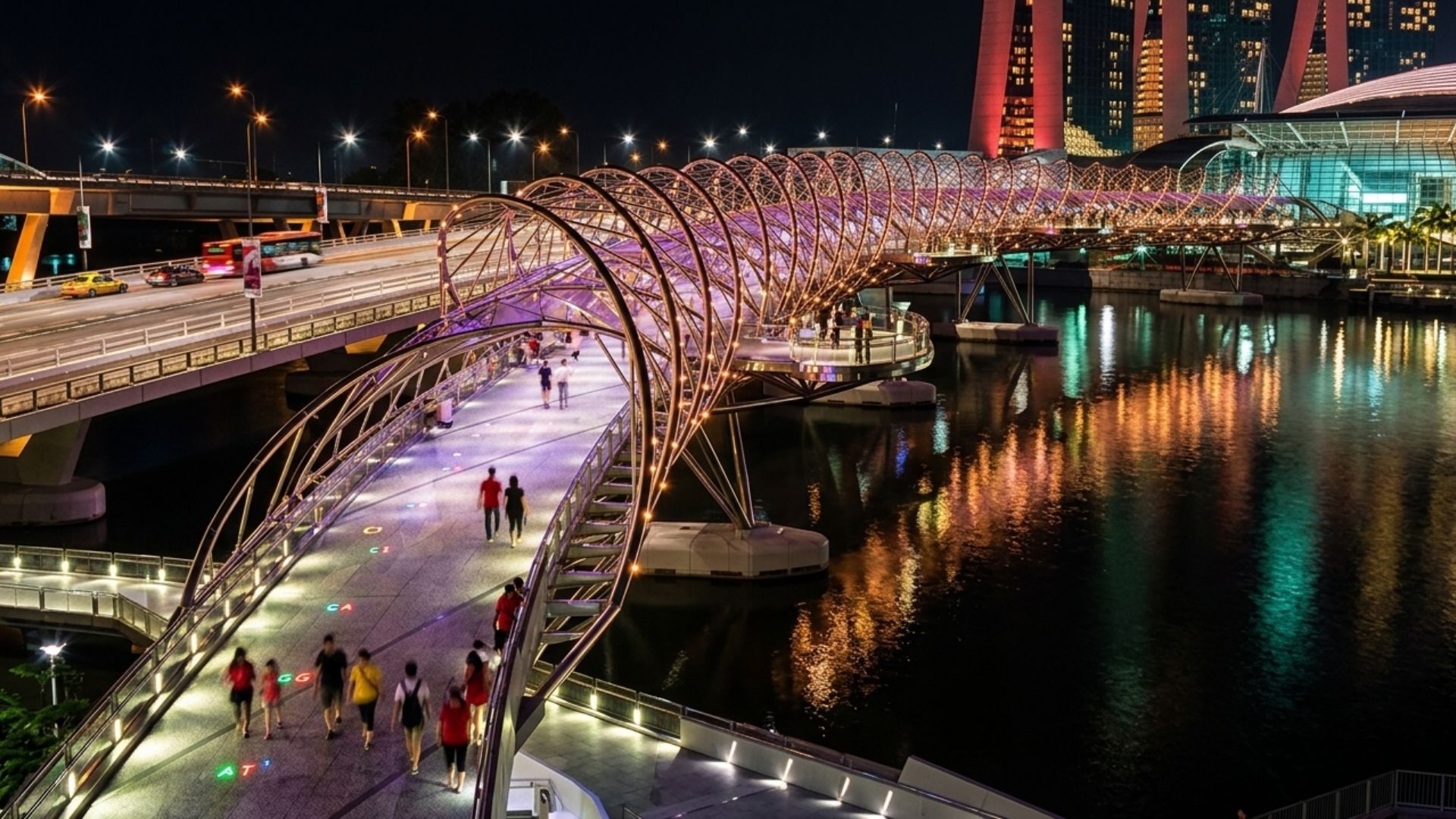
With a DNA shape, this bridge in Singapore draws attention in modern architecture and surprises tourists by transforming a simple crossing into an unforgettable visual experience in the urban heart.

In public spreadsheets of projects that use cost references, consolidated values per square meter for supply and application of laminated flooring appear, as well as estimates for click vinyl in technical budgets, which helps to understand what usually goes into the cost beyond the box price at the store.
Retail Prices and Cost References Per Square Meter
In the case of laminated flooring, a budget spreadsheet published by a municipality in Rio Grande do Sul records an item described as “application and supply of laminated flooring” with a unit price of R$ 122.39 per square meter, and the same document shows the price with BDI reaching R$ 149.17 per square meter.
In another municipal document, also in the South, a composition associated with SINAPI for “laminated flooring in planks with click installation system with polyethylene protection underlayment” appears with a value of R$ 119.84.
These numbers are relevant because they represent a “package” that usually includes more than just the planks.
The spreadsheet also separates items such as baseboards in polystyrene, charged per linear meter, indicating that finishes can be accounted for outside the main flooring price, depending on the budget.
For the click vinyl flooring, a technical budget provided by the municipality of Portão (RS) for flooring replacement in an indoor environment records the price reference based on SINAPI from December 2020 and details a specific composition for “4mm click vinyl flooring.”
In this document, the item “4mm click vinyl flooring” appears with a coefficient of 1.11, in addition to indicating materials and labor hours, and the calculation memory itself registers “SINAPI price reference Dec/2020 R$ 163.92” for the mentioned composition.
The same file shows that the price of the flooring was quoted in a retail store and applied in the composition, in addition to separately listing finishing items such as baseboards and transition profiles.
In practice, this type of budget makes it clear that, even for “click” floors, the calculation usually includes a technical consumption margin related to cuts and adjustments, in addition to anticipating auxiliary materials and execution.
What Counts Beyond the Flooring Box
These documents do not replace a local quote for a residential project, but they help to understand why comparing only the price per square meter of the product on the shelf can lead to error.
SINAPI, by definition, works with service compositions formed by the sum of items and coefficients, and CAIXA describes that the reference cost is obtained from the composition of the service and the values of the items that compose it.
In other words, when the discussion is “how much does installation cost,” what determines the final value is the package intended for that service, not just the plank or box of flooring.
In retail, the price difference of the material between laminated and click vinyl is easy to visualize.
On offer pages, laminated flooring appears with promotional values per square meter around R$ 50, while an SPC click vinyl floor is advertised above R$ 140 per square meter, varying by brand, thickness, and line.
In both cases, the consumer still needs to consider items that may not be included in the advertised price, such as baseboards and finishing profiles, which are common in floating installations and appear with their own cost in public project spreadsheets.
Labor and Budgeting Model in Installation
When it comes to labor, the comparison tends to get confused because part of the market treats installation as a separate service and part offers “supply and application” for a single price.
The reading of public spreadsheets shows that it is possible to find both formats.
In the case of laminated flooring, the municipal budget exposes a unit price of the service and separately brings the baseboard as another item.
In the technical budget for click vinyl, the calculation memory shows materials, mason and helper hours, and the price quotation for the flooring itself applied with a coefficient greater than 1, signaling the planning of losses and cuts in material consumption.
In practical terms, this means that the labor cost and “waste” can be diluted within a fixed price per square meter or appear as technical factors within a composition.
Technical Rules of Use, Humidity, and Restrictions by Environment
In performance and restrictions of use, manufacturers’ documents present objective differences that influence decisions and costs.
The installation manual for Durafloor laminated flooring states that the line is intended for internal and dry areas, advises checking humidity, and states that it should not be installed in places with direct or constant action of water and steam, in addition to citing restrictions for environments such as bathrooms and service areas, with observations and exceptions according to specific lines and environment classifications.
The same manual mentions that the product complies with Brazilian standards ABNT NBR 14833-1 and 14833-2, and describes that the flooring is floating, with fixed pieces concentrated in baseboards and profiles, which aligns with the way public budgets usually separate finishing items.
On the click vinyl side, installation manuals for SPC click vinyl flooring typically provide clear requirements for base, leveling, and subfloor humidity, including humidity limits and recommendations for preparation with self-leveling compound when necessary.
An installation manual for click vinyl flooring consulted indicates that the warranty does not cover use outside the recommended areas, cites the humidity limit of the flooring, and notes that certain products already come with attached underlayment, eliminating the need for additional underlayment.
This changes the scope of the service.
In some cases, laminated flooring requires specific underlayment from the manufacturer for warranty validity, while in SPC vinyl, the presence of integrated underlayment may alter what goes into the budget, provided this is anticipated in the specification and in accordance with the chosen product manual.
Subfloor Preparation and Risk of Rework
In the practical side of the work, the most sensitive point that appears in technical documents is the preparation of the subfloor.
Both in laminated and vinyl, humidity and leveling are treated as conditions of installation.
The laminated flooring manual describes a simple test with plastic taped to the subfloor for 24 hours to check for signs of humidity and states that if there is humidity, it is necessary to waterproof by a specialized professional.
In the consulted click vinyl manual, there is also a requirement to control humidity and correct irregularities with self-leveling compound when necessary.
Since preparation may require additional materials and time, it can negate part of the “savings” perceived only by the price of the finishing material, especially when the existing base is outside the conditions required by the manuals.
Waste, Cuts, and Consumption Coefficient
When looking at waste, what exists publicly and verifiably in budget is the way coefficients appear.
In the technical budget for click vinyl in Portão (RS), the flooring is applied with a coefficient of 1.11 in the composition, reflecting a forecast of consumption above the net measured area, something common in floor coverings due to cuts and leftovers.
In laminated flooring, although the 2023 document brings the price of the composition “with protection underlayment,” it does not disclose coefficients in the published excerpt, and the consulted laminated manual mainly details installation rules, expansion, and humidity restrictions, without presenting, in this extract, a percentage of leftover purchases.
Thus, the comparison of waste with a fixed number for both systems depends on specification and budgeting method accessible in each case, and does not always appear in a standardized way in the available public documents.
Price Difference of Material and Installed Cost
In “street” values, the most direct picture is the price difference of the material in retail, with laminated flooring on sale per square meter in the range of R$ 50 and click vinyl above R$ 140 in consulted examples.
When the comparison includes installation and finishing items, public spreadsheets show that laminated flooring can appear around R$ 119.84 to R$ 122.39 per square meter in supply and application items, with variation depending on methodology and BDI, while click vinyl appears in technical budget with SINAPI reference from December 2020 recorded at R$ 163.92 for the indicated composition.
These references are not “national price” for 2026 and do not replace local budget, but show that the difference between the systems may narrow or widen depending on what is included in the package, the existing base, and the accessories provided.
With such different prices in retail and such specific technical rules for humidity, leveling, and use by environment, which of these two floors often makes more sense in your home’s reality: the one that seems cheaper on the shelf or the one that reduces the risk of rework in installation?







-

-

-

-

-

7 pessoas reagiram a isso.