





 Portuguese
  English
  Spanish
  4 min of reading
  0 comments


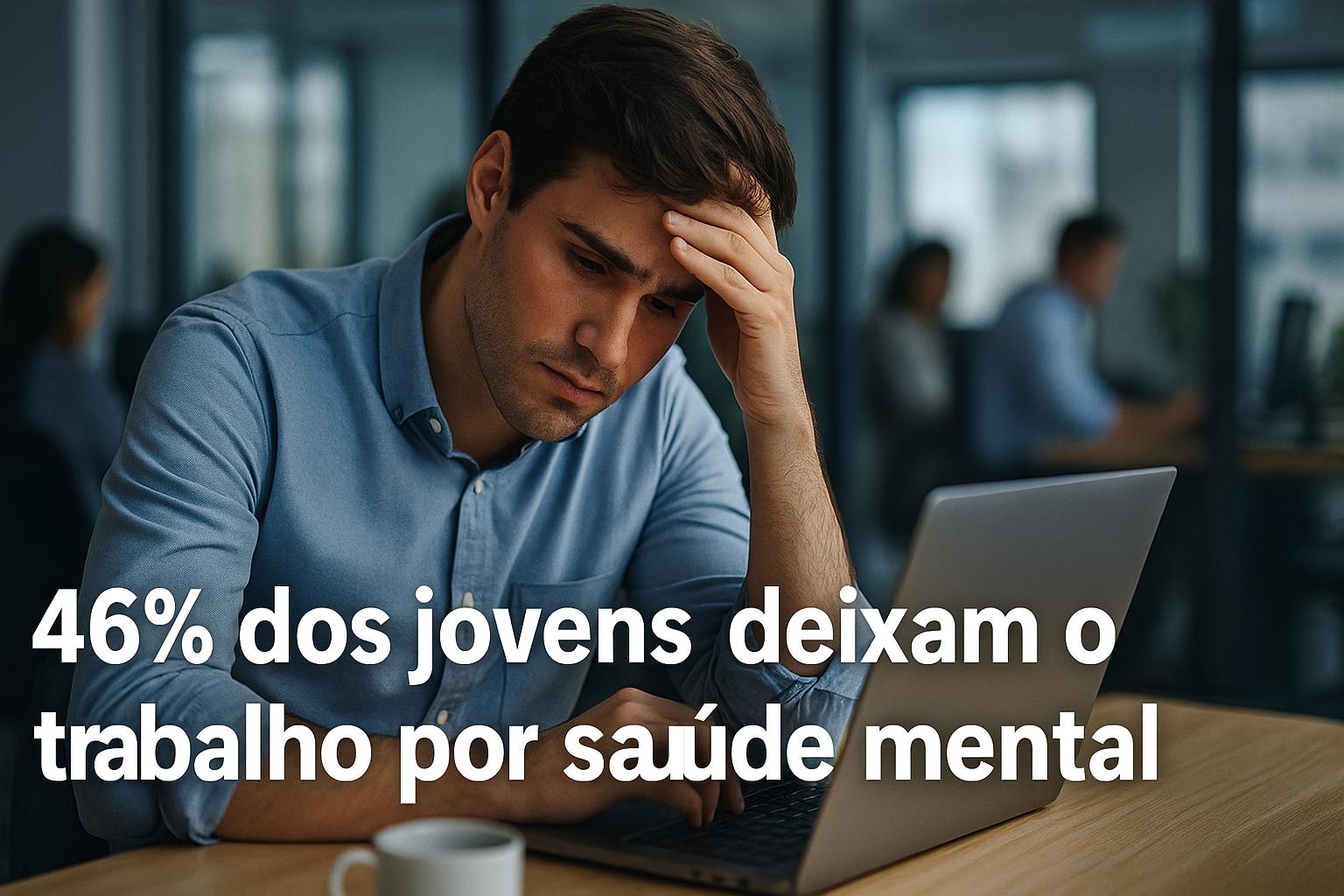
Almost Half of Generation Z Has Left the Job for Mental Health. Understand the Data, the Reasons, and How This Change is Revolutionizing the Global Labor Market.
The scene that once seemed improbable in a world dominated by the mantra “suck it up and work” is now official statistics. According to international surveys published throughout 2023 and 2024, 46% of Generation Z professionals have left or considered leaving their jobs for mental health reasons, a number that redefines priorities and dismantles old corporate models. This is the highest rate ever recorded among modern generational groups and signifies a symbolic break from the logic of absolute sacrifice for work.
This shift did not come out of nowhere. It stems from the pandemic, accelerated cultural changes, the digitalization of relationships, and a generation that grew up hearing about burnout, anxiety, and quality of life. Data from the McKinsey Health Institute, Gallup, and Deloitte Global Gen Z Survey reveal that work is no longer measured solely by salary or position but by its impact on well-being, and that toxic routines, unattainable goals, long hours, and oppressive environments will no longer go unscathed.
It is a line that separates the past from the new global work order: those who do not ensure mental health will lose talent.
-
He saw a loophole in the 1967 space treaty and claims to have made millions selling lots on the Moon and other planets.

-
Researchers from Rio Grande do Sul have discovered a plant species that does not exist anywhere else on the planet within a park in the far west of Rio Grande do Sul, and it is already critically endangered.

-
More than 411 helicopters, 11.9 million inhabitants, and a trillion-dollar GDP place the largest city in Brazil and the Southern Hemisphere in a league of its own, with figures that already rival giant countries like Morocco, Hungary, and Ecuador.

-
Mysterious rock formation found in the interior of Paraná does not follow any natural erosion pattern, and now specialists are investigating whether humans carved those cavities centuries ago.

Mental Health at Work: The New Deciding Factor for Staying or Leaving
For decades, the dominant discourse was clear: stability, career plan, formal employment, and slow and linear progression. Generation Z breaks this emotional contract with work. And it does so based on numbers.
In January 2024, a Deloitte survey reinforced that almost half of young people aged 18 to 27 have left a job due to anxiety, stress, or emotional exhaustion, while another 46% state they would do the same if necessary.
The data reinforces an uncomfortable reality for the market: the relationship between employee and employer will never be the same again.


And it is not juvenile revolt. The World Health Organization reports that cases of work-related disorders have increased by more than 25% in the post-pandemic period.
Generation Z, on the other hand, entered the job market in the midst of remote work, uncertainty, and isolation, becoming the most conscious — and at the same time most vulnerable — generation to the psychological impacts of professional life.
When the Job Costs Health: Burnout as a Breaking Point
If before the fear was being laid off, today the fear is losing oneself. This is what is shown by reports circulating social media, HR boards, professional interviews, and reports from markets such as the USA, Brazil, and Europe. Burnout, anxiety, and depression have become recruitment topics and often reasons for requesting resignation.
This is not a movement of escape but of survival. The generation that witnessed their parents falling ill due to work refuses to repeat the cycle. The message is clear: no salary compensates for mental collapse.
Companies that insist on rigid structures, excessive supervision, unsustainable goals, and lack of dialogue are discovering that they do not only lose employees — they lose relevance.
The Generation That Trades Stability for Freedom — and the Economic Impact
The movement is not just emotional. It is economic.
Recent reports show:
- Record growth of independent professionals aged 18 to 27.
- Increase in young people starting their own businesses or working as freelancers.
- Migration to careers that offer flexibility, remote work, and autonomy.
It is the rise of the freedom economy, fueled by a generation that learned to monetize online skills, desires multiple sources of income, and refuses the false dichotomy of stability vs. personal life.
Traditional companies are trying to adapt, creating psychological support programs, hybrid work schedules, reduced workweeks, and flexible benefits. Some are moving quickly. Others are resisting and falling behind.
HR Changes or Becomes the Past
The collateral effect of this phenomenon is clear: old management models are crumbling. Traditional HR, focused solely on recruitment and control, is giving way to human management with definitive pillars:
- Psychologically safe environments
- Empathetic and trained leadership
- Clear mental health policies
- Real flexibility, not just talk
- Evaluation by impact, not presence
- Horizontal structures and open communication
This is not a trend; it is organizational survival. Generation Z will make up 25% of the global workforce by 2030. Ignoring this is choosing to lose competitiveness.
A Generation That Is Not Afraid to Start Over
The message is written in the statistics and narratives that shape the new market:
- Bad jobs no longer hold anyone.
- Toxic environments will be exposed and abandoned.
- Mental health has become an asset.
- And stability, when it comes at the cost of life, is not stability; it is imprisonment.
Generation Z is not destructive. It is healing. It is not rejecting work. It is rejecting the pain disguised as discipline.
The corporate world that tries to ignore this movement will be talking to itself. Because, on the other side of the door, there is already a generation building its own path and leaving when necessary.








-

-

-

-

-

20 pessoas reagiram a isso.