





 Portuguese
  English
  Spanish
  6 min of reading
  0 comments


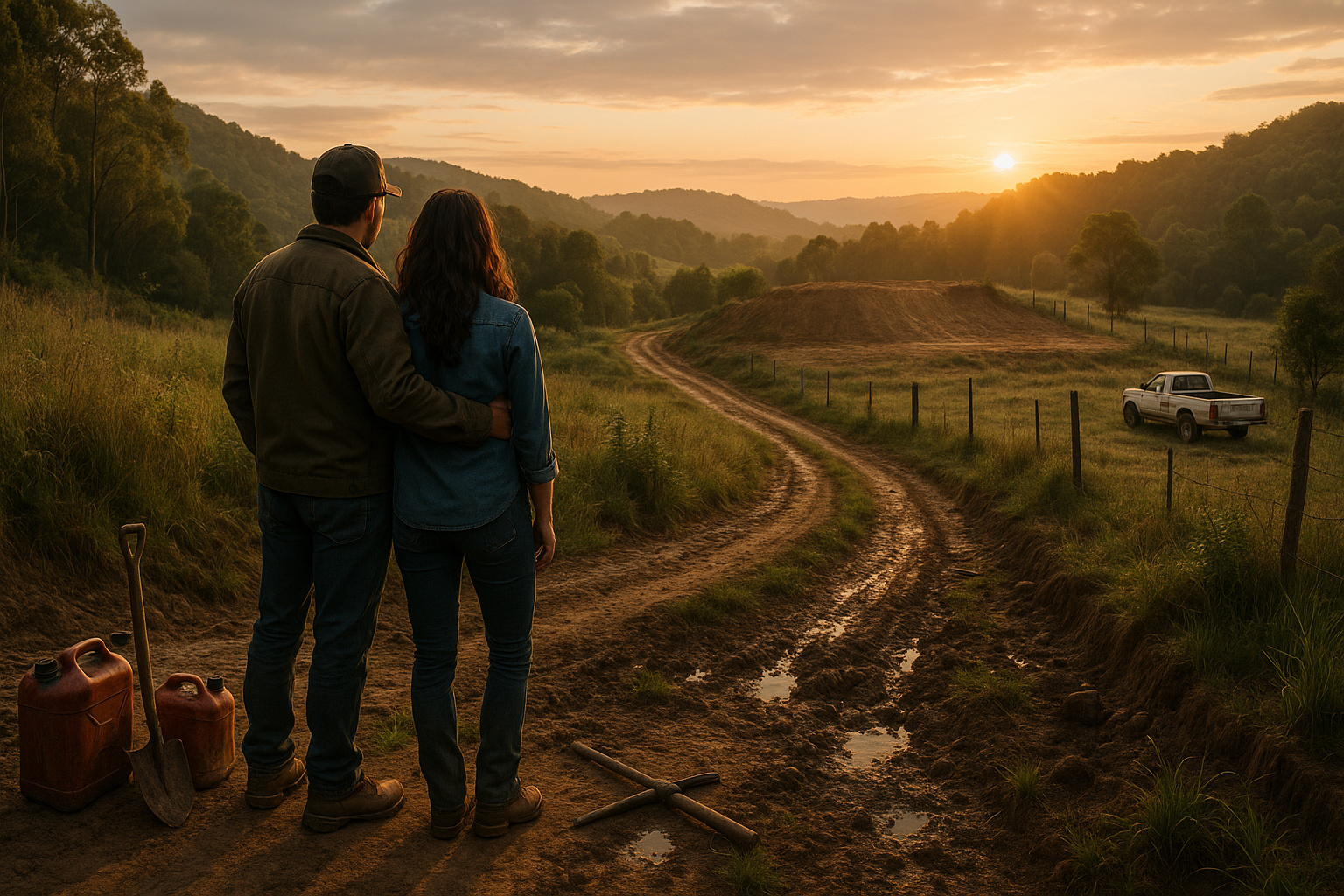
Living in the Country Seems Simple, But the Routine Hides Challenges That Go Unnoticed by Those Who Buy Land Without Planning, Accumulating Expenses, Frustrations and Difficult to Reverse Risks
Living amidst nature continues to be the dream of thousands of Brazilians, especially for those who carry the desire to escape the urban routine, the excess of stimuli, the insecurity and the accumulated fatigue of city life. However, while this desire is legitimate, it is precisely in this enthusiasm that the danger lies: buying a site without understanding what lies ahead often transforms a perfect dream into a sequence of expensive, unpredictable problems that are hard to manage. According to an article published with information from the Survivalism channel, many of the lessons learned only arise from practical experience — and it is this experience that avoids gigantic losses.
In the original video, the couple shares their experience of two years as owners of a 7-hectare plot in Antônio Carlos, Santa Catarina, revealing mistakes, frustrations, discoveries, and real problems that only those who truly live in the countryside know. They emphasize that this is not about internet theories, but direct learning in mud, rain, brush, and daily work. Below, we gather the 12 main warnings for those who wish to buy a site — warnings capable of preventing financial losses, emotional wear and tear, and hasty decisions.
The Distance From the City Can Destroy Your Routine — and Your Peace
The temptation of cheap land usually starts in the same way: “only 30 km from the city, great price.” However, this equation almost always comes at a much higher price over time. Living in isolation seems liberating in the first few days, but quickly turns into a constant logistical challenge. The presenter reports that he lived for two months in an area 30 km away from the nearest urban center. The peace was wonderful, but any detail — like running out of sauce for dinner or running out of gas — turned into a hassle.
-
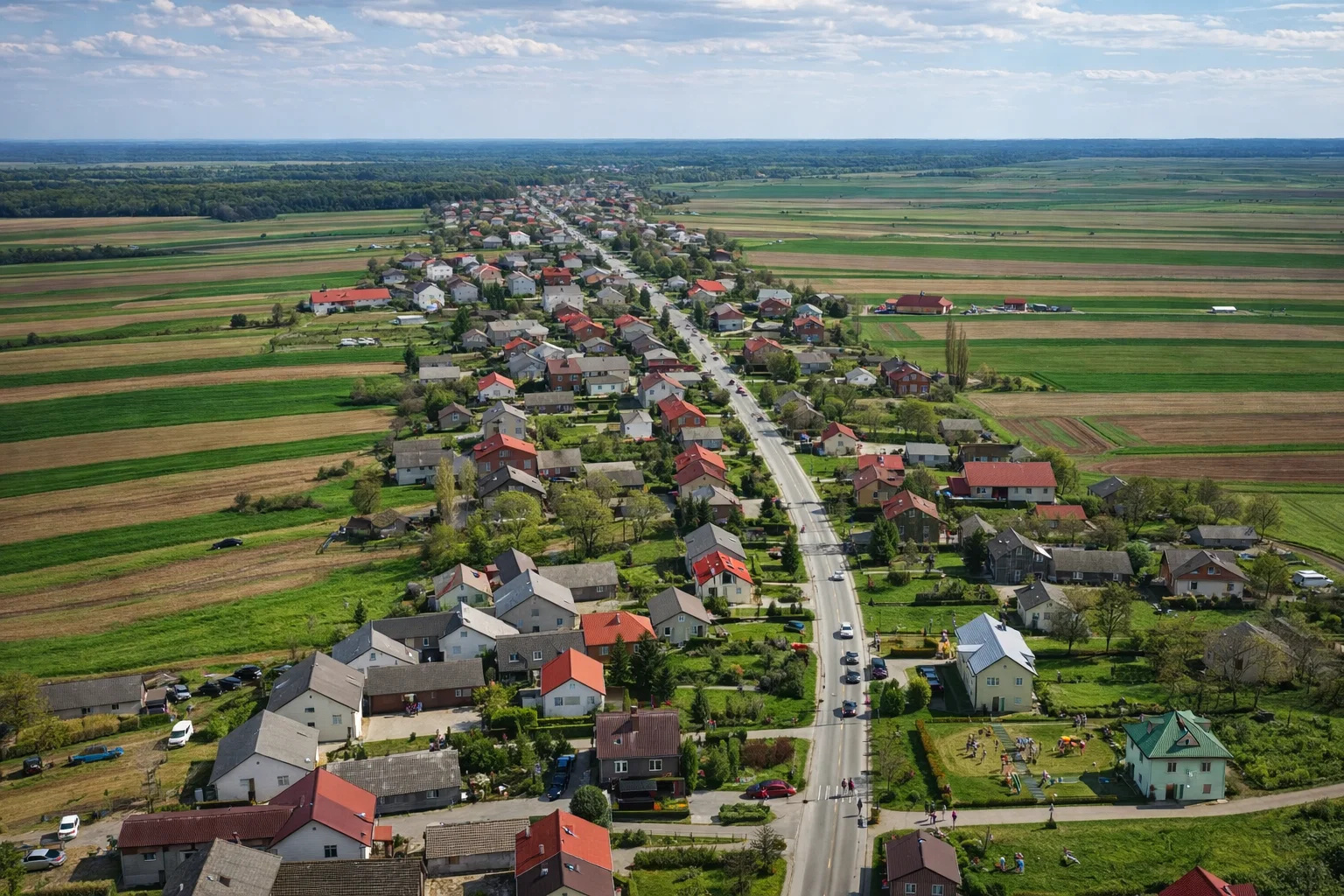
With around 6,000 residents on a single 9 km street, a village in Poland maintains a strong sense of community, cultivates strawberries and potatoes, and becomes the target of a false image created by artificial intelligence.
-
Sleeping at different times each day can be a bomb for your heart and even double your risk of having a heart attack.

-
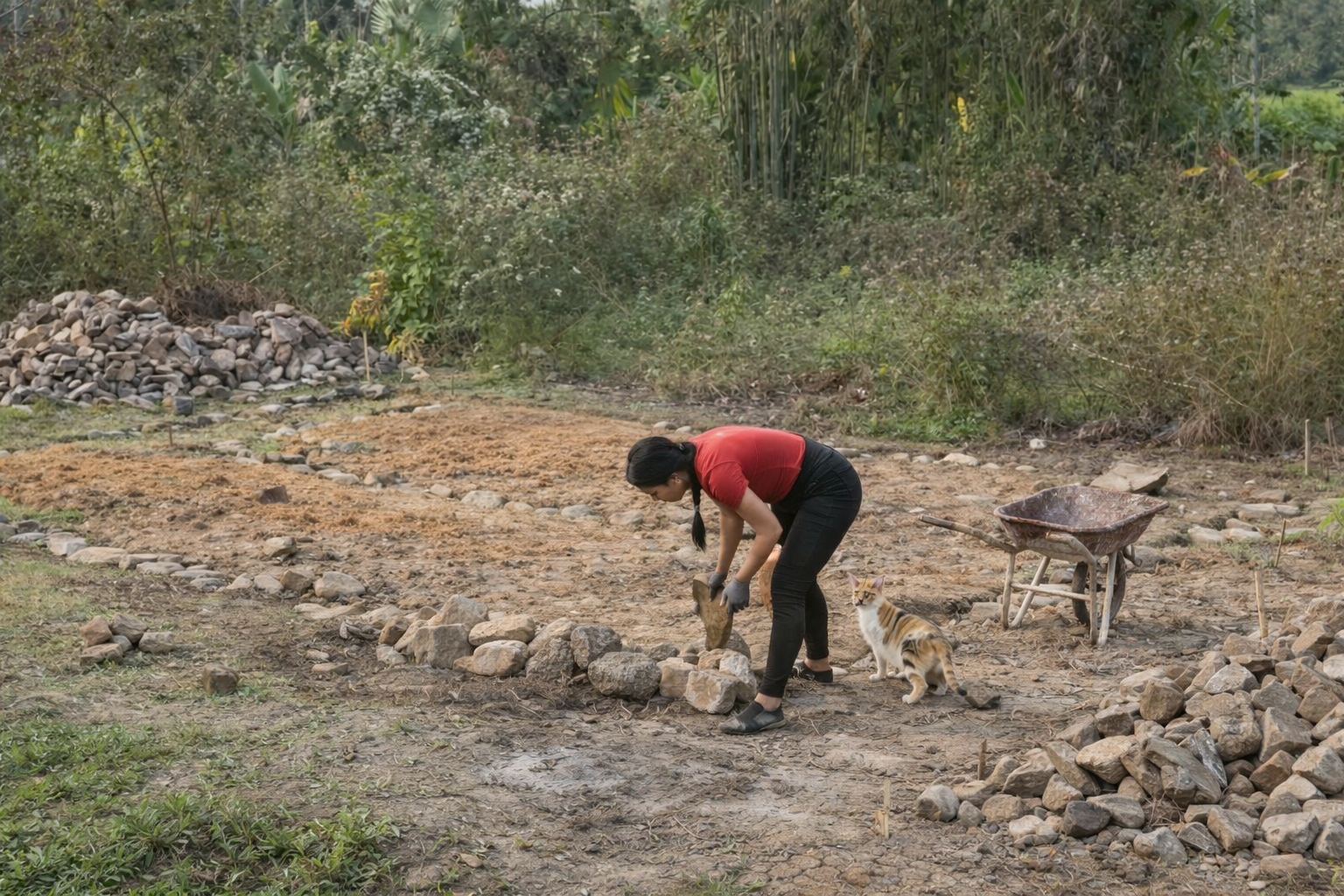
Without help and without heavy machinery, a woman builds a house from scratch with stone, wood, and cement, erects a chimney, creates a complete leisure area, and transforms an empty lot into her dream home.
-
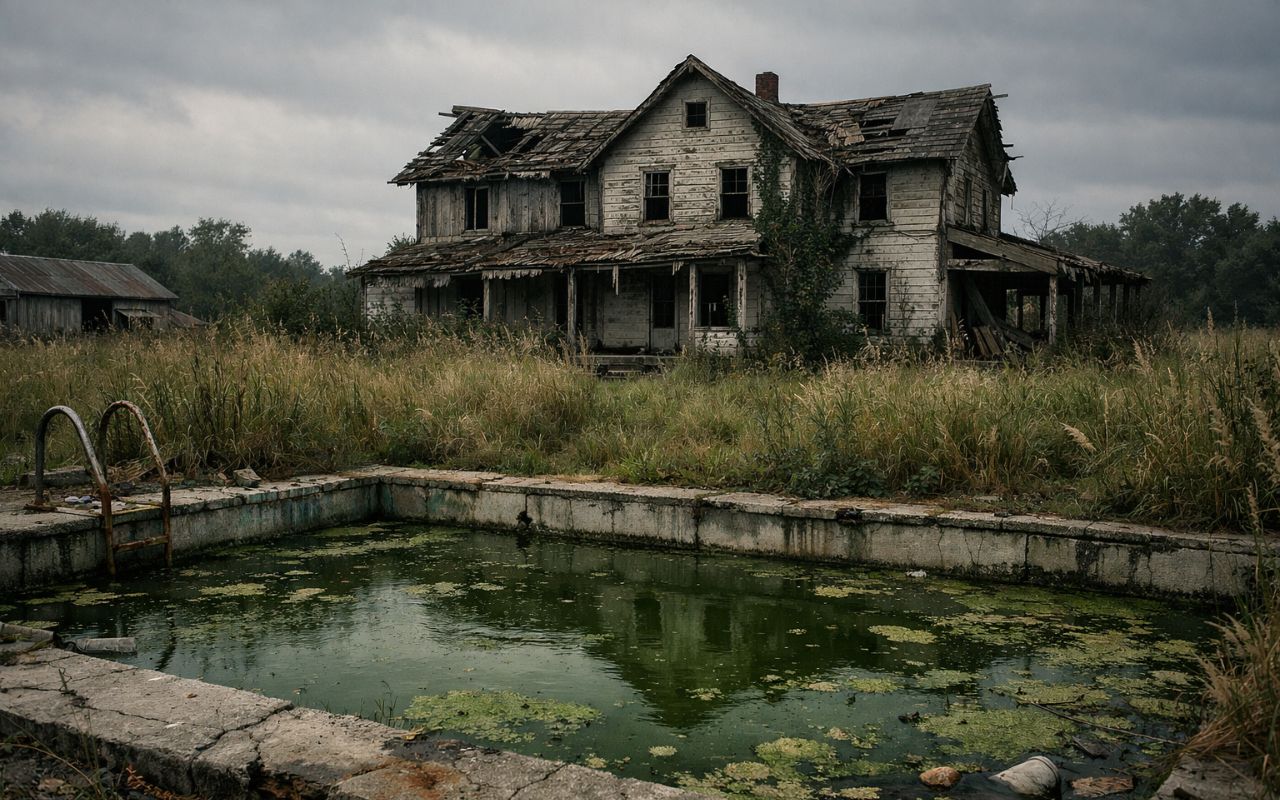
Couple transforms abandoned house after years of being closed; residence was overgrown with weeds, had a green pool, and a deteriorated structure in the interior of Rio de Janeiro.

And this is without considering children. A child who lives completely in isolation does not have simple access to English classes, judo, swimming, or essential activities for development. Even in the survivalist style, minimum dependence on the system still exists, and ignoring this creates weariness, limitations, and frustrations. Based on experience, they point out a reasonable limit: 5 to 10 km from the city. 15 km is already “pushing it too far.” Beyond that, the routine becomes too complicated.
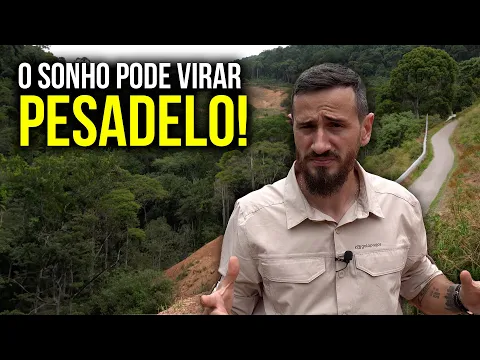

The Illusion of Hectares: You Can’t Care for the Entire Area
This warning often frustrates romantic dreams but prevents deep regrets. If you believe that you will be able to fully use 15 ha, 30 ha, 200 ha, or more with your family, know that this is a common fantasy. Maintaining large areas requires full-time commitment, equipment, labor, and money — a lot of money. They themselves, with 7 hectares (71,000 m²), admit that there are corners of the property they have not yet been able to explore fully.
The practical truth is simple:
A family effectively uses and maintains between 1,000 m² and 2 hectares.
The rest becomes weeds, maintenance, and accumulated work. If you have the means to buy large areas, great — but be clear that you won’t use it all. Ideally, live on 2 ha well organized, using the rest as a natural buffer zone. This avoids excessive spending on mowing, cleaning, fencing, and management.
Outsourcing Everything Doesn’t Work in the Country — and Can Cost a Fortune
In the urban imaginary, everything is resolved with money: “I’ll hire someone to do it.” In the countryside, this does not work that way. They report that there is no available labor even paying daily rates of R$ 160 or more. Finding someone to clear brush, weed, or clean larger areas has become very difficult in the region.
Moreover, owning equipment also requires analysis. A Tobata costs R$ 30,000. A small tractor costs R$ 5,000. And often local production does not pay for this investment. They show that outsourcing with a professional operator costs about R$ 300 per hour — and in two hours, everything is done with quality.
In other words:
Owning equipment is not worth it for most families.
A Weekend Site Becomes an Eternal Dependency on Labor — and It Doesn’t Exist
Many people buy a site believing that a caretaker will solve everything. The reality: caretakers are rare, expensive, and difficult to maintain. Furthermore, those who work all day in the city simply cannot take care of a side site. The result: weeds advance, the road worsens, the fence breaks, and the place becomes a headache.
Their advice is clear and incisive:
If you don’t like to work, don’t buy a site.
Rural life requires continuous physical and mental effort.
Roads, Plateaus, and Land Development: The Invisible Financial Pit
Fixing roads is one of the most thankless tasks in the countryside. The family estimates spending, on average, R$ 6,000 to R$ 8,000 per year just to maintain 1 km of usable easement. This includes tractors, drains, culverts, and gravel. And this is just maintenance — creating from scratch is even more expensive.
Cheap land often hides extremely high access costs. They warn:
If you can afford to pay more for already developed land, it’s worth much more.
In the Country, Nothing is Forgotten — Everything Grows, Accumulates, and Worsens
Time works against you. If you don’t fix it today, it becomes a big problem in six months; in a year, it becomes a giant problem. Roads deteriorate, weeds return, fences give way, landslides occur, and pastures close off. The presenter reinforces:
The countryside punishes those who procrastinate.
If you do not have an execution profile, the feeling of failure grows quickly.
Haste to Build Leads to Regret — Always
The initial excitement leads many people to build a house, chicken coop, garden, and structures in the wrong place. But the land only reveals its behavior after months:
- where the water runs
- where it floods
- where the sun hits
- where the soil sinks
- where it’s too windy
- where it turns into mud
Therefore, the advice is clear:
Spend months observing before laying the first brick.
The Burden of Animals Can Trap You
Raising animals requires structure, routine, and dedication. A dairy cow, for example, ties you down twice a day for milking — even on Sundays. Chickens require cleaning, care, and medicine. Pastures require paddocks, water, rotation, and strong fences.
Having animals is wonderful, but:
Animals come last — first orchard, then garden, then infrastructure.
Rural Security is No Joke: A Site is Not Synonymous With Protection
Many people believe in the myth of “safe countryside.” Unfortunately, this is not true. Specialized gangs invading weekend sites are becoming increasingly common. The family cites reports from the region of Urubici, where residents are abandoning homes because their belongings are constantly stolen.
Therefore, having a site requires:
- stable internet (they use Starlink)
- cameras
- alarm sensors
- backup battery
- reinforced doors and windows
Security must be treated as a priority from day one.
The Countryside is Beautiful, Quiet, and Rewarding — But Requires Emotional Preparedness and Constant Effort
The couple emphasizes that this is not about pessimism. They love rural life and are excited to dedicate years to the development of the property. But they warn:
The countryside is not easier — it is different.
It has beauty, silence, animals, and landscapes. But it also has challenges, work, and risks. Facing this honestly prevents deep disappointments.
The information was shared by the Survivalism channel, which emphasizes that the discussion continues in the comments, where people with decades of experience share real knowledge.






-

-

2 pessoas reagiram a isso.