





 Portuguese
  English
  Spanish
 5 min of reading
  0 comments


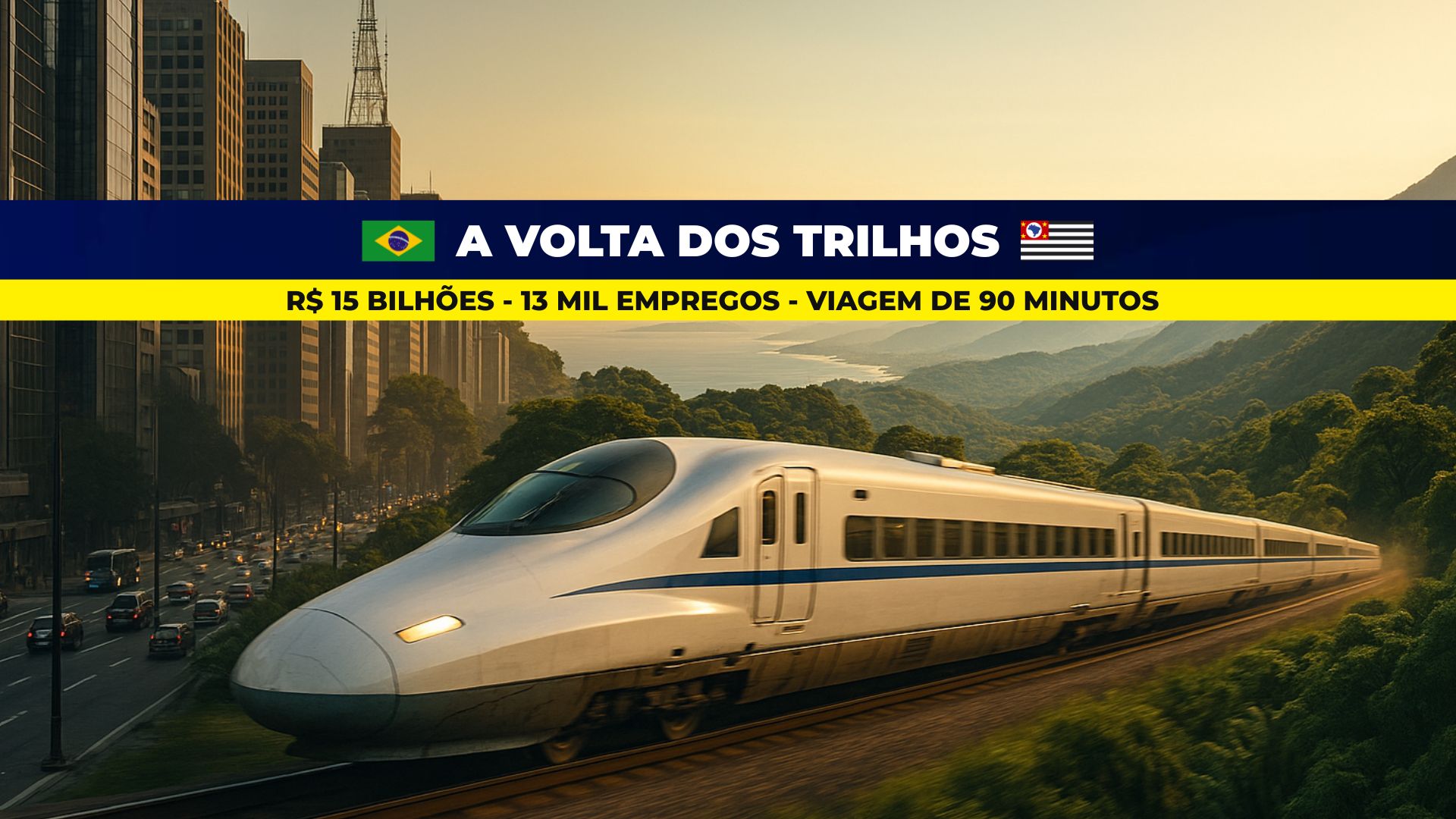
Intercity Train Can Connect São Paulo to Baixada in 90 Minutes, with R$ 15 Billion in Investments and 13,000 Jobs. Mobility in Focus
An ambitious rail project could forever transform the way millions of São Paulo residents travel between the capital and the southern coastline of the state.
The Intercity Train (TIC) South Axis, which is in advanced study phases, promises to reduce the trip between São Paulo and Baixada Santista to just 90 minutes, according to official information.
According to a check conducted this Saturday (28) on the site of the government of São Paulo, the proposal is expected to directly impact 1.8 million people and benefit nine cities along the route, involving R$ 15 billion in investments and generating around 13,000 jobs during its execution.
-
“No one will make us change the Pix,” says Lula after the US report.

-
Lula responds directly to Trump and says that Pix is from Brazil and will not change under pressure from anyone, after a report from the United States pointed out the Brazilian payment system as an American trade barrier.

-
Amazon has just announced a new fee on all deliveries, and your online purchases will become more expensive starting April 17, including for those buying from the United States here in Brazil.

-
He sold his share for R$ 4 thousand, saw the company become a giant worth R$ 19 trillion, and missed the opportunity of a lifetime.


The Impact on Traffic and the São Paulo Economy
Currently, the main connection between São Paulo and the coast is made via the Anchieta and Imigrantes highways, which suffer from frequent congestion, especially during holidays and peak season.
With the TIC South Axis, traffic could be significantly relieved, as the train is expected to replace thousands of car and bus trips, reducing the volume of vehicles on these important roads.
Additionally, the project is part of the state program SP on Tracks, which foresees over 40 initiatives to expand and modernize the São Paulo rail network, with total investments expected to exceed R$ 190 billion.
The Train That Connects São Paulo to Baixada Santista in 90 Minutes
The train route is expected to vary between 80 km and 130 km, depending on the final chosen route.
The central idea is to provide a fast, comfortable journey with less environmental impact, attracting users who currently face long periods in traffic or opt for regional flights.
According to the Partnerships in Investments Secretariat (SPI), which leads the feasibility studies, the TIC South Axis could enter operation by the end of the decade, with the completion of studies expected in the first half of 2027.
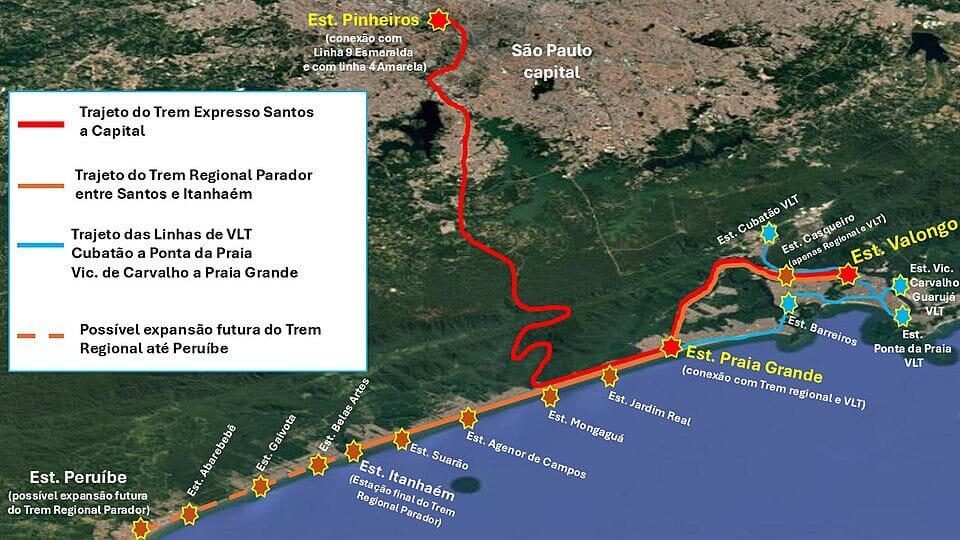
Two Paths for the Intercity Train
Currently, two main routes are being evaluated for the implementation of the TIC South Axis.
The first suggests that the train departs from the CPTM Line 10-Turquesa, proceeding to Rio Grande da Serra and then using an existing railway to Paranapiacaba.
The descent from the Serra do Mar would be made by a rack railway system, a traditional technology that ensures safe transport between the plateau and the coastline, especially in areas with steep slopes.
The second possibility envisions a starting point in the southern zone of the capital, departing from the Imigrants Highway or CPTM Line 9-Emerald.
From there, the train would follow an old railway to the Parelheiros region, advancing towards Baixada Santista.
Benefits for the Region and the Environment
In addition to reducing travel time, the TIC South Axis represents an important sustainable alternative to road transport, contributing to the reduction of polluting gas emissions.
The intercity train is expected to promote economic and social integration between the capital and the coastline, facilitating tourism, commerce, and access to job opportunities.
Estimates indicate that the creation of around 13,000 direct and indirect jobs during the construction of the train can strengthen the local economy, especially in municipalities that currently face structural challenges.
Rail Expansion: The Future of Transport in São Paulo
The TIC South Axis is just a part of the broad SP on Tracks program, which aims to expand the state’s rail network with over a thousand kilometers of new tracks, benefiting not only the São Paulo Metropolitan Region but also the interior and the coastline.
Another intercity train line already being studied aims to connect São Paulo to the interior of the state in up to 1 hour, which can revolutionize regional mobility and stimulate economic development outside the capital.
This set of investments, estimated at nearly R$ 200 billion, is considered a milestone in the modernization of São Paulo’s infrastructure, aligned with current demands for sustainable and efficient mobility.
Challenges for Implementation
Despite its transformative potential, the TIC South Axis still faces challenges to become a reality.
It is necessary to successfully complete the feasibility studies, overcome environmental barriers, obtain licenses, and ensure public-private partnerships to enable the estimated investment of R$ 15 billion.
Additionally, the technical complexity of the descent from Serra do Mar, especially along the section with the rack system, demands innovative solutions to ensure safety and comfort for passengers.
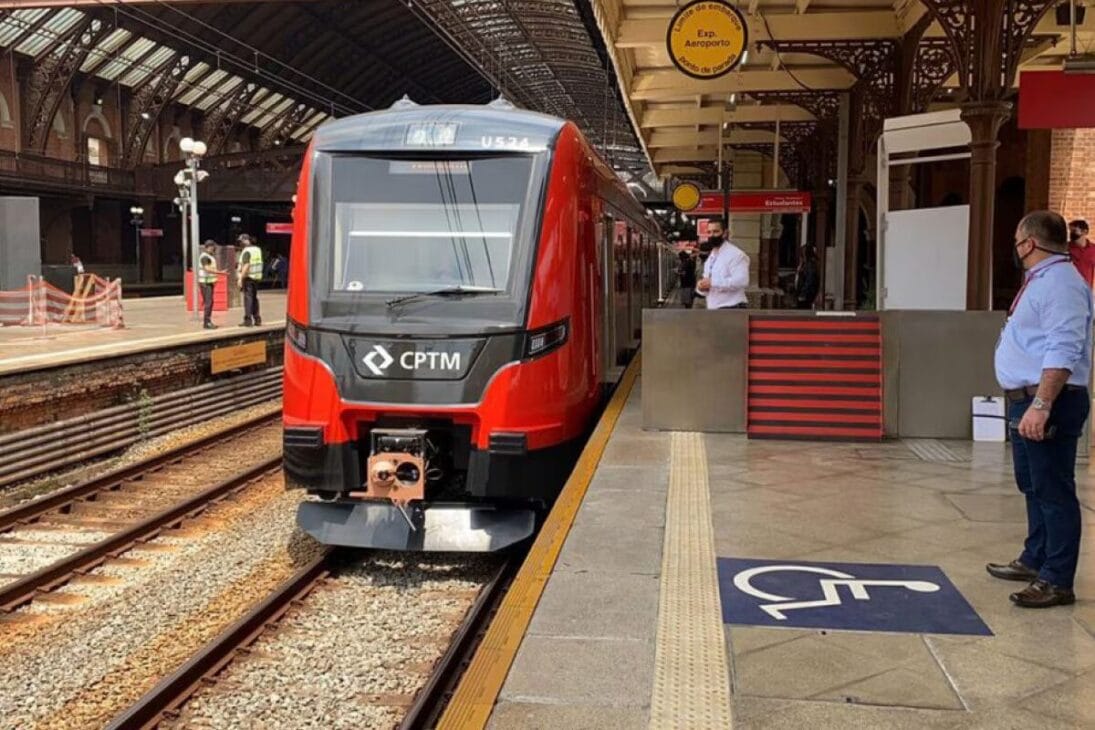
What Changes for the Average Citizen?
For users of the system, the train should offer a practical and fast alternative, especially for those living in the served cities and needing to travel frequently between São Paulo and Baixada Santista.
The expectation is that the 90-minute journey will align with commercial hours, facilitating travel for work, study, and leisure.
Furthermore, rail transport has the advantage of being less susceptible to delays caused by congestion, providing greater predictability for daily life.
Perspectives for the Future of Transportation in São Paulo
With the completion of studies anticipated for 2027, experts are closely monitoring the progress of the TIC South Axis.
If approved and implemented as planned, the project could become a milestone in São Paulo mobility, stimulating other similar initiatives and helping to reduce the historical bottlenecks of public transportation in the state.
Do you think the Intercity Train can really transform the way we travel between São Paulo and the coast? How do you envision the impact of this project on your routine? It turned out just the way you wanted! Do you want me to create SEO tags, social media summaries, or anything else?








-

-

-

-

-

7 pessoas reagiram a isso.