





 Portuguese
  English
  Spanish
  6 min of reading
  0 comments


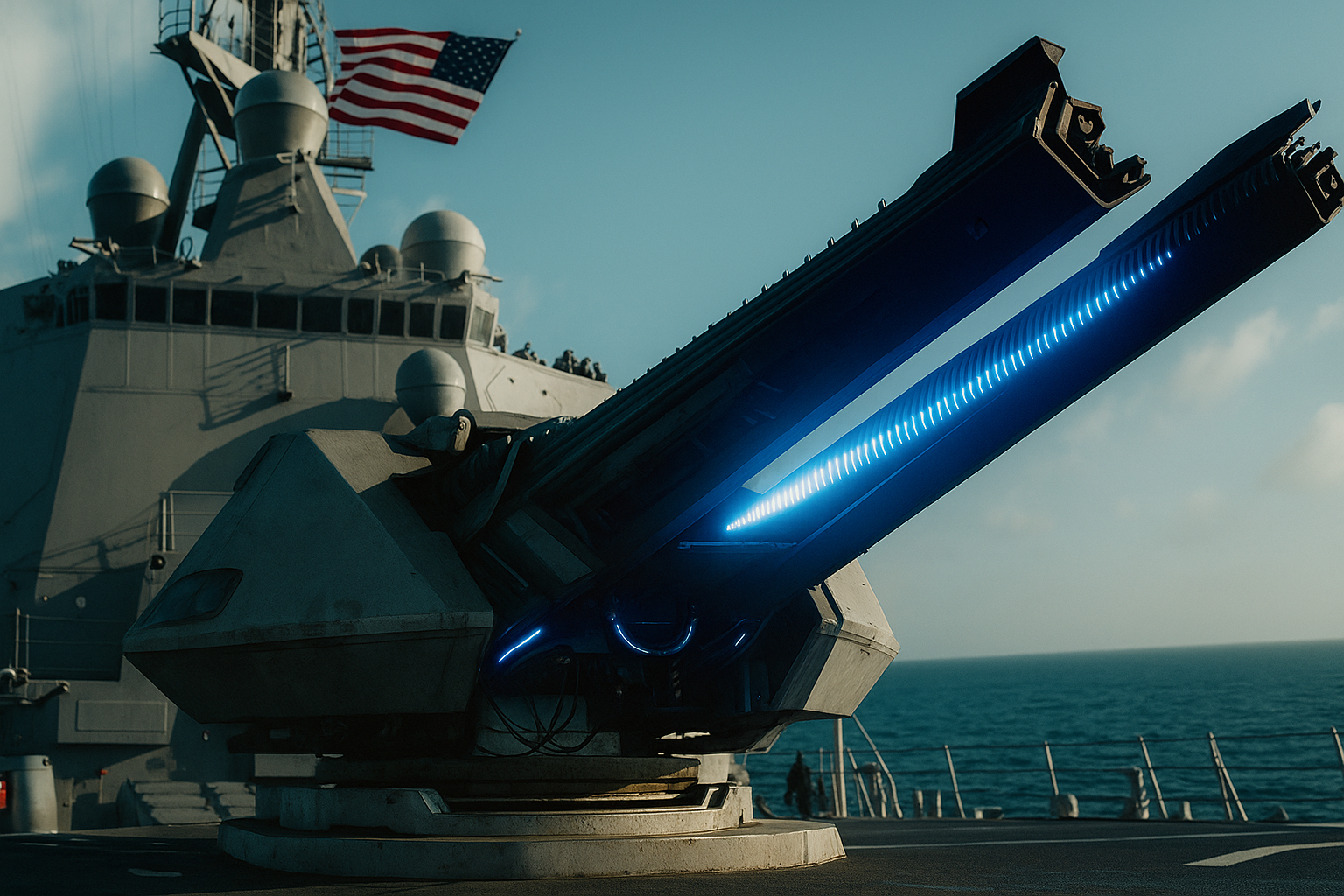
The Most Futuristic Weapon of the U.S. Cost Half a Billion Dollars, Fired Projectiles at 9,000 km/h, and Was Canceled Without Firing a Single Shot.
It fired without gunpowder, using pure energy to accelerate metal projectiles to 9,000 km/h, promised to replace missiles, and cost more than US$ 500 million to the American taxpayer. The U.S. Navy’s railgun was announced as the weapon of the future, but had a far less glorious fate: it was quietly canceled in 2021, after nearly two decades of development — never having been used in combat.
The idea was ambitious: to develop an electromagnetic weapon capable of firing projectiles at hypersonic speeds, with low cost per shot, surgical precision, and range superior to any conventional cannon. But despite successful tests in laboratories, technical problems, budget cuts, and strategic shifts in Navy priorities dictated the end of the superweapon before it could be deployed on a ship.
Today, the railgun serves as a symbol of the promises and limitations of futuristic military technology — where what is possible in theory does not always work in practice.
-
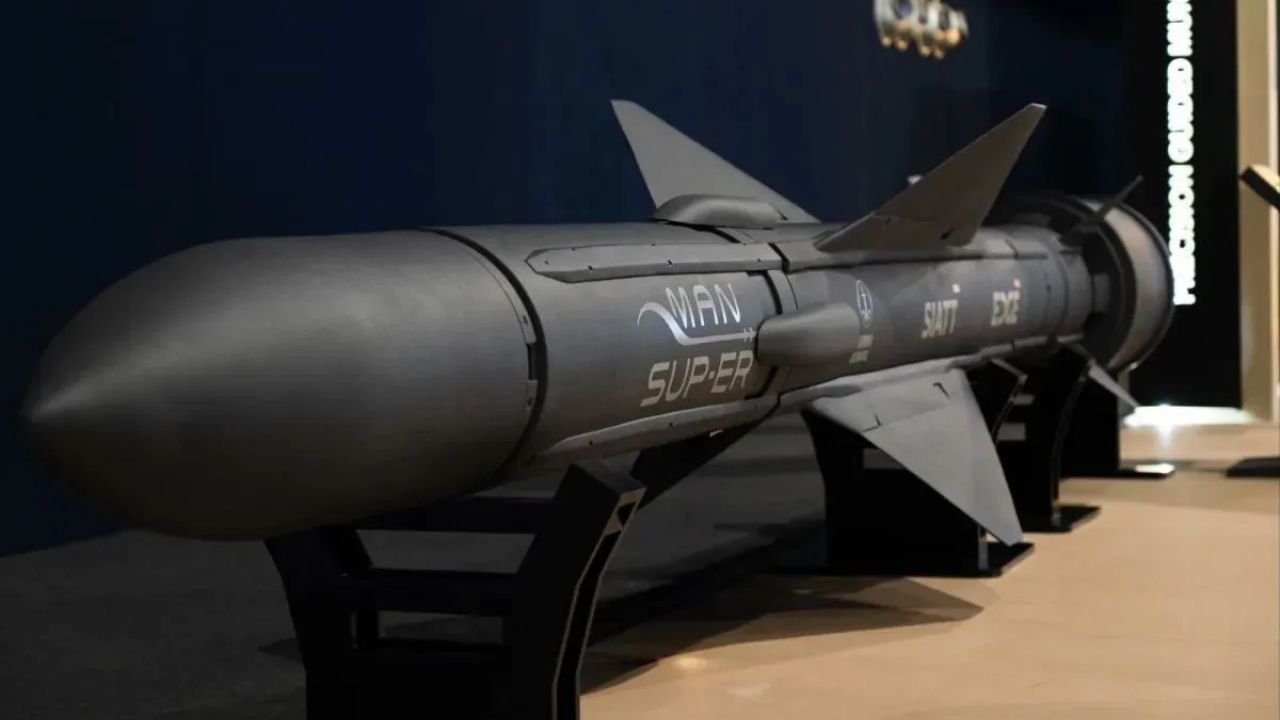
Brazil accelerates the evolution of the MANSUP missile, designing an air-surface version with a range exceeding 200 km, advanced guidance, and precision strike capability against land and naval targets, paving the way for a new generation of national armaments with global potential.
-
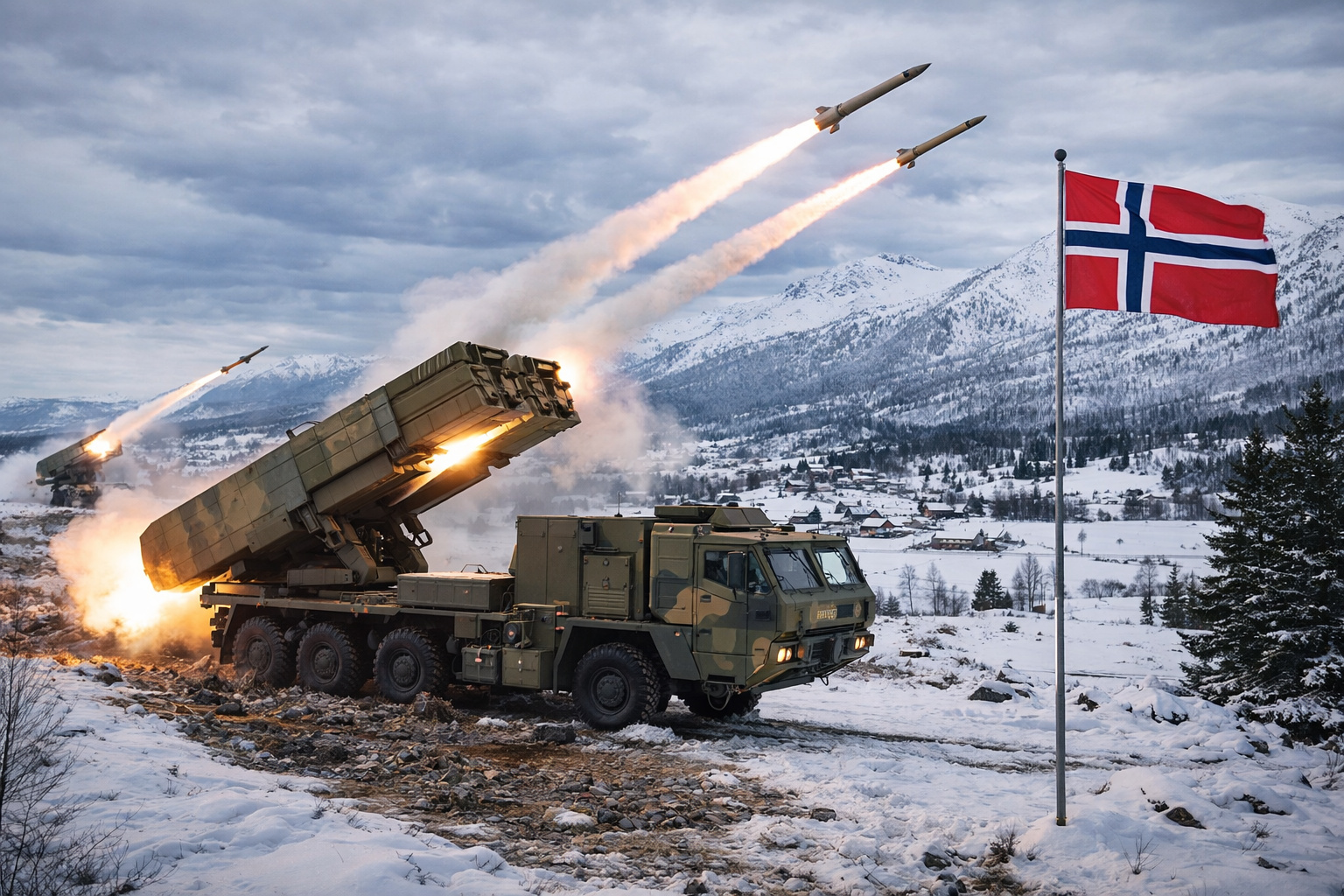
South Korea signs a $922 million deal with Norway, bringing Chunmoo launchers capable of firing guided missiles up to 290 km with an accuracy of 15 meters to Europe and turning the system into a key component of the new global race for precision artillery.
-
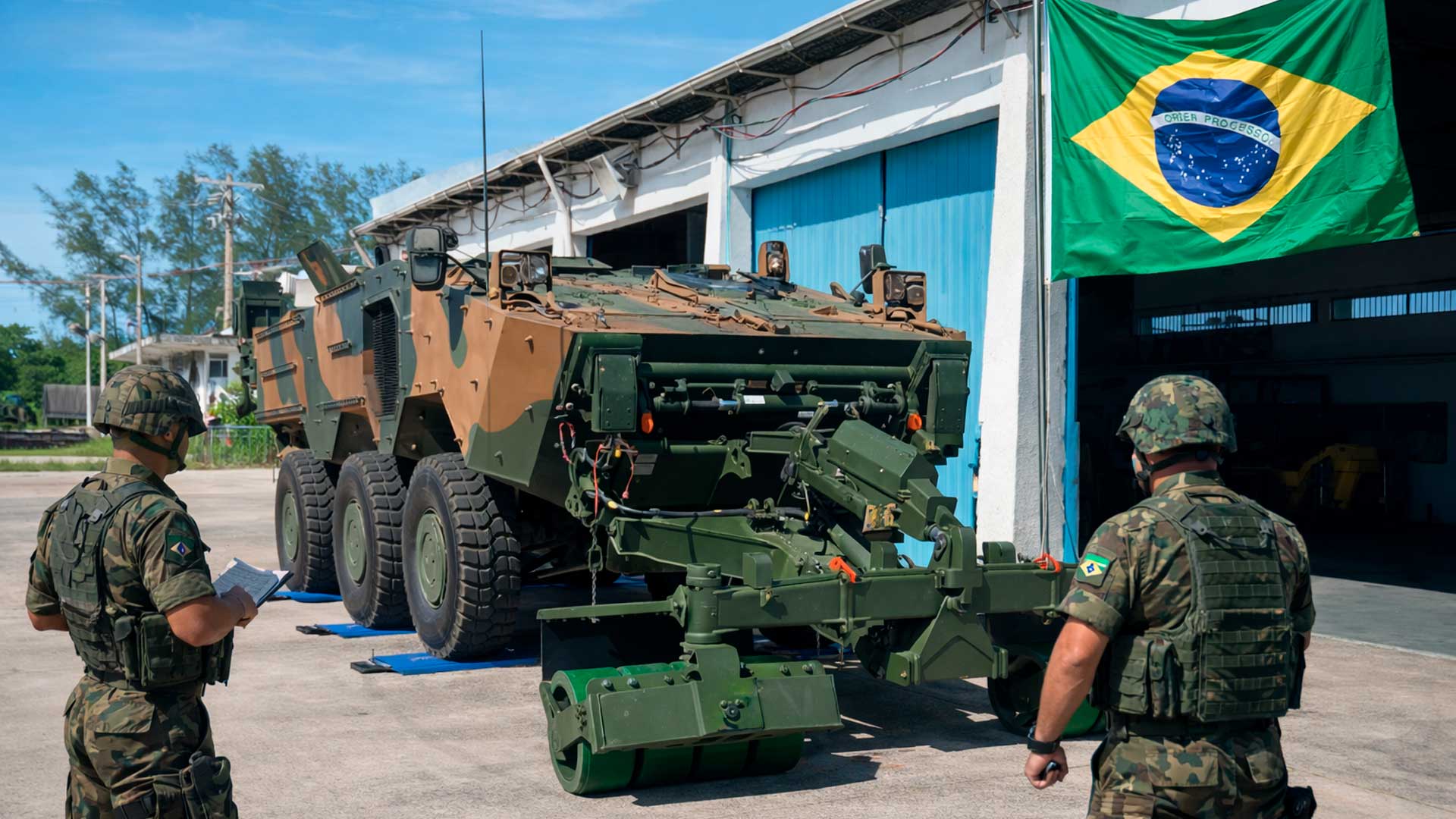
Brazil advances with decisive tests until June, the 6×6 Guarani armored vehicle with engineering equipment enters the most important phase and can enhance the operational capability of the Army.
-
Furnas Airport is handed over to the Navy and becomes a strategic base with complete military operations, attack drones, and international mobilization at Furnas Lake.

What Is a Railgun? The Physics Behind the Electromagnetic Weapon
Unlike conventional weapons that use explosives for propulsion, the railgun is an electromagnetic cannon. Instead of gunpowder, it uses extremely strong electric currents that pass through conductive rails, creating a magnetic field that pushes the projectile with colossal force.
This electromagnetic acceleration can make the projectile reach speeds of over Mach 7 — equivalent to over 9,000 km/h. Since the shot is made solely with electrical energy, there is no detonation, smoke, or explosion, making the shot quieter and less detectable by conventional sensors.
Additionally, the projectile — usually a solid piece of metal, without an explosive warhead — causes devastating damage solely through kinetic impact, eliminating the need for explosives.
In theory, it is the holy grail of long-range weapons: lethal, fast, cost-effective, and safe to store.
The Promise of the U.S. Navy: Cheaper, More Lethal Weapons
The U.S. Navy officially began developing the naval railgun in the early 2000s, with direct funding from the Office of Naval Research (ONR). The goal was to install the system on Zumwalt-class destroyers, creating a long-range attack platform with projectiles capable of hitting land and sea targets with precision, speed, and reduced cost.
Among the main arguments in favor of the project were:
- Range greater than 200 km, twice that of a conventional naval gun;
- Cost per shot of about US$ 25,000, compared to US$ 1 million for a Tomahawk missile;
- Hypersonic speed (Mach 7 or more), difficult to intercept;
- No explosives involved, increasing safety on board.
The weapon was successfully tested on land platforms in 2010 and 2017. Videos of the tests — showing projectiles fired at absurd speeds, producing a white flash followed by a boom — went viral on the internet and heightened enthusiasm around the project.


The Cost of Innovation: Over Half a Billion Dollars
Building an operational railgun required the development of special materials, complex power control systems, and, most importantly, ultra-high-power capacitors that could charge and discharge energy in milliseconds.
It is estimated that the project consumed over US$ 500 million between 2005 and 2020, not including parallel investments from DARPA (the Pentagon’s advanced projects agency) and Lockheed Martin.
Moreover, it was necessary to create special tungsten projectiles, capable of withstanding extreme heat and the forces involved in firing — further increasing operational costs.
Each year, the technical challenges grew. The cannon suffered from accelerated wear of the rails with each shot, requiring constant maintenance. The ship structures also needed to be adapted to withstand the recoil and electrical discharge of a shot of several megajoules.
Why Was the U.S. Navy’s Railgun Canceled?
In July 2021, after more than 15 years of development, the U.S. Navy announced the official shutdown of the railgun program. The official reason? Redirection of funds to projects considered more promising, such as laser weapons, hypersonic missiles, and electronic warfare systems.
But behind the scenes, a more complex reality emerged:
- Persistent technical problems: the cannon functioned in tests, but was not reliable enough for real combat;
- High wear of the rails: reduced lifespan and required frequent replacement of parts;
- Need for highly modified ships: the installation of the system was unfeasible on current models;
- Advancement of hypersonic missiles: made the railgun less competitive as a strategic weapon.
The idea of replacing missiles with pure metal projectiles seemed tempting, but in practice guided missiles continued to excel in range, precision, and adaptability — even with a higher cost per shot.
Railgun Became a Superweapon That Never Went to War
The cancellation of the railgun is emblematic because it shows the limits of military innovation. A technology may be viable in the lab but unfeasible on the battlefield. The U.S. Navy even included the system in long-term projections for 2030, but it was never actually deployed on an active destroyer.
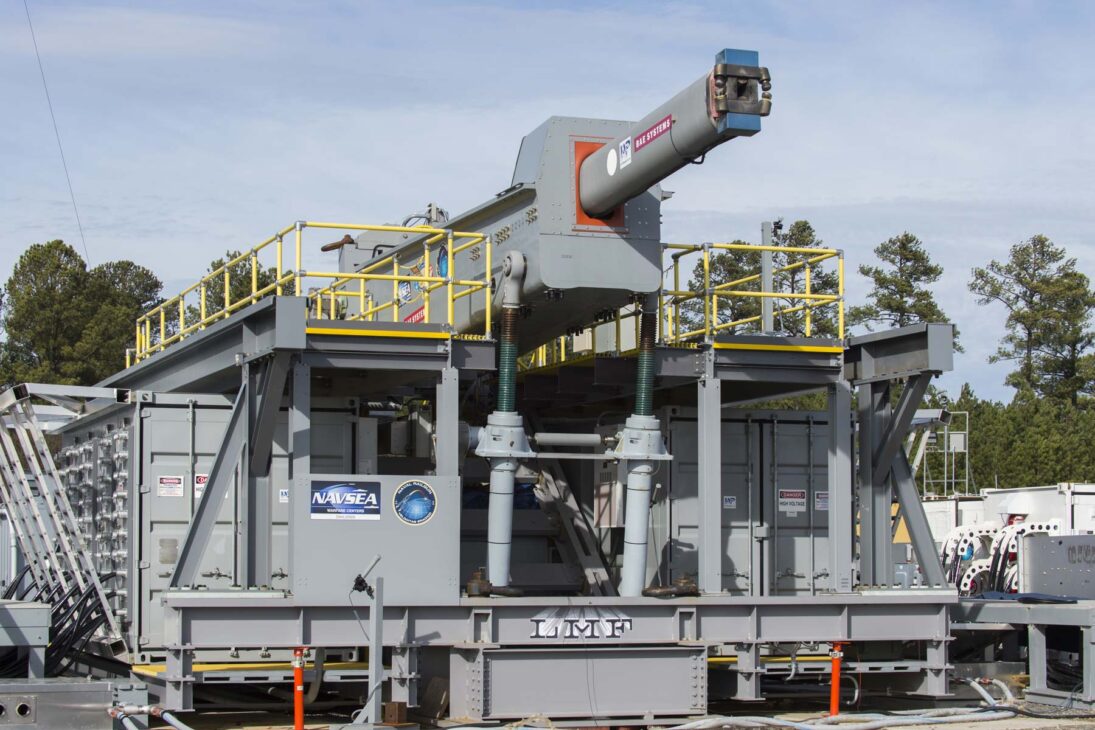
The project ended without ever being used in real combat, nor in long-term naval tests. What remained were prototypes, test videos, and technical files — a trail of unfulfilled promises.
And Now? What Replaced the Railgun?
With the end of the railgun project, the U.S. turned its attention to other forms of futuristic weaponry:
- Laser Weapons (like HELIOS): installed on ships for defense against drones and missiles;
- Hypersonic Missiles (like the CPS and LRHW): with speeds above Mach 5, accurately guided;
- Electronic Interference Systems: capable of neutralizing enemy radars and communications.
In other words, the concept of directed energy weapons has not been abandoned — only the railgun, for now, fell by the wayside.
Railgun: Failure or Temporary Advancement?
Despite the cancellation, many experts argue that the railgun was not a complete failure. It generated advancements in materials, power systems, projectile aerodynamics, and heat control that could be useful in future generations of weapons.
Moreover, other countries like China and Russia are also exploring similar technologies. The Chinese Navy, for instance, was caught testing supposed electromagnetic cannons on warships starting in 2018 — although the actual capabilities remain unknown.
The railgun may have died in the U.S., but the idea still lives on in the global military imagination.
Curiosities About the U.S. Navy’s Railgun
- The system generated over 32 megajoules per shot — enough energy to launch a 10 kg projectile over 200 km.
- The railgun barrel needed to be cooled between shots to prevent warping.
- The weapon was invisible to radars, as it did not emit heat or flames like explosive projectiles.
- One of the main tests occurred in 2017, when the projectile hit a target over 160 km away in less than 2 minutes.
The U.S. Navy’s railgun represents one of the most ambitious — and frustrating — projects in recent military history. Its concept seemed invincible: a cannon that fires at 9,000 km/h without using gunpowder or explosives. But practice showed that not all cutting-edge technology is applicable on the battlefield.
With US$ 500 million invested, the railgun became a superweapon that never fired, reminding the world that real war is made of more than just futuristic ideas. Today, it is studied as a case of interrupted military innovation — and serves as a lesson about the limits between theory, engineering, and operational reality.
Do you believe weapons like the railgun still have a place in modern warfare?
Leave your opinion below — we want to know what you think about the future of superweapons and military technology.










Seja o primeiro a reagir!