





 Portuguese
  English
  Spanish
  4 min of reading
  25 comments


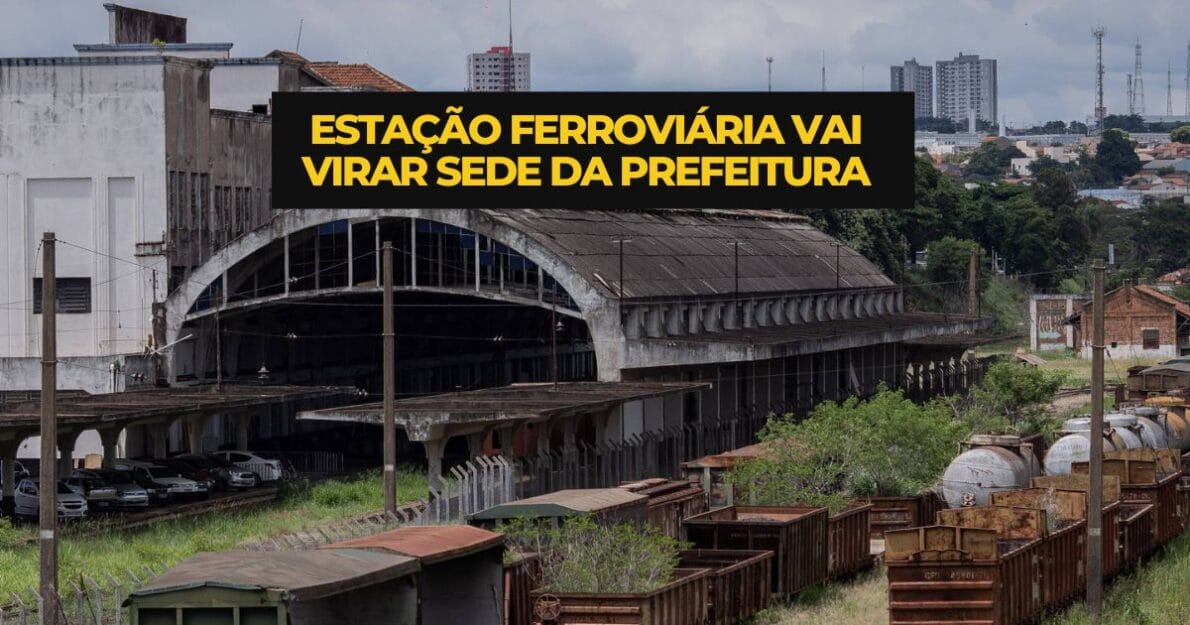


Abandoned for More Than 20 Years, the Train Station, a Symbol of Brazilian Railway History, May Become the New City Hall.
For more than two decades, the old train station in Bauru, a symbol of the Noroeste do Brasil Railway, has remained without passengers, immersed in abandonment and degradation.
Now, Mayor Suéllen Rosim (PSD) presents a bold plan: to revitalize the space and transform it into the new administrative headquarters of the city.
The proposal marks a possible new beginning for a building of great historical value, which once was part of one of the most emblematic railway systems in the country.
-
“No one will make us change the Pix,” says Lula after the US report.

-
Lula responds directly to Trump and says that Pix is from Brazil and will not change under pressure from anyone, after a report from the United States pointed out the Brazilian payment system as an American trade barrier.

-
Amazon has just announced a new fee on all deliveries, and your online purchases will become more expensive starting April 17, including for those buying from the United States here in Brazil.

-
He sold his share for R$ 4 thousand, saw the company become a giant worth R$ 19 trillion, and missed the opportunity of a lifetime.

According to the mayor, the transformation of the space into an administrative headquarters is not just a matter of historical value, but a management strategy to reduce costs and increase the circulation of people in the surrounding area.
“The building, with its three stories, could accommodate the main municipal secretariats, which will help cut expenses on rents and revitalize the area,” explained Suéllen in one of her posts.
With this, a positive impact is expected for the local economy and for the safety of the region.
According to Folha de S. Paulo, the building, now dilapidated and filled with debris, abandoned train cars, and graffiti, is located in a central and important area of the city.
The space, which in the past was a hub of passenger flow and commercial activities, could once again generate economic movement if the project advances as planned.
City Hall Plans Partnerships and Studies for Feasibility
The idea of transforming the space began to gain momentum soon after Suéllen took office in 2021.
A working group for studies and concessions was created to evaluate the fate of the Noroeste railway station, with proposals ranging from a shopping center to the possibility of private concessions for the use of the area.
In a survey conducted at the time, the cost to adapt the building for administrative use was estimated at over R$ 30 million, a figure currently updated to approximately R$ 34.3 million, according to IPCA indexes.
In an interview, the mayor highlighted that the idea of revitalization matured over time and that, to make the project feasible, partnerships and studies on other historical preservation initiatives were made.
An example was the recovery project of the rail yard in Campinas, visited by Suéllen and her team to seek inspiration and analyze the feasibility of the project.
International Interest and Reactivation of Transport
During a visit by Chinese businessmen in early 2024, new ideas were discussed, including the possibility of resuming the use of the tracks for urban transport.
The proposal is that, by revitalizing the station, it could also implement a Light Rail Vehicle (LRV) in the city, increasing the connection between the central region and other areas.
Although the idea still depends on studies and investments, the visit opened doors for international partnerships, strengthening the expectations of transforming the station not only into an administrative center but also into a new urban mobility point.
History and Symbolism of the Railway: the “Death Train”
The history of the Noroeste do Brasil Railway is deeply intertwined with the development of Bauru.
Connecting Bauru to Corumbá (MS), the railway was known as the “Death Train” due to the high incidence of accidents and the transportation of sick people along its route.
The Brazilian line was part of a route that extended to Santa Cruz de la Sierra, Bolivia, where accidents and operational problems were common.
From the 1960s onwards, the railway faced a decline in investments, resulting in the gradual closure of stations.
Currently, according to Folha de S. Paulo, of the 122 stations that made up the line, about 80 have been demolished or are abandoned, in an advanced state of deterioration.
Impacts on the City and Future of the Project
With the promise of revitalization, the mayor and her team hope that the project contributes to reclaiming the historical and economic importance of Bauru, transforming the train station into a landmark of municipal administration and a point of urban development.
However, the city hall’s project is not without challenges, as it still needs a solid plan to attract the necessary funding and consolidate partnerships, and it depends on approval from historical preservation agencies.
On her social media, Suéllen emphasized that she wants to move forward quickly with the project, stating that the new city hall will be “a watershed” for the city, bringing back the movement and respect for a space that was once vital to the population.
In your opinion, should the train station be reactivated or is the city hall right to use the location as a municipal headquarters? Leave your answer in the comments! Until next time, reader!






Recordo que a empresa RUMO TRANSPORTES FERROVIÁRIOS vem restaurando suas vias abandonadas, com o intuito de revitalizar o transporte na região. Quem sabe, se interesse também por essa Estação.
Melhorando os meios de transporte coletivo com trens modernos e eficientes a levar também passageiros para os variados destinos no Estado SP e além deste, com segurança, conforto, economia de custos operacionais e com tempo de viagens mitigando o excesso da utilização de rodovias e acidentes. A economia atingiria inúmeros setores, como vidas preservadas, diminuição das despesas hospitalares, do consumo de combustíveis e emissões dos gases do efeito-estufa na atmosfera, etc.
Investir no local,é obrigadar quem é o dono do lugar a limpar ou manter ,a desculpa é revitalizar, ou seja gastar dinheiro público,se duvidar vai virar estacionamento particular tbm,resumindo o povo só vai pagar a conta.
Um povo que não liga para sua história; terá um futuro sem memória!