





 Portuguese
  English
  Spanish
  3 min of reading
  0 comments


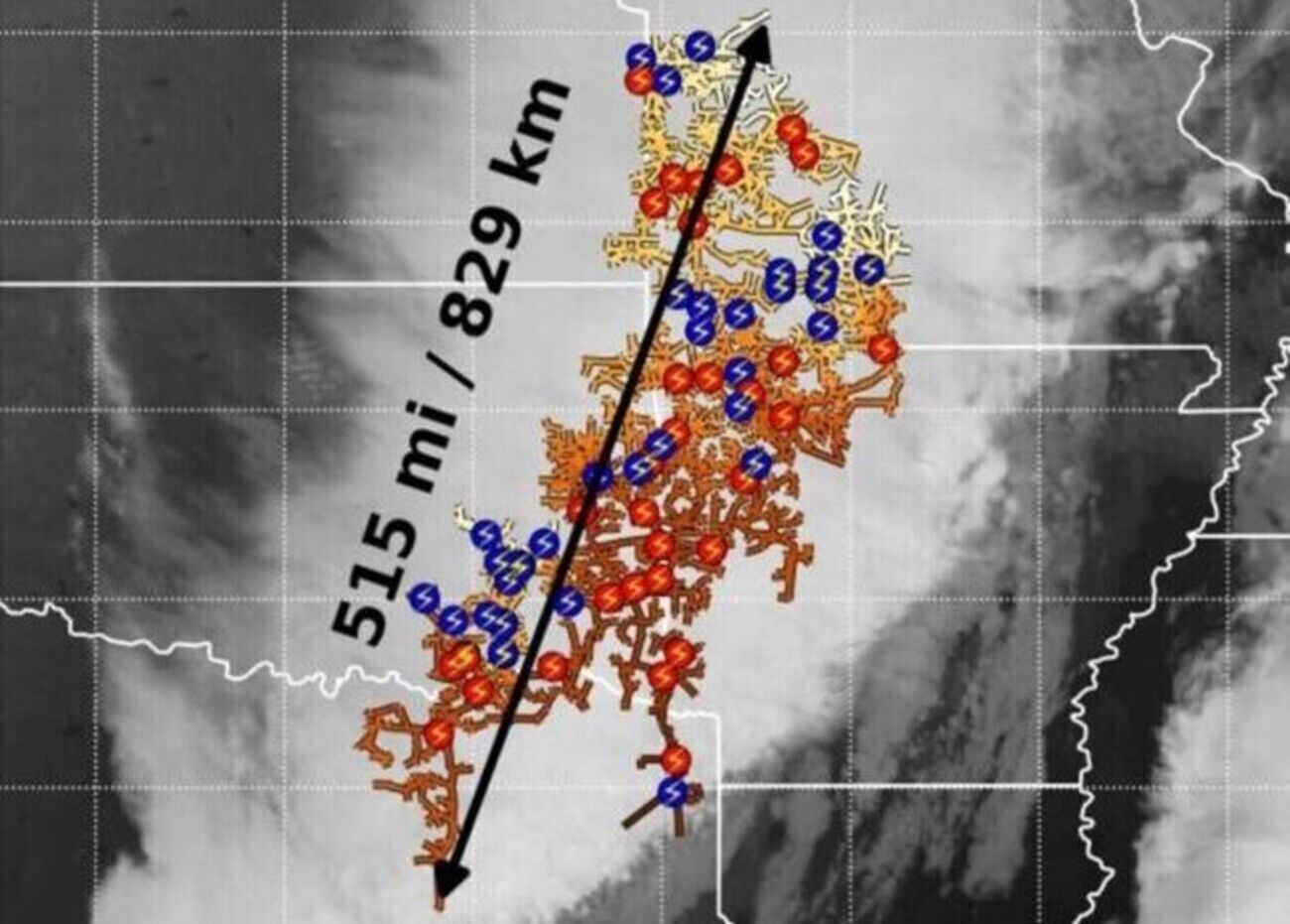
Giant Lightning Spanned 829 Km Between Texas and Kansas, Breaking Previous Record and Revealing the Power of Megaflashes in Severe Storms
A single lightning bolt that crossed the sky between Texas and Kansas, in the United States, broke the world record for the longest lightning bolt ever recorded.
The phenomenon occurred during a storm in October 2017, but it was only officially recognized years later, after detailed data analysis.
The electrical discharge spanned 829 kilometers, surpassing the previous record by 61 kilometers.
-
With a cost per shot close to zero, the DragonFire laser could change naval warfare in 2027 and provide British ships with nearly unlimited defense against drones.

-
A British startup creates tires that generate electricity in electric vehicles when passing over potholes, speed bumps, and cracks.

-
Scientists have created robots made with living cells that have their own nervous system, swim on their own, explore the environment, and self-organize without any genetic engineering, and now they want to do the same with human cells.

-
Students create a solar-powered ambulance that operates without a plug, without fuel, and still keeps medical equipment running in remote areas.


Megaflash in the Great Plains
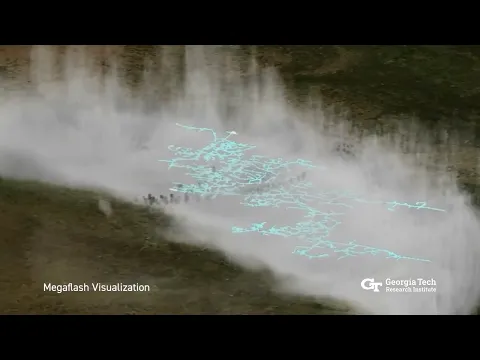

This rare type of lightning is called megaflash. It occurs when the electrical discharge travels great distances horizontally, jumping from cloud to cloud.
The 2017 event took place in the Great Plains of North America, a region prone to large-scale storms.
This type of system, known as a mesoscale convective storm, creates ideal conditions for gigantic lightning.
The previous record was from April 2020, when a megaflash traveled 768 kilometers across Texas, Louisiana, and Mississippi. The difference between the two events was 61 kilometers.
How to Measure Such a Lightning Bolt
Measuring a megaflash is a complex task. It requires cross-referencing data from satellites and ground sensors.
The goal is to reconstruct the path of the lightning bolt in three dimensions, confirming whether it is actually a single event and determining its extent.
Since these lightning bolts are horizontal and are often hidden by clouds, they can easily go unnoticed.
The entities responsible for identifying the new record were the NOAA’s GOES-16 and GOES-17 weather satellites.
They are equipped with sensors called GLMs (Geostationary Lightning Mappers), which continuously observe the sky for extreme lightning.
GOES-16 had been launched just before the 2017 storm. However, the megaflash was only identified later when scientist Michael Peterson and his team reviewed the data at the Georgia Institute of Technology.
The Majority of Lightning is Much Smaller
Generally, lightning is much smaller than megaflashes. Most have a length of up to 16 kilometers and follow a more vertical path.
In contrast, megaflashes travel long distances horizontally, jumping between clouds within a larger weather system. Any lightning over 100 kilometers is considered a megaflash.
Another Impressive Record: Duration
In addition to length, scientists also monitor the duration of lightning bolts. In 2022, the longest lightning bolt ever recorded was confirmed: it lit up the sky for 17.102 seconds. The phenomenon occurred in June 2020 during a storm over Uruguay and Argentina.
Why They Occur in These Regions
It is no coincidence that the largest megaflashes have occurred in the Great Plains of North America.
This area tends to host large storms, particularly those called mesoscale convective systems. This type of system provides perfect conditions for extreme lightning.
According to researcher Randy Cerveny from Arizona State University and the World Meteorological Organization, there is still much to be discovered about megaflashes. “It is likely that even greater extremes exist,” he stated.
More Data, More Discoveries
Michael Peterson emphasizes that observations are advancing thanks to satellite technology. “Adding continuous measurements from geostationary orbit was a major breakthrough,” he explained.
According to him, current data already covers the main points on the planet where megaflashes occur.
The expectation is that, with the continuous accumulation of data, it will be possible to find even larger lightning bolts in the future. It will also help to better understand how this rare phenomenon affects the planet.
With information from Science Alert.









-

-

2 pessoas reagiram a isso.