





 Portuguese
  English
  Spanish
 4 min of reading
  0 comments



Maxxi Econômica Faces Debt of R$ 71 Million and Files for Judicial Recovery to Avoid Bankruptcy in 2025, Exposing Crisis in Regional Pharmaceutical Retail.
Brazil enters 2025 looking at a profound transformation in the health retail sector. While large national groups and established chains intensify their expansion, a parallel reality knocks on the door: the survival of dozens of regional chains, pressured by expensive credit, price wars and aggressive competition from giant multinationals. At the center of this dramatic scenario is Maxxi Econômica, a traditional pharmacy chain from Rio Grande do Sul, which is experiencing the most delicate moment in its history. A debt of R$ 71.5 million, including labor, banking, and supplier obligations, has pushed the company to file for judicial recovery — its last attempt to avoid the definitive closure of stores and protect jobs amid the crisis.
In a market that has grown rapidly in recent years, driven by an increase in the population’s longevity, the expansion of health services within pharmacies, and million-dollar investments from industry giants, the story of Maxxi Econômica exposes an uncomfortable truth: not everyone can keep up with the new competitive dynamics of the country.
The Trajectory of a Regional Chain and the Weight of the Dispute with Large Groups
Founded over 30 years ago, Maxxi Econômica has established itself as one of the most traditional pharmacy retail chains in Rio Grande do Sul. Its stores are located in neighborhoods and cities where close service, community trust, and a physical presence were sufficient to thrive.
-
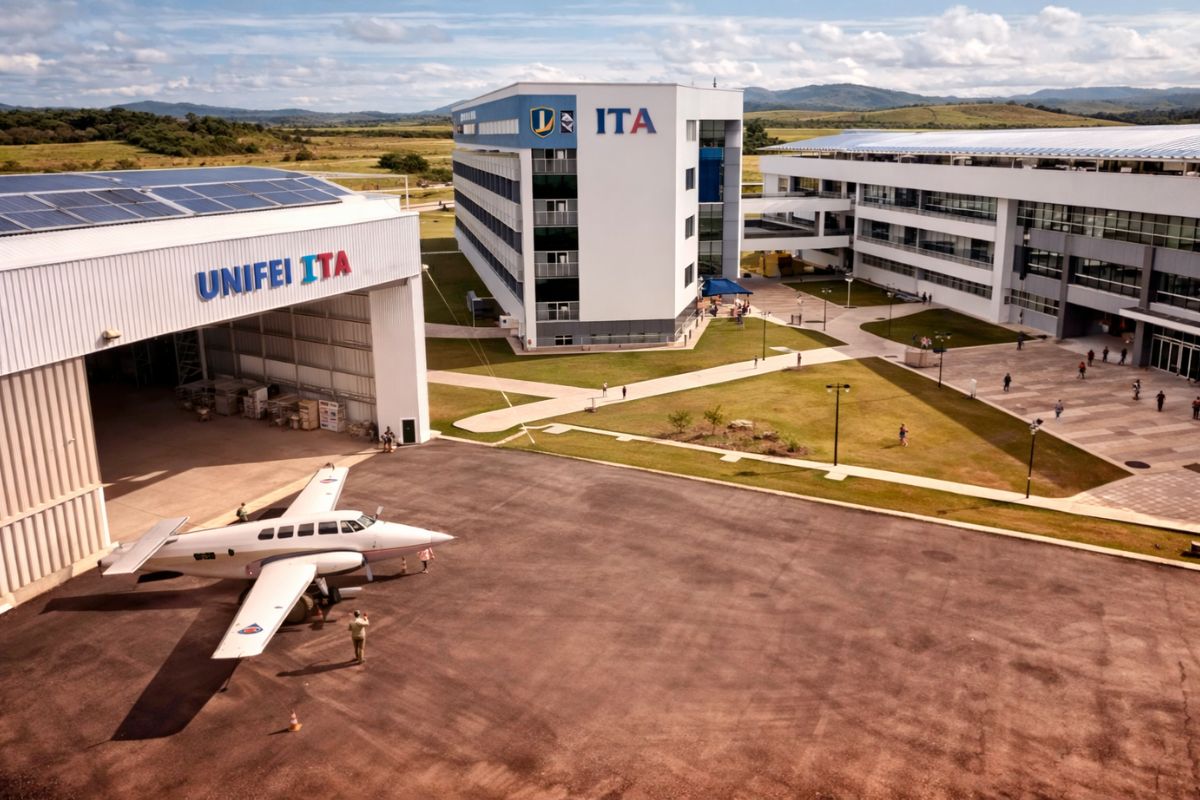
The institute that trained the greatest aerospace engineers in Brazil has just opened its first campus outside São Paulo after 75 years: ITA Ceará will have R$ 445 million, new courses in energy and systems, and classes are expected to start in 2027.
-
Luciano Hang, owner of Havan, goes to Juiz de Fora after the tragedy in February, brings R$ 1 million, hands out R$ 2,000 cards, and donates up to R$ 15,000 to victims in the region.

-
The Brazilian passport allows legal residence in dozens of countries without the need for a prior visa, and most Brazilians are unaware that they can apply for residency directly upon arriving in nations in South America, Africa, and even Europe.

-
Petrobras sends a message to Brazilian truck drivers after fuel collapse and reveals plan to have 100% domestic diesel.


But the game has changed.
In the last five years, the sector has undergone one of the biggest transformations in its history. Groups like Panvel, Raia Drogasil, Pague Menos, and Drogaria São Paulo have accelerated their expansion, digitalized operations, and strengthened loyalty and omnichannel logistics programs.
Delivery platforms began delivering medications in minutes. Vaccination clinics and laboratory services were incorporated into stores. Pharmaceutical retail has become a branch of modern health, and competition has become asymmetric.
Regional chains, with less financial power and more limited logistical structure, have begun to feel the pressure. Maxxi Econômica was one of the hardest hit. High interest rates, inflation in the inputs and medications sector, economic slowdown in the South, and the difficulty of passing costs onto consumers created a perfect storm.
The result: increasing debt and difficulty in meeting financial commitments.
Million-Dollar Debt and Judicial Race to Avoid Bankruptcy
According to the legal proceedings, Maxxi Econômica entered 2025 with liabilities exceeding R$ 71 million, including debts to banks, suppliers, cooperatives, and labor debts. When tax obligations outside of recovery are considered, the figure may approach R$ 100 million.
Without access to credit and under pressure from due dates, the company sought legal protection to avoid immediate bankruptcy. The goal is to negotiate terms, restructure payments, and keep stores open while trying to recover cash flow.
Judicial recovery, while a legitimate and often necessary legal instrument, also publicly signals a warning: a chain that was once a symbol of stability has entered survival mode.
This raises a fundamental point in the debate about health retail in the country: if a company with decades of operation and strong regional presence cannot survive, what can be said of the hundreds of small entrepreneurs in the sector?
High Interest Rates, Fierce Competition, and Compressed Margins
The case of Maxxi Econômica is not an isolated incident. It is a symptom of a business model being tested. The pharmaceutical sector, although resilient and essential, operates with narrow margins in many categories. Generics, dermocosmetics, personal care items, and OTCs have become battlegrounds for price wars.
In addition, the following factors contribute:
• High capital costs — with interest rates above 10% per year for long periods
• Competition from large players with publicly traded capital and the ability to absorb temporary losses
• Change in consumer behavior, increasingly digital and sensitive to loyalty programs
• Growth of marketplaces selling OTC medications at aggressive prices
• Logistical and tax pressure
In this scenario, pharmaceutical retail ceases to be merely commerce: it requires scale, technology, logistics, and data intelligence.
For regional chains, the challenge is brutal.
The Social and Economic Impact of a Regional Downfall
The crisis at Maxxi Econômica affects not only its owners. It impacts workers, local suppliers, independent pharmacies that rely on regional distributors, and even consumers who see less competition and potentially higher prices where the company operates.
Regional pharmacy chains play a strategic role in hundreds of Brazilian cities — especially where large groups have not yet arrived. They ensure access to medications, basic services, and competitive prices. When one weakens, the entire local ecosystem feels.
Therefore, the case from Rio Grande do Sul is being watched not only by the sector but by analysts monitoring retail trends and market structures.
A Struggle that Reflects a National Transformation
The story of Maxxi Econômica is a portrait of a bigger issue: will the future of Brazilian pharmaceutical retail be concentrated in the hands of a few national groups? Or will there still be room for regional chains and hybrid models?
If nothing changes, the natural movement will be consolidation, and cases like this will become increasingly frequent.
But there is one point that could still balance the competition: the proximity to the local customer, a characteristic that regional chains dominate like few others.









Seja o primeiro a reagir!