





 Portuguese
  English
  Spanish
  5 min of reading
  28 comments


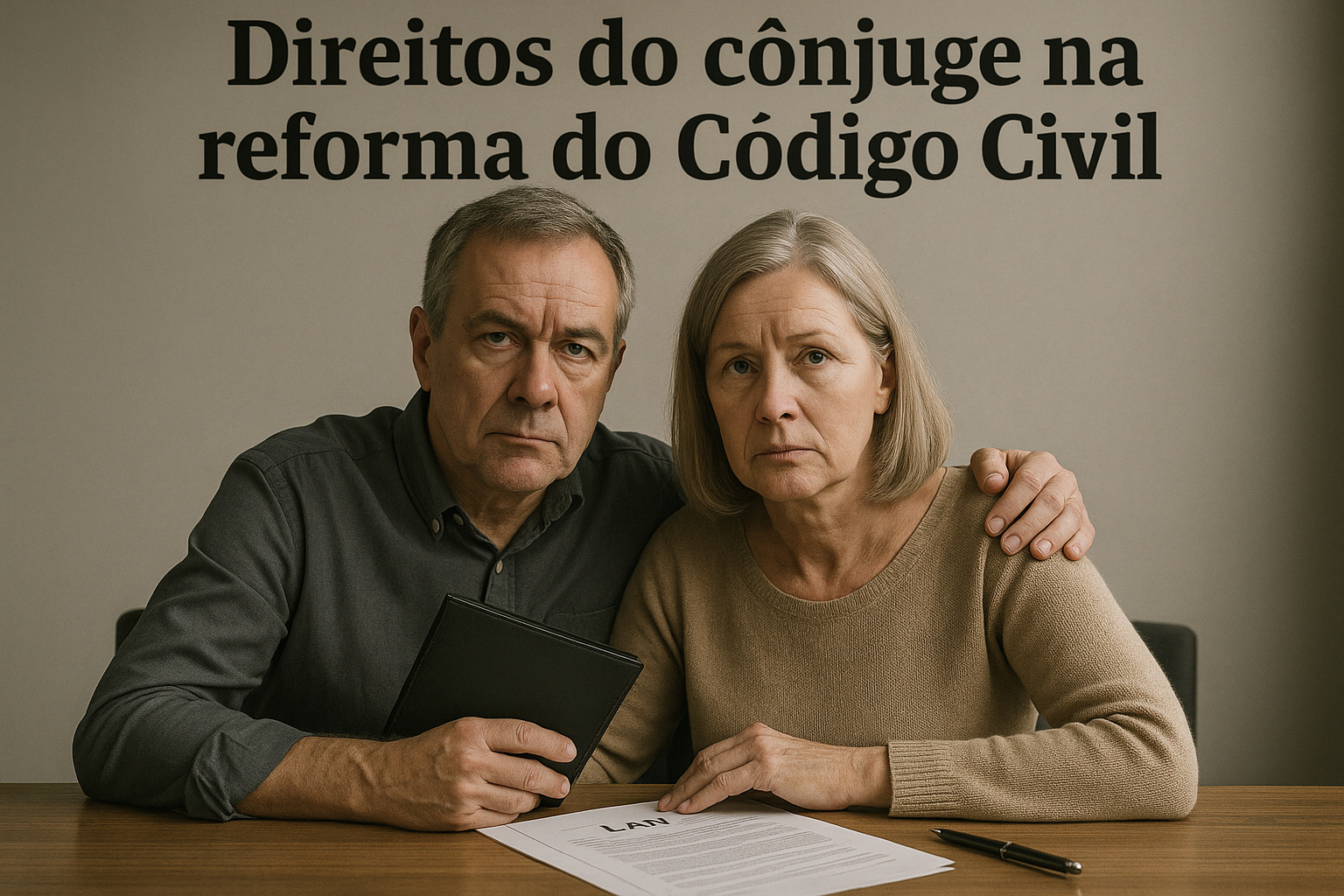


The Wave of Misinformation About the Reform of the Civil Code Created Fear on Social Media, But a Technical Analysis Reveals That the Project Does Not Abandon Widowers, Preserves Essential Guarantees, and Also Modernizes Succession for Families with Different Arrangements and Life Histories
A video circulating on social media claims that the reform of the Civil Code (PL 4/2025), currently under discussion in the Federal Senate, would take away all inheritance rights from husbands and wives, leaving the surviving spouse “with nothing” after years of life together. However, this distorted version does not reflect reality. The information was released by Senado Verifica, which analyzed the project and showed that the text provides various forms of protection for the widower or widow, even with the change in the list of necessary heirs.
The central point of the debate lies precisely in this list. Currently, children, grandchildren, parents, and grandparents have a mandatory right to at least 50% of the inheritance — a portion that cannot be removed even by will. The reform project suggests removing the spouse from this category, which has led to misinterpretations about a supposed total loss of rights. However, this does not mean abandonment of the widower. In fact, the proposal creates new security mechanisms, adjusting succession to the contemporary realities of Brazilian families.
What Changes in Inheritance and Why This Does Not Eliminate Protection for the Spouse
Even though it is no longer a necessary heir, the spouse is not left unprotected. The project establishes two fundamental pillars that preserve their stability after the death of the partner: usufruct and compensatory provision.
-
The Chamber opens a debate on driver’s licenses at 16 years old as part of a reform that includes around 270 proposals to change the Brazilian Traffic Code and may redesign rules for licensing, enforcement, and circulation in the country.

-
The new Civil Code could revolutionize marriages in Brazil with “express divorce” and changes that could exclude spouses from inheritance.

-
Banco do Brasil sues famous influencer for million-dollar debt and intensifies debate on delinquency, risks of seizure, and direct impact on Gkay’s credibility.

-
The Senate approves a bill that criminalizes misogyny, hatred, or aversion towards women, and includes the crime in the Racism Law with a penalty of up to 5 years.


Usufruct ensures that the widower or widow can continue living in the property where the couple lived, regardless of who receives the property in the division of assets. Thus, even if the children inherit the asset, the surviving spouse retains the right to remain in the residence, ensuring dignified housing and continuity of life.
The compensatory provision acts as a mechanism for property justice. It can be granted by the judge in cases where the spouse has primarily dedicated themselves to the home, children, or family support, putting aside their career or professional development. Thus, the reform acknowledges that domestic work and family dedication generate value and deserve fair financial compensation.
Additionally, there is an existing right that remains intact: survivor’s pension. Regardless of the reform, the widower or widow can continue to receive the benefit according to the rules of the pension system to which the deceased spouse was linked.
Inheritance Is Not the Same as Half-Share: The Error That Fuels Confusion
A significant portion of the misinformation spread on social media arises from the confusion between inheritance and half-share, two completely distinct concepts in Brazilian law. Inheritance corresponds to the set of assets, rights, and obligations transferred after death. In contrast, half-share is the automatic right to half of the assets acquired during marriage or stable union, even before discussing inheritance.
In the partial communion regime — the most common in Brazil — the widower or widow automatically guarantees 50% of everything acquired by the couple during the union. This right does not depend on a will, is not affected by PL 4/2025, and cannot be removed by any reform. Thus, in practice, the person is not left “with nothing”: they already own half of all the assets built together throughout their shared life.
Even after receiving their half-share, the surviving spouse may still have the right to the usufruct of the property where they lived and to the compensatory provision if necessary to ensure their survival or quality of life.
And in the Total Separation of Assets Regime? What Really Happens
Another common doubt involves couples living under total separation of assets, a regime in which each person exclusively retains the property acquired individually. In this case, indeed, the reform project of the Civil Code provides that the surviving spouse will not be an heir. However, this does not mean abandonment or vulnerability.
Even outside the asset division, the widower or widow can still receive housing guaranteed by usufruct and, when demonstrated economic dependency or full dedication to the family, may still apply for the compensatory provision. The goal is to prevent someone who dedicated years to the home, renounced their career, or suffered a direct economic impact due to the relationship from being at a disadvantage after the death of their partner.
According to the jurists responsible for the text, this adaptation seeks to balance two principles:
- Protect Reconstituted Families, increasingly common in Brazil;
- Ensure that Children from Previous Relationships Are Not Made Vulnerable.
Thus, those wishing to remarry can better organize their assets, while the surviving spouse remains supported by minimum guarantees of dignity and security.
Proposal Still Under Debate in the Senate
It is crucial to emphasize that PL 4/2025 is still under construction, undergoing debates and hearings with specialists, and may undergo changes before the final vote. The Federal Senate maintains a temporary committee dedicated specifically to modernizing the Civil Code, listening to jurists, entities, and civil society. As reported by Senado Verifica, the meetings are public, and any citizen can follow the progress and access analyses on points that generate doubts or misinformation.
In fact, the question that led to this verification was raised by an internet user concerned about rumors dominating social media. Thanks to these contributions, the Senate team maintains ongoing clarifications to combat misinterpretations, avoid alarmism, and reinforce the importance of qualified information during the processing of sensitive projects.









O cônjuge do primeiro casamento ou aquele que casam de papel passado merecem herança sem precisar fazer inventario pra sustentar advogados, juízes e Estado, e não ajuntós como tem muitos toda vida
A minha opinião,acho que o conjugue esta sendo excluído sim pois quem cuida do outro teria que ter todo direito sem precisar apelar pois enquanto os irmãos e filhos se assim o tiveram estão numa boa cuidando da vida deles o conjugue esta lá pra o que der e vier e muitas vezes passando todo trabalho se sacrificando pra cuidar de quem os parentes não estão nem ai
É piada isso, a companheira fica 40, 50 anos de casada ai o abençoado morre, arruma amante, ****, filhos de **** e a companheira perde, aquela que aguentou o traste a vida toda, que lei é essa?? Que esses politicos sejam mostradis e nunca mais receba voto de mulheres que se dedicaram a casa ; filhos , absurdo isso, que politica **** é essa, nunca mais voto em nenhum politico, isso é um lixo, nnde chegamos affffff🤬🤬🤬🤬
“aguentou”? Era uma sentença? Bastava se separar, ou alguém casa com promessa de ter algum tipo de premiação?, se não bastasse essa berração do código chamada “direito real de habitação” aonde os filhos tem que assistir a depreciação e desvalorização do imóvel enquanto a querida da viúva não vende. Já vão receber uma eventual pensão por morte que a pessoa pode muito bem refazer a vida sem ter que trabalhar, por mim cônjuge sobrevivente tinha que sair a pão e água.